 #1
Marshall
Lyon County · 14,171 peopleJuly high·January low 6°·18 days of 90°+ a year
Each edition grades its towns against each other only.
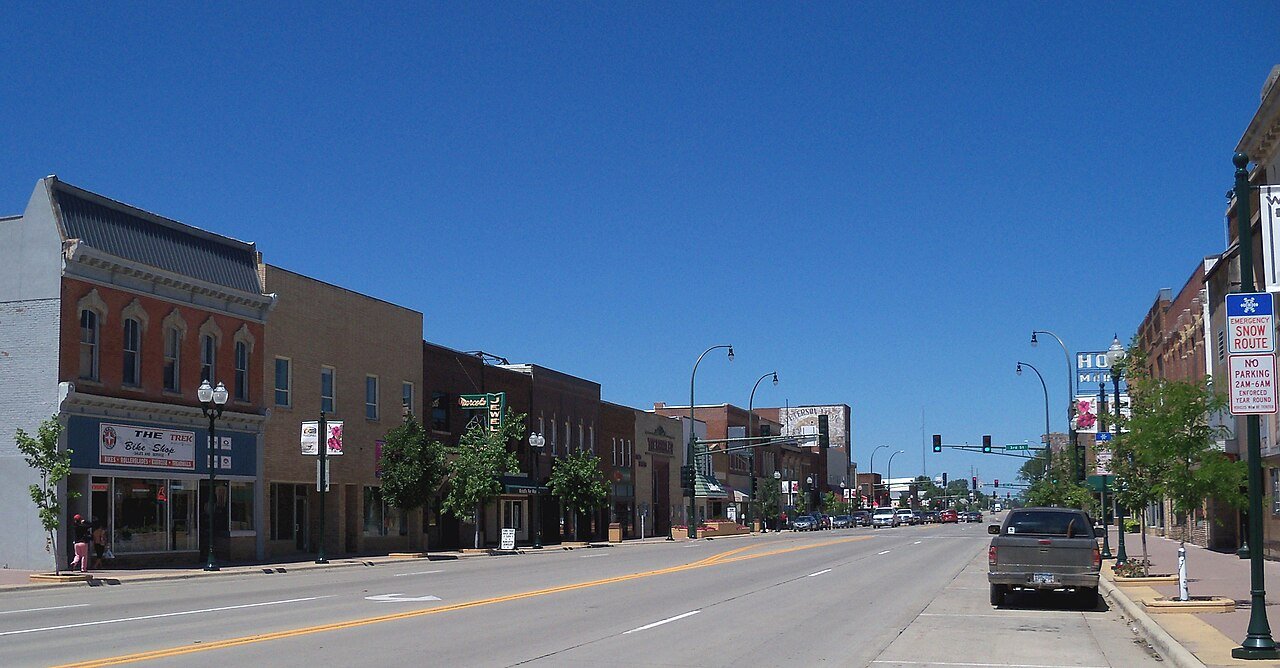
Marshall, #1 on this list · Photo: Jon Platek · CC BY-SA 3.0Marshall has the hottest summers of Minnesota’s 270 towns of 2,500+: July afternoons average a high of 84° (NOAA 1991–2020 normals). The typical town here averages 82°; none of the 270 average 90° or more.
The average July high. NOAA U.S. Climate Normals, 1991–2020, from NOAA’s 5 km grid at each town’s center; one town for each grid cell. A described list: no letters. How grades work
#1July high·January low 6°·18 days of 90°+ a year
 #2
July high·January low 5°·20 days of 90°+ a year
 #3
July high·January low 6°·16 days of 90°+ a year
July high, highest first. Towns with the same figure share a rank (T = tied; 250 towns here).
270 towns ranked. Not here? See why a town may be missing.
Marshall (Lyon County): July afternoons average a high of 84°. Granite Falls (83°) and Redwood Falls (83°) follow.
By the average July high (the warmest month’s afternoons), highest first, on NOAA’s 1991–2020 normals, read from its 5 km grid at each town’s center. Towns with the same figure share a rank (T); the figure and the state rank are the ones on each town’s Climate page. How grades work.
The list covers towns of 2,500+ residents, one for each of NOAA’s 5 km grid cells (270 in Minnesota): where towns share a cell, one of them stands for it, since the grid gives them the same figures. Every town’s own figures are on its Climate page. Every town is on the Minnesota page.
Every list ranks the same 2,500+ towns, so a town’s rank means the same thing on each.