156 years in pictures
Census counts: 862 in 1880, 5,398 in 2020. The archive holds 6 old photos and papers going back to 1901 and 2 maps from 1965 on.
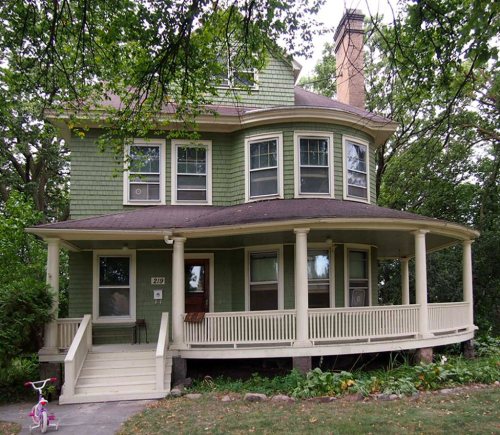
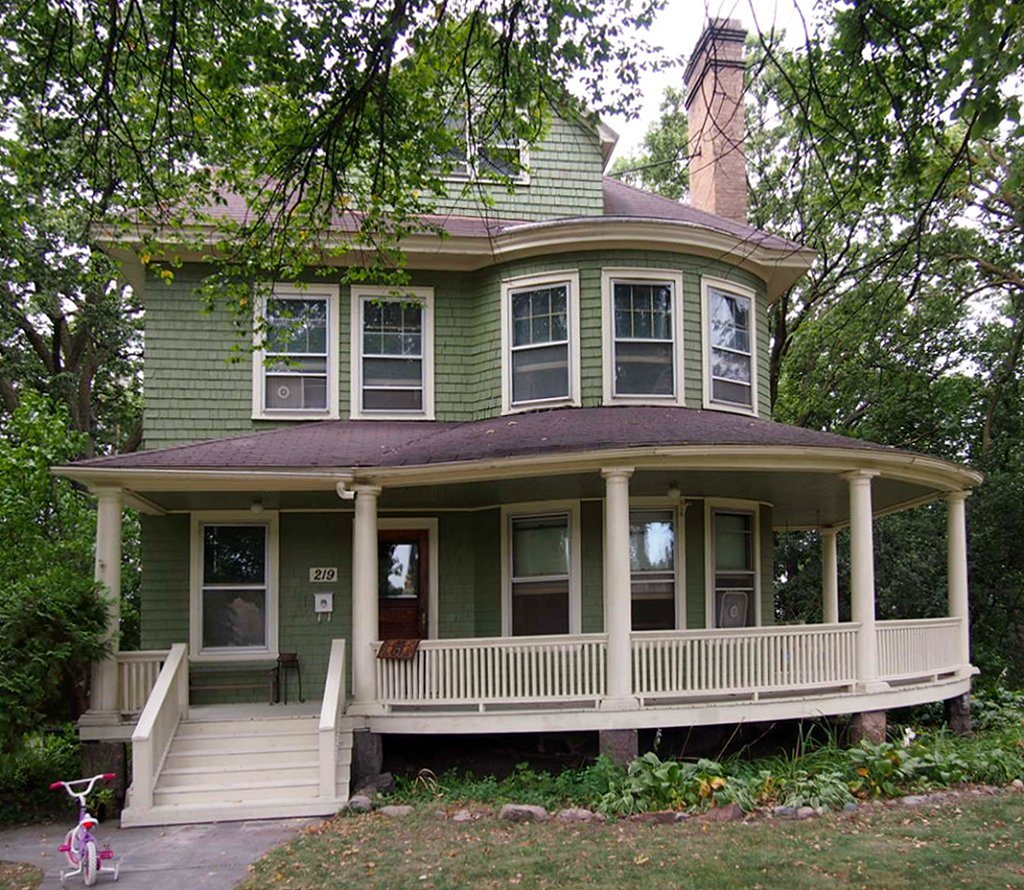
4 places on the National Register of Historic Places.
- 1870Montevideo is settled
Each edition grades its towns against each other only.

Montevideo gives you more for your money than most places: a typical home costs about $211K, 3 years of the county’s $71K median household income. It grades A− overall, ranked 111th of 271 in Minnesota. On the plus side, it reports less crime per resident than 100% of U.S. towns. 39% of working residents work locally in Montevideo, where Minnesota’s towns sit at 9.7% and U.S. towns at 8%. Only 47 of Minnesota’s 572 towns score lower on health. Montevideo has 4 places on the National Register of Historic Places, among them Charles H. Budd House and Chippewa County Bank.
Where Montevideo beats most towns.
Charles H. Budd HouseEach subject compared with towns across the country (schools within Minnesota), ordered by how far Montevideo is from typical.
How TownRatings grades towns →
Census counts: 862 in 1880, 5,398 in 2020. The archive holds 6 old photos and papers going back to 1901 and 2 maps from 1965 on.
4 places on the National Register of Historic Places.
Who provides power, water and the rest in Montevideo, and how to reach them.
EPA SDWIS (Oct 9, 2026) · HIFLD + EIA-861 2025 · Census 2020 ZCTAs · NCES 2024–25 · registration: vote.gov, updated Nov 18, 2024.
Ordered by what stands out in Montevideo.
Montevideo pairs an A− overall with homes cheaper than the Minnesota norm, but it has poverty well above the Minnesota rate and has lost a quarter or more of its jobs in ten years.
Violent crime is rare: 0 reported in 2025, 0 per 1,000 residents.
Montevideo reports less crime per resident than 100% of the U.S. towns and cities we grade. Montevideo’s property crime rate is 0 per 1,000 residents. Only 10 of the 167 Minnesota towns we compare have a lower violent crime rate than Montevideo.
| Montevideo | Minnesota towns | U.S. towns | |
|---|---|---|---|
| Property crimes per 1,000 (2025) | 0 per 1,000 residents | 8.7 | 9.9 |
| Violent crimes per 1,000 (2025) | 0 per 1,000 residents | 1.1 | 1.6 |
FBI crime data, 2025 · crimes reported to police
Its public schools are run by the Montevideo Public School District. Two of its 9 schools are below, each with why it’s listed. The largest public high school is Montevideo Senior High, with 408 students.
| School | Level | Students | Letter |
|---|---|---|---|
| Montevideo MiddleLargest public middle schoolGrades 5–8 | Grades 5–8 | 393 | B |
| Montevideo Senior HighLargest public high schoolGrades 9–12 | Grades 9–12 | 408 | B− |
NCES · EDFacts · graded within MN on state tests and graduation
Montevideo grades A− overall with a typical home of about $211K, below the Minnesota typical value; only 39 of the 123 Minnesota towns graded A− or better can say that. At 3 years of the county’s $71K median household income, the typical home (about $211K) costs less against local pay than in 88% of Minnesota towns; that ratio is one input to its A− for cost of living.
The median rent in Montevideo is $851 a month. Typical home values rose 6.2% in the year to September 2026. 65% of households own their home in Montevideo.
| Montevideo | Minnesota towns | U.S. towns | |
|---|---|---|---|
| Median rent | $851 a month | $1,199 a month | $1,185 a month |
| Households that own their home | 65% | 75% | 73% |
Census ACS, 2020–24 · Zillow Home Value Index · Redfin Data Center
Montevideo has cold, snowy winters and pleasant summers. Among 274 Minnesota towns, just 4 have a higher July high than Montevideo.
NOAA U.S. Climate Normals, 1991–2020
Jobs based here fell from 3,465 in 2013 to 2,593. The average commute for its 2,426 working residents takes 15.2 minutes, against 22.7 across Minnesota.
About one in 3 of Montevideo’s working residents works in town. 20% of Montevideo residents live below the poverty line. Jobs based in Montevideo fell to 2,593 in 2023, 872 fewer than in 2013.
| Montevideo | Minnesota towns | U.S. towns | |
|---|---|---|---|
| Below the poverty line | 20% | 7% | 9.6% |
| Average trip to work | 15 minutes | 23 minutes | 25 minutes |
| Median household income | $69,000 | $91,000 | $80,000 |
Census LEHD 2023 · ACS
Expected storm and flood damage is higher than in 64% of U.S. communities. Since 1978, 114 flood insurance claims have been paid out in Montevideo.
FEMA flood insurance claims · FEMA National Risk Index · OpenFEMA
Montevideo beats the Minnesota average on 1 of 32 CDC measures and trails it on 17.
| Montevideo | Minnesota towns | U.S. towns | |
|---|---|---|---|
| Get no exercise (CDC PLACES) | 30% | 23% | 25% |
| Obesity (CDC PLACES) | 40% | 35% | 35% |
| No health insurance, 18–64 (CDC PLACES) | 11% | 7.3% | 8.1% |
| Diabetes (CDC PLACES) | 13% | 10% | 12% |
| What stands out | Montevideo | MN |
|---|---|---|
| More adults treating high blood pressure | 79.3% | 76.1% |
| More uninsured adults | 11.4% | 7.5% |
CDC PLACES 2025 · modeled estimates for adults · CMS · HRSA
| Montevideo | Minnesota towns | U.S. towns | |
|---|---|---|---|
| Miles of trail per square mile | 0.1 miles per square mile | 0.5 | 0.4 |
| Conserved land | 7.3% | 4.6% | 4.3% |
| Biggest places to walk | Trails | Acres |
|---|---|---|
| 1. Windom Park | 0.6 mi | 14 |
| 2. J Harley Smith Park | — | 16 |
| 3. Chinhinta Park | — | 7 |
Trails & parks © OpenStreetMap contributors · Conserved land: USGS PAD-US
Museums, parks, gardens and other places to visit around Montevideo. Close and well known come first.
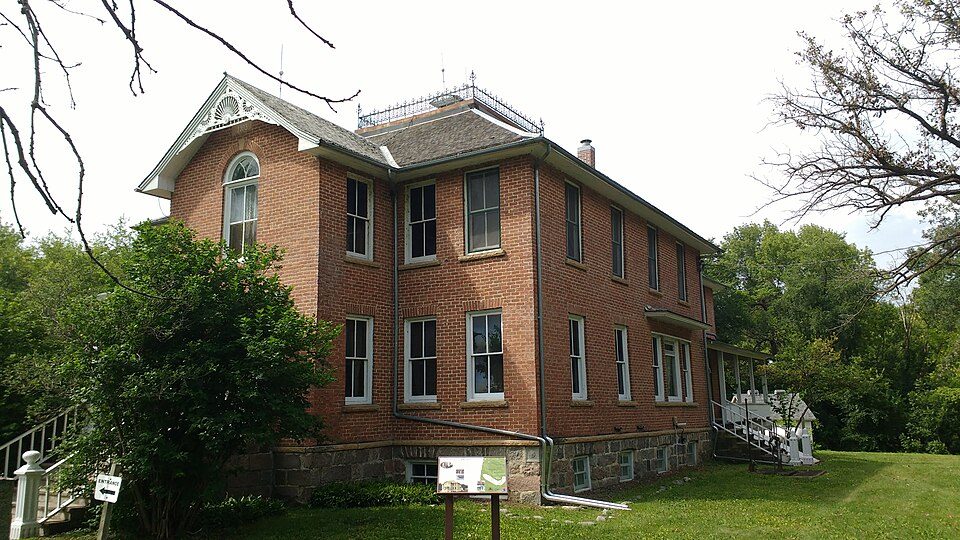
8 mi MuseumSwensson Farm Museum40 mi GardenAlexander Ramsey Park
17 mi MuseumDawson Bank Museum
15 mi MuseumArv Hus MuseumSwensson Farm Museum: Myotus, CC BY-SA 4.0 · Dawson Bank Museum: McGhiever, CC BY-SA 3.0 · Arv Hus Museum: Myotus, CC BY-SA 4.0
1 within 15 miles of the center of Montevideo
About 5 of every 100 Montevideo residents are enrolled in college, about the same as Minnesota.
4 places in Montevideo on the National Register of Historic Places.
10 notable people were born in Montevideo.
City in Minnesota, United States
Montevideo ( MON-tə-VID-ee-oh) is a city in and the county seat of Chippewa County, Minnesota, United States. The population was 5,398 at the 2020 census. The area around Montevideo was populated by Native Americans and fur traders during the first half of the 19th century. After the Dakota War of 1862, the US government opened the area to homesteaders. Railroads were built, and settlers followed, including Civil War veterans, Norwegians, Germans, Swedes, Dutch, and Irish. Montevideo was incorporated in 1879.
From Wikipedia, licensed CC BY-SA 4.0 · facts via Wikidata (CC0)
2 towns share a border with Montevideo.
| Town | MN rank | Overall | Cost | Safety | Schools | Health |
|---|---|---|---|---|---|---|
| Montevideo | #111 | A− | A− | A+ | B | C+ |
| Sparta Township | — | — | — | — | — | — |
| Stony Run Township | — | — | — | — | — | — |
Sparta Township and Stony Run Township aren’t graded (fewer than 1,000 residents, or not enough data). Compare Montevideo with a neighbor →
Short answers, built from the data on this page.
By most measures, yes. Montevideo grades A− overall, better than 81% of U.S. towns and #111 of 271 in Minnesota. It grades C+ for health, A+ for safety and B for schools.
Not for the area. Cost of living, which also weighs rents, property taxes and how many households pay 30% or more of their income for housing, grades A−.
10 notable people were born here, including Wayne Brabender and Leo Hale Taylor.