174 years in pictures
Census counts: 1,648 in 1900, 19,079 in 2020. The archive holds 12 old photos and papers going back to 2006 and 6 maps from 1896 on.
1 place on the National Register of Historic Places.
- 1852Hopkins is settled

Each edition grades its towns against each other only.

For most people who can afford it, yes. Hopkins grades B overall, 198th among Minnesota's 271 graded towns. It is easier to get around on foot or by transit than 95% of U.S. towns. CDC estimates put its residents' health ahead of 89% of the country. What holds it back is price: homes are expensive, about $329K for a typical one and 3.3 times the Minneapolis metro’s $100K median household income. Hopkins’ trail density is 2.2 miles per square mile, above both the Minnesota town median (0.5) and the median of U.S. towns (0.4). Only 40 of Minnesota’s 575 towns score higher on hazard risk. Hopkins Commercial Historic District is on the National Register of Historic Places.
Where Hopkins beats most towns.
8.5% of the town is conserved land, across 10 parks and preserves.
Each subject compared with towns across the country (schools within Minnesota), ordered by how far Hopkins is from typical.
How TownRatings grades towns →
Census counts: 1,648 in 1900, 19,079 in 2020. The archive holds 12 old photos and papers going back to 2006 and 6 maps from 1896 on.
1 place on the National Register of Historic Places.
Museums, parks, gardens and other places to visit around Hopkins. Close and well known come first.
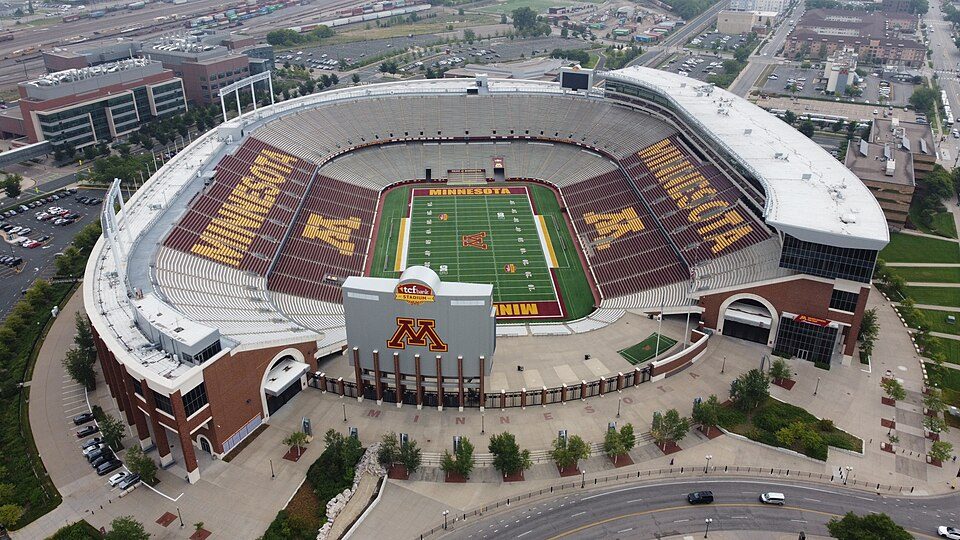
Big draw8 mi Stadium & arenaU.S. Bank Stadium
7 mi Stadium & arenaTarget Field
10 mi Stadium & arenaHuntington Bank Stadium
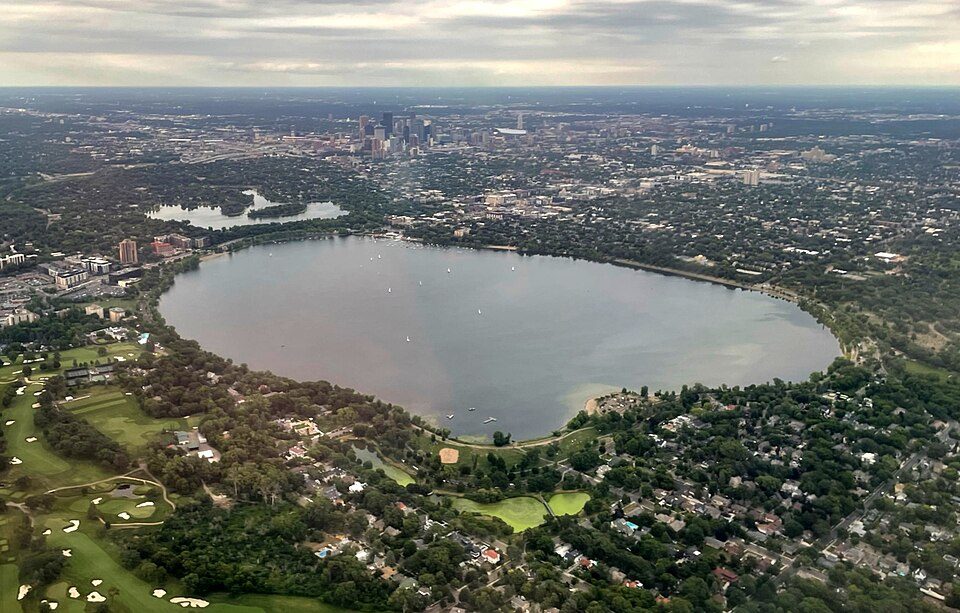
5 mi LakeBde Maka Ska
9 mi Theme parkValleyfair
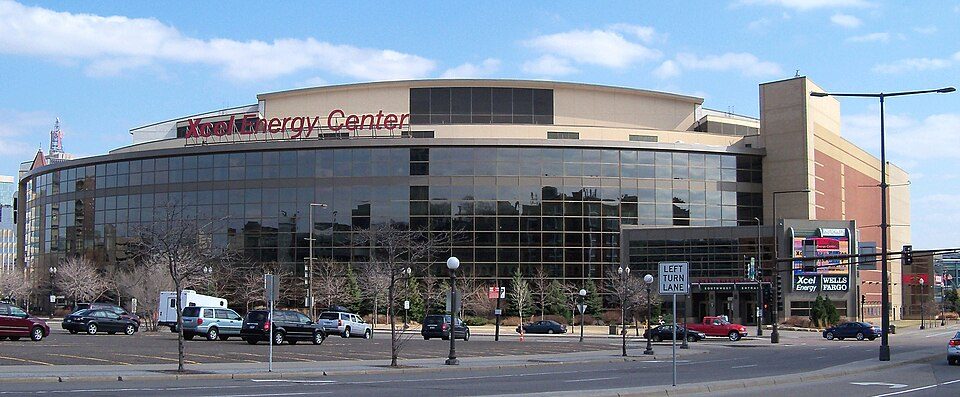
15 mi Stadium & arenaGrand Casino ArenaU.S. Bank Stadium: Darb02, CC BY-SA 4.0 · Target Field: Lectrician2, CC BY-SA 4.0 · Huntington Bank Stadium: Lectrician2, CC BY-SA 4.0 · Bde Maka Ska: Tyler Vigen, CC BY-SA 4.0 · Valleyfair: https://www.flickr.com/photos/clumpinglitter/, CC BY-SA 2.0 · Grand Casino Arena: AlexiusHoratius, CC BY-SA 3.0
Who provides power, water and the rest in Hopkins, and how to reach them.
EPA SDWIS (Oct 9, 2026) · HIFLD + EIA-861 2025 · Census 2020 ZCTAs · NCES 2024–25 · registration: vote.gov, updated Nov 18, 2024.
Ordered by what stands out in Hopkins.
Hopkins trades workers with Minneapolis and other neighbors, is safe by national standards but not by Minnesota’s and has cooler summers than most of the country, though not than most of Minnesota.
Trails run 9.1 miles in 10 parks and preserves. The biggest place to walk is Valley Park, 65 acres with 1.5 miles of trail. Parks and preserves in Hopkins: 10, covering 108 acres.
| Biggest places to walk | Trails | Acres |
|---|---|---|
| 1. Valley Park | 1.5 mi | 65 |
| 2. Central Park | 0.5 mi | 15 |
| 3. Burnes Park | 0.3 mi | 7 |
Trails & parks © OpenStreetMap contributors · Conserved land: USGS PAD-US
The largest public high school is Ubah Academy, with 321 students. The Hopkins Public School District runs its public schools. Below: Three of its 10 schools, each with why it was picked.
| School | Level | Students | Letter |
|---|---|---|---|
| Eisenhower ElementaryLargest public elementary schoolGrades PK–5 | Grades PK–5 | 504 | C− |
| Ubah AcademyLargest public high schoolGrades 9–12 | Grades 9–12 | 321 | A+ |
| Xinxing AcademyTop results in townGrades K–5 | Grades K–5 | 238 | A+ |
NCES · EDFacts · graded within MN on state tests and graduation
In Hopkins, 12% of adults smoke cigarettes. The share of adults in Hopkins who have obesity is 28%, against 35% in Minnesota’s towns and 35% across U.S. towns. Two figures for adults in the town: 10% report frequent physical distress, 7.9% have diabetes. CDC measures, 32 in all: Hopkins beats Minnesota on 8 and trails on 8.
| Hopkins | Minnesota towns | U.S. towns | |
|---|---|---|---|
| Obesity (CDC PLACES) | 28% | 35% | 35% |
| Frequent physical distress (CDC PLACES) | 10% | 12% | 14% |
| Diabetes (CDC PLACES) | 7.9% | 10% | 12% |
| Sleep under 7 hours (CDC PLACES) | 29% | 30% | 36% |
| What stands out | Hopkins | MN |
|---|---|---|
| Fewer adults with diabetes | 7.9% | 10.1% |
| Fewer adults with arthritis | 18.2% | 22.3% |
| More adults facing housing insecurity | 11.6% | 9.3% |
CDC PLACES 2025 · modeled estimates for adults · CMS · HRSA
Hopkins has had 4 paid flood insurance claims since 1987. Expected storm and flood damage is lower than in four fifths of U.S. communities.
FEMA flood insurance claims · FEMA National Risk Index · OpenFEMA
July afternoons average 82.3°: cooler than most of the country, but hotter than 85% of Minnesota places with climate records; January nights average 6.7°.
Hopkins’ January low is 7°F. About 54 inches of snow falls in a winter.
| Hopkins | Minnesota towns | U.S. towns | |
|---|---|---|---|
| January low | 7°F | 6°F | 22°F |
| July high | 82°F | 82°F | 85°F |
NOAA U.S. Climate Normals, 1991–2020
At 25 crimes per 1,000 residents a year, it reports more crime than 76% of Minnesota’s graded towns. Reported crimes fell from 383 to 274 over the last three FBI years, a drop beyond ordinary year-to-year swings.
The violent crime rate in Hopkins is 2.6 per 1,000 residents. The property offense rate locally is 11.4 per 1,000 residents.
| Hopkins | Minnesota towns | U.S. towns | |
|---|---|---|---|
| Violent crimes per 1,000 (2025) | 2.6 per 1,000 residents | 1.1 | 1.6 |
| Property crimes per 1,000 (2025) | 11.4 per 1,000 residents | 8.6 | 9.9 |
FBI crime data, 2025 · crimes reported to police
Only 36.5% of households own their home, against 72.2% across Minnesota.
For Hopkins, the median age is 37.8 years. Adults 18 to 34 are 29% of residents (22% statewide); children under 18 are 18% of residents (23% statewide). 46% of adults 25 and older hold a bachelor’s degree or more in the town. This Minnesota town is growing: up 2.3% since 2020, to 19,523 residents (2025 estimate).
| Hopkins | Minnesota towns | U.S. towns | |
|---|---|---|---|
| Bachelor’s degree or more, 25+ | 46% | 33% | 29% |
| Under 18 | 18% | 23% | 22% |
| Median age | 37.8 years | 39.9 years | 40.5 years |
53% women, 47% men
That’s an even split within the survey’s margin of ±3.4 points. Across Minnesota, 49.9% of residents are women.
| Hopkins | MN | U.S. | |
|---|---|---|---|
| Under 10 | 10.8% | 12.1% | 11.6% |
| 10 to 17 | 7.6% | 10.7% | 10.3% |
| 18 to 24 | 5.3% | 8.8% | 9.1% |
| 25 to 34 | 23.4% | 13% | 13.7% |
| 35 to 44 | 12.1% | 13.5% | 13.2% |
| 45 to 54 | 11.5% | 11.6% | 12.2% |
| 55 to 64 | 12.1% | 12.9% | 12.7% |
| 65 to 74 | 8.4% | 10.2% | 10.2% |
| 75 and older | 8.7% | 7% | 7% |
| No diploma | 5.7% | 6.1% | 10.4% |
| High school | 18.9% | 23.3% | 26% |
| Some college | 20.8% | 19.5% | 19.1% |
| Associate’s | 9% | 11.8% | 8.8% |
| Bachelor’s | 31.2% | 25.6% | 21.6% |
| Graduate | 14.4% | 13.8% | 14.1% |
Census population estimates, 2025 · U.S. Census Bureau · ACS 2020-2024 5-year estimates
Hopkins has about as many jobs (10,055) as working residents, but only 573 people both live and work here.
The share of workers in Hopkins who work from home: 21%. Commuting out is the norm locally: 6% of working residents work locally. For Hopkins, the mean commuting time is 19 minutes. The top destinations are Minneapolis (18%), Minnetonka (8%) and Eden Prairie (7%).
| Hopkins | Minnesota towns | U.S. towns | |
|---|---|---|---|
| Work from home | 21% | 14% | 11% |
| Average trip to work | 19 minutes | 23 minutes | 25 minutes |
| Below the poverty line | 12% | 7% | 9.6% |
| Median household income | $75,000 | $91,000 | $80,000 |
Census LEHD 2023 · ACS
Its typical home is the least expensive on its borders; St. Louis Park is next at $377K.
A home in Hopkins typically sold within 16 days of listing. Typical home values rose 2.1% in the year to September 2026. The midpoint rent for Hopkins comes to $1,468 a month.
| Hopkins | Minnesota towns | U.S. towns | |
|---|---|---|---|
| Households that own their home | 37% | 75% | 73% |
| Median rent | $1,468 a month | $1,192 a month | $1,185 a month |
Census ACS, 2020–24 · Zillow Home Value Index · Redfin Data Center
27 within 15 miles of the center of Hopkins
About 5 of every 100 Hopkins residents are enrolled in college, about the same as Minnesota.
9 notable people were born in Hopkins.
City in Minnesota, United States
Hopkins is a suburban city in Hennepin County, Minnesota, United States, located west of Minneapolis. The population was 19,079 at the 2020 census. The city is four square miles in size and is surrounded by the larger suburban communities of Minnetonka, Saint Louis Park, and Edina. The city's main street was added to the National Register of Historic Places in 2022 as the Hopkins Commercial Historic District.
From Wikipedia, licensed CC BY-SA 4.0 · facts via Wikidata (CC0)
3 towns share a border with Hopkins.
All 3 graded towns on its borders grade higher than its B; St. Louis Park (B) is closest.
| Town | MN rank | Overall | Cost | Safety | Schools | Health |
|---|---|---|---|---|---|---|
| Hopkins | #198 | B | C− | C+ | B | A |
| Minnetonka | #75 | A | C− | B− | A | A+ |
| St. Louis Park | #180 | B | C | C− | B | A+ |
| Edina | #79 | A | D | B− | A+ | A+ |
Short answers, built from the data on this page.
For most people who can afford it, yes. Hopkins grades B overall, better than 58% of U.S. towns and #198 of 271 in Minnesota. It grades A for health, C+ for safety and B for schools. Cost of living is its weak spot, with a C−.
Yes. Cost of living, which also weighs rents, property taxes and how many households pay 30% or more of their income for housing, grades C−.
9 notable people were born here, including Samantha Harris and Amir Coffey.