Essex dates to 1763, and 1 of its places is on the National Register
More historic than 51% of U.S. towns · #67 of 71 in Vermont. What drives it
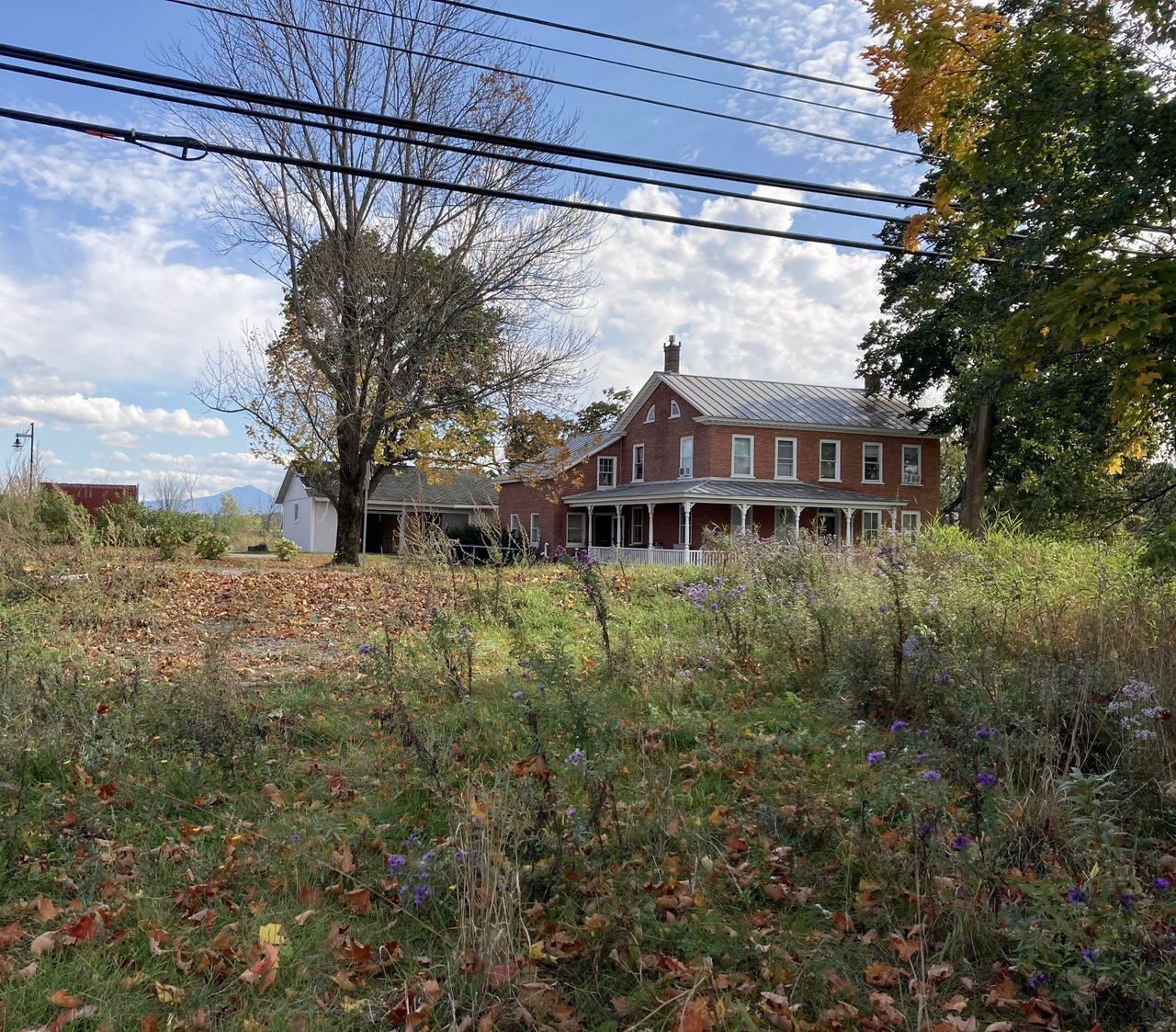
Most of Essex was built recently: 3% of its homes predate 1940 and the median home dates from 1990. Its Register listing is the Roswell Butler House. Below: maps from 1915 on and the census since 1790.
Founding year: Wikidata; Wikipedia’s history section gives the same year. First post office: 1820.The full story ↓
History grade
What drives Essex’s History grade
On its age, its old homes and the National Register, Essex is more historic than 51% of U.S. towns, #67 of 71 in Vermont. Its age holds the grade up; its share of homes from before 1940 pulls it down.
B−
HistoryA character grade: shown, never part of Essex’s overall grade.
Vermont towns list more on the Register than most of the country (a typical Vermont town has 147 per 10,000 residents, the U.S. 2.4), so Essex’s 0.9 sits below most of its state (10% of Vermont towns have fewer) while its 1 listings outnumber those of 51% of U.S. towns.
How sure. Graded on any two of the three inputs instead, the letter would range from C− to B+. The pre-1940 share (±2.6 points) is firm at this size. Two sources give 1763.
Founding year: Wikidata (other dates in Quick answers). Homes: Census ACS 2020–24. National Register: National Park Service, May 2026 list; each listing counted once (boundary changes and added documentation belong to their listing), and a historic district counts its contributing buildings. How TownRatings grades history →
What stands out about Essex’s past
Read from the archive, the National Register and the record. The page puts what stands out first.
The town was incorporated on June 7, 1763, named after the Earl of Essex.
The Village of Essex Junction was formed within the town of Essex on November 15, 1892. The village was formed to provide additional services (such as sidewalks, water, and sewers) to its residents. The rural areas of the town did not want the services or the needed taxes.
As the town outside the village developed, it gradually added its own similar services, and by 1958, merger proposals appeared via voter petition. Over the years, various votes (often contentious) regarding a merger occurred in the village and the town, but never passing in both communities. - a requirement by the state legislature for a merger.
Essex county was incorporated from Caledonia in 1798, but was not fully organized till 1799, when Lunenburg and Brunswick were established as half shires. On the third Monday in December, 1800, the first session of the Essex county court
Text read by machine from the scan; it may contain errors.
History of Chittenden County, Vermont, with illustrations and biographical sketches of some of its prominent men and pioneers1886 · page 217Read the page →
Read the text
Essex Classical Institute. — The first school in Essex dates from 1788, and was taught by John Finch, an Englishman, who is said to have been sour-faced and severe. The first school district of which any record exists was organized in 1796, and embraced the northeast portion of the town. The school-house in which this was held was the second one erected in the town, the first having stood on Brown's River, near Jericho. Both were constructed of logs. In 1830 a large stone school-house was put up at the Center, the upper story of
Text read by machine from the scan; it may contain errors.
History of Chittenden County, Vermont, with illustrations and biographical sketches of some of its prominent men and pioneers1886 · page 82Read the page →
Read the text
seigniories throughout the valley, which were surveyed and laid out, and in many instances settled by families, or rather communities, from France. That immense tract of fertile land afterward successfully colonized by William Gilliland, and now comprising the thriving towns of Essex and Willsborough, on the western border of the lake, was regarded by the French as one of their most precious possessions. The point to the south of the present village of Essex was inhabited by a wealthy Frenchman, and cultivated so thoroughly as to prepare the way for the English settlers of a later date. The most impor-
Text read by machine from the scan; it may contain errors.
town office in Lunenburg and represented the town in the legislature in 1884,' 1898, and 1900, and in 1886 he was state senator for Essex county. In both legislative bodies he made a splendid record and was recognized as a leader in debate. He served on the more important com-
Text read by machine from the scan; it may contain errors.
Scans and text from the Internet Archive. Books published in 1930 or earlier, which are in the public domain.
In 1763, according to Wikidata and Wikipedia’s history of the town. Essex’s post office opened in 1820, and the first U.S. census counted 354 people here in 1790.
How does Essex rank for history?
Essex is more historic than 51% of U.S. towns, #67 of 71 in Vermont. The History grade combines the town’s founding era, the share of homes built before 1940 and its National Register listings. It’s a character grade, so it isn’t part of the overall grade. How it works.
What is on the National Register in Essex?
One place: the Roswell Butler House (listed 2001).
How old are the homes in Essex?
3% of Essex’s homes were built before 1940 (Census estimate, ±2.6 points), against a typical 22% for a Vermont town; the median home was built in 1990.
Founding dates: Wikidata, Wikipedia, the U.S. post office records of Blevins & Helbock (CC0) and the Census. Homes by year built: Census ACS 2020–24. National Register of Historic Places: National Park Service (list of May 22, 2026). Old photos, postcards and papers: Wikimedia Commons, the Library of Congress and other public archives, credited on each item’s page. Maps: U.S. Geological Survey historical topographic maps (via Esri) and Sanborn fire-insurance maps (Library of Congress). History text and census tables: Wikipedia (CC BY-SA 4.0). Places that used to be: USGS Geographic Names Information System (2021).
From Wikimedia Commons (6), Wikidata (1), the National Register of Historic Places (1), Wikipedia, Wikidata and Wikipedia for famous people, U.S. Geological Survey historical maps, U.S. Census counts (via Wikipedia), the US Post Offices dataset (Blevins & Helbock), the USGS Geographic Names Information System and old county and town histories (Internet Archive). Archive images are copied here with their credits and licenses, shown on each photo’s page. Refreshed monthly.


 2021
 2020
 2017
 2010
 2009
 2004