More historic than 88% of U.S. towns · #19 of 38 in Rhode Island. What drives it
18 places in town are on the National Register, among them the Eleazer Arnold House, a National Historic Landmark, and six historic districts with 334 buildings between them. Below: 18 old photos and papers, maps from 1894 on, and the census since 1870.
On its age, its old homes and the National Register, Lincoln is more historic than 88% of U.S. towns, #19 of 38 in Rhode Island. All 2 inputs are above most U.S. towns; its National Register listings ranks highest and its share of homes from before 1940 lowest.
A
HistoryA character grade: shown, never part of Lincoln’s overall grade.
Rhode Island towns list more on the Register than most of the country (a typical Rhode Island town has 94.7 per 10,000 residents, the U.S. 2.4), so Lincoln’s 154 sits near the middle of its state (61% of Rhode Island towns have fewer) while its 353 historic buildings outnumber those of 96% of U.S. towns.
How sure. Graded on two of the three inputs, so a change in either one moves the letter more than it would with three. The pre-1940 share is a Census survey estimate (±4.3 points).
Founding year: our sources. Homes: Census ACS 2020–24. National Register: National Park Service, May 2026 list; each listing counted once (boundary changes and added documentation belong to their listing), and a historic district counts its contributing buildings. How TownRatings grades history →
What stands out about Lincoln’s past
Read from the archive, the National Register and the record. The page puts what stands out first.
US Post Offices dataset (Blevins & Helbock, CC0). Places and cemeteries from the USGS Geographic Names Information System (2021).
The story so far
Lincoln, in brief
Wikipedia doesn’t have a history of Lincoln yet. The photos, dates and memories neighbors add here are how it gets written.
Lincoln is a town in Providence County, Rhode Island, United States. The population was 22,529 at the 2020 census. Lincoln is located in northeastern Rhode Island, north of Providence. Lincoln is part of the Providence metropolitan statistical area and the Greater Boston combined statistical area. Lincoln was settled in the 17th century as part of the Louisquisset grant, and several colonial stone-enders still exist in the town. Lincoln Woods State Park is located within the town. Limestone quarrying has occurred there since colonial times at the village of Lime Rock. Lincoln was a part of the town of Smithfield until 1871, when it was split off and named in honor of Abraham Lincoln. The ci…
Between the 2010 and 2020 censuses its population grew from 21,105 to 22,529 (+7%).
Intro from Wikipedia. Population: U.S. Census Bureau.
From the old history books
What they wrote about Lincoln, 1876–1891
Passages that mention Lincoln, cut from the printed page as they were published.
History of Providence County, Rhode Island1891 · page 425Read the page →
Read the text
The result of these feelings was that petitions were drawn up in various parts of the town petitioning the legislature to set off portions of the town of Lincoln to adjacent towns, principally to set off the village of Central Falls to the town of Pawtucket, but they did not succeed. In the autumn of 1874 the question of dividing the town was revived in a new shape, and appeared in the form of petitions to set off a portion of the villages of Valley Falls, Lonsdale, Ashton and Albion to the town of Cumberland, of which notice was given to the
Text read by machine from the scan; it may contain errors.
Historical sketch of the town of Lincoln, in the state of Rhode Island1876 · page 15Read the page →
Read the text
Cumberland, of which notice was given to the Town Council on October 31st, 1874, that it would be presented at the ensuing January session of the Legislature; and also two petitions to set off a ]iortion of the town of Lincoln to the town of North Providence, of which the Town Clouncil was notitied on November "JSth. that they would be presented at the ensuing January session of the Legislature.
Text read by machine from the scan; it may contain errors.
Historical sketch of the town of Lincoln, in the state of Rhode Island1876 · page 14Read the page →
Read the text
The result of these feelings was that petitions were drawn up in various parts of the town, petitioning the legislature to set off portions of the town of Lincoln to adjacent towns, — principally to set off the village of Central Falls to the town of Pawtucket.
Text read by machine from the scan; it may contain errors.
History of Providence County, Rhode Island1891 · page 468Read the page →
Read the text
Institution for Savings, of which his father was president. November 3d, 1886, he was elected treasurer, and has since held that office, with many others, viz.: treasurer of the Pawtucket Mutual Fire Insurance Company, treasurer of the town of Lincoln, treasurer of the Central Falls Fire District, treasurer of Union School Districts 1 and 2, and in 1885-6 he represented the town of Lincoln in the general assembly.
Text read by machine from the scan; it may contain errors.
Scans and text from the Internet Archive. Books published in 1930 or earlier, which are in the public domain.
Timeline
Lincoln, 1710 to 2020
Woven from the archive, old maps, post office records, the National Register and the people born here.
Nothing in the archives for these yearsWeddings on Main Street, storms, parades, school pictures, the old store. If it’s in your family album, it belongs here.
Lincoln is more historic than 88% of U.S. towns, #19 of 38 in Rhode Island. The History grade combines the town’s founding era, the share of homes built before 1940 and its National Register listings. It’s a character grade, so it isn’t part of the overall grade. How it works.
What is on the National Register in Lincoln?
18 listings: 10 buildings, among them the Eleazer Arnold House (a National Historic Landmark since 1968), 6 historic districts with 334 contributing buildings, and 2 structures. 353 historic buildings in all.
How old are the homes in Lincoln?
21% of Lincoln’s homes were built before 1940 (Census estimate, ±4.3 points), against a typical 20% for a Rhode Island town; the median home was built in 1970.
Founding dates: Wikidata, Wikipedia, the U.S. post office records of Blevins & Helbock (CC0) and the Census. Homes by year built: Census ACS 2020–24. National Register of Historic Places: National Park Service (list of May 22, 2026). Old photos, postcards and papers: Wikimedia Commons, the Library of Congress and other public archives, credited on each item’s page. Maps: U.S. Geological Survey historical topographic maps (via Esri) and Sanborn fire-insurance maps (Library of Congress). History text and census tables: Wikipedia (CC BY-SA 4.0). Places that used to be: USGS Geographic Names Information System (2021).
From Wikimedia Commons (18), the National Register of Historic Places (18), Wikidata and Wikipedia for famous people, U.S. Geological Survey historical maps, U.S. Census counts (via Wikipedia), the US Post Offices dataset (Blevins & Helbock), the USGS Geographic Names Information System and old county and town histories (Internet Archive). Archive images are copied here with their credits and licenses, shown on each photo’s page. Refreshed monthly.


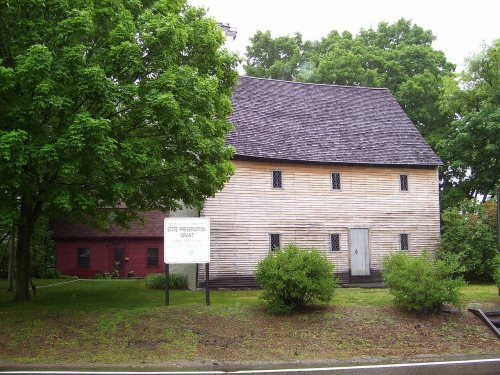 ★ Landmark

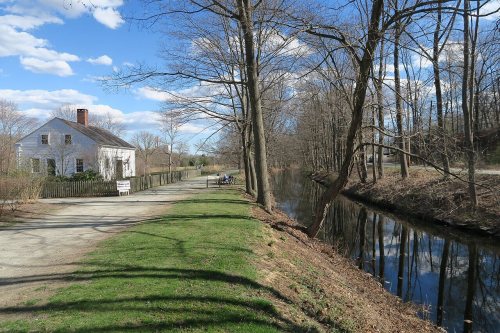
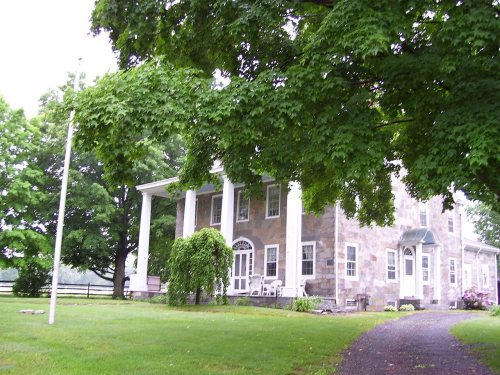



![Cumberland, of which notice was given to the Town Council on October 31st, 1874, that it would be presented at the ensuing January session of the Legislature; and also two petitions to set off a ]iortion of the town of Lincoln to the town of North Providence, of which the Town Clouncil was notitied…](https://images.townratings.com/story/33258/bk-f7f898d891626792-l.jpg)


 c. 1917
 1933
 1933
 1933
 1933
 1933
 1933
 1933
 1933
 1933
 1933
 1933
 1933
 1933


