Guest, Sign inJoin

Post to Albany

We’ll email a one-tap link to publish your post. No password, and nothing is public until you click it.
Already a member? Sign in
A+History
History · Albany

Albany dates to 1686, and 43% of its homes were built before 1940

Among the most historic 1% of U.S. towns · #7 of 758 in New York. What drives it

72 places in town are on the National Register, among them 6 National Historic Landmarks and ten historic districts with 3,610 buildings between them. Below: 33 old photos and papers, maps from 1892 on, and the census since 1790.

1686founded
72on the National Register
43%homes built before 1940
33old photos & papers
39famous people
From Albany’s archive · credits on each photo
Quick answers

How Albany began

When was Albany founded?

1686

Albany dates its founding to 1686 (Wikidata and Wikipedia’s history agree). It appears in the first U.S. census, 1790.

First census: 3,498 in 17902020 census: 99,224340 years

How historic is Albany?

A+

Among the most historic 1% of U.S. towns, on its age, its old homes and the National Register.

What drives the grade ↓
Founding year: Wikidata; Wikipedia’s history section gives the same year. First post office: 1851.The full story ↓
History grade

What drives Albany’s History grade

On its age, its old homes and the National Register, Albany is among the most historic 1% of U.S. towns, #7 of 758 in New York. All 3 inputs put Albany near the top nationally; its age ranks highest.

A+
HistoryA character grade: shown, never part of Albany’s overall grade.
All U.S. towns we grade (21,289)Among the top 1%
NewerOlder
New York towns of 2,500+ (758)#7 of 758

Among the 400 U.S. cities of 100,000 or more, Albany ranks #7 on History.

New York towns list more on the Register than most of the country (a typical New York town has 12.3 per 10,000 residents, the U.S. 2.4), so Albany’s 366 sits above most of its state (89% of New York towns have fewer) while its 3,675 historic buildings outnumber those of 100% of U.S. towns.

How sure. Graded on any two of the three inputs instead, the letter would still be A+. The pre-1940 share (±2.1 points) is firm at this size. Two sources give 1686.

Founding year: Wikidata (other dates in Quick answers). Homes: Census ACS 2020–24. National Register: National Park Service, May 2026 list; each listing counted once (boundary changes and added documentation belong to their listing), and a historic district counts its contributing buildings. How TownRatings grades history →

What stands out about Albany’s past

Read from the archive, the National Register and the record. The page puts what stands out first.

★ What stands out · On the National Register

72 listings protect 3,675 historic buildings

The country’s official list of buildings and places worth saving. 6 are National Historic Landmarks, the highest tier. Boundary changes and added documentation are counted with their listing.

places listed
72
National Historic Landmarks
6
Philip Schuyler Mansion
historic buildings protected
3,675
each building in a district counts
first listed
1967
Philip Schuyler Mansion
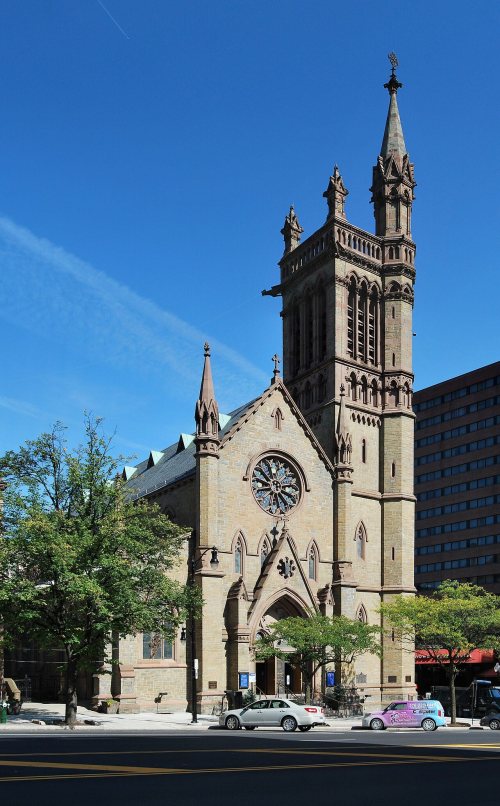
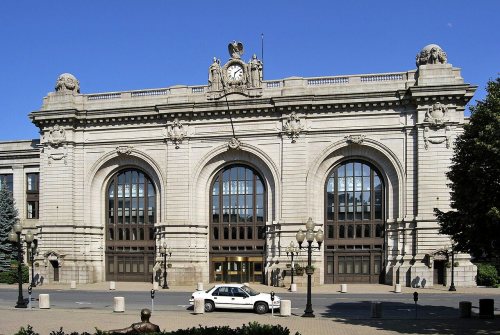
Albany Academy, built 1815Albany Union StationCherry Hill, built 1787New York Executive MansionNew York State Court of Appeals BuildingNew York State Department of Education BuildingWhipple Cast and Wrought Iron Bowstring Truss BridgeTen Broeck MansionOld Post OfficeDelaware and Hudson Railroad Company BuildingPastures Historic DistrictQuackenbush HouseWashington Park Historic DistrictAlbany City Hall, built 1883First Trust Company BuildingFirst Reformed Church, built 1797Cathedral of All Saints, built 1888Nut GroveUnited Traction Company BuildingCathedral of the Immaculate Conception, built 1852Albany Institute of History and Art, built 1791St. Mary's Church, built 1867Church of the Holy Innocents, built 1850Young Men's Christian Association BuildingLafayette Park HistoricArbor Hill Historic District-Ten Broeck TrianglePalace Theatre, built 1931Center Square-Hudson-Park Historic DistrictMansion Historic DistrictQuackenbush Pumping Station, Albany Water Works, built 1873South End-Groesbeckville Historic DistrictBuildings at 744, 746, 748, 750 Broadway, built 1875Broadway-Livingston Avenue Historic DistrictClinton Avenue Historic DistrictWashington Avenue (Tenth Battalion) Armory, built 1890Lil's Diner, built 1941Hook and Ladder No. 4Walter Merchant HouseRapp Road Community Historic DistrictMendelson, A., and Son Company Building, built 1905Stephen and Harriet Myers HouseSt. Andrew's Episcopal Church, built 1931Van Ostrande-Radliff House, built 1728Calvary Methodist Episcopal Church, built 1914Knox Street Historic DistrictLustron Houses of Jermain Street Historic District, built 1949University Club of Albany, TheBuilding at 44 Central Avenue, built 1817First Congregational Church of Albany, built 1961Downtown Albany Historic DistrictAbrams Building, built 1885Livingston, Philip, Junior High SchoolSt Casimir's Church ComplexNormanskill FarmWashington Avenue Corridor Historic DistrictUnited States Post Office, Court House, and Custom HouseNational Biscuit Company ComplexPark MartConsolidated Car Heating Company ComplexAlbany Perforated Wrapping Paper Co.Steamboat Square Historic DistrictAlbany VA Main Hospital BuildingBoardman and Gray Piano CompanyGraceland Cemetery Receiving VaultDolgeville Universalist ChurchSelfridge & Langford BuildingPhilip Schuyler Mansion, built 1760★New York State Capitol, built 1899★St. Peter's Church, built 1876★James Hall Office★Fort Orange Archeological Site★USS Slater (Destroyer Escort)★
BuildingsDistrictsSitesStructures★ landmark

Architectural styles listings

Greek Revival13
Italianate9
Romanesque6
Gothic Revival6
Queen Anne5
Classical Revival3
All 72 listings
Cherry HillBuilding · listed 1971New York Executive MansionBuilding · listed 1971New York State Court of Appeals BuildingBuilding · listed 1971New York State Department of Education BuildingBuilding · listed 1971Whipple Cast and Wrought Iron Bowstring Truss BridgeStructure · listed 1971Ten Broeck MansionBuilding · listed 1971Old Post OfficeBuilding · listed 1972Delaware and Hudson Railroad Company BuildingBuilding · listed 1972Pastures Historic DistrictDistrict · listed 1972Quackenbush HouseBuilding · listed 1972Washington Park Historic DistrictDistrict · listed 1972Albany City HallBuilding · listed 1972First Trust Company BuildingBuilding · listed 1973First Reformed ChurchBuilding · listed 1974Cathedral of All SaintsBuilding · listed 1974Nut GroveBuilding · listed 1974United Traction Company BuildingBuilding · listed 1976Cathedral of the Immaculate ConceptionBuilding · listed 1976Albany Institute of History and ArtBuilding · listed 1976St. Mary's ChurchBuilding · listed 1977Church of the Holy InnocentsBuilding · listed 1978Young Men's Christian Association BuildingBuilding · listed 1978Lafayette Park HistoricDistrict · listed 1978Arbor Hill Historic District-Ten Broeck TriangleDistrict · listed 1979Palace TheatreBuilding · listed 1979Center Square-Hudson-Park Historic DistrictDistrict · listed 1980Mansion Historic DistrictDistrict · listed 1982Quackenbush Pumping Station, Albany Water WorksBuilding · listed 1983South End-Groesbeckville Historic DistrictDistrict · listed 1984Buildings at 744, 746, 748, 750 BroadwayDistrict · listed 1987Broadway-Livingston Avenue Historic DistrictDistrict · listed 1988Clinton Avenue Historic DistrictDistrict · listed 1988Washington Avenue (Tenth Battalion) ArmoryBuilding · listed 1995Lil's DinerBuilding · listed 2000Hook and Ladder No. 4Building · listed 2001Walter Merchant HouseBuilding · listed 2002Rapp Road Community Historic DistrictDistrict · listed 2002Mendelson, A., and Son Company BuildingBuilding · listed 2003Stephen and Harriet Myers HouseBuilding · listed 2004St. Andrew's Episcopal ChurchBuilding · listed 2005Van Ostrande-Radliff HouseBuilding · listed 2008Calvary Methodist Episcopal ChurchBuilding · listed 2008Knox Street Historic DistrictDistrict · listed 2008Lustron Houses of Jermain Street Historic DistrictBuilding · listed 2009University Club of Albany, TheBuilding · listed 2011Building at 44 Central AvenueBuilding · listed 2014First Congregational Church of AlbanyBuilding · listed 2014Downtown Albany Historic DistrictDistrict · listed 2022Abrams BuildingBuilding · listed 1980Livingston, Philip, Junior High SchoolBuilding · listed 2014St Casimir's Church ComplexDistrict · listed 2018Normanskill FarmDistrict · listed 2019Washington Avenue Corridor Historic DistrictDistrict · listed 2019United States Post Office, Court House, and Custom HouseBuilding · listed 2020National Biscuit Company ComplexBuilding · listed 2020Park MartBuilding · listed 2021Consolidated Car Heating Company ComplexBuilding · listed 2021Albany Perforated Wrapping Paper Co.Building · listed 2022Steamboat Square Historic DistrictDistrict · listed 2022Albany VA Main Hospital BuildingBuilding · listed 2022Boardman and Gray Piano CompanyBuilding · listed 2022Graceland Cemetery Receiving VaultBuilding · listed 2024Dolgeville Universalist ChurchBuilding · listed 2024Selfridge & Langford BuildingBuilding · listed 2024

National Park Service, National Register of Historic Places. Photos from Wikimedia Commons, credited on each place’s page.

By decade

Albany, decade by decade

12 decades in the archive, from the 1630s to the 1900s. Scroll each row; tap a photo for its story.

The story

How Albany came to be

From Wikipedia’s history of Albany.

Read it all →

The Hudson River area was originally inhabited by Algonquian-speaking Mohicans, who called it Pempotowwuthut-Muhhcanneuw, meaning "the fireplace of the Mohican nation". Based to the west along the Mohawk River, the Iroquoian-speaking Mohawk called it skahnéhtati, also transliterated to Sche-negh-ta-da, "through the pine woods", referring to the path they took there.

According to Hendrick Aupaumut, the Mohicans came to the area from the north and the west. They settled along the Mahicannituck River, which is now called the Hudson River, and called themselves the Muh-he-con-neok, the "People of the Waters That Are Never Still".

Text from Wikipedia, licensed CC BY-SA 4.0.

Timeline

Albany, 1630 to 1899

Woven from the archive, old maps, post office records, the National Register and the people born here.

  1. 17th century
  2. 1630In the archiveFort Orange in c1630 Rensselaerswyck Map Detail (now
  3. 1686
    FoundingAlbany is established
  4. 18th century
  5. 1760BuiltPhilip Schuyler Mansion is built
  6. 1765In the archiveAlbanyNY1765
  7. 1789In the archiveA view of houses in the city of
  8. 1797Born hereJoseph Henry is born here
  9. 19th century
  10. 1805In the archiveEightsstatestreetalbany
  11. 1815BuiltAlbany Academy is built
  12. 1832In the archiveAlbany, 1832
  13. 1836Born hereBret Harte is born here
  14. 1842In the archiveAlbany Painting
  15. 1851Post officeThe Kenwood post office opens
  16. 1854Post officeThe Kenwood post office closes
  17. 1862Post officeThe West Albany post office opens
  18. 1876BuiltSt. Peter's Church is built
  19. 1891Post officeThe Normansville post office opens
  20. 1893On the mapFirst mapped by the U.S. Geological Survey
  21. 1899BuiltNew York State Capitol is built
On the map

Albany on the map, 1893 to 1980

Every edition of the U.S. Geological Survey’s map of Albany. Tap a year, or press play to watch the town change.

Albany on the 1893 USGS mapAlbany on the 1927 USGS mapAlbany on the 1947 USGS mapAlbany on the 1953 USGS mapAlbany on the 1978 USGS mapAlbany on the 1980 USGS map1893Albany sheet · 1:62,500

U.S. Geological Survey historical topographic maps (public domain), via Esri’s collection of the scans. The red ring marks the center of Albany.

Every building

Albany, building by building, 1892–1909

Fire insurance maps drew every building, what it was made of and what it was used for, so insurers could price the risk of fire. Pick a year, then a sheet.

Albany fire insurance map, 1892, sheet 21892Sheet 2 of 124
Edition
BrickWoodStone

Sanborn Map Company, via the Library of Congress. Editions published in 1930 or earlier, which are in the public domain.

Then & now

The same spot, years apart

Drag across each photo to compare.

New York State CapitolNew York State Capitol 18661866Today
New York State Capitol 1866Matched from the two captions
People over time

Albany, census by census

020,00040,00060,00080,000100,000120,000140,00018001850190019502000Peak: 134,995

Peaked at 134,995 in 1950; 99,224 people lived here in 2020.

24 censuses, 1790–2020.

U.S. Census Bureau decennial counts, from the census table on Albany’s Wikipedia page.

Famous people

39 famous people were born in Albany

Writers, athletes, leaders and more, ranked by how widely they’re known.

See all →
Places that used to be

Lost post offices, old corners, places now gone and burying grounds

Three other post offices opened and closed inside today’s town.

Kenwood
1851–1854
West Albany
1862–1956
Normansville
1891–1905
18501940today
Hamlets and corners on the map
KarlsfeldKenwoodLincoln Park HomesNormansvilleWest AlbanyYarbrough Homes
Gone or out of use
Albany Engine Company Number 6buildingAlbany Hospital for IncurableshospitalAlbany Union StationlocaleFort FrederickmilitaryHarmanus Bleeker LibrarybuildingMater Christi SeminaryschoolNew Scotland Avenue ArmorymilitaryOur Lady of Angels Roman Catholic ChurchchurchPhilip Schuyler Elementary SchoolschoolProtestant Orphan SchoolschoolPublic Bath Number 2buildingPublic Bath Number 3buildingSaint Casimir's ConventchurchSaint Casimir's Roman Catholic ChurchchurchSaint Casimir's SchoolschoolSaint John's Roman Catholic ChurchchurchSaint John's SchoolschoolSchool Number 1school
2cemeteries and burying grounds inside Albany
Eagle HillGraceland

US Post Offices dataset (Blevins & Helbock, CC0). Places and cemeteries from the USGS Geographic Names Information System (2021).

Help out

Finish Albany’s story

Most archives stop around 1920. The photos from after that are in family albums, not libraries.

Decades since 1900 with photos
00s10s20s30s40s50s60s70s80s90s
1 of 10 decades. The empty ones are waiting for someone’s album.
Stories next door

History across the town line

Each neighbor’s History grade, on the same three inputs.

Questions about Albany’s history

What year was Albany founded?

In 1686, according to Wikidata and Wikipedia’s history of the town. Albany’s post office opened in 1851, and the first U.S. census counted 3,498 people here in 1790.

How does Albany rank for history?

Albany is among the most historic 1% of U.S. towns, #7 of 758 in New York. The History grade combines the town’s founding era, the share of homes built before 1940 and its National Register listings. It’s a character grade, so it isn’t part of the overall grade. How it works.

What is on the National Register in Albany?

72 listings, 6 of them National Historic Landmarks: 52 buildings, among them the Philip Schuyler Mansion (a National Historic Landmark since 1967), 17 historic districts with 3,610 contributing buildings, 1 site, and 2 structures. 3,675 historic buildings in all.

How old are the homes in Albany?

43% of Albany’s homes were built before 1940 (Census estimate, ±2.1 points), against a typical 27% for a New York town; the median home was built in 1949.

Memory lane

What the archives can’t tell you, neighbors can.

Town Square →
Start a conversation
Sources

Where this page comes from

Founding dates: Wikidata, Wikipedia, the U.S. post office records of Blevins & Helbock (CC0) and the Census. Homes by year built: Census ACS 2020–24. National Register of Historic Places: National Park Service (list of May 22, 2026). Old photos, postcards and papers: Wikimedia Commons, the Library of Congress and other public archives, credited on each item’s page. Maps: U.S. Geological Survey historical topographic maps (via Esri) and Sanborn fire-insurance maps (Library of Congress). History text and census tables: Wikipedia (CC BY-SA 4.0). Places that used to be: USGS Geographic Names Information System (2021).

From Wikimedia Commons (28), the Library of Congress (5), Wikidata (17), the National Register of Historic Places (72), Wikipedia, Wikidata and Wikipedia for famous people, U.S. Geological Survey historical maps, U.S. Census counts (via Wikipedia), the US Post Offices dataset (Blevins & Helbock), the USGS Geographic Names Information System and Sanborn fire insurance maps (Library of Congress). Archive images are copied here with their credits and licenses, shown on each photo’s page. Refreshed monthly.