Joffre Roundhouse (Canadian National) · Photo: Gabriel Picard · CC BY-SA 4.0
20historic places on the registers
History of Lévis · Canada’s heritage registers
Lévis’s record starts in 1750 with Maison Pâquet
The registers put 20 historic places inside Lévis’s boundary, 14 of them of the highest rank. Relative to its size the figure is 1.2 per 10,000 residents, more than in 81% of Canadian towns. Designations here include 4 municipal citations and 2 Recognized Federal Heritage Buildings. A further one sits a short way past the edge of town.
Each of Lévis’s designated places has a photo. Open a place’s page for its old views: 4 places in Lévis have them. Among them: Joffre Roundhouse (Canadian National) and Maison natale Louis-Fréchette.
Photos from Wikimedia Commons, each credited to its photographer with its licence; names open the place’s page. Tap a photo to step through them full screen.
Through time
Lévis from 1830 to 1910
On one line by date: one old photograph of the town and the oldest views of 4 of its historic places. Scroll the strip and tap a picture to open it.
182518501875190019251950Before ConfederationConfederation to 1900Boom yearsThe wars and betweenAfter the war
Public domain or CC0, made before 1950, from Wikimedia Commons; old views of places can be drawings, prints or maps of their time. Each credit opens the image’s page.
How old
Most of Lévis’s dated places come from the years before Confederation
Each place by the first construction date on its record.
New France before 17601
British North America 1760–186610
After Confederation 1867–19137
Wars and Depression 1914–19450
Since 1946 1946 on0
11 of the 18 dated places are older than Confederation.
How it began
Lévis’s record begins in 1989
Lévis takes its name from Francis de Gaston, Chevalier de Levis, marshal of France. The name Lévis-Lauzon lasted until 1991, when Lévis took another. In 1989 the municipality took over from Lauzon, Les Chutes-de-la-Chaudière Regional County Municipality and Lévis.
On Wikidata the municipality of Lévis dates to January 1, 2002, with no word on whether that was its founding or a later incorporation.
Every place on the registers inside the town, by its designation.
Highest designationsOther federal designationsProvincial and local listings400 m from Ancien hôtel de ville de Lauzon
3 of 14within 400 m of Ancien hôtel de ville de Lauzon, the heart of the town’s history
Names show on hover, and a tap takes you to the place’s page.
The 20, by tier
14 Highest designations2 Other federal designations4 Provincial and local listings
In Québec the record is fuller than elsewhere: beside Parks Canada’s designations, the province’s register lists its classements and every municipal citation.
Points from Wikidata (Parks Canada’s files carry none) and from Québec’s register, as mapped there.
Highest designations
14 places in Lévis with the highest designation
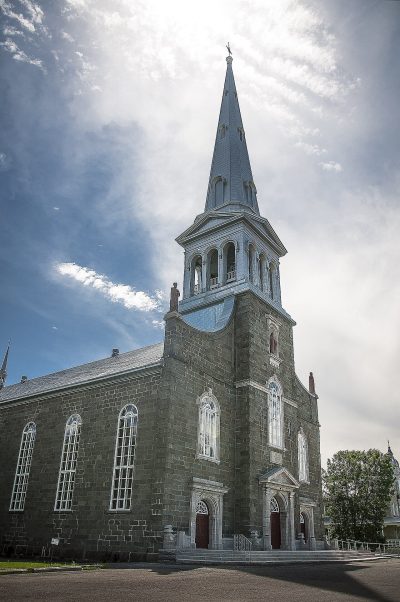
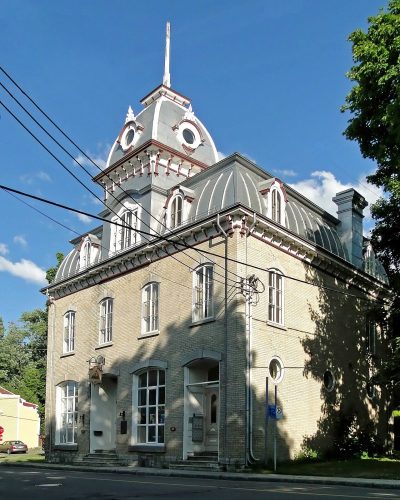
They are 10 places classified by Québec and 4 National Historic Sites. National Historic Sites and Classified Federal Heritage Buildings, Canada’s highest federal recognition. Maison Pâquet is the earliest, from 1750; the latest dates from 1884. Each one opens its own page.
Designations came from 1991 to 1992. Recognized Federal Heritage Buildings, heritage railway stations and lighthouses. They date from 1865 (Fort No.1) to 1912. Each one opens its own page.
Recognized Federal Heritage Building · 1912–1915Armoury10 de l'Arsenal StreetPhoto: Bernard Gagnon · CC BY-SA 3.0 · Commons file
What’s designated
In Lévis, churches and religious buildings lead the list (40%)
Next come forts and military buildings: 3. Leading by designation: Davie Shipyard and Lévis Forts. By kind, the list runs to 6 groups.
Churches and religious buildings8
Forts and military buildings3
Stations, lighthouses and bridges3
Houses3
Public buildings2
Other places1
Grouped by what each register says the place is or was; a converted building counts as what it was built for.
Provincial and local listings
On provincial and local lists in Lévis: 4 places
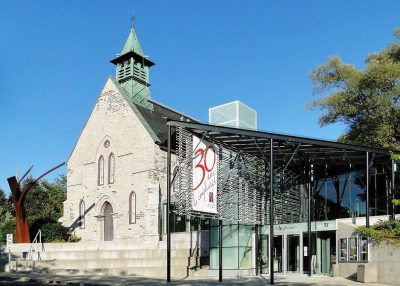
They date from 1848 (L'Anglicane) to 1908. Citations the municipality has made, registered with Québec’s ministry of culture. The first was designated in 1987, the latest in 2001. Each one opens its own page.
Lévis Forts went on the registers first, in 1920. The busiest year was 1977, with 2. 2 have been added since 2011.
Just outside
Just outside Lévis
Places the registers give to the town from within 5 km of its edge, nearest first.
Just outside Lévis: 1
Québec BridgeNational Historic Site · 300 m outside the town
Homes by age
9.1% of Lévis’s homes are from 2016 to 2021 (4.1% is typical)
More of Lévis’s homes were built from 1981 to 2000 than in any other period: 30%. Only 14% of Lévis’s homes predate 1961, against 18% in the typical town. 21% of Lévis’s homes date from 2001 to 2015, well above the typical 15%.
14%
Before 1961
27%
1961–80
30%
1981–2000
21%
2001–15
9.1%
2016–21
LévisTypical town
2021 Census, private dwellings by period of construction (Statistics Canada); the typical town is the middle Canadian town of 2,500 or more.
Born here
2 of Canada’s national historic persons, tied to Lévis
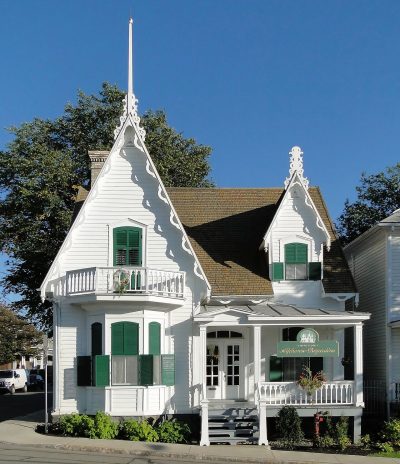
Onésiphore Turgeon reached 95, the longest life here, ending in 1944. There are 54 people born here before 1914 with an article to show for it. The register links Louis-Honoré Fréchette to Maison natale Louis-Fréchette. Alphonse Desjardins follows, at Maison Alphonse-Desjardins. The timeline shows the 20 best known.
Ignace Bourget
Modeste Demers
Jean-Baptiste Thibault
François-Xavier Lemieux
John Costigan
Louis-Honoré Fréchette
Louis-Nazaire Bégin
Louis-Éphrem Olivier
Louis Julien Demers
Pierre Malcom Guay
William P. Anderson
François-Xavier Lemieux
Joseph Boutin Bourassa
Alphonse Desjardins
Joseph-Edmond Roy
Alphonse Bernier
Alfred Pampalon
Pierre-Georges Roy
Joseph-Arthur Bernier
Pierre-Émile Côté
175017751800182518501875190019251950
Louis-Nazaire Bégin1840–1925 · Canadian Catholic cardinal
Louis-Honoré Fréchette1839–1908 · On Canada’s list since 1937 · Linked to Maison natale Louis-Fréchette
Alphonse Desjardins1854–1920 · Person of national historic significance (1971) · Recalled by Maison …
Ignace Bourget1799–1885 · Catholic archbishop
Joseph-Edmond Roy1858–1913 · Canadian politician
William P. Anderson1851–1927 · Engineer/superintendent/Lighthouses
Modeste Demers1809– · Catholic bishop
Louis-Éphrem Olivier1848–1882 · Canadian politician
Everyone born in Lévis → Born before 1914, or named by one of the town’s historic places. Birthplaces from Wikidata, each checked against Wikipedia; national historic persons from Parks Canada’s Directory of Federal Heritage Designations, matched by name and life years.
Towns its size
Lévis has the 4th most of 16 towns its size
Towns of 141,100 to 175,400 residents, by places on the registers.
All told, Lévis has 20 historic places, 14 with the highest designation; Davie Shipyard heads the list. Around Ancien hôtel de ville de Lauzon, 3 of the places of the highest designation lie within 400 m. Only 3 of the 16 towns nearest its size have more historic places.
the years before Confederation account for 10 of the 18 dated places. Its people of the past include Louis-Nazaire Bégin (1840), Louis-Honoré Fréchette (1839) and Alphonse Desjardins (1854). Little of its housing was standing by 1961: 14%, against 18% in the typical town.
How to read these numbers
What this data can and can’t tell you
•
People and events. Persons of national historic significance come with no location; a town gets one only by birthplace (name and both life years agreeing) or by one of its own places that bears the name and whose record tells the story. Events, which can’t be tied, are left out.
•
Protection. A place classified or cited under Québec’s law is protected; National Historic Site status alone protects only what the federal government owns.
•
The grade. This page gives no grade; history doesn’t count toward a Canadian town’s letter.
•
Map points. Pins for federal places come from Wikidata rather than Parks Canada, which gives no points.
•
The federal register. Federal places come from Parks Canada’s directory, which counts National Historic Sites, federal heritage buildings, stations and lighthouses; their statements are the register’s own.
•
The tiers. The highest designations are National Historic Sites, Classified Federal Heritage Buildings and Québec’s classements; then come the other federal designations; then provincial and local listings.
•
Québec’s register. In Québec the ministry of culture publishes its register openly: provincial classements, declared sites and the municipalities’ citations all appear, with their descriptions.
Questions about Lévis’s history
What is the oldest building in Lévis?
By its record, Maison Pâquet, from 1750 (Classified heritage building (Québec)).
Which places in Lévis have the highest designation?
They are Davie Shipyard, Lévis Forts, Joffre Roundhouse (Canadian National), Lévis Railway Station (Intercolonial), Maison Pâquet and Chapelle de procession Sainte-Anne, and 8 more.
How old are the homes in Lévis?
14% of its homes were built before 1961, against 18% in the typical Canadian town.
Contains information licensed under the Open Government Licence – Canada (Parks Canada). Québec register data: Ministère de la Culture et des Communications du Québec, CC BY 4.0.
Sources: Parks Canada, Directory of Federal Heritage Designations · Canadian Register of Historic Places (federal extract) · Répertoire du patrimoine culturel du Québec (MCC, Données Québec) · Wikidata (CC0) for map points, other names and articles · Statistics Canada, 2021 Census (homes by period of construction). Under the Statistics Canada Open Licence.


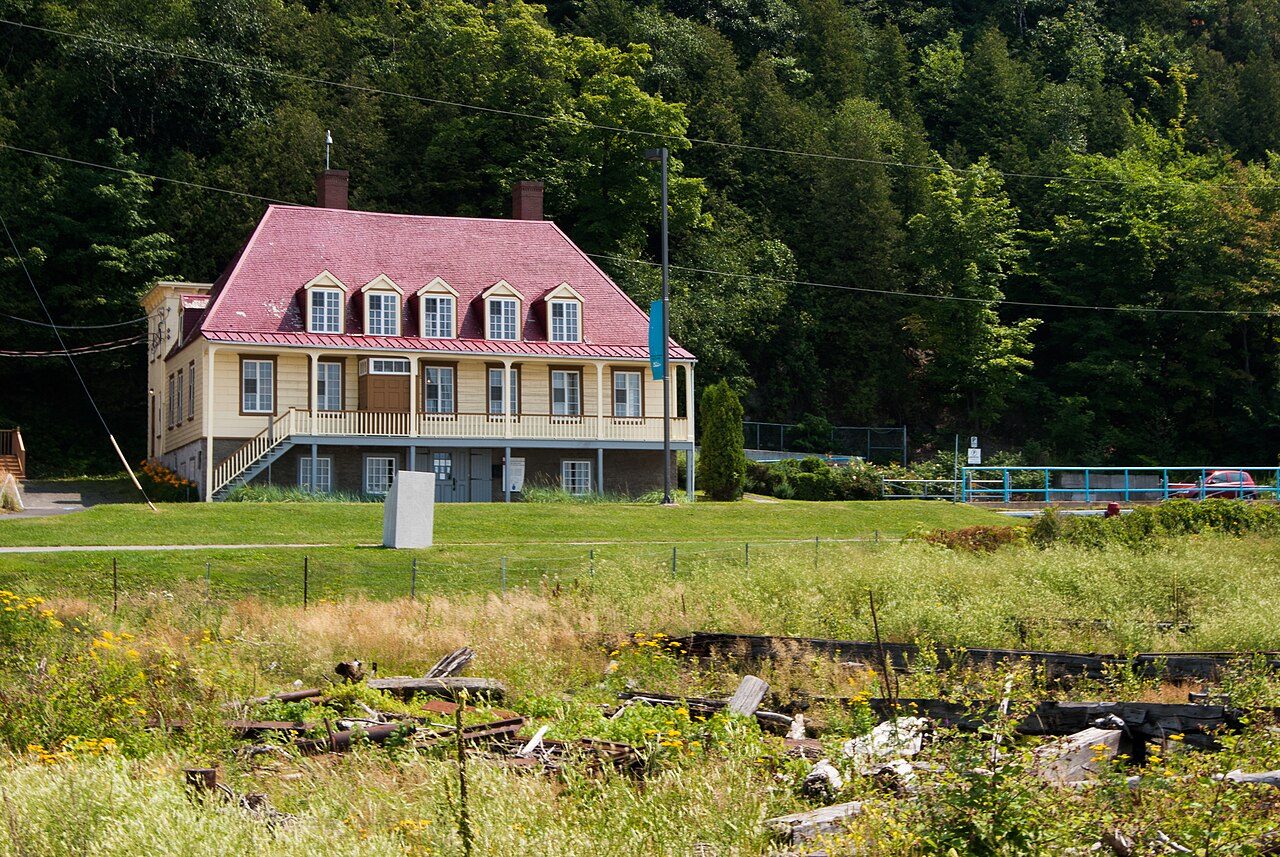


 c. 1830
 c. 1880
 c. 1902
 c. 1910
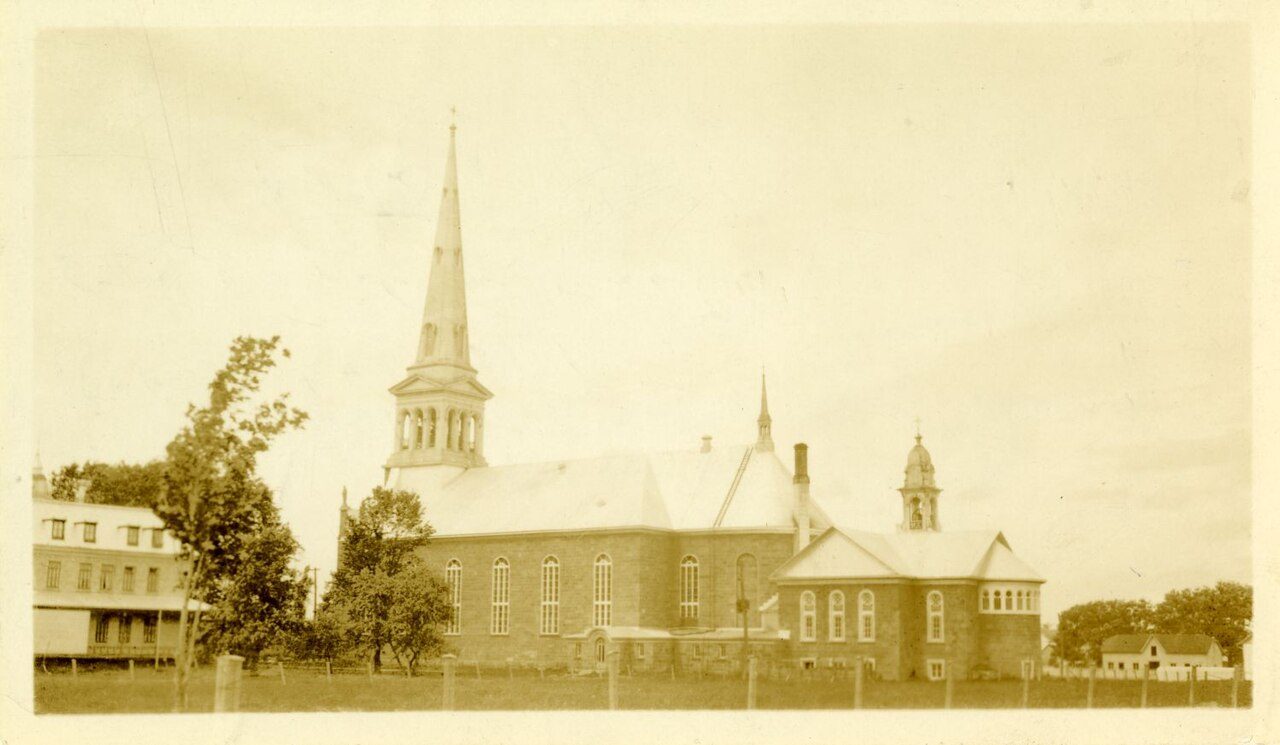 c. 1910
 Top
 Top
 Top
 Top
 Top
 Top
 Top
 Top
 Top
 Top
 Top
 Top
 Top
 Top
 Fed
 Fed
 Local
 Local
 Local


