Canadian National Railway Station, Kelowna, British Columbia · Photo: Machegav · CC BY-SA 3.0
2historic places on the registers
History of Kelowna · Canada’s heritage registers
Canada’s registers list 2 historic places in Kelowna
Counted by designation, there are a Recognized Federal Heritage Building and a heritage railway station. The earliest construction date, 1904, belongs to Brigadier Angle Armoury. Before 1961: just 6.4% of the homes, where most towns have 18%. Kelowna has 0.1 for every 10,000 people, a higher rate than 71% of Canadian towns.
Public domain or CC0, made before 1950, from Wikimedia Commons; old views of places can be drawings, prints or maps of their time. Each credit opens the image’s page.
How it began
Milestones of Kelowna since 1859
A single date stands for Kelowna as a municipality on Wikidata, 1859, and it may be an incorporation rather than a founding. Kelowna was on the railway from 1925.
Every place on the registers inside the town, by its designation.
Other federal designations
Each dot is a place: point at it for the name, tap it for its page.
The 2, by tier
2 Other federal designations
Parks Canada’s Directory of Federal Heritage Designations lists the places the Government of Canada has recognized; outside Québec, provincial and municipal listings come only through Wikidata, and only those with an encyclopedia article get a page.
Points from Wikidata (Parks Canada’s files carry none) and from Québec’s register, as mapped there. One place, placed by its register’s municipality, has no point and isn’t on the map.
Other federal designations
2 other places Canada recognizes in Kelowna
They were designated between 1991 and 1997. The group holds a Recognized Federal Heritage Building and a heritage railway station. Recognized Federal Heritage Buildings, heritage railway stations and lighthouses. Each one opens its own page.
The highest designation, 2 times, within 100 km of Kelowna
The mix: 2 National Historic Sites and 2 provincial or municipal listings. They belong to 3 towns, chiefly Penticton, Central Okanagan and Electoral Area H, Okanagan-Similkameen. All told, 4 places are within 100 km.
NaramataBritish Columbia designated provincial heritage site · 44 km away, in Penticton
SicamousHeritage designation · 44 km away, in Penticton
Similkameen Spirit TrailNational Historic Site · 79 km away, in Electoral Area H, Okanagan-Similkameen
Homes by age
Kelowna is still building: 12% of homes date from 2016 to 2021, against 4.1%
The busiest building years in Kelowna were from 1981 to 2000, which account for 31% of today’s homes. 25% of Kelowna’s homes date from 2001 to 2015, well above the typical 15%. Half of the homes standing in Kelowna today were built before 2001.
6.4%
Before 1961
25%
1961–80
31%
1981–2000
25%
2001–15
12%
2016–21
KelownaTypical town
2021 Census, private dwellings by period of construction (Statistics Canada); the typical town is the middle Canadian town of 2,500 or more.
Canada’s heritage lists give Kelowna 2 historic places. Pre-1961 homes are a small part of its stock: 6.4%, against 18% in the typical town. The rest is about typical: 2 historic places is about usual for its size (the median is 6); and the list grew between 1991 and 1997.
How to read these numbers
What this data can and can’t tell you
•
People and events. Parks Canada’s open file gives its national historic persons no place. A town’s page names one only when the person was born there (matched by name and both life years) or one of its own historic places carries the name and its record speaks of them; national historic events stay off.
•
The federal register. Every federal designation is in Parks Canada’s directory, and the Canadian Register of Historic Places gives most of them a bilingual statement of significance.
•
Map points. Where a federal place sits on the map is Wikidata’s placing; the directory itself has no coordinates.
•
The tiers. Tiers follow the designation: national recognition and classement first, other federal designations next, provincial and local listings last.
•
Protection. Federal recognition isn’t a planning control: buildings the federal government owns follow its heritage policy, while others are protected only by a provincial or municipal designation.
•
The grade. There is no history grade: the page sets out the record and compares it with other towns.
•
Provincial and municipal lists. Provincial and municipal listings here come from Wikidata alone, since the provinces’ own registers can’t be reused; a listing needs an encyclopedia article to get a page.
Questions about Kelowna’s history
How many historic places does Kelowna have on the registers?
The registers list 2 historic places inside Kelowna.
What is the oldest building in Kelowna?
Brigadier Angle Armoury — its record dates it to 1904 (Recognized Federal Heritage Building).
How old are the homes in Kelowna?
Before 1961: 6.4% of its homes; the typical town has 18%.
Why might a heritage building in Kelowna be missing here?
Only federal designations are fully open outside Québec. One more listing in Kelowna is known through Wikidata alone, so it is counted, not paged.
Contains information licensed under the Open Government Licence – Canada (Parks Canada).
Sources: Parks Canada, Directory of Federal Heritage Designations · Canadian Register of Historic Places (federal extract) · Wikidata (CC0) for map points, other names and articles · Statistics Canada, 2021 Census (homes by period of construction). Under the Statistics Canada Open Licence.

 c. 1909
 c. 1909
 c. 1909
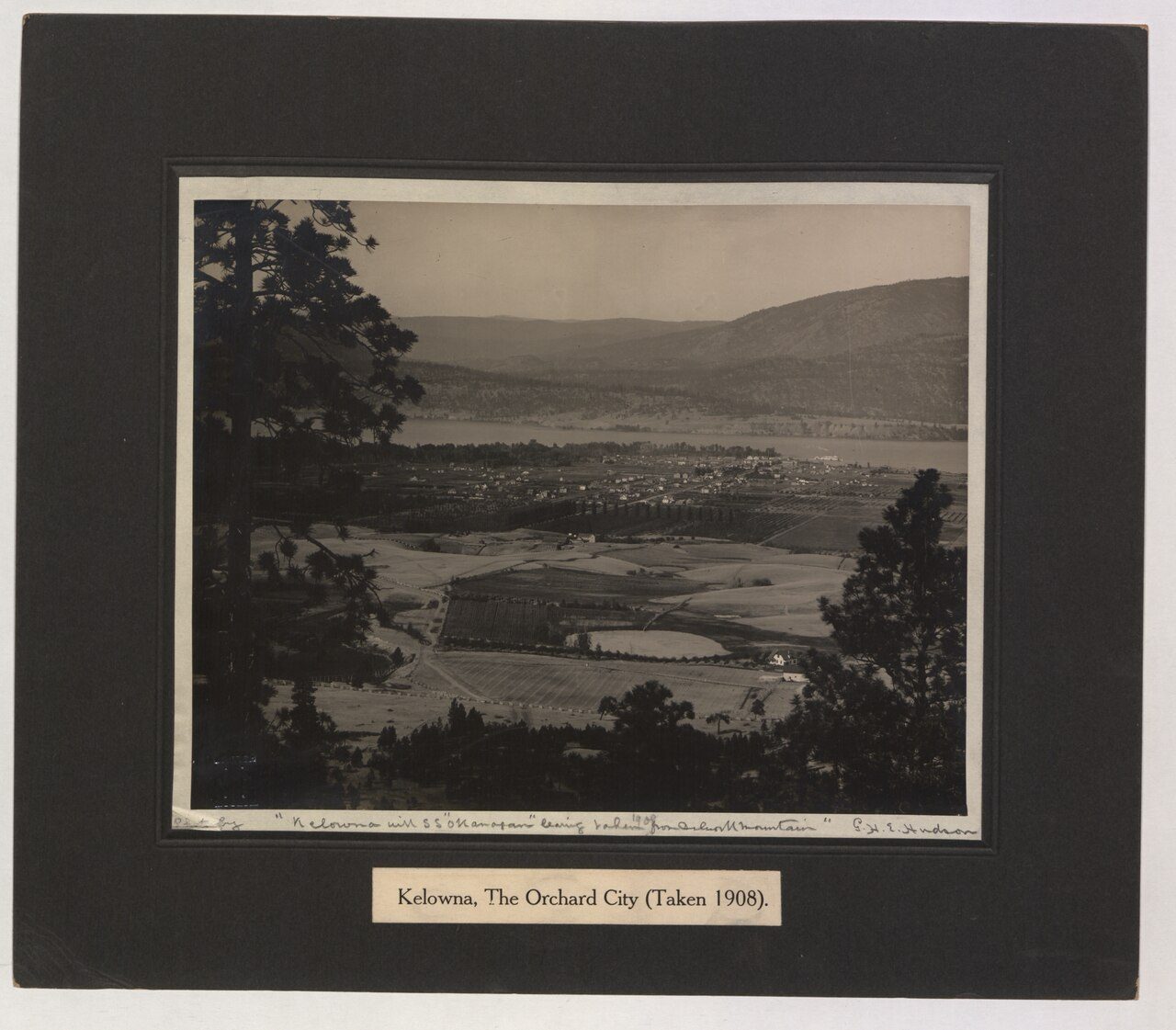 c. 1909
 Fed