Mendon dates to 1813, and 24% of its homes were built before 1940
More historic than 93% of U.S. towns · #202 of 758 in New York. What drives it
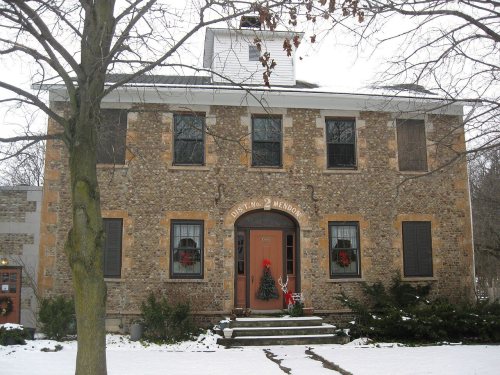
14 places in town are on the National Register, among them two historic districts with 219 buildings between them. Below: maps from 1951 on and the census since 1820.
Founding year: Wikidata. First post office: 1815.The full story ↓
History grade
What drives Mendon’s History grade
On its age, its old homes and the National Register, Mendon is more historic than 93% of U.S. towns, #202 of 758 in New York. All 3 inputs are above most U.S. towns; its National Register listings ranks highest and its age lowest.
A
HistoryA character grade: shown, never part of Mendon’s overall grade.
New York towns list more on the Register than most of the country (a typical New York town has 12.3 per 10,000 residents, the U.S. 2.4), so Mendon’s 261 sits above most of its state (85% of New York towns have fewer) while its 235 historic buildings outnumber those of 94% of U.S. towns.
How sure. Graded on any two of the three inputs instead, the letter would range from A− to A. The pre-1940 share is a Census survey estimate (±4.4 points). Two sources give 1813.
Founding year: Wikidata (other dates in Quick answers). Homes: Census ACS 2020–24. National Register: National Park Service, May 2026 list; each listing counted once (boundary changes and added documentation belong to their listing), and a historic district counts its contributing buildings. How TownRatings grades history →
What stands out about Mendon’s past
Read from the archive, the National Register and the record. The page puts what stands out first.
Lost post offices, old corners, places now gone and burying grounds
Mendon’s post office has been open since 1815. Two other post offices opened and closed inside today’s town.
Mendon
1815–today
Honeoye Falls
1838–today
Mendon Centre
1851–1901
Rochester Junction
1896–1951
18101920today
Hamlets and corners on the map
Dann CornerFord CornerHoneoye FallsMendon CenterMoran CornerRochester JunctionSibleyvilleTomlinson Corners
Gone or out of use
Honeoye Falls AirportairportSchool Number 1schoolSchool Number 10schoolSchool Number 11schoolSchool Number 12schoolSchool Number 13schoolSchool Number 14schoolSchool Number 15schoolSchool Number 16schoolSchool Number 3schoolSchool Number 4schoolSchool Number 6schoolSchool Number 9school
8cemeteries and burying grounds inside Mendon
Honeoye FallsMendonMillerQuakerRochester JunctionSaint Paul of the CrossTaylor RoadTomlinson's Corners
US Post Offices dataset (Blevins & Helbock, CC0). Places and cemeteries from the USGS Geographic Names Information System (2021).
The earliest known inhabitants of the land where the town of Mendon is located were the Seneca people of the Iroquois Confederacy. Totiakton, the native settlement in present-day Mendon, was home to about 4,000 people. In 1687, the town was destroyed by the Marquis de Denonville, the governor of New France, during his expedition against the Seneca. Shortly after the destruction, the surviving natives moved elsewhere. The rest of the Seneca suffered a similar fate when, in 1779, Major General John Sullivan was ordered by George Washington to wage war against Loyalists and four nations of the Iroquois Confederacy who had sided with the British in the Revolutionary War. The Sullivan Expedition pushed the tribes to the British-controlled Niagara Frontier, the western edge of New York.
Passages that mention Mendon, cut from the printed page as they were published.
A centurial history of the Mendon association of Congregational ministers, with the Centennial address, delivered at Franklin, Mass., Nov. 19, l851, and biographical sketches of the members and licentiates1853 · page 27Read the page →
Read the text
As the services of this day show, this Association of ministers was organized on the 8th of November, 1751, old style, or on the 19th according to present computation. It was formed in the second parish of Mendon, now called Milford, at the house of Rev. Amariah Frost, pastor of the church in that parish.
Text read by machine from the scan; it may contain errors.
A centurial history of the Mendon association of Congregational ministers, with the Centennial address, delivered at Franklin, Mass., Nov. 19, l851, and biographical sketches of the members and licentiates1853 · page 28Read the page →
Read the text
The first church of Mendon was indeed formed in 1669, * See Christian Observatory, vol. iii., p. 389. The oldest known regular association there given was formed " at Charlestown, N. E., October 13, 1G90," and met at the College in Cambridge on " Monday, at nine or ten o'clock in the morning, once in six weeks, or oftener if need shall be." A semi-monthly meeting oif the ministers of Boston and vicinity, at the house of the members in succession, was commenced in 1635.
Text read by machine from the scan; it may contain errors.
The west half of the town of Mendon is divided Into tm-ts bearing the names of their oriijinal proprietors, Tlie Ferris tract lies in the northwest, the others io the southwest. Andrew Youns, mentioned in the history of Honeoye Falls, was the first permanent settler on tlie Ball tract outside the village. On the Porter trac4, just nitrth, a man uaned Moore located in l.-'.'i> upon the place now owned by Edward Slielters. lie soon cleared a small piece of cround around his log habitation, and after a few years mov>-d away. D-iniel Shaw settled in the vicinity, upon a large farm now owned in part by John Fish. He acquirLMJ wealth,
Text read by machine from the scan; it may contain errors.
The town of Mendon wa.s orginized in 1S13, and the first town meeting was held on the fits-t Tuesday in April of that year, at the house of Tlmmas Ewer, and adjourned to his barn, now owned by George Treat, at Treat's Coruers.
Text read by machine from the scan; it may contain errors.
Scans and text from the Internet Archive. Books published in 1930 or earlier, which are in the public domain.
Timeline
Mendon, 1803 to 1951
Woven from the archive, old maps, post office records, the National Register and the people born here.
In 1813, according to Wikidata. Mendon’s post office opened in 1815, and the census of 1820 counted 2,012 people here.
How does Mendon rank for history?
Mendon is more historic than 93% of U.S. towns, #202 of 758 in New York. The History grade combines the town’s founding era, the share of homes built before 1940 and its National Register listings. It’s a character grade, so it isn’t part of the overall grade. How it works.
What is on the National Register in Mendon?
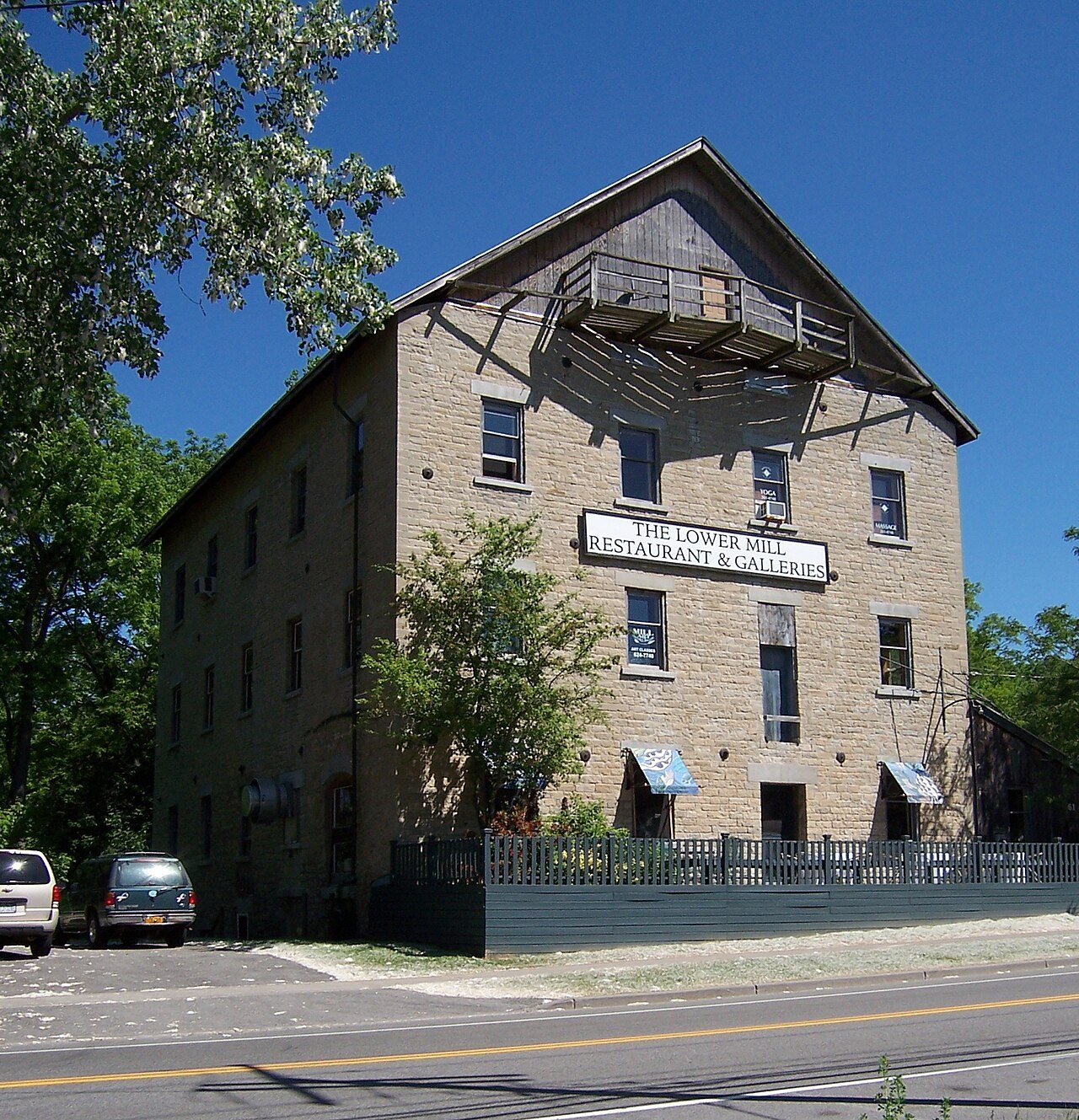
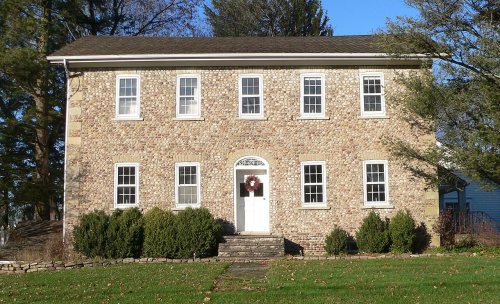
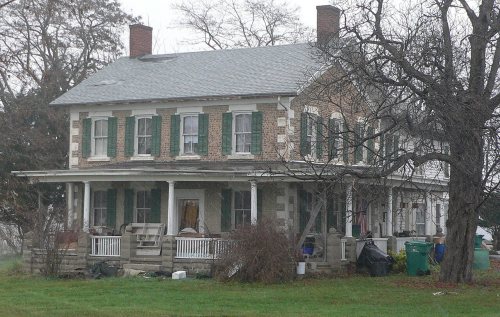
14 listings: 12 buildings, among them the Lower Mill (listed 1973, the first), and 2 historic districts, the Honeoye Falls Village Historic District and the Miller-Horton-Barben Farm, with 219 contributing buildings. 235 historic buildings in all.
How old are the homes in Mendon?
24% of Mendon’s homes were built before 1940 (Census estimate, ±4.4 points), against a typical 27% for a New York town; the median home was built in 1978.
Founding dates: Wikidata, Wikipedia, the U.S. post office records of Blevins & Helbock (CC0) and the Census. Homes by year built: Census ACS 2020–24. National Register of Historic Places: National Park Service (list of May 22, 2026). Old photos, postcards and papers: Wikimedia Commons, the Library of Congress and other public archives, credited on each item’s page. Maps: U.S. Geological Survey historical topographic maps (via Esri) and Sanborn fire-insurance maps (Library of Congress). History text and census tables: Wikipedia (CC BY-SA 4.0). Places that used to be: USGS Geographic Names Information System (2021).
From Wikimedia Commons (12), Wikidata (2), the National Register of Historic Places (14), Wikipedia, Wikidata and Wikipedia for famous people, U.S. Geological Survey historical maps, U.S. Census counts (via Wikipedia), the US Post Offices dataset (Blevins & Helbock), the USGS Geographic Names Information System and old county and town histories (Internet Archive). Archive images are copied here with their credits and licenses, shown on each photo’s page. Refreshed monthly.







 2024
 2024
 2024
 2024
 2023
 2012
 2012
 2010
 2009
 2009
 2009
 2000

