Lima dates to 1789, and 32% of its homes were built before 1940
More historic than 95% of U.S. towns · #150 of 758 in New York. What drives it
33 places in town are on the National Register, among them a historic district with 25 buildings. Below: 2 old photos and papers, maps from 1884 on, and the census since 1820.
Founding year: Wikipedia. First post office: 1807.The full story ↓
History grade
What drives Lima’s History grade
On its age, its old homes and the National Register, Lima is more historic than 95% of U.S. towns, #150 of 758 in New York. All 3 inputs are above most U.S. towns; its National Register listings ranks highest and its age lowest.
A
HistoryA character grade: shown, never part of Lima’s overall grade.
New York towns list more on the Register than most of the country (a typical New York town has 12.3 per 10,000 residents, the U.S. 2.4), so Lima’s 277 sits above most of its state (86% of New York towns have fewer) while its 114 historic buildings outnumber those of 90% of U.S. towns.
How sure. Graded on any two of the three inputs instead, the letter would still be A. The pre-1940 share is a Census survey estimate (±6.0 points). Two sources give 1789.
Founding year: Wikipedia (other dates in Quick answers). Homes: Census ACS 2020–24. National Register: National Park Service, May 2026 list; each listing counted once (boundary changes and added documentation belong to their listing), and a historic district counts its contributing buildings. How TownRatings grades history →
What stands out about Lima’s past
Read from the archive, the National Register and the record. The page puts what stands out first.
The town of Lima was organized in 1789 (before Livingston County was established) as the "Town of Charleston", but was renamed "Lima" in 1808 to reflect that many residents had come from Old Lyme, Connecticut, and to avoid confusion with the town of Charleston in Montgomery County, New York.
The Genesee Wesleyan Seminary (1830) / Genesee College (1849) in Lima village was one of the first co-educational schools in the country when it first opened in 1822. Eventually, determined by a Methodist-Episcopal convention in 1870, the college was shut in favor of the newly developed Syracuse University (1871), over the protests of the residents of Lima.
Nothing in the archives for these yearsWeddings on Main Street, storms, parades, school pictures, the old store. If it’s in your family album, it belongs here.
Every edition of the U.S. Geological Survey’s map of Lima. Tap a year, or press play to watch the town change.
1901Honeoye sheet · 1:62,500
U.S. Geological Survey historical topographic maps (public domain), via Esri’s collection of the scans. The red ring marks the center of Lima.
Every building
Lima, building by building, 1884–1911
Fire insurance maps drew every building, what it was made of and what it was used for, so insurers could price the risk of fire. Pick a year, then a sheet.
Lost post offices, old corners, places now gone and burying grounds
Lima’s post office has been open since 1808. Another post office, Charleston, opened and closed inside today’s town.
Charleston
1807–1808
Lima
1808–today
18001910today
Hamlets and corners on the map
Fisher Mobile Home ParkHarper Park Mobile Home Park LimaIdahoLivingston Mobile Home ParkSouth Lima
Gone or out of use
American HotelbuildingGenesee Junior CollegeschoolLima High SchoolschoolRochester QuarrymineSaint Rose Parochial SchoolschoolSchool Number 1schoolSchool Number 2schoolSchool Number 3schoolSchool Number 4schoolSchool Number 6schoolSchool Number 7schoolSchool Number 8school
6cemeteries and burying grounds inside Lima
Chet Dalton FarmNew MethodistOak RidgeOld MethodistPresbyterian ChurchSaint Rose
US Post Offices dataset (Blevins & Helbock, CC0). Places and cemeteries from the USGS Geographic Names Information System (2021).
Stories next door
History across the town line
Each neighbor’s History grade, on the same three inputs.
In 1789, according to Wikipedia’s history of the town. Lima’s post office opened in 1807, and the census of 1820 counted 1,963 people here.
How does Lima rank for history?
Lima is more historic than 95% of U.S. towns, #150 of 758 in New York. The History grade combines the town’s founding era, the share of homes built before 1940 and its National Register listings. It’s a character grade, so it isn’t part of the overall grade. How it works.
What is on the National Register in Lima?
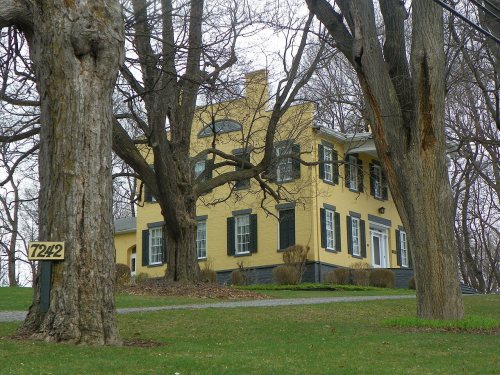
33 listings: 32 buildings, among them the Genesee Wesleyan Seminary and Genesee College Hall (listed 1976, the first), and 1 historic district, the Lima Village Historic District, with 25 contributing buildings. 114 historic buildings in all.
How old are the homes in Lima?
32% of Lima’s homes were built before 1940 (Census estimate, ±6.0 points), against a typical 27% for a New York town; the median home was built in 1973.
Founding dates: Wikidata, Wikipedia, the U.S. post office records of Blevins & Helbock (CC0) and the Census. Homes by year built: Census ACS 2020–24. National Register of Historic Places: National Park Service (list of May 22, 2026). Old photos, postcards and papers: Wikimedia Commons, the Library of Congress and other public archives, credited on each item’s page. Maps: U.S. Geological Survey historical topographic maps (via Esri) and Sanborn fire-insurance maps (Library of Congress). History text and census tables: Wikipedia (CC BY-SA 4.0). Places that used to be: USGS Geographic Names Information System (2021).
From Wikimedia Commons (6), the Library of Congress (1), Wikidata (1), the National Register of Historic Places (33), Wikipedia, Wikidata and Wikipedia for famous people, U.S. Geological Survey historical maps, U.S. Census counts (via Wikipedia), the US Post Offices dataset (Blevins & Helbock), the USGS Geographic Names Information System and Sanborn fire insurance maps (Library of Congress). Archive images are copied here with their credits and licenses, shown on each photo’s page. Refreshed monthly.




 2025
 2025
 2025
 2025
 2023


