Greenburgh dates to 1788, and 22% of its homes were built before 1940
More historic than 89% of U.S. towns · #278 of 758 in New York. What drives it
40 places in town are on the National Register, among them 7 National Historic Landmarks and five historic districts with 297 buildings between them. Below: 3 old photos and papers, maps from 1892 on, and the census since 1790.
Founding year: Wikidata. First post office: 1804.The full story ↓
History grade
What drives Greenburgh’s History grade
On its age, its old homes and the National Register, Greenburgh is more historic than 89% of U.S. towns, #278 of 758 in New York. All 3 inputs are above most U.S. towns; its National Register listings ranks highest and its share of homes from before 1940 lowest.
A
HistoryA character grade: shown, never part of Greenburgh’s overall grade.
New York towns list more on the Register than most of the country (a typical New York town has 12.3 per 10,000 residents, the U.S. 2.4), so Greenburgh’s 37.9 sits near the middle of its state (65% of New York towns have fewer) while its 356 historic buildings outnumber those of 96% of U.S. towns.
NoteThe founding year comes from Wikidata alone; no second source gives 1788.
How sure. Graded on any two of the three inputs instead, the letter would range from A− to A. The pre-1940 share (±1.8 points) is firm at this size.
Founding year: Wikidata (other dates in Quick answers). Homes: Census ACS 2020–24. National Register: National Park Service, May 2026 list; each listing counted once (boundary changes and added documentation belong to their listing), and a historic district counts its contributing buildings. How TownRatings grades history →
What stands out about Greenburgh’s past
Read from the archive, the National Register and the record. The page puts what stands out first.
National Park Service, National Register of Historic Places. Photos from Wikimedia Commons, credited on each place’s page.
Places that used to be
Lost post offices, old corners, places now gone and burying grounds
Greenburgh had its own post office from 1873 to 1875. 10 other post offices opened and closed inside today’s town.
Greensburg
1804–1832
Dobbs Ferry
1828–today
Tarrytown
1832–today
Greensburgh
1834–1838
Moringville
1847–1860
Hastings Upon Hudson
1849–1913
Abbotsford
1851–1852
Dearman's
1851–1854
Irvington
1854–today
Harts Corners
1864–1872
18001910today
Hamlets and corners on the map
ArdsleyArdsley-on-HudsonChaunceyCotswoldDobbs FerryEast IrvingtonEastviewElmsfordFairviewGlenvilleGreenvilleHartsdaleHastings-on-HudsonIrvingtonKnollwood ManorMount HopeTarrytownUniontownWoodlandsWorthingtonYellowstone Park
Gone or out of use
Elmsford Drive-InlocaleLoeb Memorial HomebuildingMarymount CollegeschoolMoringville Post Officepost officeSaint Matthew SchoolschoolWorthington Stationlocale
Greenburgh developed along the Hudson River, long the main transportation route. It was settled by northern Europeans in its early years, primarily of Dutch and English descent. Residents were active during the American Revolutionary War.
The Romer-Van Tassel House served as the first town hall, from 1793 into the early 19th century. It was added to the National Register of Historic Places in 1994. Other locations on the National Register are the Church of St. Joseph of Arimathea and Odell House. The Spanish American War Monument to the 71st Infantry Regiment in Mount Hope Cemetery was added to the National Register of Historic Places in 2011.
Passages that mention Greenburgh, cut from the printed page as they were published.
History of Westchester County, New York, from its earliest settlement to the year 19001900 · page 611Read the page →
Read the text
Ferry (1873), Mount Kisco (1875), North Tarrytown (1875), and Hastings (1879). It is noteworthy that four of these places belonged to the Town of Greenburgh, while a fifth was located on its borders. Population of Westchester County in 1880: towns POPULATION Bedford 3>731 Mount Kisco Village 728
Text read by machine from the scan; it may contain errors.
History of Westchester County, New York, from its earliest settlement to the year 19001900 · page 459Read the page →
Read the text
mention was a notable running fight between Captain Hopkins, of the American Light Horse, and Emmerick, with a much larger body of British cavalry (about 500 strong). This happened on the borders of the Town of Greenburgh. Hopkins was lying in ambuscade in the vicinity of Youngs's House, hoping to surprise a party of the enemy under Colonel Bearmore, when Emmerick came up. A spirited encounter followed, in which numbers were killed and wounded on both sides. According to Bolton, the British killed were
Text read by machine from the scan; it may contain errors.
History of Westchester county, New York, including Morrisania, Kings Bridge, and West Farms, which have been annexed to New York city1886 · page 738Read the page →
Read the text
cemetery was incorporated November 20, 1854. A tract of thirty-six acres was purchased, bounded on the east by Broadway and on the south by the highway leading from Broadway to Greenburgh. About 1862, the affairs of the company having fallen into disorder, its creditors were induced, through the eflforts of Wm. H. Albro, Esq., to exchange their claims for cemetery lots of corresponding value.
Text read by machine from the scan; it may contain errors.
Scans and text from the Internet Archive. Books published in 1930 or earlier, which are in the public domain.
Timeline
Greenburgh, 1762 to 1975
Woven from the archive, old maps, post office records, the National Register and the people born here.
Nothing in the archives for these yearsWeddings on Main Street, storms, parades, school pictures, the old store. If it’s in your family album, it belongs here.
In 1788, according to Wikidata. Greenburgh’s post office opened in 1804, and the first U.S. census counted 1,450 people here in 1790.
How does Greenburgh rank for history?
Greenburgh is more historic than 89% of U.S. towns, #278 of 758 in New York. The History grade combines the town’s founding era, the share of homes built before 1940 and its National Register listings. It’s a character grade, so it isn’t part of the overall grade. How it works.
What is on the National Register in Greenburgh?
40 listings, 7 of them National Historic Landmarks: 31 buildings, among them the Sunnyside (a National Historic Landmark since 1962), 5 historic districts with 297 contributing buildings, 2 sites, 1 structure, and 1 object. 356 historic buildings in all.
How old are the homes in Greenburgh?
22% of Greenburgh’s homes were built before 1940 (Census estimate, ±1.8 points), against a typical 27% for a New York town; the median home was built in 1959.
Founding dates: Wikidata, Wikipedia, the U.S. post office records of Blevins & Helbock (CC0) and the Census. Homes by year built: Census ACS 2020–24. National Register of Historic Places: National Park Service (list of May 22, 2026). Old photos, postcards and papers: Wikimedia Commons, the Library of Congress and other public archives, credited on each item’s page. Maps: U.S. Geological Survey historical topographic maps (via Esri) and Sanborn fire-insurance maps (Library of Congress). History text and census tables: Wikipedia (CC BY-SA 4.0). Places that used to be: USGS Geographic Names Information System (2021).
From Wikimedia Commons (6), the National Register of Historic Places (40), Wikipedia, Wikidata and Wikipedia for famous people, U.S. Geological Survey historical maps, U.S. Census counts (via Wikipedia), the US Post Offices dataset (Blevins & Helbock), the USGS Geographic Names Information System and old county and town histories (Internet Archive). Archive images are copied here with their credits and licenses, shown on each photo’s page. Refreshed monthly.


 ★ Landmark
 ★ Landmark
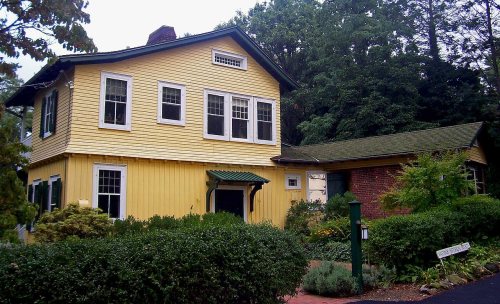 ★ Landmark
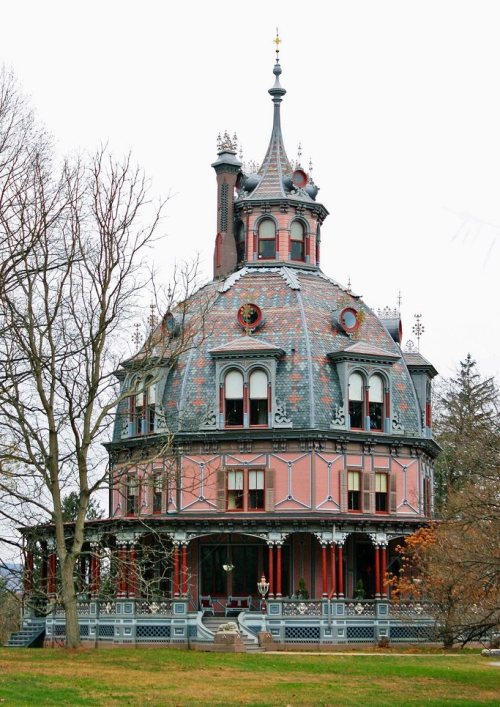 ★ Landmark
 ★ Landmark
 ★ Landmark


 2012
 2007
 2004


