Gardiner dates to 1853, and 14% of its homes were built before 1940
More historic than 62% of U.S. towns · #585 of 758 in New York. What drives it
14 places in town are on the National Register, among them four historic districts with 23 buildings between them. Below: 8 old photos and papers, maps from 1903 on, and the census since 1860.
On its age, its old homes and the National Register, Gardiner is more historic than 62% of U.S. towns, #585 of 758 in New York. Its National Register listings hold the grade up; its age pulls it down.
B
HistoryA character grade: shown, never part of Gardiner’s overall grade.
New York towns list more on the Register than most of the country (a typical New York town has 12.3 per 10,000 residents, the U.S. 2.4), so Gardiner’s 72.6 sits above most of its state (72% of New York towns have fewer) while its 41 historic buildings outnumber those of 84% of U.S. towns.
How sure. Graded on any two of the three inputs instead, the letter would range from C+ to A−. The pre-1940 share is a Census survey estimate (±5.8 points). Two sources give 1853.
Founding year: Wikidata (other dates in Quick answers). Homes: Census ACS 2020–24. National Register: National Park Service, May 2026 list; each listing counted once (boundary changes and added documentation belong to their listing), and a historic district counts its contributing buildings. How TownRatings grades history →
What stands out about Gardiner’s past
Read from the archive, the National Register and the record. The page puts what stands out first.
Lost post offices, old corners, places now gone and burying grounds
Gardiner’s post office has been open since 1872. Seven other post offices opened and closed inside today’s town.
Libertyville
1826–1905
Tuthill
1829–1877
Gardiner
1872–today
Forest Glen
1882–1930
Minnewaska
1882–1947
Rutsonville
1888–1918
Ganahgote
1900–1914
Lake Minnewaska
1947–1957
18201920today
Hamlets and corners on the map
Benton CornersDeerhaven Mobile Home ParkForest GlenIreland CornersJenkinstownLake MinnewaskaLibertyvilleRutsonvilleThober Mobile Home ParkTuthillTuthilltownWallkill Camp
Gone or out of use
District School Number 7school
1cemetery inside Gardiner
Dubois
US Post Offices dataset (Blevins & Helbock, CC0). Places and cemeteries from the USGS Geographic Names Information System (2021).
People over time
Gardiner, census by census
Lost two-thirds of its people between 1910 and 1930, then grew 5-fold.
17 censuses, 1860–2020.
U.S. Census Bureau decennial counts, from the census table on Gardiner’s Wikipedia page.
On the National Register
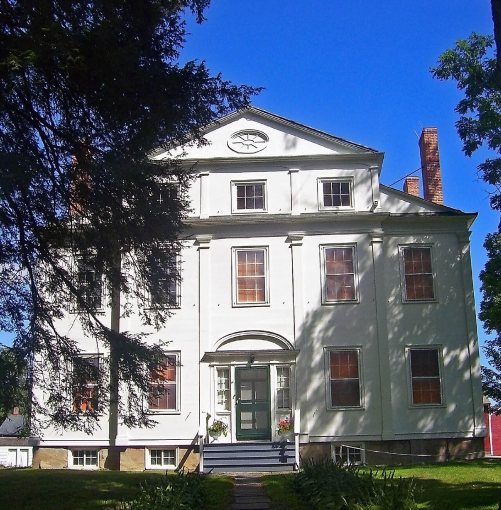
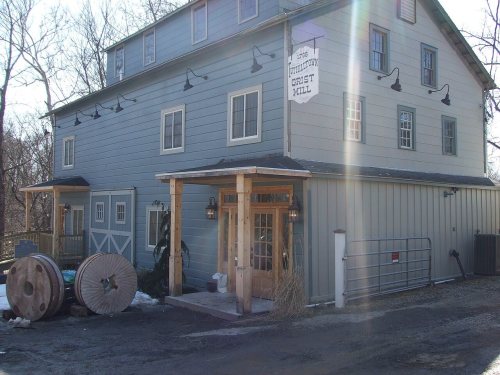
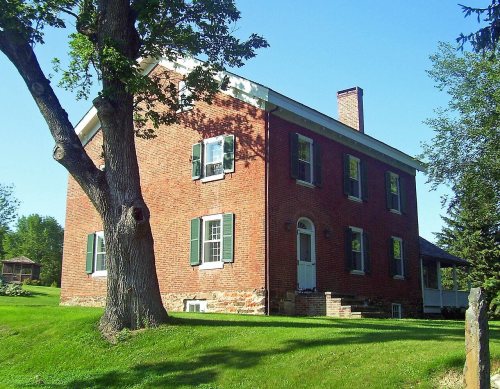
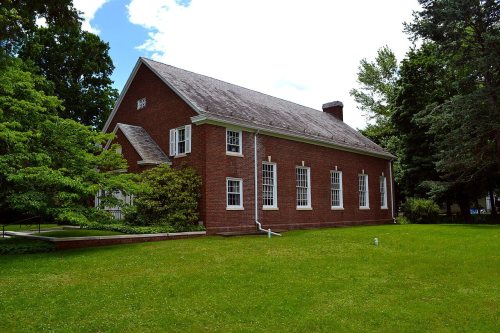
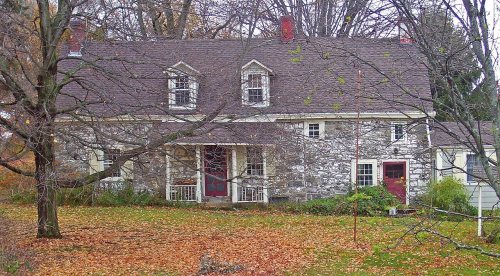
14 historic places in Gardiner
The country’s official list of buildings and places worth saving.
The first settlers in the region were Huguenots from France. Gardiner was created from parts of New Paltz, Rochester, and Denning by an act of the New York State Legislature on April 2, 1853. The first town meeting was on May 17, 1853. It was named for Lieutenant Governor Addison Gardiner. In 1925, a large fire destroyed a large part of Gardiner village.
The Wallkill Valley Rail Trail begins in southern Gardiner and runs along the abandoned Wallkill Valley Railroad rail corridor to New Paltz. Majestic Park is off Farmer's Turnpike, and features a disc golf course, skate park, playground, gazebo, and covered picnic area.
Passages that mention Gardiner, cut from the printed page as they were published.
History of Gardiner, Pittston and West Gardiner, with a sketch of the Kennebec Indians, & New Plymouth purchase, comprising historical matter from 1602 to 18521852 · page 46Read the page →
Read the text
In December, 1754, f " the Company granted to Dr. Gardiner the falls and part of the land forming the present town of Gardiner, not as a gift as they had offered it the previous year to strangers, but as a portion of what he would be entitled to in the future divisions of the Company, and trusting to his determined purpose, these grants were made Avithout the usual restrictions or limitations ; and so well did Dr.
Text read by machine from the scan; it may contain errors.
doin to Hallowell, and until the 17th of February, 1803, when another act was passed incorporating all that part of Pittston lying on the west side of the Kennebec River as the town of Gardiner, the history of Pittston is our histoiy. The greater part of Dr. Gardiner's property descended to his son, William, and at his death in 1787 to his grandson, Robert Hallowell, who was also the grandson of Benjamin Hallowell, for whom our neighboring town of Hallowell was
Text read by machine from the scan; it may contain errors.
The first schoolhouse in Gardiner was a rude wooden building of one room, without lath, plaster, or paint — rough inside and out. This was situated on Water Street, near where the brick gristmill now stands. Previous to the erection of this building a school had been kept by a man named Hoogs in the southeast lower room of Doctor Gardiner's "Great House." In 1803, when Gardiner was incorporated, the only public school building within the present city limits
Text read by machine from the scan; it may contain errors.
History of Gardiner, Pittston and West Gardiner, with a sketch of the Kennebec Indians, & New Plymouth purchase, comprising historical matter from 1602 to 18521852 · page 196Read the page →
Read the text
*' Sect. 3. And be it further enacted, that the inhabitants of said Town of Gardiner, and the non-re&ident proprietors of real or other estate therein, shall pay all arrears of taxes, which have been legally assessed upon them, by the Town of Pittston prior to the passing of this Act ; and in like manner shall they pay an equal proportion of all debts now due and oAving fi-om the said Town of Pittston, and shall also be entitled to receive an equal dividend of all debts or moneys, now due to said Pittston, from
Text read by machine from the scan; it may contain errors.
Scans and text from the Internet Archive. Books published in 1930 or earlier, which are in the public domain.
Timeline
Gardiner, 1742 to 2010
Woven from the archive, old maps, post office records, the National Register and the people born here.
Nothing in the archives for these yearsWeddings on Main Street, storms, parades, school pictures, the old store. If it’s in your family album, it belongs here.
In 1853, according to Wikidata. Gardiner’s post office opened in 1826, and the census of 1860 counted 2,096 people here.
How does Gardiner rank for history?
Gardiner is more historic than 62% of U.S. towns, #585 of 758 in New York. The History grade combines the town’s founding era, the share of homes built before 1940 and its National Register listings. It’s a character grade, so it isn’t part of the overall grade. How it works.
What is on the National Register in Gardiner?
14 listings: 10 buildings and 4 historic districts with 23 contributing buildings. 41 historic buildings in all.
How old are the homes in Gardiner?
14% of Gardiner’s homes were built before 1940 (Census estimate, ±5.8 points), against a typical 27% for a New York town; the median home was built in 1977.
Founding dates: Wikidata, Wikipedia, the U.S. post office records of Blevins & Helbock (CC0) and the Census. Homes by year built: Census ACS 2020–24. National Register of Historic Places: National Park Service (list of May 22, 2026). Old photos, postcards and papers: Wikimedia Commons, the Library of Congress and other public archives, credited on each item’s page. Maps: U.S. Geological Survey historical topographic maps (via Esri) and Sanborn fire-insurance maps (Library of Congress). History text and census tables: Wikipedia (CC BY-SA 4.0). Places that used to be: USGS Geographic Names Information System (2021).
From Wikimedia Commons (17), Wikidata (1), the National Register of Historic Places (14), Wikipedia, Wikidata and Wikipedia for famous people, U.S. Geological Survey historical maps, U.S. Census counts (via Wikipedia), the US Post Offices dataset (Blevins & Helbock), the USGS Geographic Names Information System, Sanborn fire insurance maps (Library of Congress) and old county and town histories (Internet Archive). Archive images are copied here with their credits and licenses, shown on each photo’s page. Refreshed monthly.






 1933
 1933
 1933
 1933
 1933
 1933
 1933
 2007
 2007
 2007
 2007
 2007
 2007
 2006
 2006
 2006


