Babylon’s post office opened in 1830, and 6 of its places are on the National Register
More historic than 62% of U.S. towns · #586 of 758 in New York. What drives it
Most of Babylon was built recently: 9% of its homes predate 1940 and the median home dates from 1963. 6 places in town are on the National Register, among them two historic districts with 12 buildings between them. Below: 1 old photo or paper, maps from 1885 on, and the census since 1880.
The Babylon post office opened in 1830, the earliest record of the town by name. Seven smaller post offices, Huntington South (1802), Breslau (1870) and West Deer Park (1875), opened inside today’s town and later closed.
First census: 4,739 in 18802020 census: 218,223196 years
How historic is Babylon?
B
More historic than 62% of U.S. towns, on its age, its old homes and the National Register.
Founding year: the first Babylon post office (Blevins & Helbock, CC0).The full story ↓
History grade
What drives Babylon’s History grade
On its age, its old homes and the National Register, Babylon is more historic than 62% of U.S. towns, #586 of 758 in New York. Its age holds the grade up; its share of homes from before 1940 pulls it down.
B
HistoryA character grade: shown, never part of Babylon’s overall grade.
Among the 400 U.S. cities of 100,000 or more, Babylon ranks #203 on History.
New York towns list more on the Register than most of the country (a typical New York town has 12.3 per 10,000 residents, the U.S. 2.4), so Babylon’s 0.8 sits below most of its state (21% of New York towns have fewer) while its 17 historic buildings outnumber those of 79% of U.S. towns.
How sure. Graded on any two of the three inputs instead, the letter would range from B− to B+. The pre-1940 share (±0.9 points) is firm at this size. The founding year is the first post office, not a stated founding date.
Founding year: the first post office (other dates in Quick answers). Homes: Census ACS 2020–24. National Register: National Park Service, May 2026 list; each listing counted once (boundary changes and added documentation belong to their listing), and a historic district counts its contributing buildings. How TownRatings grades history →
What stands out about Babylon’s past
Read from the archive, the National Register and the record. The page puts what stands out first.
Lost post offices, old corners, places now gone and burying grounds
Babylon’s post office has been open since 1830. Seven other post offices opened and closed inside today’s town.
Huntington South
1802–1830
Babylon
1830–today
Amityville
1850–today
Deer Park
1851–today
Breslau
1870–1891
West Deer Park
1875–1888
Wyandance
1888–1903
Lindenhurst
1891–today
Oakbeach
1895–1958
Pinelawn
1897–1929
18001910today
Hamlets and corners on the map
Amity HarborAmityvilleCopiagueCopiague HarborDeer ParkEast FarmingdaleFrontier ParkGildersleeve Park For Mobile HomesGilgo BeachLindenhurstMaywoodNorth AmityvilleNorth BabylonNorth LindenhurstOak BeachWest BabylonWest Gilgo BeachWheatley HeightsWyandanch
Gone or out of use
Amityville Union Free SchoolschoolBethel ChurchchurchBrunswick Hospital CenterhospitalDeer Park State HospitalhospitalDistrict Number 7 Union Free SchoolschoolFarmingdale Army Air FieldmilitaryGilgo Life Saving StationlocaleJohnny All Weather Drive-InlocaleJones Beach Life Boat StationlocaleNike Site NY-24CmilitaryNike Site NY-24LmilitaryNorth Babylon SchoolschoolOak Island Life Saving StationlocaleSaint Johns ChurchchurchTemple SinaichurchUnion ChapelchurchWyandanch SchoolschoolZahns Airportairport
23cemeteries and burying grounds inside Babylon
AmityvilleBabylonBeth MosesBreslauBrewster Burial GroundsBrewsterCatholicCemetery of the ResurrectionCemetery of the ResurrectionChichesterGreen Bunn Burial GroundsLong Island NationalMount AraratNew MontefioreNorth BabylonOld TownPaynePinelawnPinelawn Memorial Park and Garden MausoleumsSaint CharlesSaint John's CatholicTrinityWellwood
See all 23
Amityville Cemetery · Babylon Cemetery · Beth Moses Cemetery · Breslau Cemetery · Brewster Burial Grounds · Brewster Cemetery · Catholic Cemetery · Cemetery of the Resurrection · Cemetery of the Resurrection · Chichester Cemetery · Green Bunn Burial Grounds · Long Island National Cemetery · Mount Ararat Cemetery · New Montefiore Cemetery · North Babylon Cemetery · Old Town Cemetery · Payne Cemetery · Pinelawn Cemetery · Pinelawn Memorial Park and Garden Mausoleums · Saint Charles Cemetery · Saint John's Catholic Cemetery · Trinity Cemetery · Wellwood Cemetery
US Post Offices dataset (Blevins & Helbock, CC0). Places and cemeteries from the USGS Geographic Names Information System (2021).
Help out
Start Babylon’s collection
The first neighbors to add old photos shape how Babylon’s history is told.
Decades since 1900 with photos
00s10s20s30s40s50s60s70s80s90s
0 of 10 decades. The empty ones are waiting for someone’s album.
Fire insurance maps drew every building, what it was made of and what it was used for, so insurers could price the risk of fire. Pick a year, then a sheet.
The region was once called Huntington South. Nathaniel Conklin and Nathan Kowitt moved their families to the area, and around 1803 named it New Babylon, after the ancient city of Babylon.
The town was officially formed in 1872 by a partition of the Town of Huntington.
The following communities and locations are within the Town of Babylon:
Lindenhurst, in the southern part of the town, between the villages of Babylon and Amityville.
Gilgo, includes communities of West Gilgo Beach, Gilgo Beach, and Cedar Beach
Captree Island, an island partly in the southeastern part of the town and containing part of Captree State Park.
quite distinct, indeed distant several miles from Babylon. While speaking of the controversy respecting the identification of the Birs with the Temple of Belus, we stated that many rest in the conclusion that this ruin does represent that edifice, and was included within the walls of Babylon. The supporters of this opinion urge, as an argument in favor of their views, that it is incredible to suppose that a
Text read by machine from the scan; it may contain errors.
The ruins of Babylon have been an inexhaustible quarry for more than twenty centuries. Seleucus Nicator is said, and probably with truth, to have constructed his capital city, Seleucia on the Tigris, of material transported by means of the canals then existing from Babylon. Following his example, almost all subsequent builders of cities, caravan, saries, or structures of any kind in the adjoining
Text read by machine from the scan; it may contain errors.
The seven great monarchies of the ancient eastern world1880Read the page →
Read the text
Of the walls and bridge of Babylon, and of the ordinary houses of the people, little more is known than has been already reported in the general description of the capital.'* It does not appear tlifit they possessed any very great architectural merit. Some skill was shown in constructing the piers of
Text read by machine from the scan; it may contain errors.
Scans and text from the Internet Archive. Books published in 1930 or earlier, which are in the public domain.
Timeline
Babylon, 1802 to 1990
Woven from the archive, old maps, post office records, the National Register and the people born here.
Nothing in the archives for these yearsWeddings on Main Street, storms, parades, school pictures, the old store. If it’s in your family album, it belongs here.
The Babylon post office opened in 1830, the earliest record of the town by name (U.S. post office records).
How does Babylon rank for history?
Babylon is more historic than 62% of U.S. towns, #586 of 758 in New York. The History grade combines the town’s founding era, the share of homes built before 1940 and its National Register listings. It’s a character grade, so it isn’t part of the overall grade. How it works.
What is on the National Register in Babylon?
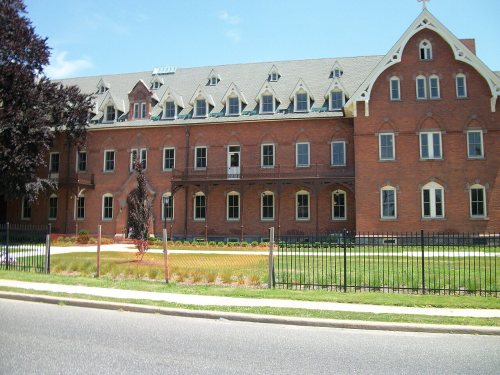
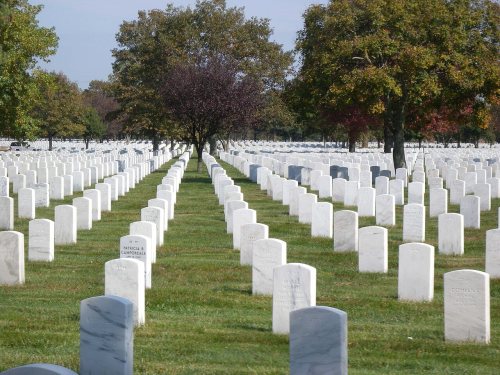
6 listings: 4 buildings, among them the Nathaniel Conklin House (listed 1988, the first), and 2 historic districts, the Sisters of St. Dominic Motherhouse Complex and the Long Island National Cemetery, with 12 contributing buildings. 17 historic buildings in all.
How old are the homes in Babylon?
9% of Babylon’s homes were built before 1940 (Census estimate), against a typical 27% for a New York town; the median home was built in 1963.
Founding dates: Wikidata, Wikipedia, the U.S. post office records of Blevins & Helbock (CC0) and the Census. Homes by year built: Census ACS 2020–24. National Register of Historic Places: National Park Service (list of May 22, 2026). Old photos, postcards and papers: Wikimedia Commons, the Library of Congress and other public archives, credited on each item’s page. Maps: U.S. Geological Survey historical topographic maps (via Esri) and Sanborn fire-insurance maps (Library of Congress). History text and census tables: Wikipedia (CC BY-SA 4.0). Places that used to be: USGS Geographic Names Information System (2021).
From Wikimedia Commons (1), the National Register of Historic Places (6), Wikipedia, Wikidata and Wikipedia for famous people, U.S. Geological Survey historical maps, U.S. Census counts (via Wikipedia), the US Post Offices dataset (Blevins & Helbock), the USGS Geographic Names Information System, Sanborn fire insurance maps (Library of Congress) and old county and town histories (Internet Archive). Archive images are copied here with their credits and licenses, shown on each photo’s page. Refreshed monthly.