Avon dates to 1797, and 32% of its homes were built before 1940
More historic than 97% of U.S. towns · #96 of 758 in New York. What drives it
9 places in town are on the National Register, among them a historic district with 373 buildings. Below: 4 old photos and papers, maps from 1885 on, and the census since 1820.
Founding year: Wikipedia. First post office: 1797.The full story ↓
History grade
What drives Avon’s History grade
On its age, its old homes and the National Register, Avon is more historic than 97% of U.S. towns, #96 of 758 in New York. All 3 inputs are above most U.S. towns; its National Register listings ranks highest and its age lowest.
A+
HistoryA character grade: shown, never part of Avon’s overall grade.
New York towns list more on the Register than most of the country (a typical New York town has 12.3 per 10,000 residents, the U.S. 2.4), so Avon’s 584 sits above most of its state (93% of New York towns have fewer) while its 408 historic buildings outnumber those of 96% of U.S. towns.
How sure. Graded on any two of the three inputs instead, the letter would range from A to A+. The pre-1940 share is a Census survey estimate (±5.8 points). Two sources give 1797.
Founding year: Wikipedia (other dates in Quick answers). Homes: Census ACS 2020–24. National Register: National Park Service, May 2026 list; each listing counted once (boundary changes and added documentation belong to their listing), and a historic district counts its contributing buildings. How TownRatings grades history →
What stands out about Avon’s past
Read from the archive, the National Register and the record. The page puts what stands out first.
Lost post offices, old corners, places now gone and burying grounds
Avon’s post office has been open since 1808. Three other post offices opened and closed inside today’s town.
Hartford
1797–1808
Avon
1808–today
East Avon
1827–1915
South Avon
1831–1896
17901910today
Hamlets and corners on the map
AshanteeEast AvonHarper Park Mobile Home Park AvonLittlevilleNorth AvonSouth Avon
Gone or out of use
Avon QuarrymineEast Avon SchoolschoolSchool Number 4schoolSchool Number 5schoolSchool Number 6schoolSchool Number 7schoolSchool Number 8schoolSchool Number 9school
The area around and including what would become Avon village was inhabited for millennia by Paleo-Indians and later by the Seneca people, the westernmost tribe of the Haudenosaunee (Iroquois). After the Iroquois title to the land was extinguished in 1788 with the Phelps and Gorham Purchase, white and Black settlement of the area began. In 1789, Dr. Timothy Hosmer, Maj. Isaiah Thompson, William Wadsworth, and others from Hartford, Connecticut, purchased a tract east of the Genesee River and named it "Hartford" after their homeland. The town was organized in 1797. The town's name was changed to "Avon" in 1808 to avoid confusion with another Hartford in Washington County, New York. In 1818, part of the town was removed to form the new town of Rush. County lines shifted as well, Avon and Rush both being part of Ontario County until the formation of Livingston County and Monroe County in 182…
Passages that mention Avon, cut from the printed page as they were published.
History of Livingston County, New York, from its earliest traditions to the present1905 · page 622Read the page →
Read the text
THE township of Avon, which originally included the town of Rush, Monroe county, and was Nos. 10 and 11 of Range 7, was named Hartford by Hosmer and Thompson, its first purchasers from Phelps, and the name was not changed to Avon until 1808. The town of Rush was set off in 1818.
Text read by machine from the scan; it may contain errors.
A history of Livingston County, New York1876 · page 407Read the page →
Read the text
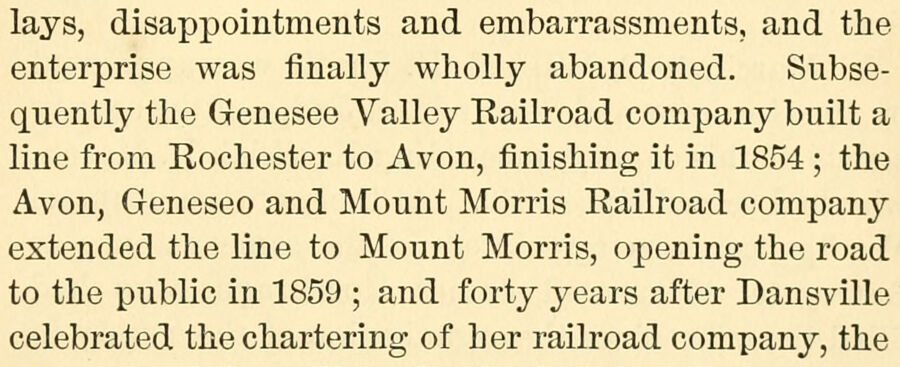
lays, disappointments and embarrassments, and the enterprise was finally wholly abandoned. Subsequently the Genesee Valley Railroad company built a line from Rochester to Avon, finishing it in 1854 ; the Avon, Geneseo and Mount Morris Railroad company extended the line to Mount Morris, opening the road to the public in 1859 ; and forty years after Dansville celebrated the chartering of her railroad company, the
Text read by machine from the scan; it may contain errors.
Scans and text from the Internet Archive. Books published in 1930 or earlier, which are in the public domain.
Timeline
Avon, 1797 to 1928
Woven from the archive, old maps, post office records, the National Register and the people born here.
Nothing in the archives for these yearsWeddings on Main Street, storms, parades, school pictures, the old store. If it’s in your family album, it belongs here.
Every edition of the U.S. Geological Survey’s map of Avon. Tap a year, or press play to watch the town change.
1901Honeoye sheet · 1:62,500
U.S. Geological Survey historical topographic maps (public domain), via Esri’s collection of the scans. The red ring marks the center of Avon.
Every building
Avon, building by building, 1885–1910
Fire insurance maps drew every building, what it was made of and what it was used for, so insurers could price the risk of fire. Pick a year, then a sheet.
In 1797, according to Wikipedia’s history of the town. Avon’s post office opened in 1797, and the census of 1820 counted 1,933 people here.
How does Avon rank for history?
Avon is more historic than 97% of U.S. towns, #96 of 758 in New York. The History grade combines the town’s founding era, the share of homes built before 1940 and its National Register listings. It’s a character grade, so it isn’t part of the overall grade. How it works.
What is on the National Register in Avon?
9 listings: 7 buildings, among them the Barber-Mulligan Farm (listed 1980, the first), 1 historic district, the Avon Village Historic District, with 373 contributing buildings, and 1 structure. 408 historic buildings in all.
How old are the homes in Avon?
32% of Avon’s homes were built before 1940 (Census estimate, ±5.8 points), against a typical 27% for a New York town; the median home was built in 1970.
Founding dates: Wikidata, Wikipedia, the U.S. post office records of Blevins & Helbock (CC0) and the Census. Homes by year built: Census ACS 2020–24. National Register of Historic Places: National Park Service (list of May 22, 2026). Old photos, postcards and papers: Wikimedia Commons, the Library of Congress and other public archives, credited on each item’s page. Maps: U.S. Geological Survey historical topographic maps (via Esri) and Sanborn fire-insurance maps (Library of Congress). History text and census tables: Wikipedia (CC BY-SA 4.0). Places that used to be: USGS Geographic Names Information System (2021).
From Wikimedia Commons (10), the Library of Congress (1), Wikidata (1), the National Register of Historic Places (9), Wikipedia, Wikidata and Wikipedia for famous people, U.S. Geological Survey historical maps, U.S. Census counts (via Wikipedia), the US Post Offices dataset (Blevins & Helbock), the USGS Geographic Names Information System, Sanborn fire insurance maps (Library of Congress) and old county and town histories (Internet Archive). Archive images are copied here with their credits and licenses, shown on each photo’s page. Refreshed monthly.
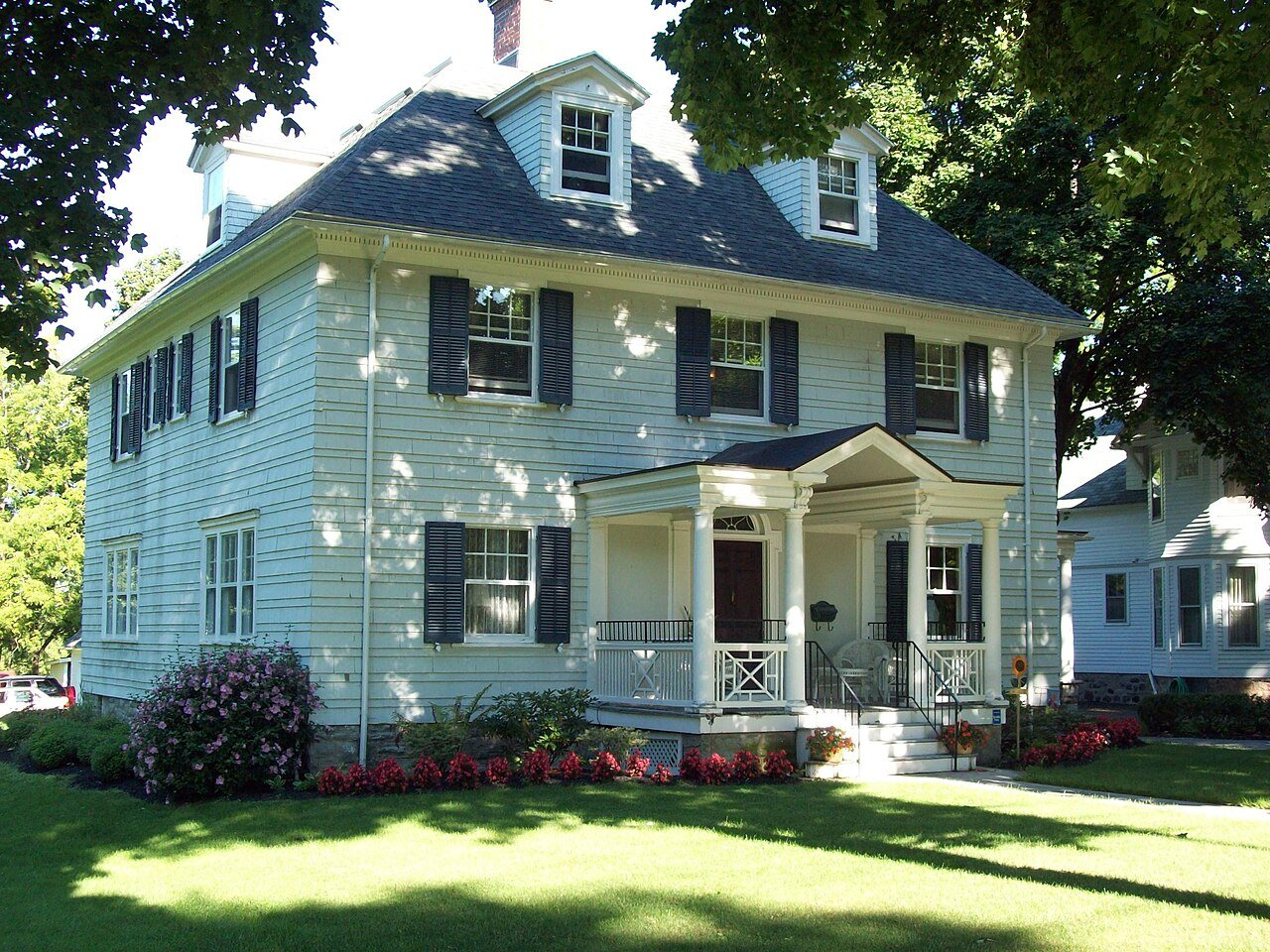
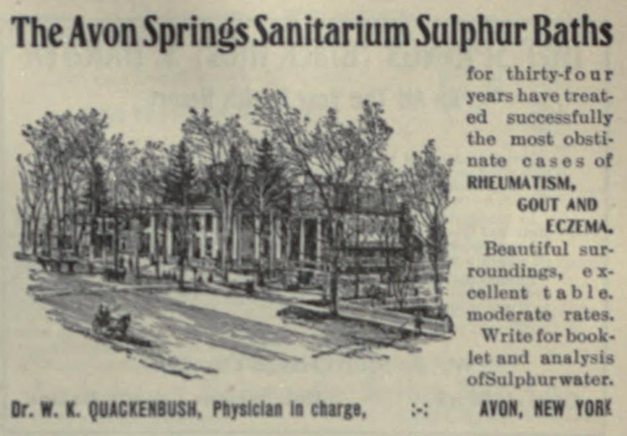






 Date?
 Date?
 Date?
 2024
 2020
 2010
 2010
 2010
 2010
 2009


