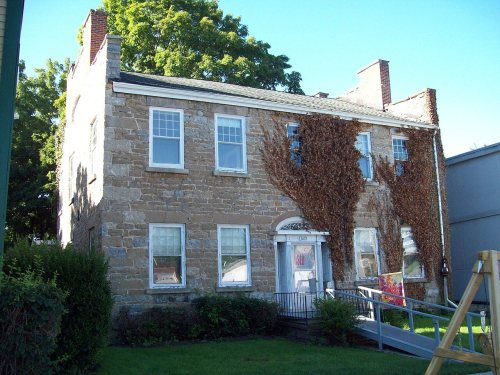
Founding year: Wikipedia. First post office: 1803.The full story ↓
History grade
What drives Caledonia’s History grade
On its age, its old homes and the National Register, Caledonia is more historic than 85% of U.S. towns, #351 of 758 in New York. All 3 inputs are above most U.S. towns; its share of homes from before 1940 ranks highest and its National Register listings lowest.
A
HistoryA character grade: shown, never part of Caledonia’s overall grade.
New York towns list more on the Register than most of the country (a typical New York town has 12.3 per 10,000 residents, the U.S. 2.4), so Caledonia’s 19.3 sits near the middle of its state (55% of New York towns have fewer) while its 8 historic buildings outnumber those of 74% of U.S. towns.
How sure. Graded on any two of the three inputs instead, the letter would still be A−. The pre-1940 share is a Census survey estimate (±4.1 points). Two sources give 1803.
Founding year: Wikipedia (other dates in Quick answers). Homes: Census ACS 2020–24. National Register: National Park Service, May 2026 list; each listing counted once (boundary changes and added documentation belong to their listing), and a historic district counts its contributing buildings. How TownRatings grades history →
What stands out about Caledonia’s past
Read from the archive, the National Register and the record. The page puts what stands out first.
Lost a third of its people between 1820 and 1830, then more than doubled.
20 censuses, 1820–2010.
U.S. Census Bureau decennial counts, from the census table on Caledonia’s Wikipedia page.
Places that used to be
Lost post offices, old corners, places now gone and burying grounds
Caledonia’s post office has been open since 1809. Two other post offices opened and closed inside today’s town.
Southampton
1803–1809
Caledonia
1809–today
Canawangus
1872–1882
18001910today
Hamlets and corners on the map
BakerCaledonia Mobile Home ParkCanawaugusMaxwellMenzie CrossingMonte Carlo Mobile Home ParkTaylor
Gone or out of use
Caledonia House HotelbuildingCaledonia QuarrymineSchool Number 2schoolSchool Number 3schoolSchool Number 9school
2cemeteries and burying grounds inside Caledonia
Caledonia RuralSaint Columba
US Post Offices dataset (Blevins & Helbock, CC0). Places and cemeteries from the USGS Geographic Names Information System (2021).
Every building
Caledonia, building by building, 1897–1910
Fire insurance maps drew every building, what it was made of and what it was used for, so insurers could price the risk of fire. Pick a year, then a sheet.
1897Sheet 1 of 1
Edition
Sheets
BrickWoodStone
Sanborn Map Company, via the Library of Congress. Editions published in 1930 or earlier, which are in the public domain.
The Seneca people long occupied much of present-day western New York, Pennsylvania and Ohio. They had a village in this area called "Canawaugus" (or Conawagus); it was located on the west side of the Genesee River. The site has since been absorbed by the town of Caledonia. Chief Cornplanter was born here around 1750 into the Wolf clan of his Seneca mother. His father was a Dutch fur trader, John Abeel, whose family had been established in Albany. Cornplanter was known as a statesman as well as a war chief, and he was influential in inviting Quakers to teach Seneca children on his land.
Passages that mention Caledonia, cut from the printed page as they were published.
1687. History of Livingston County, New York, with illustrations and biographical sketches of some of its prominent men and pioneers1881 · page 411Read the page →
Read the text
At the time of the first settlement here the territory now known as York was embraced in the town of Caledonia, and the settlers, chiefly from Scotland, located first at " Big Springs," now the village of Caledonia, in 1799 and 1800, and from thence branched out into the section of wilderness then called " South Woods," and now known as the town of York.
Text read by machine from the scan; it may contain errors.
History of Livingston County, New York, from its earliest traditions to the present1905 · page 655Read the page →
Read the text
The village of Caledonia was incorporated in May, 1891. Its first president was C. W. Blackman and its first clerk F. A. Christie. In addition to its public library and water works, which have been elsewhere noticed, the village has an excellent fire department for protection against the most dangerous element in cities and villages. It consists of two hose companies and one hook and ladder company, the last organized in 1878 and the others in 1897.
Text read by machine from the scan; it may contain errors.
1687. History of Livingston County, New York, with illustrations and biographical sketches of some of its prominent men and pioneers1881 · page 109Read the page →
Read the text
and operated by the New York Central and Hudson River Railroad Company. It extends from east to west through the north part of the town of Caledonia. The Rochester, Nunda and Pennsylvania Railroad Company was organized April 9, 1870, for the purpose of building a road from Mt. Morris to Belvidere, the object being to establish a railroad
Text read by machine from the scan; it may contain errors.
Scans and text from the Internet Archive. Books published in 1930 or earlier, which are in the public domain.
Timeline
Caledonia, 1803 to 2000
Woven from the archive, old maps, post office records, the National Register and the people born here.
Nothing in the archives for these yearsWeddings on Main Street, storms, parades, school pictures, the old store. If it’s in your family album, it belongs here.
Nothing in the archives for these yearsWeddings on Main Street, storms, parades, school pictures, the old store. If it’s in your family album, it belongs here.
In 1803, according to Wikipedia’s history of the town. Caledonia’s post office opened in 1803, and the census of 1820 counted 2,645 people here.
How does Caledonia rank for history?
Caledonia is more historic than 85% of U.S. towns, #351 of 758 in New York. The History grade combines the town’s founding era, the share of homes built before 1940 and its National Register listings. It’s a character grade, so it isn’t part of the overall grade. How it works.
What is on the National Register in Caledonia?
4 listings: 4 buildings, among them the Clark-Keith House (listed 1998, the first). 8 historic buildings in all.
How old are the homes in Caledonia?
24% of Caledonia’s homes were built before 1940 (Census estimate, ±4.1 points), against a typical 27% for a New York town; the median home was built in 1969.
Founding dates: Wikidata, Wikipedia, the U.S. post office records of Blevins & Helbock (CC0) and the Census. Homes by year built: Census ACS 2020–24. National Register of Historic Places: National Park Service (list of May 22, 2026). Old photos, postcards and papers: Wikimedia Commons, the Library of Congress and other public archives, credited on each item’s page. Maps: U.S. Geological Survey historical topographic maps (via Esri) and Sanborn fire-insurance maps (Library of Congress). History text and census tables: Wikipedia (CC BY-SA 4.0). Places that used to be: USGS Geographic Names Information System (2021).
From Wikimedia Commons (6), the National Register of Historic Places (4), Wikipedia, Wikidata and Wikipedia for famous people, U.S. Geological Survey historical maps, U.S. Census counts (via Wikipedia), the US Post Offices dataset (Blevins & Helbock), the USGS Geographic Names Information System, Sanborn fire insurance maps (Library of Congress) and old county and town histories (Internet Archive). Archive images are copied here with their credits and licenses, shown on each photo’s page. Refreshed monthly.


 1892
 1892
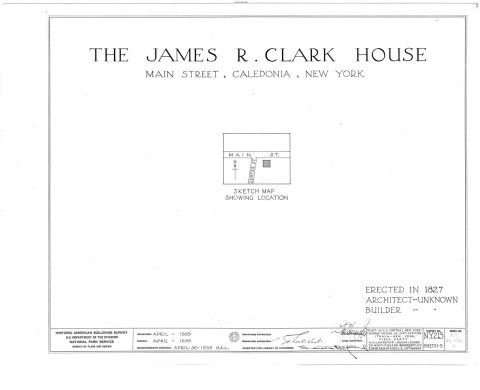 1933
 1933