Hanover dates to 1649, and 3 of its places are on the National Register
More historic than 74% of U.S. towns · #243 of 283 in Massachusetts. What drives it
Most of Hanover was built recently: 9% of its homes predate 1940 and the median home dates from 1978. 3 places in town are on the National Register, among them two historic districts with 15 buildings between them. Below: 3 old photos and papers, maps from 1885 on, and the census since 1790.
Founding year: Wikidata. First post office: 1796.The full story ↓
History grade
What drives Hanover’s History grade
On its age, its old homes and the National Register, Hanover is more historic than 74% of U.S. towns, #243 of 283 in Massachusetts. Its age holds the grade up; its share of homes from before 1940 pulls it down.
B+
HistoryA character grade: shown, never part of Hanover’s overall grade.
Massachusetts towns list more on the Register than most of the country (a typical Massachusetts town has 46.0 per 10,000 residents, the U.S. 2.4), so Hanover’s 11.5 sits below most of its state (28% of Massachusetts towns have fewer) while its 17 historic buildings outnumber those of 79% of U.S. towns.
NoteThe founding year comes from Wikidata alone; no second source gives 1649.
How sure. Graded on any two of the three inputs instead, the letter would range from B− to A−. The pre-1940 share is a Census survey estimate (±3.0 points).
Founding year: Wikidata (other dates in Quick answers). Homes: Census ACS 2020–24. National Register: National Park Service, May 2026 list; each listing counted once (boundary changes and added documentation belong to their listing), and a historic district counts its contributing buildings. How TownRatings grades history →
What stands out about Hanover’s past
Read from the archive, the National Register and the record. The page puts what stands out first.
Clark AirportairportFour Corners Post Officepost officeHanover StationlocaleKing Street SchoolschoolNorth Hanover Post Officepost officeSouth Hanover Post Officepost office
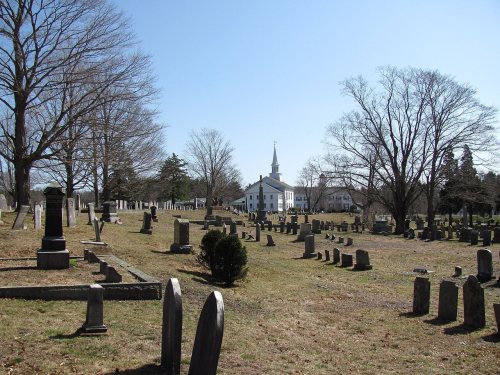
2cemeteries and burying grounds inside Hanover
Hanover CenterWest Hanover
US Post Offices dataset (Blevins & Helbock, CC0). Places and cemeteries from the USGS Geographic Names Information System (2021).
Help out
Start Hanover’s collection
The first neighbors to add old photos shape how Hanover’s history is told.
Decades since 1900 with photos
00s10s20s30s40s50s60s70s80s90s
3 of 10 decades. The empty ones are waiting for someone’s album.
The area of Hanover was first inhabited by the local Wampanoag and Massachusett people before Europeans had settled. According to local history, there were a few documented sites being within the modern day border of Hanover, with one being in Assinippi, one in Pine Island Swamp, and the last being at Factory Pond, also known as Drinkwater Swamp. In the middle of the 17th century, the indigenous people were removed by force as waves of settlers from the British Isles started to migrate towards North America. The last of these natives in Hanover were removed in a small skirmish that occurred at the Factory Pond area in the 1630s.
Passages that mention Hanover, cut from the printed page as they were published.
History of the town of Hanover, Massachusetts, with family genealogies1910Read the page →
Read the text
He died on the 6th day of April, 1900, and the following extract is copied from his will: “I give and bequeath to the town of Hanover in the Commonwealth of Massachusetts the sum of fifteen thousand dollars for the purchase of a suitable lot of land and the erection thereon of a Public Library Building, to contain the library heretofore given by me to said town of Hanover, together with the additional books in public use, which building shall be designed by some competent architect and built according to his
Text read by machine from the scan; it may contain errors.
History of the town of Hanover, Massachusetts, with family genealogies1910 · page 46Read the page →
Read the text
recorded after a very early date, yet the presumption is, by references in the Scituate records, that, for a long time, the Court continued to hold a reserved authority. The most of the lands in Hanover were granted previous to its incorporation, but even after 1727 the Scituate committee assigned certain lands to the town of Hanover that were at that time within the borders of the latter town.
Text read by machine from the scan; it may contain errors.
History of shipbuilding on North river, Plymouth county, Massachusetts, with genealogies of the shipbuilders, and accounts of the industries upon its tributaries. 1640 to 18721889 · page 24Read the page →
Read the text
carried down to the old fulling-mill near the iron foundry and tested, and that Tilson Gould was killed by the bursting of one of these guns, the pieces of which are said to be still lying in the bottom of the old furnace pond. About this time Hanover was very prosperous and in 1794, there were within the town of Hanover 3 saw-mills, G grist-mills, 2 forges, 1 anchor shop, 1 fulling-mill.
Text read by machine from the scan; it may contain errors.
History of shipbuilding on North river, Plymouth county, Massachusetts, with genealogies of the shipbuilders, and accounts of the industries upon its tributaries. 1640 to 18721889 · page 33Read the page →
Read the text
who, hoAvever, was not the first owner of the [)roperty. The first building erected here was a grist mill by Charles Stockbridge, grandfather of David Stockln-idge, of Hanover.* Cricket Hole, so called in 1640, from which bog iron ore was obtained for jMigliill's and Bardin's iron M'orks, is a short distance west of Titiany's. In 1673 the Town's Committee of Lands oti'ered a premium of " 30 acres of land to any person who, within six months, should erect a grist mill on the Third
Text read by machine from the scan; it may contain errors.
Scans and text from the Internet Archive. Books published in 1930 or earlier, which are in the public domain.
By decade
Hanover, decade by decade
3 decades in the archive, from the 1900s to the 1930s. Scroll each row; tap a photo for its story.
Nothing in the archives for these yearsWeddings on Main Street, storms, parades, school pictures, the old store. If it’s in your family album, it belongs here.
In 1649, according to Wikidata. Hanover’s post office opened in 1796, and the first U.S. census counted 1,084 people here in 1790.
How does Hanover rank for history?
Hanover is more historic than 74% of U.S. towns, #243 of 283 in Massachusetts. The History grade combines the town’s founding era, the share of homes built before 1940 and its National Register listings. It’s a character grade, so it isn’t part of the overall grade. How it works.
What is on the National Register in Hanover?
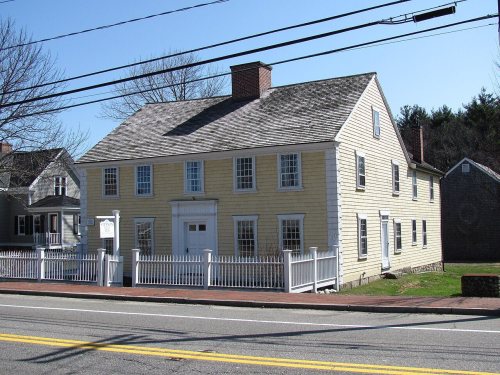
Three places: the Stetson House (listed 1979), the Hanover Center Historic District (1996) and the Cardinal Cushing Center Historic District (2018).
How old are the homes in Hanover?
9% of Hanover’s homes were built before 1940 (Census estimate, ±3.0 points), against a typical 21% for a Massachusetts town; the median home was built in 1978.
Founding dates: Wikidata, Wikipedia, the U.S. post office records of Blevins & Helbock (CC0) and the Census. Homes by year built: Census ACS 2020–24. National Register of Historic Places: National Park Service (list of May 22, 2026). Old photos, postcards and papers: Wikimedia Commons, the Library of Congress and other public archives, credited on each item’s page. Maps: U.S. Geological Survey historical topographic maps (via Esri) and Sanborn fire-insurance maps (Library of Congress). History text and census tables: Wikipedia (CC BY-SA 4.0). Places that used to be: USGS Geographic Names Information System (2021).
From Wikimedia Commons (10), the National Register of Historic Places (3), Wikipedia, Wikidata and Wikipedia for famous people, U.S. Geological Survey historical maps, U.S. Census counts (via Wikipedia), the US Post Offices dataset (Blevins & Helbock), the USGS Geographic Names Information System, Sanborn fire insurance maps (Library of Congress) and old county and town histories (Internet Archive). Archive images are copied here with their credits and licenses, shown on each photo’s page. Refreshed monthly.


 2010
 2010
 2010
 2010
 2008
 2007
 2004