Bedford dates to 1640, and 14 of its places are on the National Register
More historic than 90% of U.S. towns · #147 of 283 in Massachusetts. What drives it
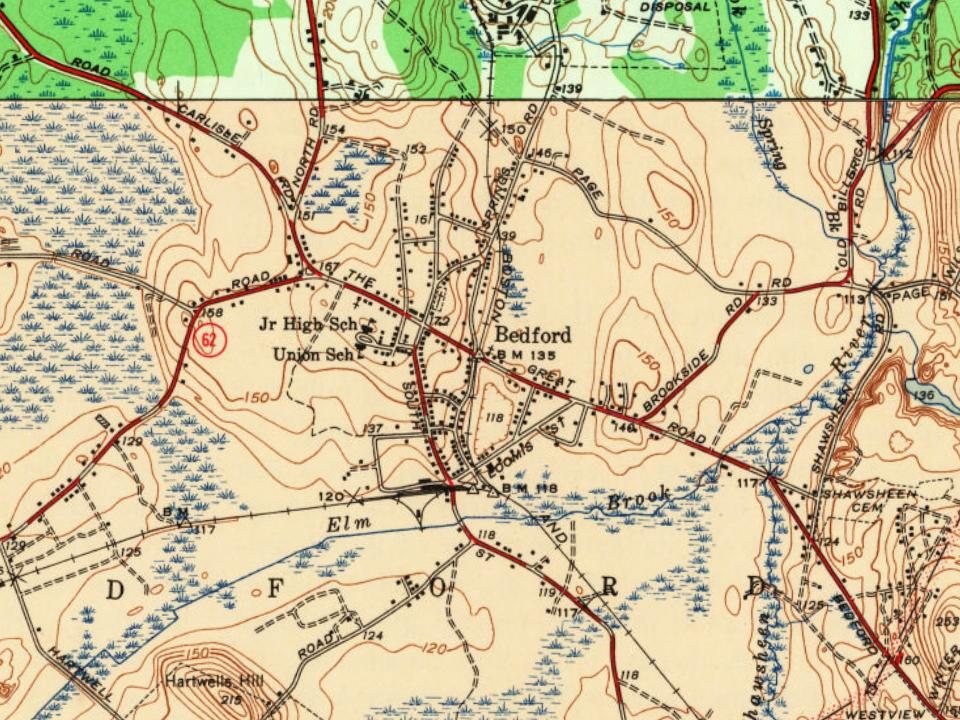
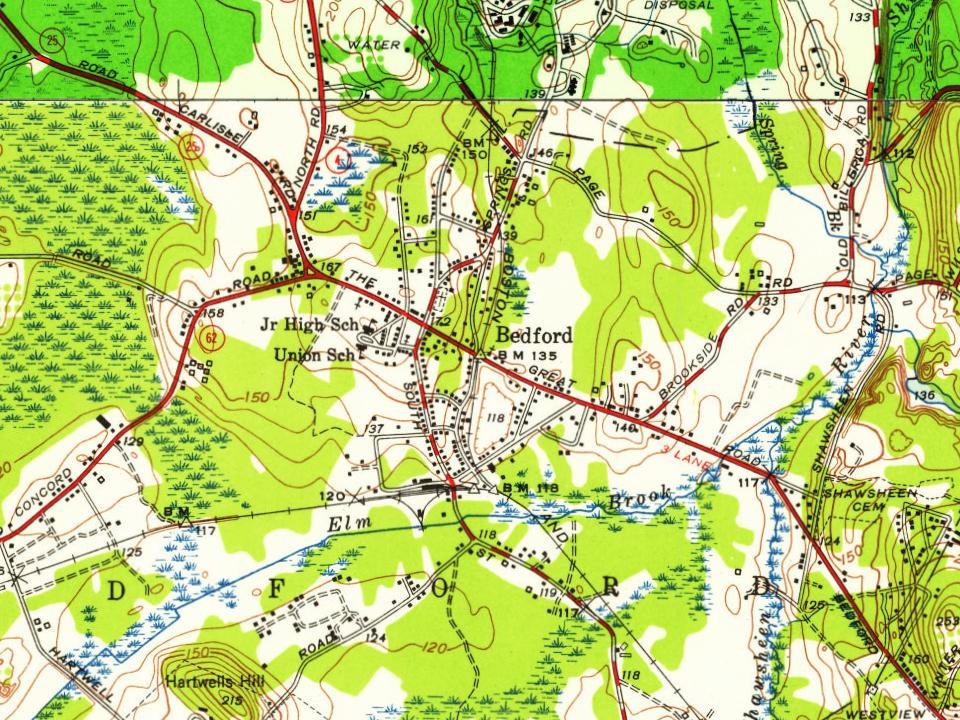
Most of Bedford was built recently: 9% of its homes predate 1940 and the median home dates from 1976. 14 places in town are on the National Register, among them six historic districts with 344 buildings between them. Below: 4 old photos and papers, maps from 1889 on, and the census since 1790.
Founding year: Wikidata. First post office: 1826.The full story ↓
History grade
What drives Bedford’s History grade
On its age, its old homes and the National Register, Bedford is more historic than 90% of U.S. towns, #147 of 283 in Massachusetts. Its age holds the grade up; its share of homes from before 1940 pulls it down.
A
HistoryA character grade: shown, never part of Bedford’s overall grade.
Massachusetts towns list more on the Register than most of the country (a typical Massachusetts town has 46.0 per 10,000 residents, the U.S. 2.4), so Bedford’s 280 sits above most of its state (83% of Massachusetts towns have fewer) while its 412 historic buildings outnumber those of 96% of U.S. towns.
NoteThe founding year comes from Wikidata alone; no second source gives 1640.
How sure. Graded on any two of the three inputs instead, the letter would range from A− to A+. The pre-1940 share is a Census survey estimate (±3.3 points).
Founding year: Wikidata (other dates in Quick answers). Homes: Census ACS 2020–24. National Register: National Park Service, May 2026 list; each listing counted once (boundary changes and added documentation belong to their listing), and a historic district counts its contributing buildings. How TownRatings grades history →
What stands out about Bedford’s past
Read from the archive, the National Register and the record. The page puts what stands out first.
The following compilation comes from Ellen Abrams (1999) based on information from Abram English Brown's History of the Town of Bedford (1891), as well as other sources such as The Bedford Sampler Bicentennial Edition containing Daisy Pickman Oakley's articles, Bedford Vital Records, New England Historical and Genealogical Register, Town Directories, and other publications from the Bedford Historical Society.
The land now within the boundaries of Bedford was first settled by Europeans around 1640. In 1729 it was incorporated from a portion of Concord (about 2/5 of Bedford) and a portion of Billerica (about 3/5 of Bedford).
Passages that mention Bedford, cut from the printed page as they were published.
The history of New Bedford, Bristol County, Massachusetts1858 · page 196Read the page →
Read the text
as well as the citizens of the village of Bedford, were noted for their prosperity and general thriftness. The wild and extensive forest lands had yielded to the persevering exertions of our hardy forefathers, and smiling farms, with their broad acres of cornfields and meadows, had taken their place. The little village of Bedford had sprung up on the banks of the Acushnet, and the founda-
Text read by machine from the scan; it may contain errors.
The history of New Bedford, Bristol County, Massachusetts1858 · page 152Read the page →
Read the text
Although I have given this work the title of a History of New Bedford, I have included considerable which more j3roperly belongs to the old township of Dartmouth, of which New Bedford is but a part, the old township having been divided in the year 1787, as before stated; and that territory, once known only as Dartmouth, included the present townships of Westport, Dartmouth, New Bedford
Text read by machine from the scan; it may contain errors.
Scans and text from the Internet Archive. Books published in 1930 or earlier, which are in the public domain.
By decade
Bedford, decade by decade
4 decades in the archive, from the 1900s to the 1930s. Scroll each row; tap a photo for its story.
Nothing in the archives for these yearsWeddings on Main Street, storms, parades, school pictures, the old store. If it’s in your family album, it belongs here.
In 1640, according to Wikidata. Bedford’s post office opened in 1826, and the first U.S. census counted 523 people here in 1790.
How does Bedford rank for history?
Bedford is more historic than 90% of U.S. towns, #147 of 283 in Massachusetts. The History grade combines the town’s founding era, the share of homes built before 1940 and its National Register listings. It’s a character grade, so it isn’t part of the overall grade. How it works.
What is on the National Register in Bedford?
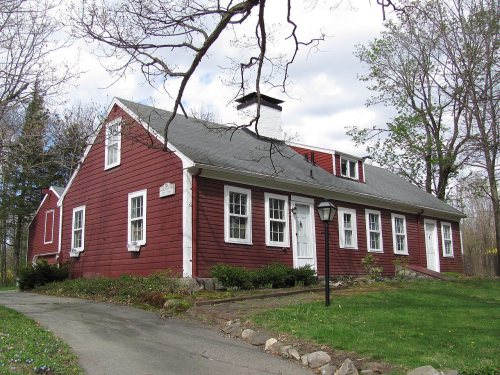
14 listings: 8 buildings, among them the Job Lane House (listed 1973, the first), 6 historic districts with 344 contributing buildings, and 1 site. 412 historic buildings in all.
How old are the homes in Bedford?
9% of Bedford’s homes were built before 1940 (Census estimate, ±3.3 points), against a typical 21% for a Massachusetts town; the median home was built in 1976.
Founding dates: Wikidata, Wikipedia, the U.S. post office records of Blevins & Helbock (CC0) and the Census. Homes by year built: Census ACS 2020–24. National Register of Historic Places: National Park Service (list of May 22, 2026). Old photos, postcards and papers: Wikimedia Commons, the Library of Congress and other public archives, credited on each item’s page. Maps: U.S. Geological Survey historical topographic maps (via Esri) and Sanborn fire-insurance maps (Library of Congress). History text and census tables: Wikipedia (CC BY-SA 4.0). Places that used to be: USGS Geographic Names Information System (2021).
From Wikimedia Commons (9), Wikidata (9), the National Register of Historic Places (15), Wikipedia, Wikidata and Wikipedia for famous people, U.S. Geological Survey historical maps, U.S. Census counts (via Wikipedia), the US Post Offices dataset (Blevins & Helbock), the USGS Geographic Names Information System, Sanborn fire insurance maps (Library of Congress) and old county and town histories (Internet Archive). Archive images are copied here with their credits and licenses, shown on each photo’s page. Refreshed monthly.





 2010
 2010
 2010
 2009
 2001