Windham dates to 1693, and 36% of its homes were built before 1940
Among the most historic 1% of U.S. towns · #6 of 155 in Connecticut. What drives it
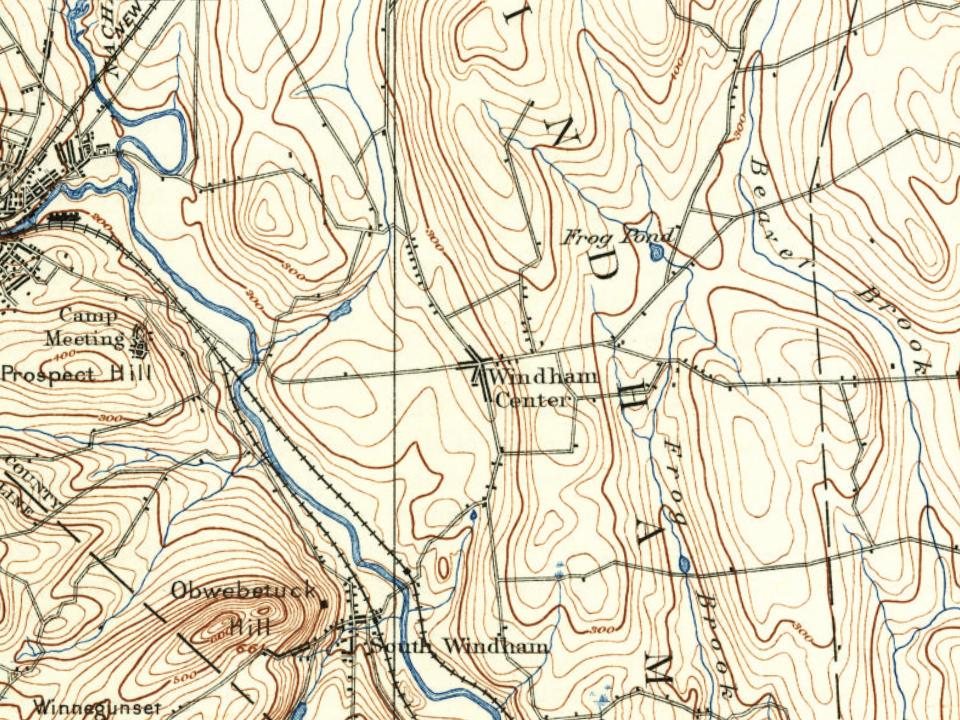
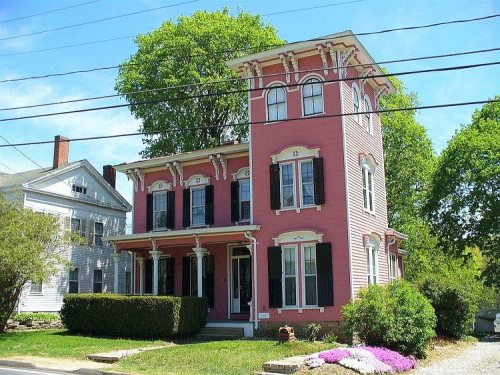
10 places in town are on the National Register, among them five historic districts with 122 buildings between them. Below: 5 old photos and papers, maps from 1892 on, and the census since 1820.
Founding year: Wikidata. First post office: 1795.The full story ↓
History grade
What drives Windham’s History grade
On its age, its old homes and the National Register, Windham is among the most historic 1% of U.S. towns, #6 of 155 in Connecticut. All 3 inputs put Windham near the top nationally; its age ranks highest.
A+
HistoryA character grade: shown, never part of Windham’s overall grade.
Connecticut towns list more on the Register than most of the country (a typical Connecticut town has 73.3 per 10,000 residents, the U.S. 2.4), so Windham’s 423 sits above most of its state (92% of Connecticut towns have fewer) while its 1,014 historic buildings outnumber those of 99% of U.S. towns.
NoteThe founding year comes from Wikidata alone; no second source gives 1693.
How sure. Graded on any two of the three inputs instead, the letter would still be A+. The pre-1940 share is a Census survey estimate (±3.6 points).
Founding year: Wikidata (other dates in Quick answers). Homes: Census ACS 2020–24. National Register: National Park Service, May 2026 list; each listing counted once (boundary changes and added documentation belong to their listing), and a historic district counts its contributing buildings. How TownRatings grades history →
What stands out about Windham’s past
Read from the archive, the National Register and the record. The page puts what stands out first.
Prior to the arrival of Europeans, the region was occupied by Algonquian peoples, including the Pequot, Mohegan, Narragansett, and Nipmuck. After the conclusion of the Pequot War in 1638, the Pequots ceased to exist as a tribe; after King Philip's War ended in 1678, the Narragansett and Nipmuck did as well, leaving the Mohegans the only native power in the region. The settlement of Windham was left to settlers by Joshua Uncas, son of Uncas, in a will dated 1675. Settlers moved in, and held their first town meeting on May 18, 1691. The tract was named the town of Windham in May 1692, and was incorporated into Hartford County in fall of 1693.
Passages that mention Windham, cut from the printed page as they were published.
History of Windham County, Connecticut ..1889 · page 144Read the page →
Read the text
The courts of Windham county were removed from the village of Windham to Brooklyn in July, 1820. The bar of Windham county at this time boasted a very creditable array of legal talent, and held a good position in the state. It was represented in the different towns as follows : Brooklyn— John Parish, Daniel Kies, Jonathan A. Welch (son of Doctor Moses C. Welch), Uriel Fuller; Ashford— David Bolles, Philip Hayward, Samuel Ashley; Canterbury— Rufus Adams, Andrew T. Judson, Daniel
Text read by machine from the scan; it may contain errors.
History of Windham County, Connecticut ..1889 · page 41Read the page →
Read the text
Three towns, it will be seen, were originally included in Windham county, which are now outside its limits. Lebanon, southwest from Windham, was organized as a town in 1700. Mansfield, at first a part of Windham township, was set off as a distinct incorporation in 1703. Coventry, west of Mansfield, was made a town in 1711. These were all large and important towns, and added much to the strength of the new county. The little irregular INIortlake Manor was included in a distinct town-
Text read by machine from the scan; it may contain errors.
Scans and text from the Internet Archive. Books published in 1930 or earlier, which are in the public domain.
By decade
Windham, decade by decade
4 decades in the archive, from the 1790s to the 1890s. Scroll each row; tap a photo for its story.
Nothing in the archives for these yearsWeddings on Main Street, storms, parades, school pictures, the old store. If it’s in your family album, it belongs here.
In 1693, according to Wikidata. Windham’s post office opened in 1795, and the census of 1820 counted 2,489 people here.
How does Windham rank for history?
Windham is among the most historic 1% of U.S. towns, #6 of 155 in Connecticut. The History grade combines the town’s founding era, the share of homes built before 1940 and its National Register listings. It’s a character grade, so it isn’t part of the overall grade. How it works.
What is on the National Register in Windham?
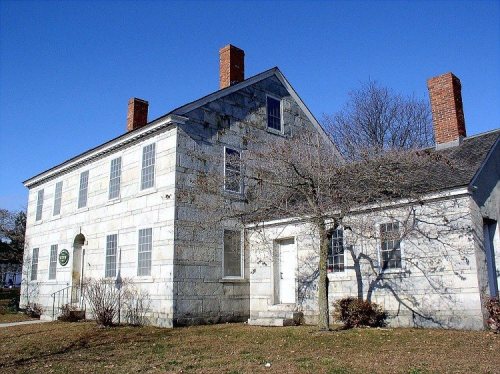
10 listings: 4 buildings, among them the Dr. Chester Hunt Office (listed 1970, the first), 5 historic districts with 122 contributing buildings, and 1 structure. 1,014 historic buildings in all.
How old are the homes in Windham?
36% of Windham’s homes were built before 1940 (Census estimate, ±3.6 points), against a typical 15% for a Connecticut town; the median home was built in 1956.
Founding dates: Wikidata, Wikipedia, the U.S. post office records of Blevins & Helbock (CC0) and the Census. Homes by year built: Census ACS 2020–24. National Register of Historic Places: National Park Service (list of May 22, 2026). Old photos, postcards and papers: Wikimedia Commons, the Library of Congress and other public archives, credited on each item’s page. Maps: U.S. Geological Survey historical topographic maps (via Esri) and Sanborn fire-insurance maps (Library of Congress). History text and census tables: Wikipedia (CC BY-SA 4.0). Places that used to be: USGS Geographic Names Information System (2021).
From Wikimedia Commons (4), the Library of Congress (1), the National Register of Historic Places (10), Wikipedia, Wikidata and Wikipedia for famous people, U.S. Geological Survey historical maps, U.S. Census counts (via Wikipedia), the US Post Offices dataset (Blevins & Helbock), the USGS Geographic Names Information System and old county and town histories (Internet Archive). Archive images are copied here with their credits and licenses, shown on each photo’s page. Refreshed monthly.









 1862

