 Top
National Historic Site · 1796–1800Fort GeorgeQueen's Parade RoadPhoto: Balcer · Public domain · Commons file
 Powder Magazine · Photo: Gogerr · CC BY 4.0
28historic places on the registers
History of Niagara-on-the-Lake · Canada’s heritage registers
Niagara-on-the-Lake’s oldest designated place, Fort George, dates from 1796
The lists give Niagara-on-the-Lake 28 historic places, 13 in the top tier. Per resident it outdoes 99% of Canadian towns, with 14 for every 10,000 people. Designations here include 15 Recognized Federal Heritage Buildings. Wikidata gives 1781 for the municipality, whether that is when it was founded, incorporated or merged.
Historic places
28
14 per 10,000 residents
Highest designations
13
National Historic Sites and Classified Federal Heritage Buildings
Other federal designations
15
Recognized buildings, railway stations, lighthouses
Oldest building
1796
the first construction date on its record
Homes built before 1961
20%
typical town: 18%
In pictures
Photos of 11 of the 13 top-tier places in Niagara-on-the-Lake
Two worth a look first: Powder Magazine and Niagara Apothecary. The photos cover 16 of Niagara-on-the-Lake’s designated places; the rest keep their register record. Open a place’s page for its old views: 6 places in Niagara-on-the-Lake have them.
 Niagara Apothecary
 Mississauga Point Lighthouse
 Butler's Barracks
 Fort George
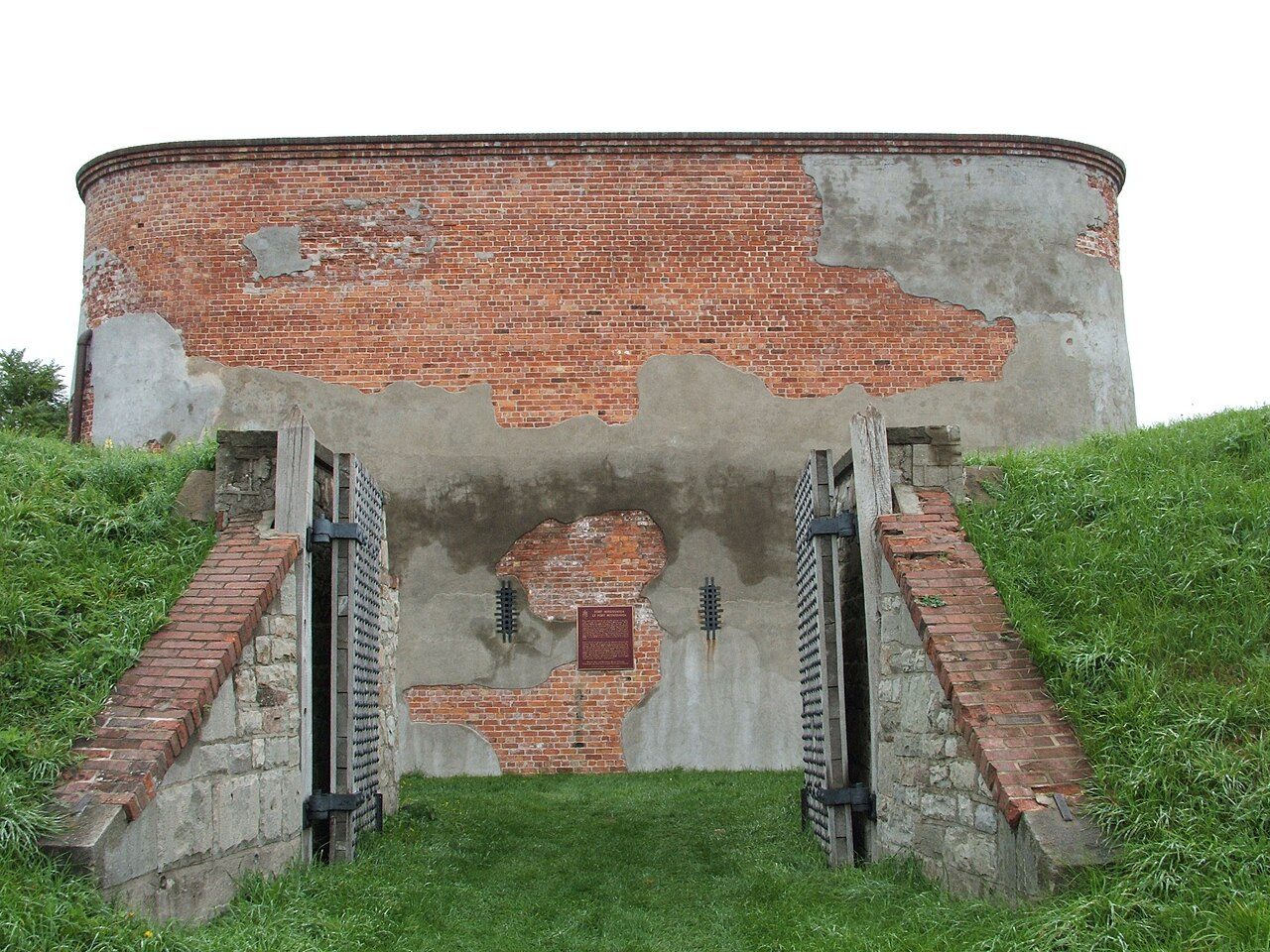 Fort Mississauga+11See all photos
Photos from Wikimedia Commons, each credited to its photographer with its licence; names open the place’s page. Tap a photo to step through them full screen.
Through time
Niagara-on-the-Lake between 1793 and 1930
On one line by date: 2 old photographs of the town and the oldest views of 6 of its historic places. Each dot on the line is a picture; tap one to open it full screen.
 c. 1793
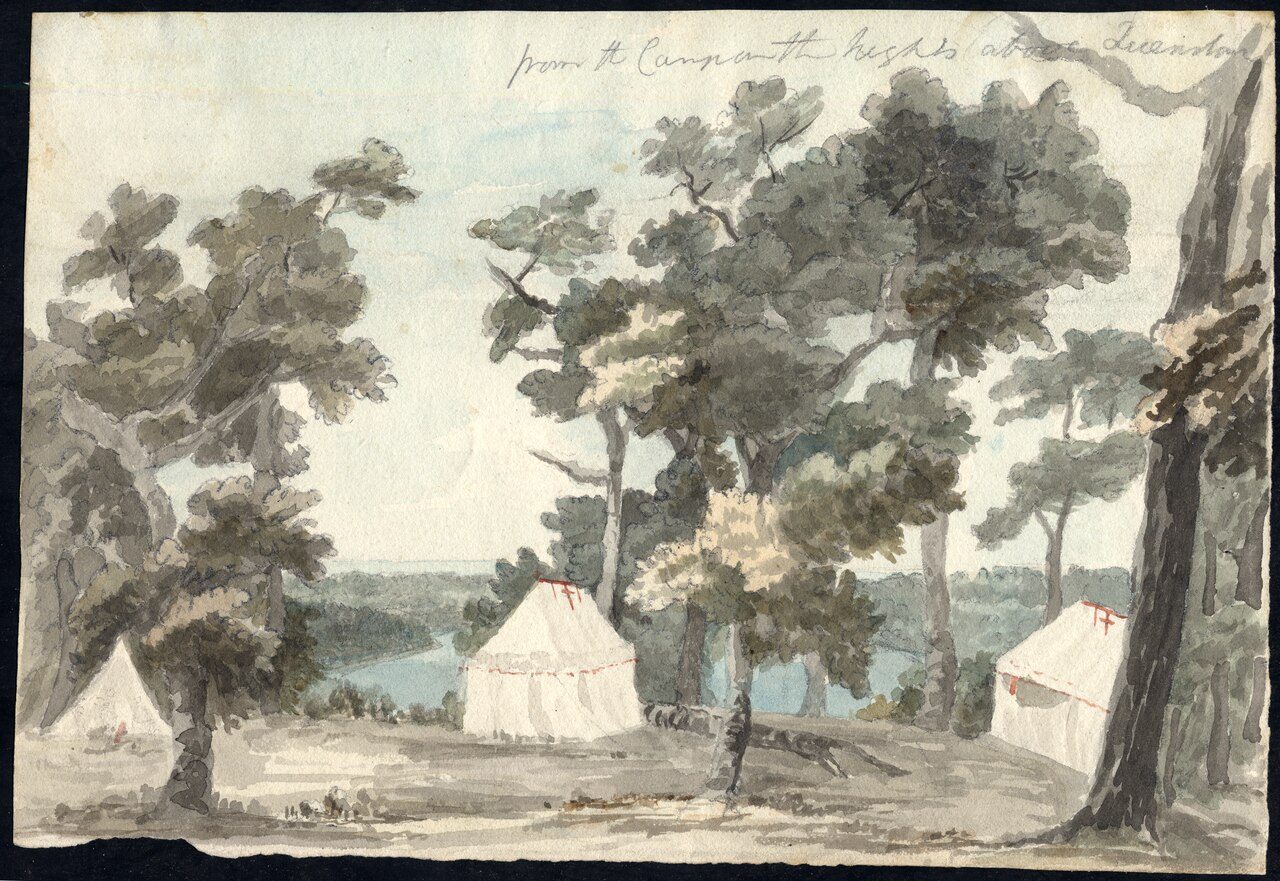 c. 1793
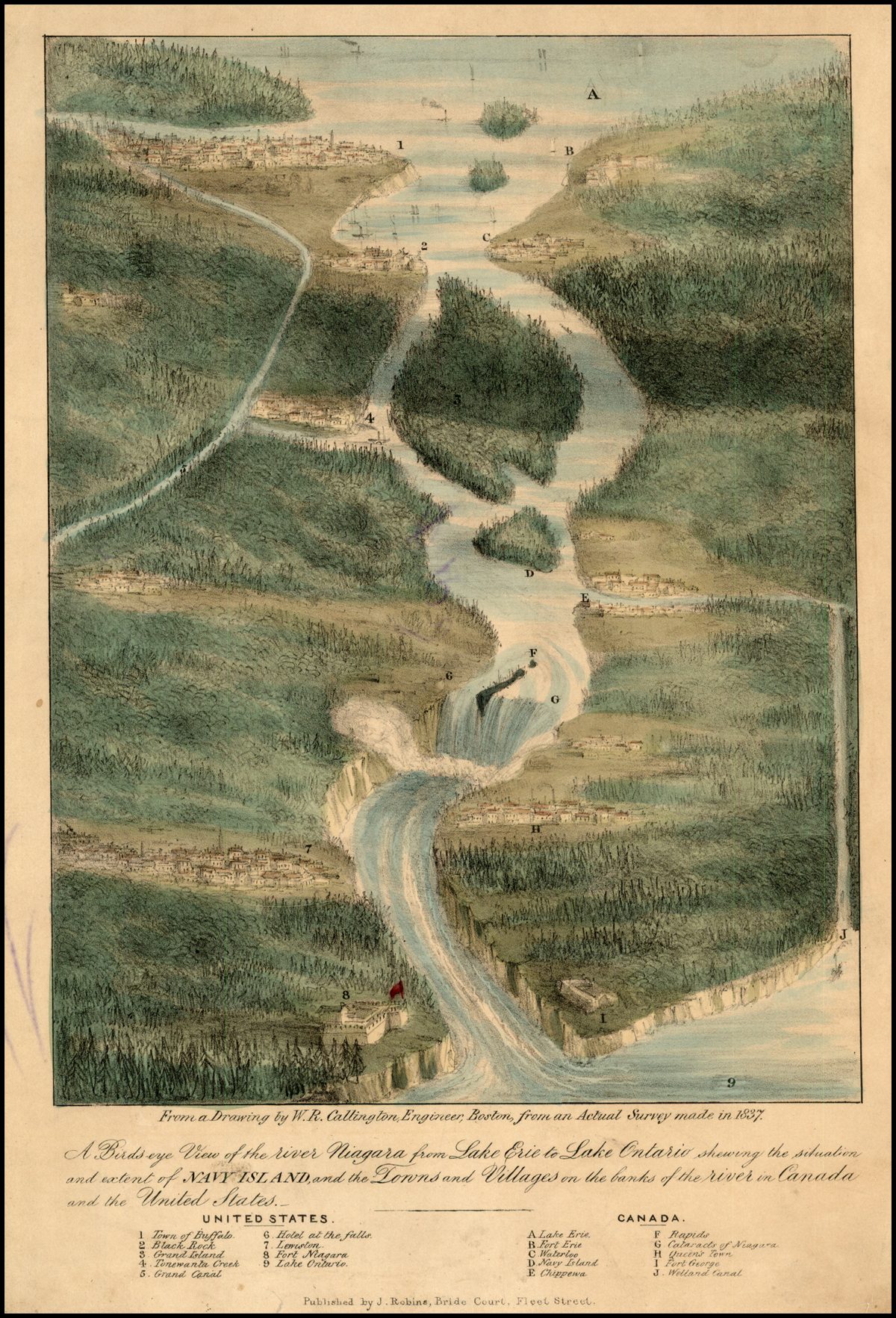 c. 1838
 1888
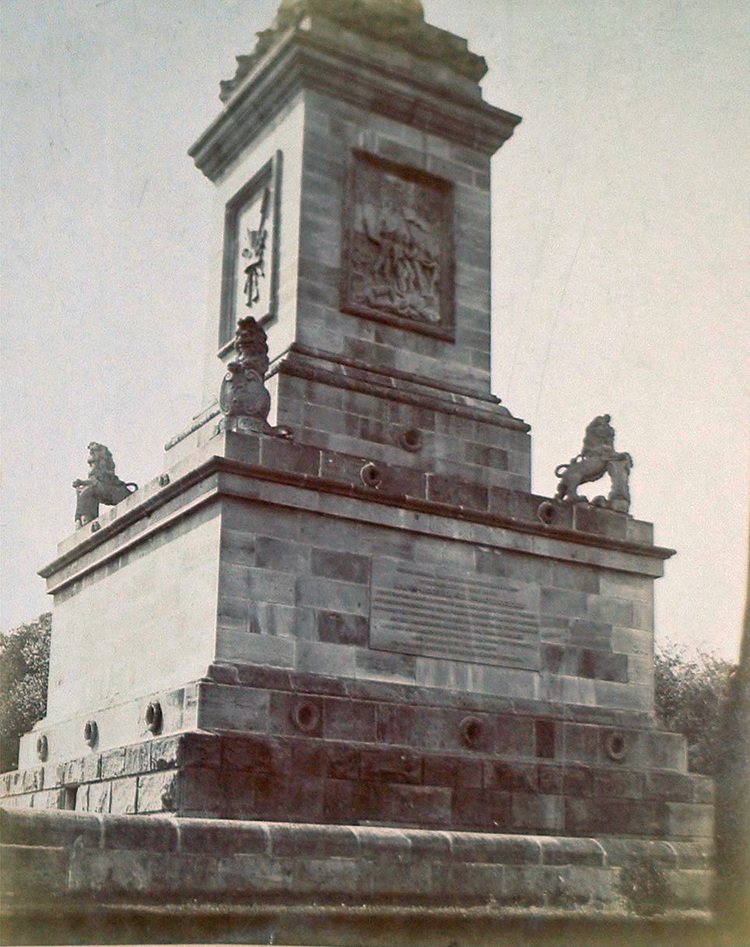 1900
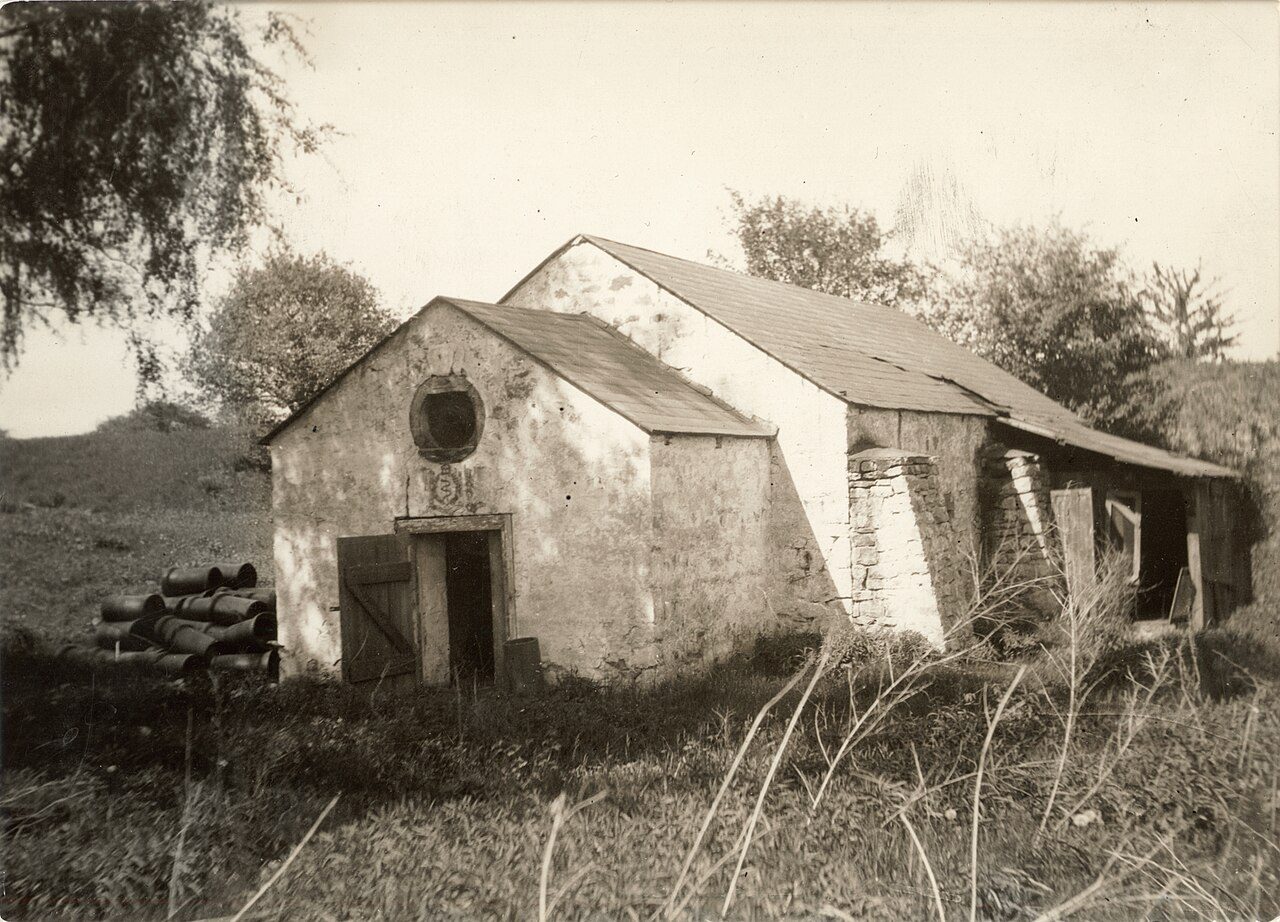 c. 1906
 1910
 c. 1930
Public domain or CC0, made before 1950, from Wikimedia Commons; old views of places can be drawings, prints or maps of their time. Each credit opens the image’s page.
How old
In Niagara-on-the-Lake, the years before Confederation left the most behind
Each place by the first construction date on its record.
British North America 1760–186620
After Confederation 1867–19130
Wars and Depression 1914–19458
Since 1946 1946 on0
20 of the 28 dated places were built before Confederation.
The map
Where Niagara-on-the-Lake’s history is
Every place on the registers inside the town, by its designation.
Highest designationsOther federal designations400 m from Fort Drummond
3 of 13within 400 m of Fort Drummond, the heart of the town’s history
Hover a dot for its name; tap one to open its page.
The 28, by tier
13 Highest designations15 Other federal designations
What the map shows is the open record: the federal directory in full, and from provincial or municipal lists only the places Wikidata ties to an encyclopedia article.
Points from Wikidata (Parks Canada’s files carry none) and from Québec’s register, as mapped there. 10 places, placed by their register’s municipality, have no point and aren’t on the map.
Highest designations
13 places in Niagara-on-the-Lake with the highest designation
Here that means 11 National Historic Sites and 2 Classified Federal Heritage Buildings. National Historic Sites and Classified Federal Heritage Buildings, Canada’s highest federal recognition. The oldest, Fort George, dates from 1796; the newest from 1853. Each one opens its own page.
 Top
National Historic Site · 1804–1805Mississauga Point Lighthouse223 Queen StreetPhoto: Ymblanter · CC BY-SA 4.0 · Commons file
 Top
National Historic Site · 1812–1813Queenston Heights14184 Niagara ParkwayPhoto: Mhsheikholeslami · CC BY-SA 4.0 · Commons file
 Top
National Historic Site · 1814–1855Butler's BarracksQueen's ParadePhoto: Balcer · Public domain · Commons file
 Top
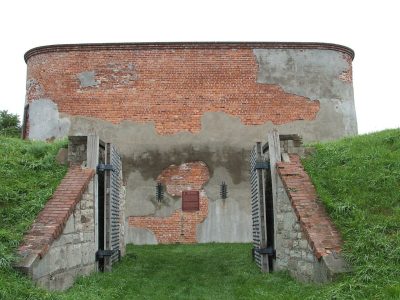
National Historic Site · 1814–1841Fort Mississauga223 Queen StreetPhoto: Radtek67 · Public domain · Commons file
 Top
National Historic Site · 1815–1860Niagara-on-the-LakePhoto: Satoru Kikuchi · CC BY 2.0 · Commons file
 Top
National Historic Site · 1820–1821Niagara Apothecary5 Queen StreetPhoto: JohnnyH2000 · CC BY-SA 4.0 · Commons file
 Top
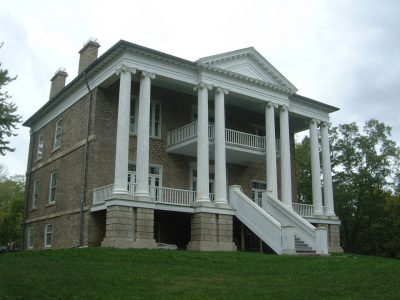
National Historic Site · 1834–1837Willowbank14487 Niagara ParkwayPhoto: Achim Hering · CC BY 3.0 · Commons file
 Top
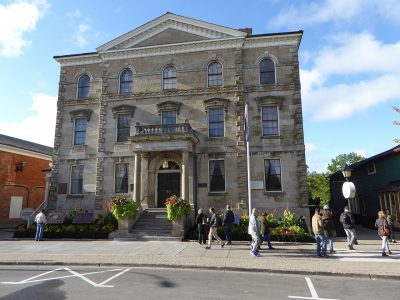
National Historic Site · 1846–1848Niagara District Court House26 Queen StreetPhoto: Pierre André · CC BY-SA 4.0 · Commons file
 Top
Classified Federal Heritage Building · 1796–1798Powder MagazinePhoto: Gogerr · CC BY 4.0 · Commons file
 Top
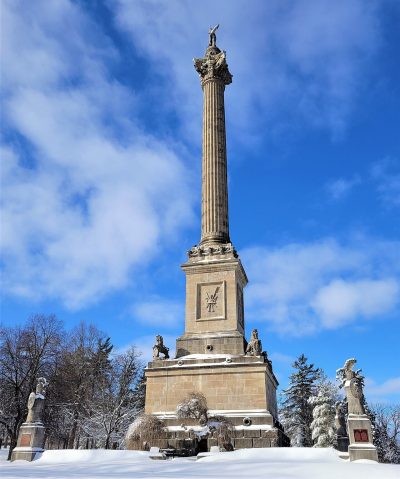
Classified Federal Heritage Building · 1853–1857Brock’s MonumentQueenston Heights National Historic Site of CanadaPhoto: Jesse Davis · CC BY-SA 3.0 · Commons file
National Historic Site · 1812–1813Vrooman's Battery14759 and 14767 Niagara Parkway
Show the other 1
National Historic Site · 1814–1815Fort Drummond
Other federal designations
Federal heritage in Niagara-on-the-Lake: 15 more places
The oldest, Gunshed, dates from 1812; the newest from 1939. Recognized Federal Heritage Buildings, heritage railway stations and lighthouses. Their designations span 1989 to 1991. Each one opens its own page.
All 15, A to Z
Blockhouse 1Blockhouse 2Blockhouse 3Commissariat StorehouseFort George National Historic Site, Artificer’s and Blacksmith ShopGuardhouse / Orderly RoomGunshedJunior Commissariat Officer’s QuartersMen’s Two-Storey BarracksNavy HallOctagonal BlockhouseOfficers' KitchenOfficers' QuartersPowder MagazinesTower
What’s designated
The list in Niagara-on-the-Lake starts with forts and military buildings, at 61%
Leading by designation: Fort George and Mississauga Point Lighthouse. Next come public buildings: 4. The record covers 6 kinds of building and site.
Forts and military buildings17
Public buildings4
Mills, shops and works2
Theatres, museums and memorials1
Stations, lighthouses and bridges1
Other places3
Kinds read from each place’s name and the functions its register gives; a building keeps the kind it was built as.
When designated
Over half of Niagara-on-the-Lake’s places were designated in 1991
The places by the year of their designation.
1991 · 15
192019401960198020002020
It began with Fort George in 1921. The busiest year was 1991, with 15. Nothing has been added since 2011.
Just outside
Just outside Niagara-on-the-Lake
Places the registers give to the town from within 5 km of its edge, nearest first.
Just outside Niagara-on-the-Lake: 1
| Battlefield of Fort GeorgeNational Historic Site · 100 m outside the town |
Homes by age
Niagara-on-the-Lake is still building: 10% of homes date from 2016 to 2021, against 4.1%
Niagara-on-the-Lake has an unusual share of homes built from 2001 to 2015: 32%, where most towns have 15%. 20% of Niagara-on-the-Lake’s homes predate 1961, close to the typical town’s 18%. Few of Niagara-on-the-Lake’s homes date from 1961 to 1980: 18%, the norm 27%.
20%
Before 1961
18%
1961–80
20%
1981–2000
32%
2001–15
10%
2016–21
Niagara-on-the-LakeTypical town
2021 Census, private dwellings by period of construction (Statistics Canada); the typical town is the middle Canadian town of 2,500 or more.
Born here
Niagara-on-the-Lake’s past in lives: 2 nationally designated
The widest known is Allan MacNab: 6 Wikipedia editions. Lewis Burwell comes first, born in 1790. Counting only births before 1914, there are 15. At the other end is Sidney Langford Hinde, from 1863.
Lewis Burwell
David Thompson
John Richardson
Allan MacNab
John Hamilton
Walter Hamilton Dickson
William B. Mitchell
Catharine McGill Crooks
Alexander McMicken
Janet Carnochan
George Sleeman
Henry William Allan
Hugh J. Chisholm
Arthur Campbell Garden
Sidney Langford Hinde
175017751800182518501875190019251950

Allan MacNab1798–1862 · Person of national historic significance (1937) · Canadian politician

William B. Mitchell1832–1900 · American lawyer, judge and politician

John Richardson1796–1852 · Person of national historic significance (1938) · British Army office…

Catharine McGill Crooks1833–1871 · Canadian botanist

Hugh J. Chisholm1847–1912 · Canadian-American businessman

Sidney Langford Hinde1863–1930 · Canadian born British physician
HA
Henry William Allan1843–1913 · Canadian politician

John Hamilton1802–1882 · Canadian politician
Everyone born in Niagara-on-the-Lake → Born before 1914. Birthplaces from Wikidata, each checked against Wikipedia; national historic persons from Parks Canada’s Directory of Federal Heritage Designations, matched by name and life years.
Towns its size
Niagara-on-the-Lake has the most of 16 towns its size
Towns of 19,900 to 20,300 residents, by places on the registers.
Niagara-on-the-Lake28
The middle one has 0. 11 of them have none.
Neighbours
Niagara-on-the-Lake and its neighbours
| Town | People | Places | Highest | Oldest |
|---|---|---|---|---|
| Niagara-on-the-Lake | 20,080 | 28 | 13 | 1796 |
| St. Catharines | 153,865 | 6 | 1 | 1851 |
| Niagara Falls | 113,983 | 7 | 6 | 1761 |
| Thorold | 33,844 | 1 | 1 | 1813 |
In brief
Niagara-on-the-Lake in brief
Of the homes standing in Niagara-on-the-Lake, 20% went up before 1961, against 18% in the typical town. The lists come to 28 historic places, 13 with the highest designation, including Fort George. Among the 16 towns nearest its size, none has more historic places. Around Fort Drummond, 3 of the places of the highest designation lie within 400 m.
forts and military buildings make up 61% of the list. By date, the years before Confederation lead: 20 of 28. Among the lives from its past: Allan MacNab (1798), William B. Mitchell (1832) and John Richardson (1796).
How to read these numbers
What this data can and can’t tell you
- People and events. The open directory puts its national historic persons nowhere, so a town shows one only on firm ground: a birth there, matched by name and life years, or a historic place there named for the person whose record says so. Events are left out.
- Map points. Parks Canada publishes no coordinates, so federal places are pinned where Wikidata puts them.
- Provincial and municipal lists. Outside Québec, provinces’ and municipalities’ heritage registers aren’t open data; their places are known only through Wikidata items with a register number, and only those with an encyclopedia article get a page.
- The federal register. Parks Canada’s Directory of Federal Heritage Designations lists every National Historic Site, federal heritage building, heritage railway station and lighthouse; the Canadian Register of Historic Places adds their statements in English and French.
- The grade. History is described, not graded, for every Canadian town.
- The tiers. Three tiers: the top for National Historic Sites, classified federal buildings and Québec’s classements, a second for the other federal designations, a third for provincial and municipal listings.
- Protection. Being on these registers doesn’t mean a building can’t change. Federal designation commemorates; protection is provincial or municipal, and those lists aren’t open here.
Questions about Niagara-on-the-Lake’s history
What is the oldest building in Niagara-on-the-Lake?
Fort George (National Historic Site): the first construction date on its record is 1796.
Which places in Niagara-on-the-Lake have the highest designation?
These: Fort George, Mississauga Point Lighthouse, Queenston Heights, Vrooman's Battery, Butler's Barracks and Fort Drummond, and 7 more.
Why might a heritage building in Niagara-on-the-Lake be missing here?
Its province’s and council’s own lists can’t be reused here; 8 further listings in Niagara-on-the-Lake show up only as Wikidata numbers.
How old are the homes in Niagara-on-the-Lake?
20% predate 1961, where the typical town has 18%.
Contains information licensed under the Open Government Licence – Canada (Parks Canada).
Sources: Parks Canada, Directory of Federal Heritage Designations · Canadian Register of Historic Places (federal extract) · Wikidata (CC0) for map points, other names and articles · Statistics Canada, 2021 Census (homes by period of construction). Under the Statistics Canada Open Licence.
Adapted from Statistics Canada (Census of Population 2021, population estimates 2025, 2021 census boundaries) under the Statistics Canada Open Licence; this does not constitute an endorsement by Statistics Canada. Neighbourhood names in some cities © OpenStreetMap contributors (ODbL).