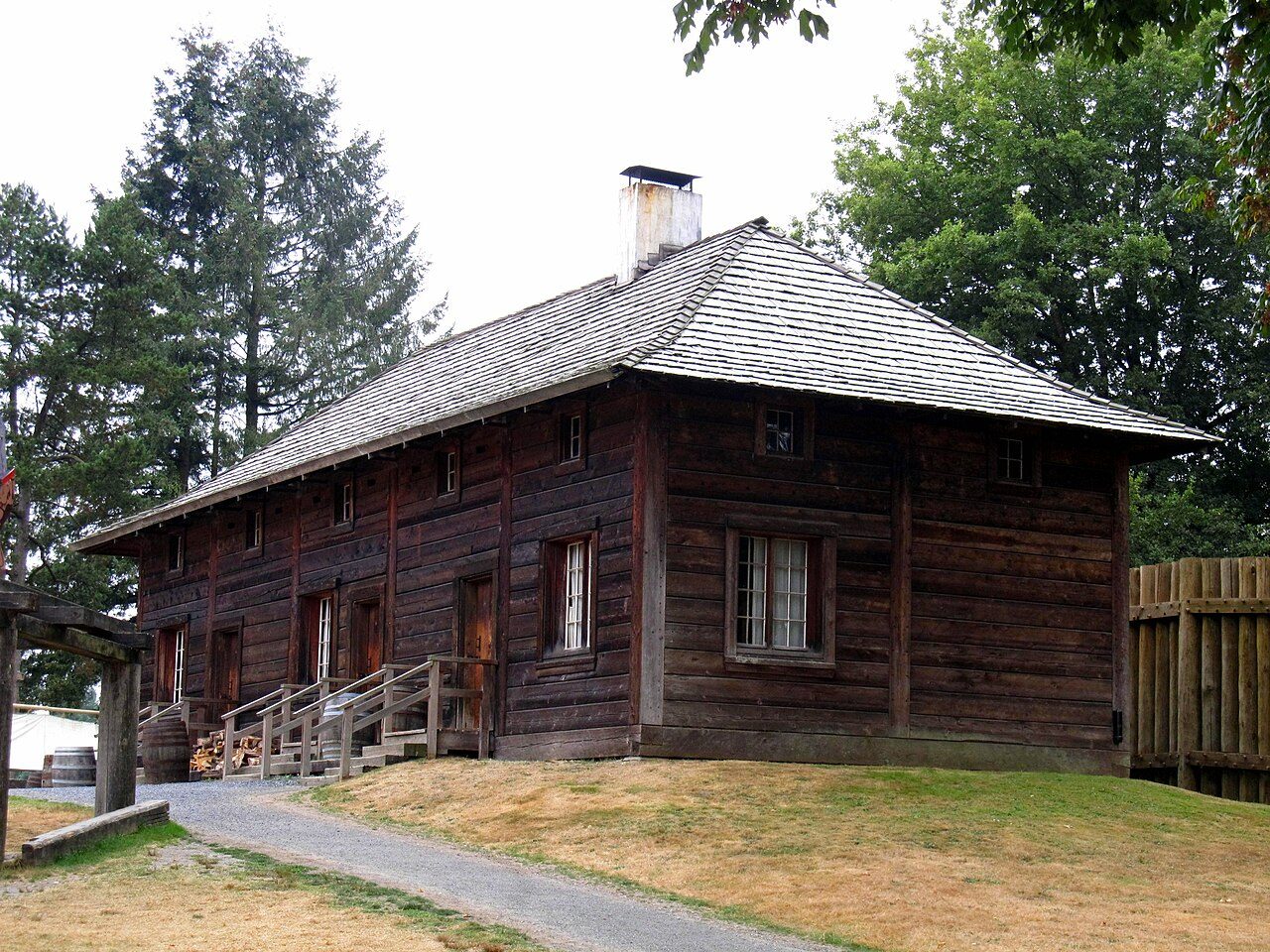
Servants' Quarters
In French: Résidence des domestiques
Fort Langley National Historic Site
This may be someone’s home: look from the street and respect the owners.
About Servants' Quarters
Servants' Quarters is one of 3 Recognized Federal Heritage Buildings in Langley. By its record, Servants' Quarters was built in 1957–1958. Its design is credited to J. Calder Peeps. 4 more historic places stand within 400 m of it.
The Servants’ Quarters, located along the west wall of Fort Langley is a one-and-a-half storey, rectangular structure. The building was erected with heavy timbers using the Red River frame construction method and is covered with a hipped roof. The designation is confined to the footprint of the building.
From the Canadian Register of Historic Places, Servants' Quarters · Open Government Licence – Canada · in the register’s words, not edited
Recognized is one of two ranks the federal government gives the heritage buildings it owns; Classified is the higher.
Finding Servants' Quarters
Langley


No second historic place is close enough here to make a walk of it.
4 within 300 m
Every place on the record within this distance; each opens its own page.
Questions about Servants' Quarters
Is Servants' Quarters protected?
The federal heritage policy applies while Canada owns it.
What is Servants' Quarters?
Servants' Quarters has been a Recognized Federal Heritage Building since 1997.
When was Servants' Quarters built?
Its register puts the building of Servants' Quarters at 1957–1958.
Can you visit Servants' Quarters?
Many historic buildings are private homes; this one can be seen from the street.
Contains information licensed under the Open Government Licence – Canada (Parks Canada).
Sources: Parks Canada, Directory of Federal Heritage Designations · Canadian Register of Historic Places (federal extract) · Photos: Wikimedia Commons, each credited with its licence and copied to our own server · Wikidata (CC0) for map points, other names and articles.
Adapted from Statistics Canada (Census of Population 2021, population estimates 2025, 2021 census boundaries) under the Statistics Canada Open Licence; this does not constitute an endorsement by Statistics Canada. Neighbourhood names in some cities © OpenStreetMap contributors (ODbL).