Alexandria dates to 1749, and 45 of its places are on the National Register
More historic than 88% of U.S. towns · #21 of 253 in Virginia. What drives it
Most of Alexandria was built recently: 9% of its homes predate 1940 and the median home dates from 1974. 45 places in town are on the National Register, among them 7 National Historic Landmarks and five historic districts with 2,418 buildings between them. Below: 2 old photos and papers, maps from 1885 on, and the census since 1790.
Founding year: Wikidata; Wikipedia’s history section gives the same year. First post office: 1775.The full story ↓
History grade
What drives Alexandria’s History grade
On its age, its old homes and the National Register, Alexandria is more historic than 88% of U.S. towns, #21 of 253 in Virginia. Its age holds the grade up; its share of homes from before 1940 pulls it down.
A
HistoryA character grade: shown, never part of Alexandria’s overall grade.
Among the 400 U.S. cities of 100,000 or more, Alexandria ranks #78 on History.
Virginia towns list more on the Register than most of the country (a typical Virginia town has 3.6 per 10,000 residents, the U.S. 2.4), so Alexandria’s 157 sits above most of its state (75% of Virginia towns have fewer) while its 2,459 historic buildings outnumber those of 99% of U.S. towns.
How sure. Graded on any two of the three inputs instead, the letter would range from B+ to A+. The pre-1940 share (±0.6 points) is firm at this size. Two sources give 1749.
Founding year: Wikidata (other dates in Quick answers). Homes: Census ACS 2020–24. National Register: National Park Service, May 2026 list; each listing counted once (boundary changes and added documentation belong to their listing), and a historic district counts its contributing buildings. How TownRatings grades history →
What stands out about Alexandria’s past
Read from the archive, the National Register and the record. The page puts what stands out first.
According to archaeologists' estimates, a succession of indigenous peoples began to occupy the Chesapeake and Tidewater region about 3,000 to 10,000 years ago. Various Algonquian-speaking peoples inhabited the lands in the Potomac River drainage area since at least the early 14th century.
In the summer of 1608, English settler John Smith explored the Potomac River and came into contact with the Patawomeck (loosely affiliated with the Powhatan) and Doeg tribes who lived on the Virginia side, as well as on Theodore Roosevelt Island, and the Piscataway (also known as the Conoy), who resided on the Maryland side. On this visit, Smith recorded the presence of a settlement called Assaomeck near the south bank of what is now Hunting Creek.
Passages that mention Alexandria, cut from the printed page as they were published.
Celebration of the first centennial of the municipal government of the city of Alexandria, Virginia1880 · page 28Read the page →
Read the text
first branch above Hunting Creek." Around this' warehouse gathered the hamlet of Belhaven. At this hamlet in 1749, "Wra. Ramsay, John Carlyle and their associates founded the town of Alexandria. The descendants of these gentlemen now among us show thut Alexandria has every reason to be proud of the men who laid the foundations of the town.
Text read by machine from the scan; it may contain errors.
Souvenir Virginia ter centennial of historic Alexandria, Va., past and present1907Read the page →
Read the text
Alexandria manufacturers are not as numerous as could be wished, but those we have are successful and that means more. The city and county of Alexandria offer Washington a most advantageous location for its manufacturing enterprises; m fact, it has been well said that Alexandria is the WORK- SHOP of the Nation's Capital, and it will be.
Text read by machine from the scan; it may contain errors.
Souvenir Virginia ter centennial of historic Alexandria, Va., past and present1907Read the page →
Read the text
The era of railroad building now began, and Alexandria took an active part in the work, beginning and partly building three lines of road — the Orange and .Alexandria, the Manassas Gap and the Alexandria, Loudoun, and Hampshire, in addition to which, just prior to the war, a line was built to the south end of the Old Long Bridge.
Text read by machine from the scan; it may contain errors.
Celebration of the first centennial of the municipal government of the city of Alexandria, Virginia1880 · page 39Read the page →
Read the text
Alexandria had now too an overwhelming rival nearer at hand. Washington city was already drawing population and trade from the Virginia side, and taking from Alexandria the little chance of prosperity still left. Against this rival the town was absolutely without defence. The wealth of the Union was used to build up the Federal Capital, but few and far between were the dollars spent in the Virginia portion of the District of Columbia. Deprived of the powerful aid which
Text read by machine from the scan; it may contain errors.
Scans and text from the Internet Archive. Books published in 1930 or earlier, which are in the public domain.
Timeline
Alexandria, 1748 to 1994
Woven from the archive, old maps, post office records, the National Register and the people born here.
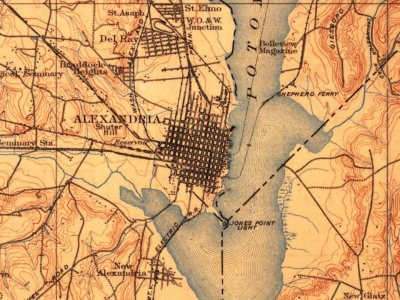
Every edition of the U.S. Geological Survey’s map of Alexandria. Tap a year, or press play to watch the town change.
1900Washington sheet · 1:62,500
U.S. Geological Survey historical topographic maps (public domain), via Esri’s collection of the scans. The red ring marks the center of Alexandria.
Every building
Alexandria, building by building, 1885–1921
Fire insurance maps drew every building, what it was made of and what it was used for, so insurers could price the risk of fire. Pick a year, then a sheet.
In 1749, according to Wikidata and Wikipedia’s history of the town. Alexandria’s post office opened in 1775, and the first U.S. census counted 2,748 people here in 1790.
How does Alexandria rank for history?
Alexandria is more historic than 88% of U.S. towns, #21 of 253 in Virginia. The History grade combines the town’s founding era, the share of homes built before 1940 and its National Register listings. It’s a character grade, so it isn’t part of the overall grade. How it works.
What is on the National Register in Alexandria?
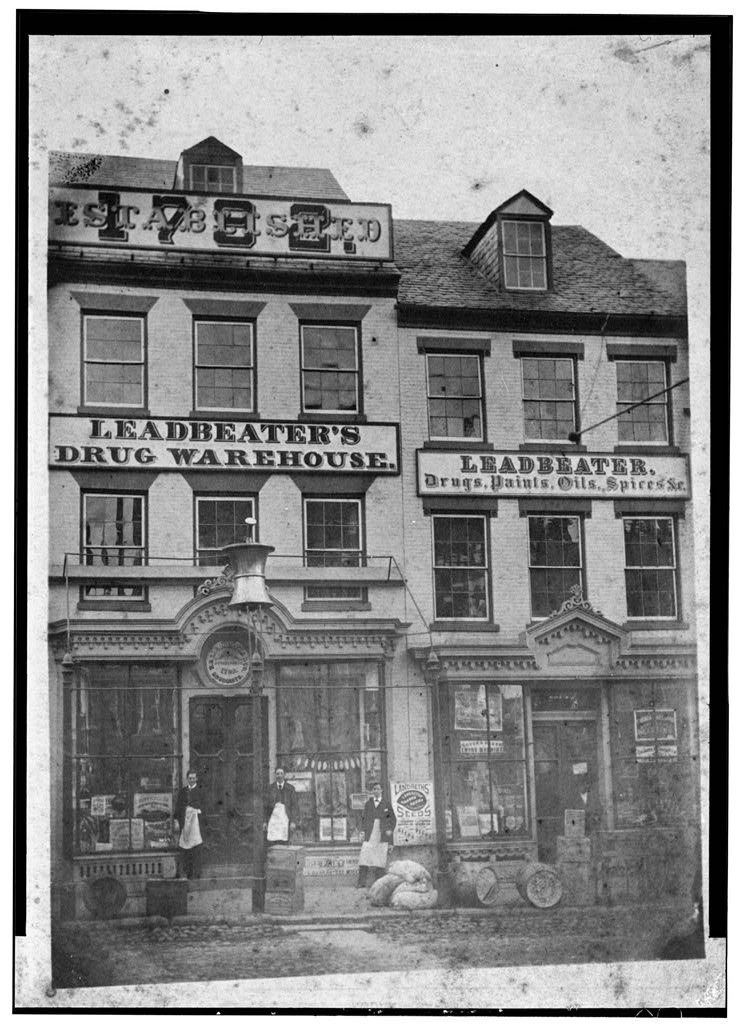
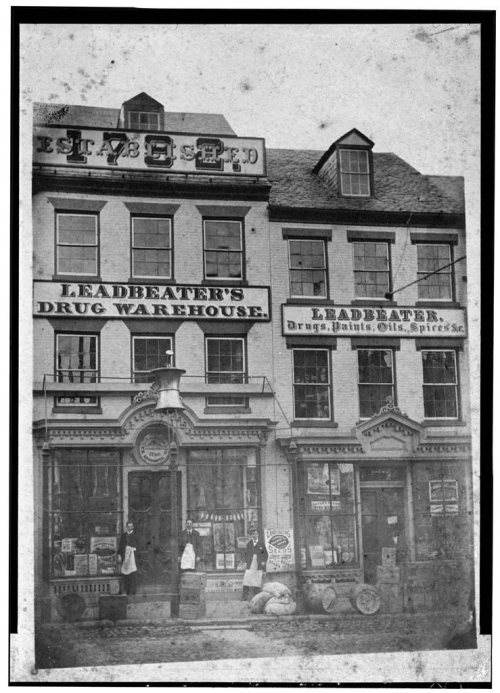
45 listings, 7 of them National Historic Landmarks: 29 buildings, among them the Stabler-Leadbeater Apothecary Shop (a National Historic Landmark since 2021) and the Gadsby's Tavern (listed 1966, the first), 5 historic districts with 2,418 contributing buildings, 5 sites, 1 structure, and 4 objects. 2,459 historic buildings in all.
How old are the homes in Alexandria?
9% of Alexandria’s homes were built before 1940 (Census estimate), against a typical 1.9% for a Virginia town; the median home was built in 1974.
Founding dates: Wikidata, Wikipedia, the U.S. post office records of Blevins & Helbock (CC0) and the Census. Homes by year built: Census ACS 2020–24. National Register of Historic Places: National Park Service (list of May 22, 2026). Old photos, postcards and papers: Wikimedia Commons, the Library of Congress and other public archives, credited on each item’s page. Maps: U.S. Geological Survey historical topographic maps (via Esri) and Sanborn fire-insurance maps (Library of Congress). History text and census tables: Wikipedia (CC BY-SA 4.0). Places that used to be: USGS Geographic Names Information System (2021).
From Wikimedia Commons (2), Wikidata (4), the National Register of Historic Places (45), Wikipedia, Wikidata and Wikipedia for famous people, U.S. Geological Survey historical maps, U.S. Census counts (via Wikipedia), the US Post Offices dataset (Blevins & Helbock), the USGS Geographic Names Information System, Sanborn fire insurance maps (Library of Congress) and old county and town histories (Internet Archive). Archive images are copied here with their credits and licenses, shown on each photo’s page. Refreshed monthly.


 ★ Landmark
 ★ Landmark
 ★ Landmark
 ★ Landmark
 ★ Landmark
 ★ Landmark
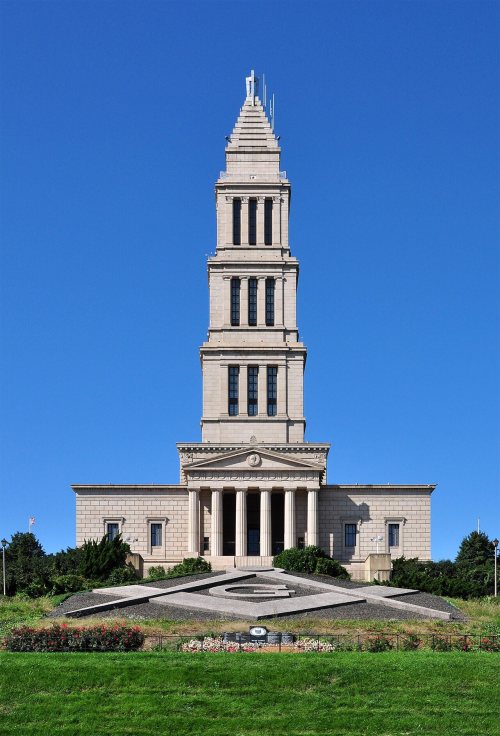 ★ Landmark