Guest, Sign inJoin

Post to Lancaster

We’ll email a one-tap link to publish your post. No password, and nothing is public until you click it.
Already a member? Sign in
A+History
History · Lancaster

Lancaster dates to 1730, and 54% of its homes were built before 1940

Among the most historic 1% of U.S. towns · #3 of 1,035 in Pennsylvania. What drives it

57 places in town are on the National Register, among them the Fulton Opera House, a National Historic Landmark, and ten historic districts with 14,077 buildings between them. Below: 10 old photos and papers, maps from 1888 on, and the census since 1790.

1730founded
57on the National Register
54%homes built before 1940
10old photos & papers
46famous people
From Lancaster’s archive · credits on each photo
Quick answers

How Lancaster began

When was Lancaster founded?

1730

Lancaster dates its founding to 1730 (Wikidata). It appears in the first U.S. census, 1790.

First census: 3,762 in 17902020 census: 58,039296 years

How historic is Lancaster?

A+

Among the most historic 1% of U.S. towns, on its age, its old homes and the National Register.

What drives the grade ↓
Founding year: Wikidata.The full story ↓
History grade

What drives Lancaster’s History grade

On its age, its old homes and the National Register, Lancaster is among the most historic 1% of U.S. towns, #3 of 1,035 in Pennsylvania. All 3 inputs put Lancaster near the top nationally; its National Register listings ranks highest.

A+
HistoryA character grade: shown, never part of Lancaster’s overall grade.
All U.S. towns we grade (21,289)Among the top 1%
NewerOlder
Pennsylvania towns of 2,500+ (1,035)#3 of 1,035

Pennsylvania towns list about as much on the Register as the country (a typical Pennsylvania town has 2.1 per 10,000 residents, the U.S. 2.4), so Lancaster’s 2,449 sits above most of its state (99% of Pennsylvania towns have fewer) while its 14,135 historic buildings outnumber those of 100% of U.S. towns.

How sure. Graded on any two of the three inputs instead, the letter would still be A+. The pre-1940 share (±2.7 points) is firm at this size. Two sources give 1730.

Founding year: Wikidata (other dates in Quick answers). Homes: Census ACS 2020–24. National Register: National Park Service, May 2026 list; each listing counted once (boundary changes and added documentation belong to their listing), and a historic district counts its contributing buildings. How TownRatings grades history →

What stands out about Lancaster’s past

Read from the archive, the National Register and the record. The page puts what stands out first.

★ What stands out · On the National Register

57 listings protect 14,135 historic buildings

The country’s official list of buildings and places worth saving. One is a National Historic Landmark, the highest tier. Boundary changes and added documentation are counted with their listing.

places listed
57
National Historic Landmark
1
Fulton Opera House
historic buildings protected
14,135
each building in a district counts
first listed
1969
Fulton Opera House
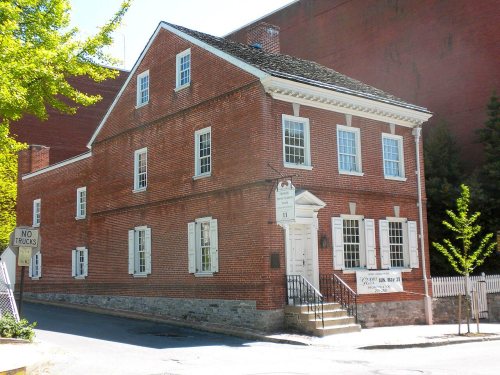
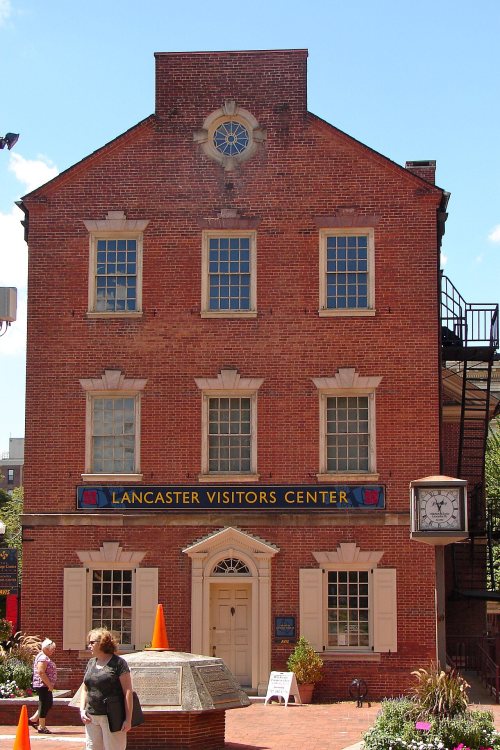
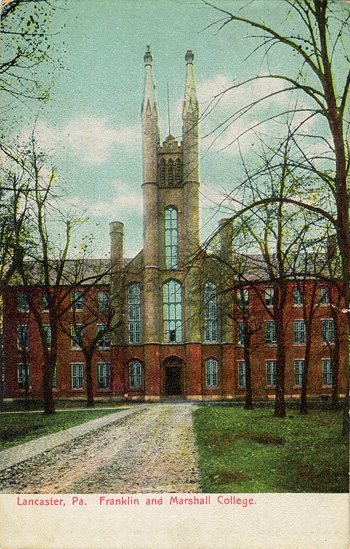
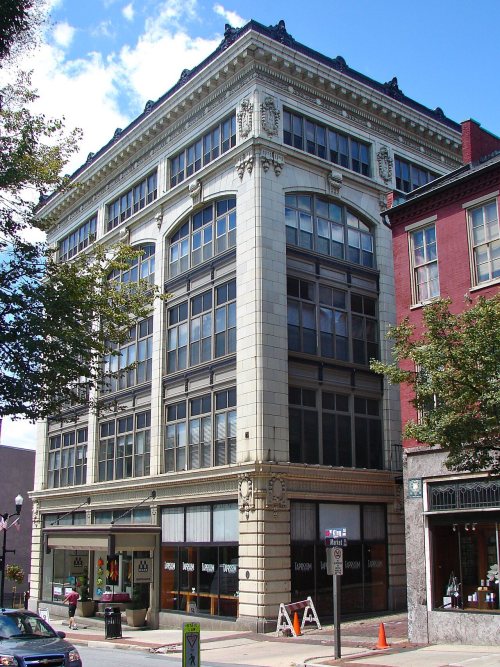
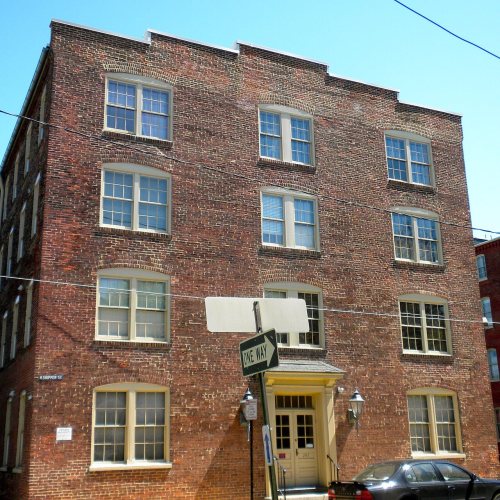
Andrew Ellicott House, built 1780Old City HallCentral Market, built 1889Soldiers and Sailors Monument, built 1874Old Main, Goethean Hall, and Diagnothian HallLancaster County CourthouseHager BuildingSteinman Hardware StoreLancaster Historic DistrictSprenger BreweryGermania Turnverein BuildingU.S. Post OfficeHess, A. B., Cigar Factory, and Warehouses, built 1908Jasper Yeates HouseHenry Krauskap House, and StoreLancaster CrematoriumStevens High SchoolKirk Johnson BuildingNew Era BuildingLancaster Trust CompanyReilly Brothers and Raub BuildingWagner's, Charlie, CafeWest LawnHamilton ApartmentsB.F. Good & Company Leaf Tobacco Warehouse, built 1899Follmer, Clogg and Company Umbrella Factory, built 1892Farmer's Southern MarketNissly-Stauffer Tobacco WarehousesNorth Prince Street Historic DistrictNorth Charlotte Street Historic DistrictAmerican/Consolidated Tobacco CompaniesBasch & Fisher Tobacco WarehouseBowman, Jacob, Tobacco WarehouseBrimmer, John, Tobacco WarehouseEisenlohr-Bayuk Tobacco Historic DistrictFrey, Jacob L., Tobacco WarehouseFriedman, Henry B., Tobacco WarehouseHarrisburg Avenue Tobacco Historic DistrictMartin, B. B., Tobacco WarehouseMcGovern, Edward, Tobacco WarehouseMiller, David H., Tobacco Warehouse, built 1900Milleysack, J. B. Cigar FactoryN. Shippen-Tobacco Avenue Historic DistrictSchnader, R. K. & Sons, Tobacco WarehouseSchnader, Walter, Tobacco WarehouseSherman, L. G., Tobacco WarehouseSlater Cigar CompanyTeller Brothers-Reed Tobacco Historic DistrictLancaster ArmoryConestoga Cork Works BuildingW.W. Griest Building, built 1925William Montgomery HouseLancaster City Historic DistrictFranklin and Marshall College Campus Historic DistrictWoodward Hill Cemetery, built 1850Gen. Edward Hand HouseFulton Opera House★
BuildingsDistrictsSites★ landmark

Architectural styles listings

Tobacco Warehouse18
Victorian6
Beaux Arts5
Georgian4
Romanesque Revival4
Gothic Revival4
All 57 listings
Steinman Hardware StoreBuilding · listed 1979Lancaster Historic DistrictDistrict · listed 1979Sprenger BreweryBuilding · listed 1979Germania Turnverein BuildingBuilding · listed 1980U.S. Post OfficeBuilding · listed 1981Hess, A. B., Cigar Factory, and WarehousesBuilding · listed 1982Jasper Yeates HouseBuilding · listed 1982Henry Krauskap House, and StoreBuilding · listed 1982Lancaster CrematoriumBuilding · listed 1983Stevens High SchoolBuilding · listed 1983Kirk Johnson BuildingBuilding · listed 1983New Era BuildingBuilding · listed 1983Lancaster Trust CompanyBuilding · listed 1983Reilly Brothers and Raub BuildingBuilding · listed 1983Wagner's, Charlie, CafeBuilding · listed 1983West LawnBuilding · listed 1984Hamilton ApartmentsBuilding · listed 1984B.F. Good & Company Leaf Tobacco WarehouseBuilding · listed 1985Follmer, Clogg and Company Umbrella FactoryBuilding · listed 1986Farmer's Southern MarketBuilding · listed 1986Nissly-Stauffer Tobacco WarehousesBuilding · listed 1989North Prince Street Historic DistrictDistrict · listed 1989North Charlotte Street Historic DistrictDistrict · listed 1989American/Consolidated Tobacco CompaniesBuilding · listed 1990Basch & Fisher Tobacco WarehouseBuilding · listed 1990Bowman, Jacob, Tobacco WarehouseBuilding · listed 1990Brimmer, John, Tobacco WarehouseBuilding · listed 1990Eisenlohr-Bayuk Tobacco Historic DistrictDistrict · listed 1990Frey, Jacob L., Tobacco WarehouseBuilding · listed 1990Friedman, Henry B., Tobacco WarehouseBuilding · listed 1990Harrisburg Avenue Tobacco Historic DistrictDistrict · listed 1990Martin, B. B., Tobacco WarehouseBuilding · listed 1990McGovern, Edward, Tobacco WarehouseBuilding · listed 1990Miller, David H., Tobacco WarehouseBuilding · listed 1990Milleysack, J. B. Cigar FactoryBuilding · listed 1990N. Shippen-Tobacco Avenue Historic DistrictDistrict · listed 1990Schnader, R. K. & Sons, Tobacco WarehouseBuilding · listed 1990Schnader, Walter, Tobacco WarehouseBuilding · listed 1990Sherman, L. G., Tobacco WarehouseBuilding · listed 1990Slater Cigar CompanyBuilding · listed 1990Teller Brothers-Reed Tobacco Historic DistrictDistrict · listed 1990Lancaster ArmoryBuilding · listed 1991Conestoga Cork Works BuildingBuilding · listed 1996W.W. Griest BuildingBuilding · listed 1999William Montgomery HouseBuilding · listed 2000Lancaster City Historic DistrictDistrict · listed 2001Franklin and Marshall College Campus Historic DistrictDistrict · listed 2003Woodward Hill CemeteryDistrict · listed 2005Gen. Edward Hand HouseBuilding · listed 1976

National Park Service, National Register of Historic Places. Photos from Wikimedia Commons, credited on each place’s page.

The story

How Lancaster came to be

From Wikipedia’s history of Lancaster.

Read it all →

Originally called Hickory Town, Lancaster was renamed after the English city of Lancaster by native John Wright. Its symbol, the red rose, is from the House of Lancaster. Lancaster was part of the 1681 Penn's Woods Charter of William Penn, and was laid out by James Hamilton in 1734. It was incorporated as a borough in 1742 and incorporated as a city in 1818.

In the summer of 1744 the Lancaster courthouse was the venue for an important colonial treaty between the Haudenosaunee Confederacy and the Provinces of Pennsylvania, Maryland, and Virginia. Conrad Weiser served as interpreter, and the text of the treaty was soon after published by Benjamin Franklin.

Text from Wikipedia, licensed CC BY-SA 4.0.

From the old history books

What they wrote about Lancaster, 1845–1917

Passages that mention Lancaster, cut from the printed page as they were published.

the said court house except to use it as a court house and for no other purpose — "Therefore be it resolved by the Select and Common Councils of the city of Lancaster that the Mayor and presidents of councils be and they are hereby instructed to attend said sale and give public notice that the coun…
The story of Lancaster1917 · page 241Read the page →
Read the text

the said court house except to use it as a court house and for no other purpose — "Therefore be it resolved by the Select and Common Councils of the city of Lancaster that the Mayor and presidents of councils be and they are hereby instructed to attend said sale and give public notice that the councils of the city of Lancaster in behalf of the people of said city and county of

Text read by machine from the scan; it may contain errors.
authorised and required to allow the corporation of the [City] of Lancaster to change the location of the Philadelphia and Columbia railroad, between the Httle and big Conestoga bridges, so that the same shall pass through the City of Lancaster, at or near the intersection of North Queen and Chestn…
The story of Lancaster1917 · page 157Read the page →
Read the text

authorised and required to allow the corporation of the [City] of Lancaster to change the location of the Philadelphia and Columbia railroad, between the Httle and big Conestoga bridges, so that the same shall pass through the City of Lancaster, at or near the intersection of North Queen and Chestnut Streets, and to grade and form the same for a double track of railway, for the performance of which

Text read by machine from the scan; it may contain errors.
people of the county to call meetings to devise measures to obviate the sufferings of the destitute. " In pursuance of a resolution passed at a large and respectable meeting of the freemen of Lancaster county, in the town of Lancaster, it was stated that a number, of the settlers had severely suffe…
History of Lancaster and York Counties1845 · page 296Read the page →
Read the text

people of the county to call meetings to devise measures to obviate the sufferings of the destitute. " In pursuance of a resolution passed at a large and respectable meeting of the freemen of Lancaster county, in the town of Lancaster, it was stated that a number, of the settlers had severely suffered, both from the hardships of a new settlement and the hostilities of the Indians — and Note. — Gen. H. Miller was born near Lancaster city Feb. 13,

Text read by machine from the scan; it may contain errors.
early as 1717 or 1719. They were the first after the Mennonites and Qualvers, to erect houses for religious worship. We could not obtain the names of their first ministers, except those who labored principally in the city of Lancaster. In 1744, the Episcopalians held a meeting at Lancaster, for the…
History of Lancaster and York Counties1845 · page 457Read the page →
Read the text

early as 1717 or 1719. They were the first after the Mennonites and Qualvers, to erect houses for religious worship. We could not obtain the names of their first ministers, except those who labored principally in the city of Lancaster. In 1744, the Episcopalians held a meeting at Lancaster, for the organization of a parish. The Rev. Richard Locke, an itinerant missionary, was the first ofiiciating minister. The following is the order in which others succeeded him : 1751, Rev. Geo. Craig ;

Text read by machine from the scan; it may contain errors.

Scans and text from the Internet Archive. Books published in 1930 or earlier, which are in the public domain.

Timeline

Lancaster, 1730 to 1985

Woven from the archive, old maps, post office records, the National Register and the people born here.

  1. 18th century
  2. 1730
    FoundingLancaster is established
  3. 1744In the archiveTREATY OF LANCASTER – FRANKLIN, Benjamin, printer (1744)
  4. 1780BuiltAndrew Ellicott House is built
  5. 19th century
  6. 1841In the archivePaxton massacre
  7. 1863In the archiveLancaster, Pennsylvania - Union League Civil War Token Medal (1863) Stevehayden 01
  8. 1874BuiltSoldiers and Sailors Monument is built
  9. 1889BuiltCentral Market is built
  10. 20th century
  11. 1902On the mapFirst mapped by the U.S. Geological Survey
  12. 1908BuiltHess, A. B., Cigar Factory, and Warehouses is built
  13. 1969LandmarkFulton Opera House named a National Historic Landmark
  14. 1972Born hereTodd Young is born here
  15. 1981Born hereTaylor Kinney is born here
  16. 1985Born hereJonathan Groff is born here
  17. 1985Born hereBeth Behrs is born here
By decade

Lancaster, decade by decade

3 decades in the archive, from the 1740s to the 1860s. Scroll each row; tap a photo for its story.

On the map

Lancaster on the map, 1902 to 1995

Every edition of the U.S. Geological Survey’s map of Lancaster. Tap a year, or press play to watch the town change.

Lancaster on the 1902 USGS mapLancaster on the 1943 USGS mapLancaster on the 1956 USGS mapLancaster on the 1969 USGS mapLancaster on the 1976 USGS mapLancaster on the 1987 USGS mapLancaster on the 1995 USGS map1902Lancaster sheet · 1:62,500

U.S. Geological Survey historical topographic maps (public domain), via Esri’s collection of the scans. The red ring marks the center of Lancaster.

Every building

Lancaster, building by building, 1888–1912

Fire insurance maps drew every building, what it was made of and what it was used for, so insurers could price the risk of fire. Pick a year, then a sheet.

Lancaster fire insurance map, 1888, sheet 21888Sheet 2 of 25
Edition
BrickWoodStone

Sanborn Map Company, via the Library of Congress. Editions published in 1930 or earlier, which are in the public domain.

Then & now

Stand where they stood

No then-and-now pairs yet. Take a photo from the same spot as an old one and they appear here side by side.

Paxton massacre
Retake this viewPaxton massacre, 1841

Find the spot, match the angle, and add your photo. It becomes the first then-and-now pair on Lancaster’s page.

Retake this view · +15
People over time

Lancaster, census by census

05,00010,00015,00020,00025,00030,00035,00040,00045,00050,00055,00060,00065,00070,00018001850190019502000Peak: 63,774

Between 3,762 and 63,774 people in every census since 1790.

24 censuses, 1790–2020.

U.S. Census Bureau decennial counts, from the census table on Lancaster’s Wikipedia page.

Famous people

46 famous people were born in Lancaster

Writers, athletes, leaders and more, ranked by how widely they’re known.

See all →
Places that used to be

Old corners, places now gone and burying grounds

Old hamlets and crossroads still carry their names on the map.

Hamlets and corners on the map
Conestoga GardensHilltop AcresSunnyside
Gone or out of use
Benners Quarrymine
18cemeteries and burying grounds inside Lancaster
Bethel African Methodist EpiscopalCedar LawnEnglish PresbyterianFirst Presbyterian Church Memorial GardensFirst Reformed Church Memorial GardenGreenwoodLancasterRiverviewRudisill FamilySaint JamesSaint Johns Episcopal Church ColumbariumSaint Joseph Roman Catholic OldSaint Lukes United Church of Christ Memorial GardensSaint Mary'sShreiner'sTrinity Lutheran ChurchyardWoodward HillZion Lutheran

Places and cemeteries from the USGS Geographic Names Information System (2021).

Help out

Finish Lancaster’s story

Most archives stop around 1920. The photos from after that are in family albums, not libraries.

Decades since 1900 with photos
00s10s20s30s40s50s60s70s80s90s
0 of 10 decades. The empty ones are waiting for someone’s album.
Stories next door

History across the town line

Each neighbor’s History grade, on the same three inputs.

Questions about Lancaster’s history

What year was Lancaster founded?

In 1730, according to Wikidata. the first U.S. census counted 3,762 people here in 1790.

How does Lancaster rank for history?

Lancaster is among the most historic 1% of U.S. towns, #3 of 1,035 in Pennsylvania. The History grade combines the town’s founding era, the share of homes built before 1940 and its National Register listings. It’s a character grade, so it isn’t part of the overall grade. How it works.

What is on the National Register in Lancaster?

57 listings: 46 buildings, among them the Fulton Opera House (a National Historic Landmark since 1969), 10 historic districts with 14,077 contributing buildings, and 1 site. 14,135 historic buildings in all.

How old are the homes in Lancaster?

54% of Lancaster’s homes were built before 1940 (Census estimate, ±2.7 points), against a typical 18% for a Pennsylvania town; the median home was built in 1938.

Memory lane

What the archives can’t tell you, neighbors can.

Town Square →
Start a conversation
Sources

Where this page comes from

Founding dates: Wikidata, Wikipedia, the U.S. post office records of Blevins & Helbock (CC0) and the Census. Homes by year built: Census ACS 2020–24. National Register of Historic Places: National Park Service (list of May 22, 2026). Old photos, postcards and papers: Wikimedia Commons, the Library of Congress and other public archives, credited on each item’s page. Maps: U.S. Geological Survey historical topographic maps (via Esri) and Sanborn fire-insurance maps (Library of Congress). History text and census tables: Wikipedia (CC BY-SA 4.0). Places that used to be: USGS Geographic Names Information System (2021).

From Wikimedia Commons (10), Wikidata (2), the National Register of Historic Places (57), Wikipedia, Wikidata and Wikipedia for famous people, U.S. Geological Survey historical maps, U.S. Census counts (via Wikipedia), the USGS Geographic Names Information System, Sanborn fire insurance maps (Library of Congress) and old county and town histories (Internet Archive). Archive images are copied here with their credits and licenses, shown on each photo’s page. Refreshed monthly.