Canonsburg dates to 1789, and 30% of its homes were built before 1940
More historic than 87% of U.S. towns · #226 of 1,035 in Pennsylvania. What drives it
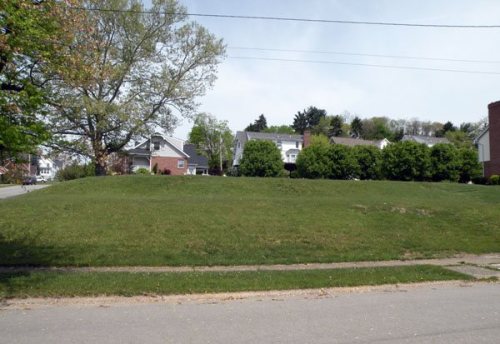
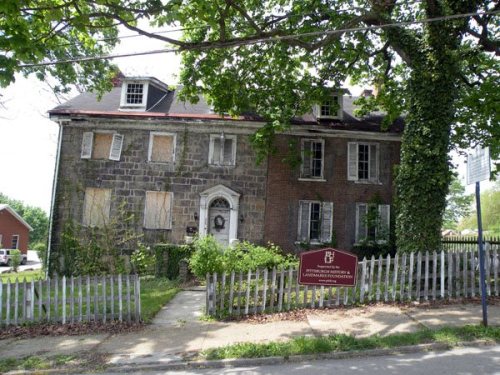
Its Register listings are the Roberts House, the Hawthorne School and the Canonsburg Armory. Below: 18 old photos and papers, maps from 1896 on, and the census since 1820.
On its age, its old homes and the National Register, Canonsburg is more historic than 87% of U.S. towns, #226 of 1,035 in Pennsylvania. All 3 inputs are above most U.S. towns; its share of homes from before 1940 ranks highest and its National Register listings lowest.
A
HistoryA character grade: shown, never part of Canonsburg’s overall grade.
Pennsylvania towns list about as much on the Register as the country (a typical Pennsylvania town has 2.1 per 10,000 residents, the U.S. 2.4), so Canonsburg’s 3.1 sits near the middle of its state (61% of Pennsylvania towns have fewer) while its 3 listings outnumber those of 65% of U.S. towns.
How sure. Graded on any two of the three inputs instead, the letter would range from A− to A. The pre-1940 share is a Census survey estimate (±5.1 points). Two sources give 1789.
Founding year: Wikipedia (other dates in Quick answers). Homes: Census ACS 2020–24. National Register: National Park Service, May 2026 list; each listing counted once (boundary changes and added documentation belong to their listing), and a historic district counts its contributing buildings. How TownRatings grades history →
What stands out about Canonsburg’s past
Read from the archive, the National Register and the record. The page puts what stands out first.
Nothing in the archives for these yearsWeddings on Main Street, storms, parades, school pictures, the old store. If it’s in your family album, it belongs here.
Sometime prior to May 1780, Colonel John Canon, a common miller who served as justice of the Virginia courts at Fort Pitt, purchased some land around Chartiers Creek from the state of Virginia. The state had claimed what is now southwestern Pennsylvania in a dispute that would not finally be settled until later in the decade. In 1781 Pennsylvania carved Washington County out of Westmoreland County, and the county seat was established at Washington. The notes of the first session of the Washington County Court during that year indicate a call for a road from Canon's mill to Pittsburgh. The road to Pittsburgh, called Pitt Street, remains in part today as an archaic and indirect route to the city. The first surviving plat of the town is from April 15, 1788. Lots were sold around Canon's property, and the emerging town took the name of Canonsburg shortly thereafter.
Passages that mention Canonsburg, cut from the printed page as they were published.
20th century history of the city of Washington and Washington County, Pennsylvania1910 · page 987Read the page →
Read the text
David Bebout, father of subject, was born Sept. 3, 1832, on the home farm near Canonsburg, where he remained until 15 years of age, after which he spent five years learning the cabinetmaker 's trade with Joseph Huston, of Canonsburg, and two years as a journeyman, and then conducted a cabinet shop and furniture store at Canonsburg for many years, and subsequently became the first station agent of the Pennsylvania Rail-
Text read by machine from the scan; it may contain errors.
History of Washington County, Pennsylvania1882 · page 615Read the page →
Read the text
Simpson, trustees of the Associate Congregation of Cliartiers township, four acres, two roods, and fifteen perches of land, situated about one mile southwest of the town of Canonsburg, on which they erected a church, and the remaining portion was used as a burial-place by the people of Canonsburg and its vicinity. Upon the decision of the congregation, in 1869, to erect a church in the borough of Canonsburg,
Text read by machine from the scan; it may contain errors.
History of Washington County, Pennsylvania1882 · page 613Read the page →
Read the text
The Presbyterian Church of Canonsburg.'— In 1830 a petition was presented to the Presbytery of Ohio (now Pittsburgh) by the people of Canonsburg and vicinity, asking for the organization of a new church to be located in the village of Canonsburg.
Text read by machine from the scan; it may contain errors.
20th century history of the city of Washington and Washington County, Pennsylvania1910 · page 842Read the page →
Read the text
After his military duties were thus honorably and patriotically performed, Mr. Cook returned to Canonsburg and engaged in the coal business and in mining until 1902, retiring from that industry then and taking up real estate interests. He has various valuable investments, being a director in the Citizens ' Trust Company at Canonsburg; is interested in the North Strabane Water Works Company, of Canonsburg, and also with the Cecil
Text read by machine from the scan; it may contain errors.
Scans and text from the Internet Archive. Books published in 1930 or earlier, which are in the public domain.
Timeline
Canonsburg, 1789 to 1933
Woven from the archive, old maps, post office records, the National Register and the people born here.
Fire insurance maps drew every building, what it was made of and what it was used for, so insurers could price the risk of fire. Pick a year, then a sheet.
In 1789, according to Wikipedia’s history of the town. the census of 1820 counted 440 people here.
How does Canonsburg rank for history?
Canonsburg is more historic than 87% of U.S. towns, #226 of 1,035 in Pennsylvania. The History grade combines the town’s founding era, the share of homes built before 1940 and its National Register listings. It’s a character grade, so it isn’t part of the overall grade. How it works.
What is on the National Register in Canonsburg?
Three places: the Roberts House (listed 1975), the Hawthorne School (1986) and the Canonsburg Armory (1989).
How old are the homes in Canonsburg?
30% of Canonsburg’s homes were built before 1940 (Census estimate, ±5.1 points), against a typical 18% for a Pennsylvania town; the median home was built in 1963.
Founding dates: Wikidata, Wikipedia, the U.S. post office records of Blevins & Helbock (CC0) and the Census. Homes by year built: Census ACS 2020–24. National Register of Historic Places: National Park Service (list of May 22, 2026). Old photos, postcards and papers: Wikimedia Commons, the Library of Congress and other public archives, credited on each item’s page. Maps: U.S. Geological Survey historical topographic maps (via Esri) and Sanborn fire-insurance maps (Library of Congress). History text and census tables: Wikipedia (CC BY-SA 4.0). Places that used to be: USGS Geographic Names Information System (2021).
From Wikimedia Commons (29), Wikidata (1), the National Register of Historic Places (3), Wikipedia, U.S. Geological Survey historical maps, U.S. Census counts (via Wikipedia), the USGS Geographic Names Information System, Sanborn fire insurance maps (Library of Congress) and old county and town histories (Internet Archive). Archive images are copied here with their credits and licenses, shown on each photo’s page. Refreshed monthly.


 1880
 1897
 1897
 1897
 1897
 c. 1900
 1903
 1903
 1903
 1903
 1923
 1933
 1933
 1933
 1933
 1933
 1933
 1938
 2012
 2012
 2010
 2010
 2008
 2008
 2008
 2008
 2007
 2007
 c. 2003