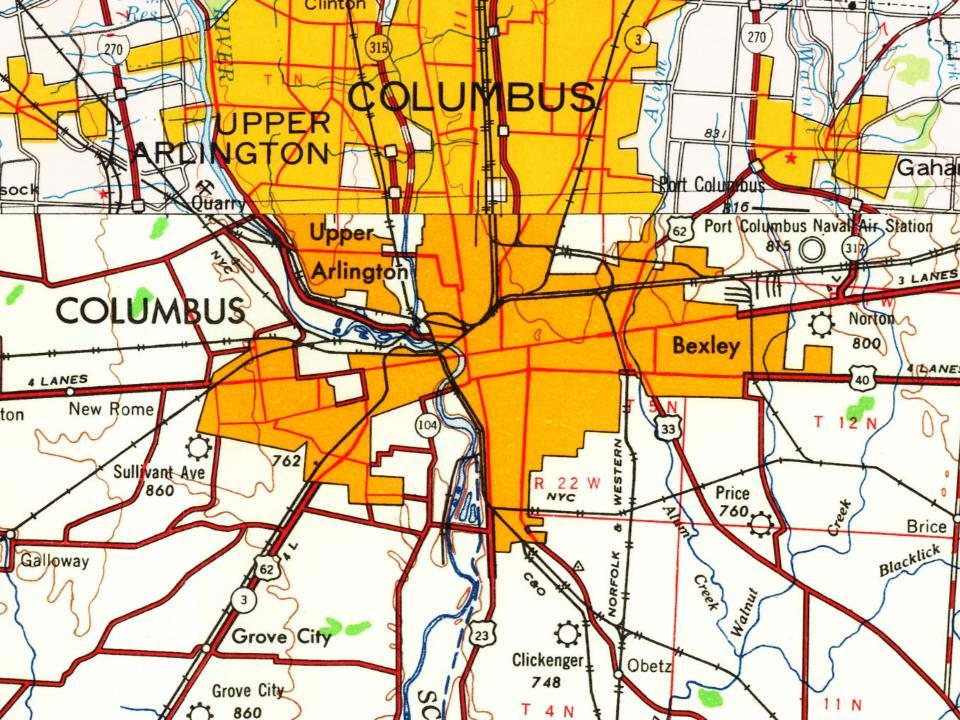
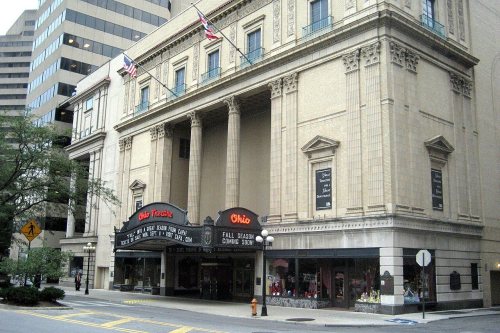
 ★ Landmark
 ★ Landmark


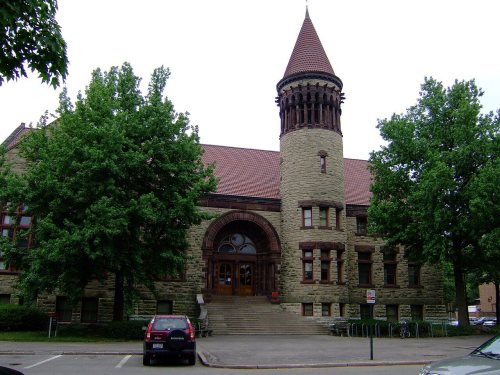

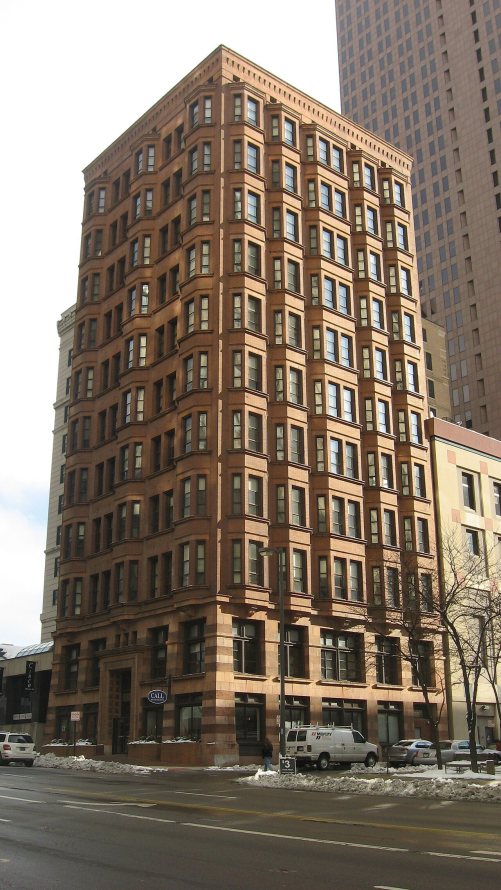

How Columbus came to be
From Wikipedia’s history of Columbus.
Between 1000 B.C. and 1700 A.D., the Columbus metropolitan area was a center to indigenous cultures known as the Mound Builders, including the Adena, Hopewell and Fort Ancient peoples. Remaining physical evidence of the cultures are their burial mounds and what they contained. Most of Central Ohio's remaining mounds are located outside of Columbus city boundaries, though the Shrum Mound is maintained, now as part of a public park and historic site. The city's Mound Street derives its name from a mound that existed by the intersection of Mound and High Streets. The mound's clay was used in bricks for most of the city's initial brick buildings; many were subsequently used in the Ohio Statehouse. The city's Ohio History Center maintains a collection of artifacts from these cultures.
Text from Wikipedia, licensed CC BY-SA 4.0.


 1865
 c. 1865
 c. 1865
 c. 1865
 c. 1865
 1872