Founding year: the first Yorkville post office (Blevins & Helbock, CC0).The full story ↓
History grade
What drives Yorkville’s History grade
On its age, its old homes and the National Register, Yorkville is more historic than 49% of U.S. towns, #679 of 758 in New York. Its share of homes from before 1940 holds the grade up; its National Register listings pull it down.
B−
HistoryA character grade: shown, never part of Yorkville’s overall grade.
New York towns list more on the Register than most of the country (a typical New York town has 12.3 per 10,000 residents, the U.S. 2.4), so Yorkville’s 0.0 sits below most of its state (10% of New York towns have fewer) while its 0 listings outnumber those of 23% of U.S. towns.
How sure. Graded on any two of the three inputs instead, the letter would range from D to B+. The pre-1940 share is a Census survey estimate (±12.0 points). The founding year is the first post office, not a stated founding date.
Founding year: the first post office (other dates in Quick answers). Homes: Census ACS 2020–24. National Register: National Park Service, May 2026 list; each listing counted once (boundary changes and added documentation belong to their listing), and a historic district counts its contributing buildings. How TownRatings grades history →
What stands out about Yorkville’s past
Read from the archive, the National Register and the record. The page puts what stands out first.
The early population was composed of workers from the textile mills in adjacent New York Mills. The village was incorporated in 1902. On April 5, 1912 martial law was proclaimed to stop rioting textile strikers in Yorkville, Utica, and New York Mills.
Once supported by manufacturing, the area has lost most of jobs in this field. Hyosung USA operated a 240,000 square foot reinforced fabric lining plant on 2214 Whitesboro Street. Formerly Utica Converters, the plant was acquired by Hyosung in 2008 and closed in 2013 laying off 85. Built in 1908, the plant was once a Goodyear plant.
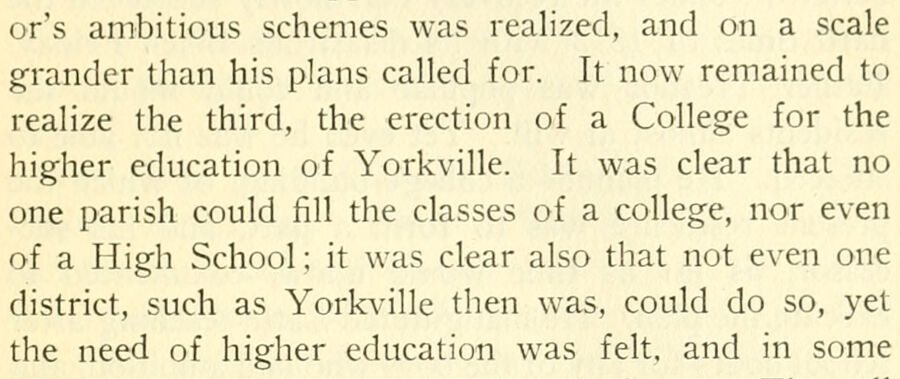
or's ambitious schemes was realized, and on a scale grander than his plans called for. It now remained to realize the third, the erection of a College for the higher education of Yorkville. It was clear that no one parish could fill the classes of a college, nor even of a High School; it was clear also that not even one district, such as Yorkville then was, could do so, yet the need of higher education was felt, and in some
Text read by machine from the scan; it may contain errors.
The story of St. Lawrence and St. Ignatius parish in Yorkville has been woven, in the main, about the construction of the churches and the efforts of the various pastors from 1851 to 1916. But much remained to be said that could not so easily be entwined about that story without spoiling the unity of the narrative; and since the work began, some additional facts have come to light which were not available when the
Text read by machine from the scan; it may contain errors.
Scans and text from the Internet Archive. Books published in 1930 or earlier, which are in the public domain.
Timeline
Yorkville, 1895 to 1987
Woven from the archive, old maps, post office records, the National Register and the people born here.
Nothing in the archives for these yearsWeddings on Main Street, storms, parades, school pictures, the old store. If it’s in your family album, it belongs here.
The Yorkville post office opened in 1889, the earliest record of the town by name (U.S. post office records).
How does Yorkville rank for history?
Yorkville is more historic than 49% of U.S. towns, #679 of 758 in New York. The History grade combines the town’s founding era, the share of homes built before 1940 and its National Register listings. It’s a character grade, so it isn’t part of the overall grade. How it works.
How old are the homes in Yorkville?
40% of Yorkville’s homes were built before 1940 (Census estimate, ±12.0 points), against a typical 27% for a New York town; the median home was built in 1950.
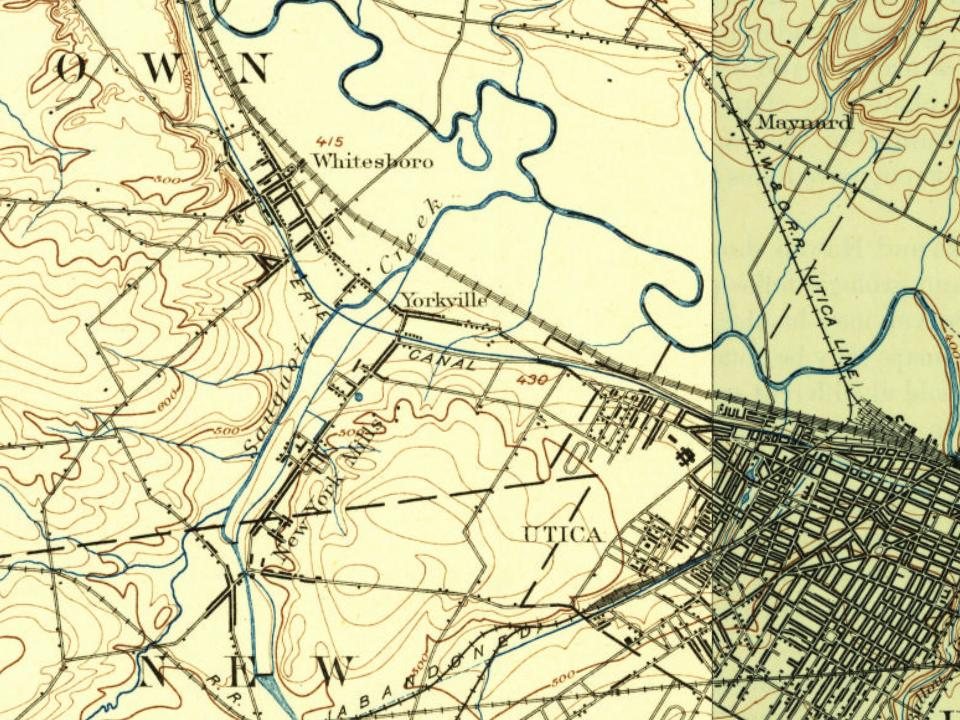
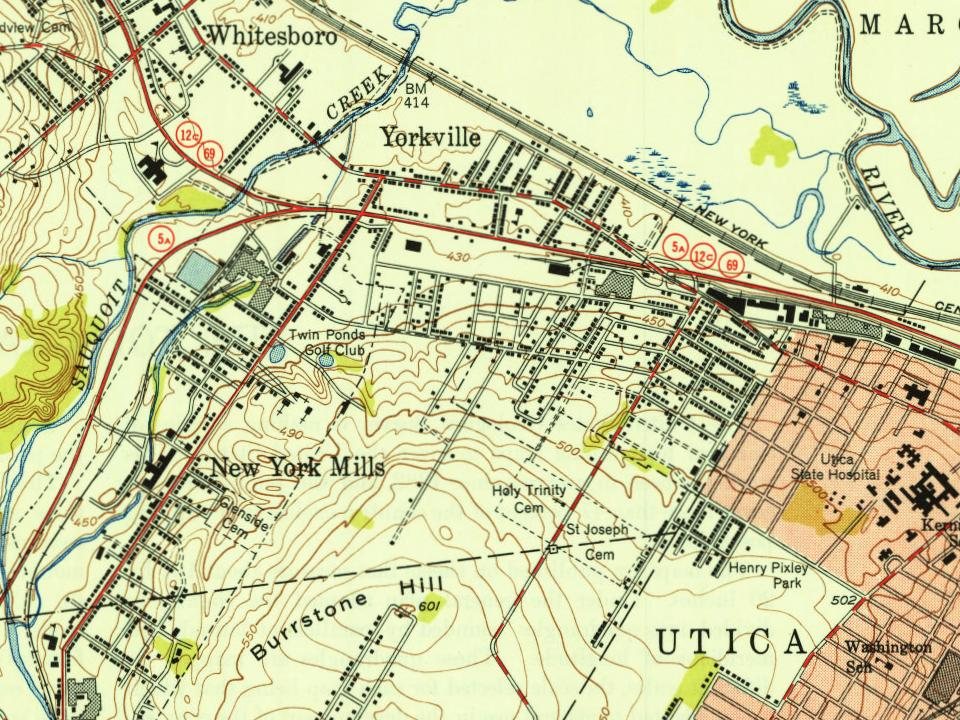
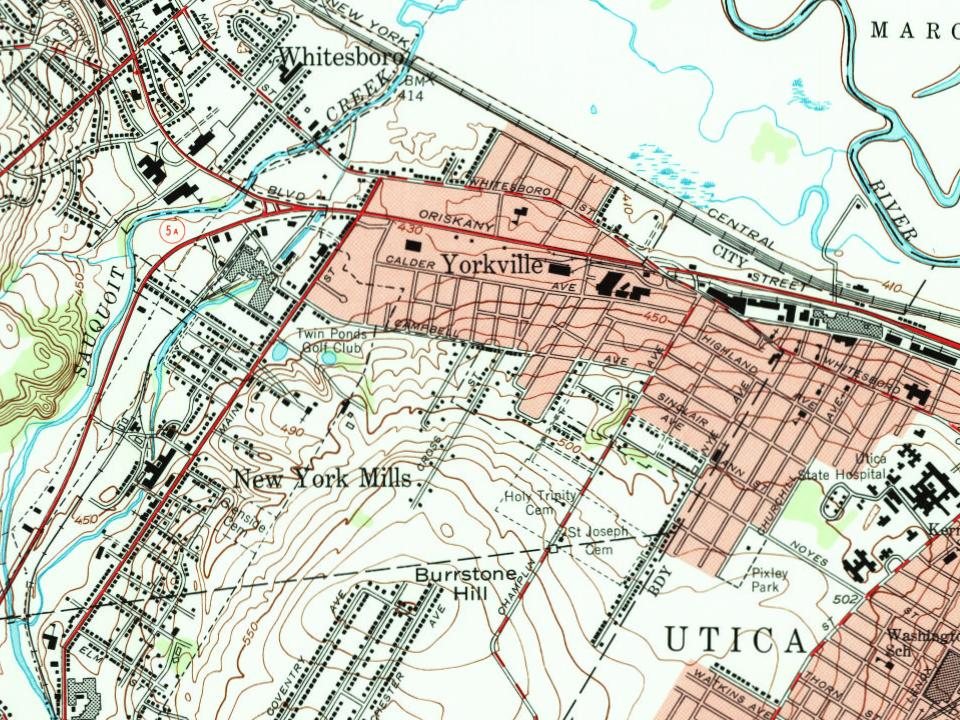
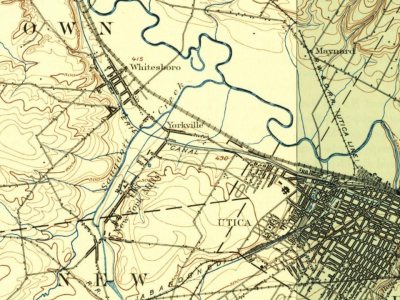
Founding dates: Wikidata, Wikipedia, the U.S. post office records of Blevins & Helbock (CC0) and the Census. Homes by year built: Census ACS 2020–24. National Register of Historic Places: National Park Service (list of May 22, 2026). Old photos, postcards and papers: Wikimedia Commons, the Library of Congress and other public archives, credited on each item’s page. Maps: U.S. Geological Survey historical topographic maps (via Esri) and Sanborn fire-insurance maps (Library of Congress). History text and census tables: Wikipedia (CC BY-SA 4.0). Places that used to be: USGS Geographic Names Information System (2021).
From Wikimedia Commons (6), Wikipedia, Wikidata and Wikipedia for famous people, U.S. Geological Survey historical maps, U.S. Census counts (via Wikipedia) and old county and town histories (Internet Archive). Archive images are copied here with their credits and licenses, shown on each photo’s page. Refreshed monthly.




 1987
 1987
 1987
 1987
 1987