Sweden dates to 1814, and 22% of its homes were built before 1940
More historic than 93% of U.S. towns · #204 of 758 in New York. What drives it
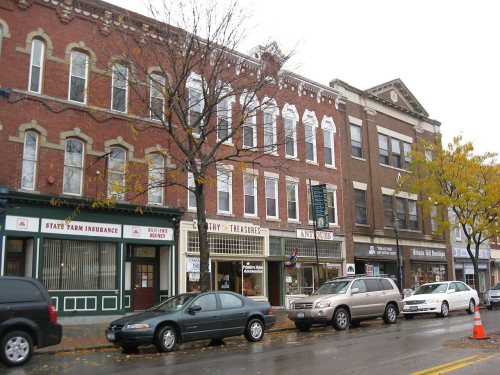
14 places in town are on the National Register, among them four historic districts with 458 buildings between them. Below: maps from 1899 on and the census since 1820.
Founding year: Wikidata; Wikipedia’s history section gives the same year. First post office: 1819.The full story ↓
History grade
What drives Sweden’s History grade
On its age, its old homes and the National Register, Sweden is more historic than 93% of U.S. towns, #204 of 758 in New York. All 3 inputs are above most U.S. towns; its National Register listings ranks highest and its share of homes from before 1940 lowest.
A
HistoryA character grade: shown, never part of Sweden’s overall grade.
New York towns list more on the Register than most of the country (a typical New York town has 12.3 per 10,000 residents, the U.S. 2.4), so Sweden’s 348 sits above most of its state (88% of New York towns have fewer) while its 469 historic buildings outnumber those of 97% of U.S. towns.
How sure. Graded on any two of the three inputs instead, the letter would range from A− to A. The pre-1940 share is a Census survey estimate (±3.7 points). Two sources give 1814.
Founding year: Wikidata (other dates in Quick answers). Homes: Census ACS 2020–24. National Register: National Park Service, May 2026 list; each listing counted once (boundary changes and added documentation belong to their listing), and a historic district counts its contributing buildings. How TownRatings grades history →
What stands out about Sweden’s past
Read from the archive, the National Register and the record. The page puts what stands out first.
The area that is now the town of Sweden was part of the Triangle Tract. Settlers began arriving before 1806. The town was created by a mandate of the New York State Legislature in 1813 to break up the west part of the county into three new towns named Bergen, Sweden, and Murray.
The town of Sweden was established in 1814 from the town of Murray in part of Monroe County. The first Sweden town meeting was held on April 5, 1814.
Lake View Cemetery was listed on the National Register of Historic Places in 2009.
Passages that mention Sweden, cut from the printed page as they were published.
The history of the life of Leonard Torstenson, (Lennart Torstenson,) "the Argus-eyed, Briarean-armed," senator of Sweden, count of Ortala, chief of the Swedish artillery under, and generalissimo of the Swedish armies subsequent to the death of, Gustavus A1855 · page 92Read the page →
Read the text
Franconia. But, above all, he distinguished himself at Sumarshusen, in 1648. The whole of Bavaria then fell into the power of the Swedes and French, the Elector himself being forced to take refuge in the Bishopric of Salzburg. When the Prince Palatine (Palsgrave), Charles Gustavus, afterwards Charles X. King of Sweden, came to assume the chief command of the main Swedish army, Wrangel preserved the direction of that in the north of Germany during the rest of the Thirty Tears' War. At leDgth, the Peace of Westphalia put an end to his military exploits, on these fields, and having returned to Sweden, Queen Christina recompensed him with the title of Count
Text read by machine from the scan; it may contain errors.
A history of Sweden from the earliest times to the present day1902 · page 12Read the page →
Read the text
Through this peace Sweden had now risen to the height of external greatness. The provinces now incorporated with Sweden were not distant provinces in foreign lands, but were really an integral part of Sweden and were one in nationality, custom and laws, and they were enclosed by their natural boundary — the sea. But on account of the turbulent times these newly acquired provinces, which contained about one-
Text read by machine from the scan; it may contain errors.
A history of Sweden from the earliest times to the present day1902 · page 241Read the page →
Read the text
Union Between Sweden and Norway. — The Swedish King and people had during the past centuries cast longing eyes in the direction of the West, endeavoring to absorb Norway and to make it a province of, or to incorporate it with Sweden. And when the faithful Finland, which for over 600 years had been a part of Sweden, was ever being threatened from the East, both King and people became more anxious to
Text read by machine from the scan; it may contain errors.
Scans and text from the Internet Archive. Books published in 1930 or earlier, which are in the public domain.
Timeline
Sweden, 1814 to 1980
Woven from the archive, old maps, post office records, the National Register and the people born here.
Every edition of the U.S. Geological Survey’s map of Sweden. Tap a year, or press play to watch the town change.
1899Bergen sheet · 1:62,500
U.S. Geological Survey historical topographic maps (public domain), via Esri’s collection of the scans. The red ring marks the center of Sweden.
Places that used to be
Lost post offices, old corners, places now gone and burying grounds
Sweden had its own post office from 1819 to 1903.
Sweden
1819–1903
Brockport
1823–today
18101920today
Hamlets and corners on the map
BrockportSweden CenterWest Sweden
Gone or out of use
Brockport Gap Filler AnnexmilitaryFree Methodist ChurchchurchNativity Parochial SchoolschoolSchool Number 1schoolSchool Number 4schoolSchool Number 5schoolSchool Number 6schoolSchool Number 7schoolSchool Number 8school
6cemeteries and burying grounds inside Sweden
East SwedenHigh StreetLakeviewLocust HillMount OlivetWest Sweden
US Post Offices dataset (Blevins & Helbock, CC0). Places and cemeteries from the USGS Geographic Names Information System (2021).
Stories next door
History across the town line
Each neighbor’s History grade, on the same three inputs.
In 1814, according to Wikidata and Wikipedia’s history of the town. Sweden’s post office opened in 1819, and the census of 1820 counted 2,761 people here.
How does Sweden rank for history?
Sweden is more historic than 93% of U.S. towns, #204 of 758 in New York. The History grade combines the town’s founding era, the share of homes built before 1940 and its National Register listings. It’s a character grade, so it isn’t part of the overall grade. How it works.
What is on the National Register in Sweden?
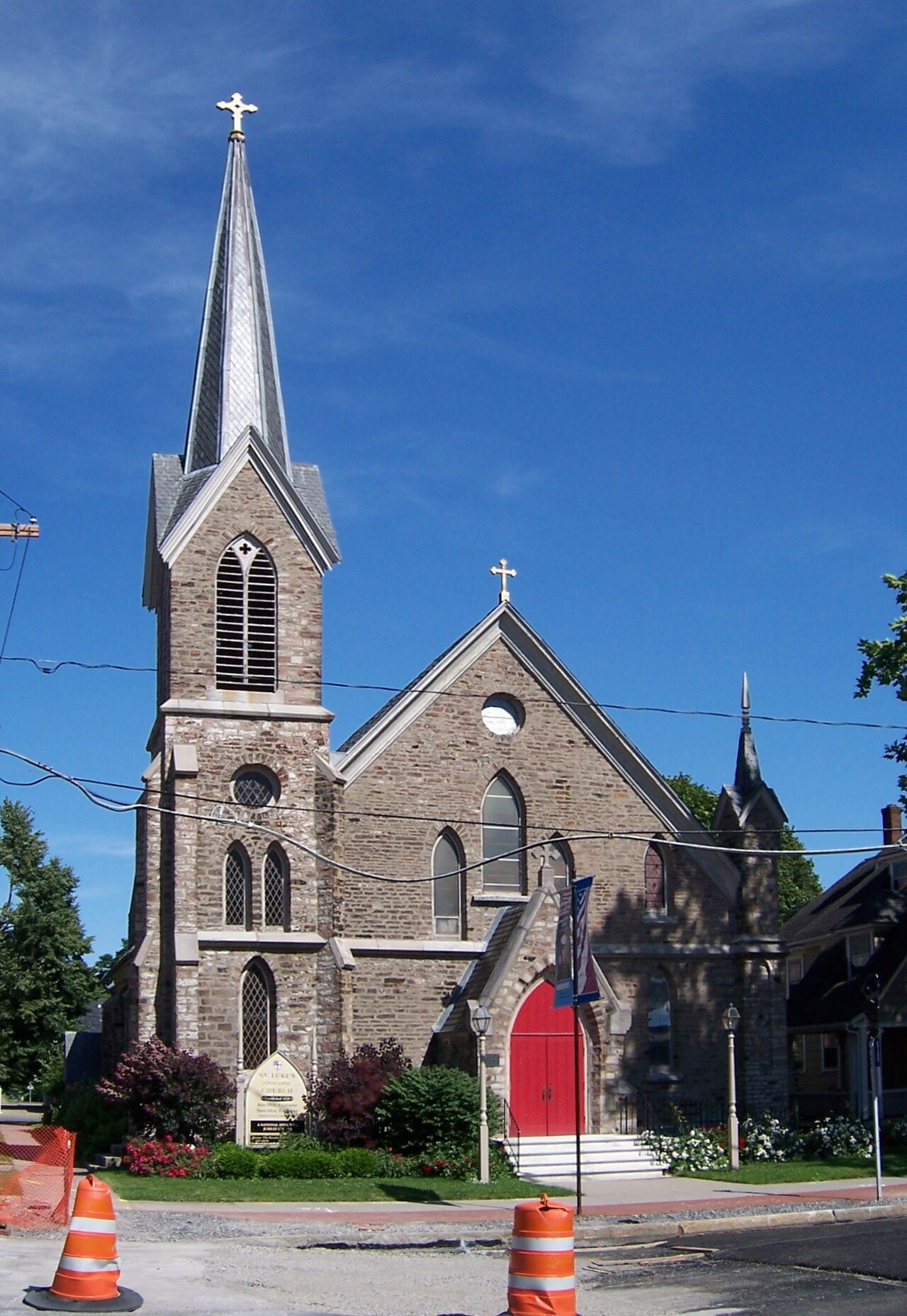
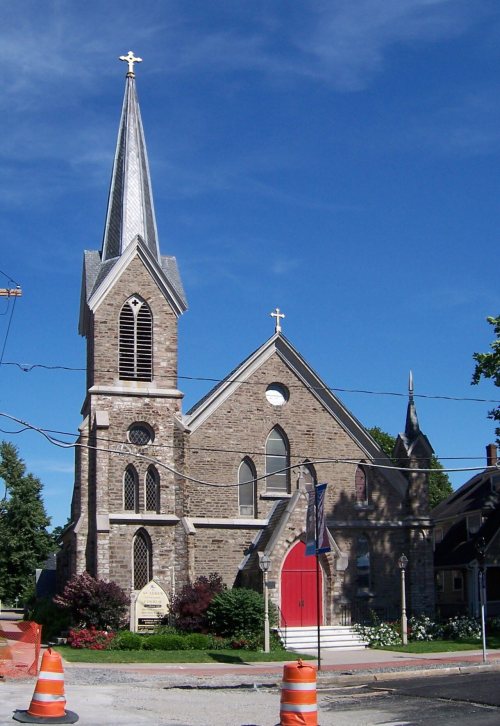
14 listings: 7 buildings, among them the St. Luke's Episcopal Church (listed 1990, the first), 4 historic districts with 458 contributing buildings, 2 sites, and 1 structure. 469 historic buildings in all.
How old are the homes in Sweden?
22% of Sweden’s homes were built before 1940 (Census estimate, ±3.7 points), against a typical 27% for a New York town; the median home was built in 1973.
Founding dates: Wikidata, Wikipedia, the U.S. post office records of Blevins & Helbock (CC0) and the Census. Homes by year built: Census ACS 2020–24. National Register of Historic Places: National Park Service (list of May 22, 2026). Old photos, postcards and papers: Wikimedia Commons, the Library of Congress and other public archives, credited on each item’s page. Maps: U.S. Geological Survey historical topographic maps (via Esri) and Sanborn fire-insurance maps (Library of Congress). History text and census tables: Wikipedia (CC BY-SA 4.0). Places that used to be: USGS Geographic Names Information System (2021).
From Wikimedia Commons (4), Wikidata (1), the National Register of Historic Places (14), Wikipedia, Wikidata and Wikipedia for famous people, U.S. Geological Survey historical maps, U.S. Census counts (via Wikipedia), the US Post Offices dataset (Blevins & Helbock), the USGS Geographic Names Information System and old county and town histories (Internet Archive). Archive images are copied here with their credits and licenses, shown on each photo’s page. Refreshed monthly.






 2024
 2010
 2008
 2000


