Saugerties’ post office opened in 1806, and 29% of its homes were built before 1940
More historic than 92% of U.S. towns · #217 of 758 in New York. What drives it
12 places in town are on the National Register, among them two historic districts with 97 buildings between them. Below: 12 old photos and papers, maps from 1887 on, and the census since 1820.
The Saugerties post office opened in 1806, the earliest record of the town by name. Nine smaller post offices, Centreville (1821), Malden (1826) and Quarryville (1854), opened inside today’s town and later closed.
First census: 2,699 in 18202020 census: 19,038220 years
How historic is Saugerties?
A
More historic than 92% of U.S. towns, on its age, its old homes and the National Register.
Founding year: the first Saugerties post office (Blevins & Helbock, CC0).The full story ↓
History grade
What drives Saugerties’ History grade
On its age, its old homes and the National Register, Saugerties is more historic than 92% of U.S. towns, #217 of 758 in New York. All 3 inputs are above most U.S. towns; its share of homes from before 1940 ranks highest and its age lowest.
A
HistoryA character grade: shown, never part of Saugerties’ overall grade.
New York towns list more on the Register than most of the country (a typical New York town has 12.3 per 10,000 residents, the U.S. 2.4), so Saugerties’ 58.3 sits above most of its state (70% of New York towns have fewer) while its 112 historic buildings outnumber those of 90% of U.S. towns.
How sure. Graded on any two of the three inputs instead, the letter would range from A− to A. The pre-1940 share is a Census survey estimate (±4.0 points). The founding year is the first post office, not a stated founding date.
Founding year: the first post office (other dates in Quick answers). Homes: Census ACS 2020–24. National Register: National Park Service, May 2026 list; each listing counted once (boundary changes and added documentation belong to their listing), and a historic district counts its contributing buildings. How TownRatings grades history →
What stands out about Saugerties’ past
Read from the archive, the National Register and the record. The page puts what stands out first.
Lost post offices, old corners, places now gone and burying grounds
Saugerties’s post office has been open since 1806. Nine other post offices opened and closed inside today’s town.
Saugerties
1806–today
Centreville
1821–1828
Malden
1826–1907
Glasco
1830–today
West Camp
1836–today
West Camp
1836–today
Quarryville
1854–1902
High Woods
1872–1900
Saxton
1874–1905
West Saugerties
1874–1906
18001910today
Hamlets and corners on the map
AsburyBlue MountainCanoe HillCentervilleEavesportFish CreekFlatbushGlascoGlenerieHigh WoodsKatsbaanMalden-on-HudsonManorvilleMount MarionMount Marion ParkQuarryvilleSaxtonShultis CornersTrinka's Mobile Home ParkVeteranWest CampWest Saugerties
Gone or out of use
Saxton Sandstone QuarrymineSchool Number 14schoolSchool Number 15schoolSchool Number 18schoolSchool Number 2school
6cemeteries and burying grounds inside Saugerties
Chestnut HillMount MarionMountain ViewSaint Mary of the SnowShoubTrinity Episcopal Church
US Post Offices dataset (Blevins & Helbock, CC0). Places and cemeteries from the USGS Geographic Names Information System (2021).
On the National Register
12 listings protect 112 historic buildings
The country’s official list of buildings and places worth saving.
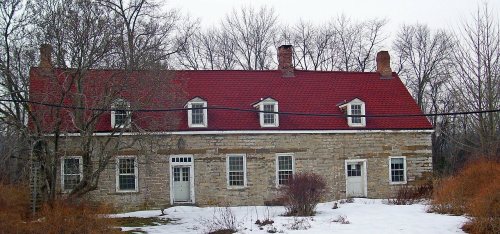
In the 1650s, Barent Cornelis Volge operated a sawmill on the Sawyer's Kill, supplying lumber for the manor of Rensselaerswick. He had secured a title from the Esopus Sachem to this land sometime before 1663. Volge likely left the area at the outbreak of the first Esopus War in 1658. The "footpath to Albany" was not laid out until 1670. In April 1677, Governor Edmund Andros purchased land from the Esopus Indian Kaelcop, chief of the Amorgarickakan band, for the price of a piece of cloth, a blanket, some coarse fiber, a loaf of bread, and a shirt. The Mynderse House was built by John Persen, formerly of Kingston, an early mill owner, circa 1685.
Fire insurance maps drew every building, what it was made of and what it was used for, so insurers could price the risk of fire. Pick a year, then a sheet.
The Saugerties post office opened in 1806, the earliest record of the town by name (U.S. post office records).
How does Saugerties rank for history?
Saugerties is more historic than 92% of U.S. towns, #217 of 758 in New York. The History grade combines the town’s founding era, the share of homes built before 1940 and its National Register listings. It’s a character grade, so it isn’t part of the overall grade. How it works.
What is on the National Register in Saugerties?
12 listings: 8 buildings, 2 historic districts, the Main-Partition Streets Historic District and the Asbury Historic District, with 97 contributing buildings, and 2 structures. 112 historic buildings in all.
How old are the homes in Saugerties?
29% of Saugerties’ homes were built before 1940 (Census estimate, ±4.0 points), against a typical 27% for a New York town; the median home was built in 1960.
Founding dates: Wikidata, Wikipedia, the U.S. post office records of Blevins & Helbock (CC0) and the Census. Homes by year built: Census ACS 2020–24. National Register of Historic Places: National Park Service (list of May 22, 2026). Old photos, postcards and papers: Wikimedia Commons, the Library of Congress and other public archives, credited on each item’s page. Maps: U.S. Geological Survey historical topographic maps (via Esri) and Sanborn fire-insurance maps (Library of Congress). History text and census tables: Wikipedia (CC BY-SA 4.0). Places that used to be: USGS Geographic Names Information System (2021).
From Wikimedia Commons (12), the National Register of Historic Places (12), Wikipedia, Wikidata and Wikipedia for famous people, U.S. Geological Survey historical maps, U.S. Census counts (via Wikipedia), the US Post Offices dataset (Blevins & Helbock), the USGS Geographic Names Information System and Sanborn fire insurance maps (Library of Congress). Archive images are copied here with their credits and licenses, shown on each photo’s page. Refreshed monthly.






 1875
 1875
 1875
 1875
 1875
 1875
 1875
 1875
 1875
 1875
 c. 1875

