Ossining’s post office opened in 1901, and 25% of its homes were built before 1940
More historic than 58% of U.S. towns · #616 of 758 in New York. What drives it
12 places in town are on the National Register, among them three historic districts with 87 buildings between them. Below: 11 old photos and papers, maps from 1892 on, and the census since 1850.
The Ossining post office opened in 1901, the earliest record of the town by name. Two smaller post offices, Sing Sing (1830) and Weskora (1867), opened inside today’s town and later closed.
First census: 4,939 in 18502020 census: 40,061125 years
How historic is Ossining?
B
More historic than 58% of U.S. towns, on its age, its old homes and the National Register.
Founding year: the first Ossining post office (Blevins & Helbock, CC0).The full story ↓
History grade
What drives Ossining’s History grade
On its age, its old homes and the National Register, Ossining is more historic than 58% of U.S. towns, #616 of 758 in New York. Its share of homes from before 1940 holds the grade up; its age pulls it down.
B
HistoryA character grade: shown, never part of Ossining’s overall grade.
New York towns list more on the Register than most of the country (a typical New York town has 12.3 per 10,000 residents, the U.S. 2.4), so Ossining’s 27.0 sits near the middle of its state (60% of New York towns have fewer) while its 106 historic buildings outnumber those of 90% of U.S. towns.
How sure. Graded on any two of the three inputs instead, the letter would range from C to A. The pre-1940 share (±2.8 points) is firm at this size. The founding year is the first post office, not a stated founding date.
Founding year: the first post office (other dates in Quick answers). Homes: Census ACS 2020–24. National Register: National Park Service, May 2026 list; each listing counted once (boundary changes and added documentation belong to their listing), and a historic district counts its contributing buildings. How TownRatings grades history →
What stands out about Ossining’s past
Read from the archive, the National Register and the record. The page puts what stands out first.
In 1685, Frederick Philipse bought the area which presently constitutes the Town of Ossining from the Sint Sinck, a Munsee-speaking Lenape people. His Manor extended from Spuyten Duyvil Creek on the border between present-day Manhattan and the Bronx to the Croton River. The last Lord of the Manor, Frederick Philipse III, was a Loyalist in the American Revolutionary War who fled to England. The State of New York confiscated the manor in 1779.
Passages that mention Ossining, cut from the printed page as they were published.
History of Westchester County, New York, from its earliest settlement to the year 19001900 · page 576Read the page →
Read the text
division was determined upon. By a legislative act passed May 2, 1845, the present Township of Ossining was erected from it. "The meaning of the term ' Ossining ' and its derivation," says Dr. Fisher, - wore given by Mr. Henry M. Schoolcraft in 1844, at the request of General Aaron Ward, member of congress from this district at the time. We arc told that the word ossin, in the Chippeway language, signifies 'a stone'; that ossinee or ossineen is the plural for 'stones.'
Text read by machine from the scan; it may contain errors.
History of Westchester County, New York, from its earliest settlement to the year 19001900 · page 532Read the page →
Read the text
in*, to the White Plains, and then easterly along the same road to the Bronx River." To Mount Pleasant was assigned the remainder of the manor. Out of its territory was constructed the new Town of Ossining by an act passed May .2, 1845. The bounds fixed for the Town of Eastchester were Westchester at the south, the Bronx River at the west, Scarsdale at the north, and the Hutchinson River at the east.
Text read by machine from the scan; it may contain errors.
History of Westchester county, New York, including Morrisania, Kings Bridge, and West Farms, which have been annexed to New York city1886 · page 582Read the page →
Read the text
It is to Dr. Fisher that we are indebted for the history of the town of Ossining, which forms one of the chapters of this work. THE JAY FAMILY.
Text read by machine from the scan; it may contain errors.
History of Westchester county, New York, including Morrisania, Kings Bridge, and West Farms, which have been annexed to New York city1886 · page 646Read the page →
Read the text
name of the town of Salem was changed to South Salem April 6, 1806, and to Lewisboro February 1$, 1840, and a part of North Salem was annexed April 26, 1844. Ossining was formed from Mount Pleasant May 2, 1845. New Castle was formed from North Castle March 18, 1781, and a part of Somers annexed May 12, 1846. The name of Stephentown was changed to Somers April 6, 1808. West Farms was formed
Text read by machine from the scan; it may contain errors.
Scans and text from the Internet Archive. Books published in 1930 or earlier, which are in the public domain.
Timeline
Ossining, 1809 to 1984
Woven from the archive, old maps, post office records, the National Register and the people born here.
Fire insurance maps drew every building, what it was made of and what it was used for, so insurers could price the risk of fire. Pick a year, then a sheet.
The Ossining post office opened in 1901, the earliest record of the town by name (U.S. post office records).
How does Ossining rank for history?
Ossining is more historic than 58% of U.S. towns, #616 of 758 in New York. The History grade combines the town’s founding era, the share of homes built before 1940 and its National Register listings. It’s a character grade, so it isn’t part of the overall grade. How it works.
What is on the National Register in Ossining?
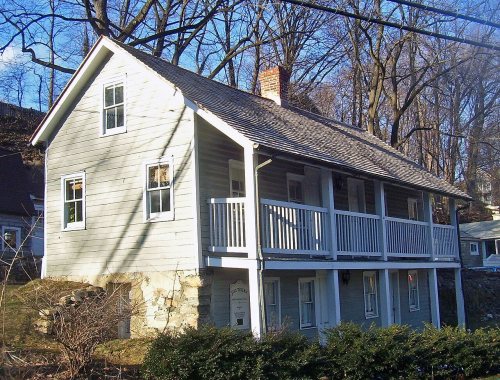
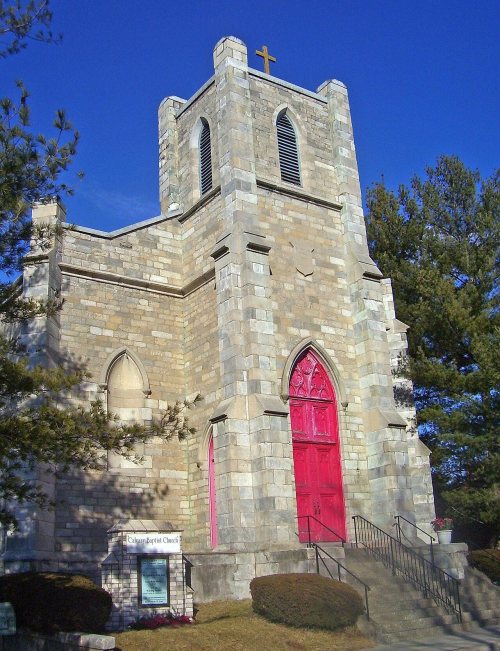
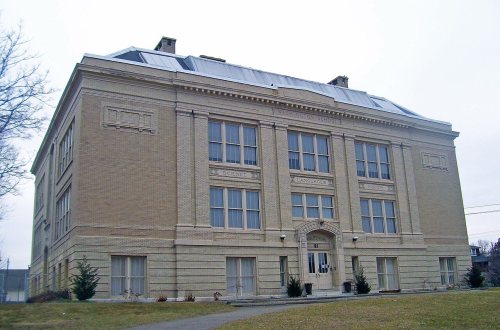
12 listings: 8 buildings, among them the First Baptist Church of Ossining (listed 1973, the first), 3 historic districts, the Scarborough Historic District, the Downtown Ossining Historic District and the Robinwood Historic District, with 87 contributing buildings, and 1 site. 106 historic buildings in all.
How old are the homes in Ossining?
25% of Ossining’s homes were built before 1940 (Census estimate, ±2.8 points), against a typical 27% for a New York town; the median home was built in 1965.
Founding dates: Wikidata, Wikipedia, the U.S. post office records of Blevins & Helbock (CC0) and the Census. Homes by year built: Census ACS 2020–24. National Register of Historic Places: National Park Service (list of May 22, 2026). Old photos, postcards and papers: Wikimedia Commons, the Library of Congress and other public archives, credited on each item’s page. Maps: U.S. Geological Survey historical topographic maps (via Esri) and Sanborn fire-insurance maps (Library of Congress). History text and census tables: Wikipedia (CC BY-SA 4.0). Places that used to be: USGS Geographic Names Information System (2021).
From Wikimedia Commons (3), the Library of Congress (8), Wikidata (1), the National Register of Historic Places (12), Wikipedia, Wikidata and Wikipedia for famous people, U.S. Geological Survey historical maps, U.S. Census counts (via Wikipedia), the US Post Offices dataset (Blevins & Helbock), the USGS Geographic Names Information System, Sanborn fire insurance maps (Library of Congress) and old county and town histories (Internet Archive). Archive images are copied here with their credits and licenses, shown on each photo’s page. Refreshed monthly.






 1809
 1809
 1820
 1828
 c. 1863
 c. 1863
 c. 1863

