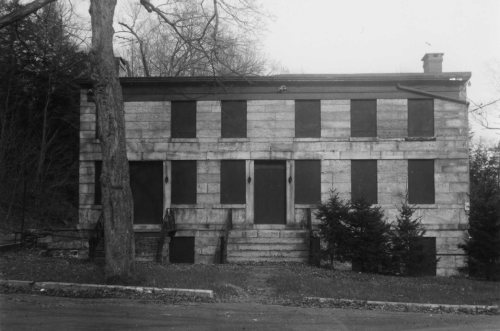
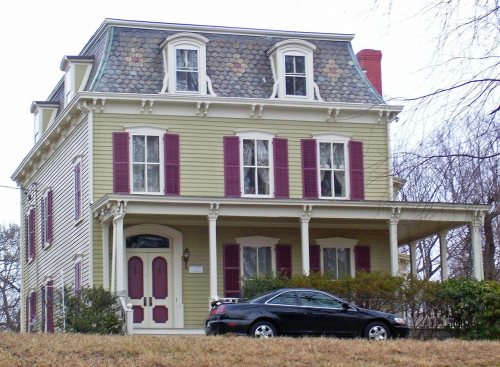
New Castle dates to 1791, and 21% of its homes were built before 1940
More historic than 83% of U.S. towns · #388 of 758 in New York. What drives it
10 places in town are on the National Register, among them a historic district with 12 buildings. Below: 2 old photos and papers, maps from 1892 on, and the census since 1820.
Founding year: Wikidata. First post office: 1827.The full story ↓
History grade
What drives New Castle’s History grade
On its age, its old homes and the National Register, New Castle is more historic than 83% of U.S. towns, #388 of 758 in New York. All 3 inputs are above most U.S. towns; its age ranks highest and its National Register listings lowest.
A−
HistoryA character grade: shown, never part of New Castle’s overall grade.
New York towns list more on the Register than most of the country (a typical New York town has 12.3 per 10,000 residents, the U.S. 2.4), so New Castle’s 12.2 sits near the middle of its state (49% of New York towns have fewer) while its 22 historic buildings outnumber those of 80% of U.S. towns.
NoteThe founding year comes from Wikidata alone; no second source gives 1791.
How sure. Graded on any two of the three inputs instead, the letter would still be A−. The pre-1940 share is a Census survey estimate (±6.0 points).
Founding year: Wikidata (other dates in Quick answers). Homes: Census ACS 2020–24. National Register: National Park Service, May 2026 list; each listing counted once (boundary changes and added documentation belong to their listing), and a historic district counts its contributing buildings. How TownRatings grades history →
What stands out about New Castle’s past
Read from the archive, the National Register and the record. The page puts what stands out first.
New Castle was originally inhabited by Native Americans, including the Siwanoy band of the Wappinger people. Portions of New Castle were initially purchased in 1640 by Nathaniel Turner from Ponas Sagamore, chief of the Siwanoy. In 1661, John Richbell purchased land, including all of present-day New Castle, from the Siwanoy. In 1696, Caleb Heathcote purchased that tract of land from Richbell's widow. What is present-day New Castle was originally incorporated as part of the town of North Castle, which was jokingly referred to as "the two saddlebags," in 1736. The first European settlers in the area were Quakers, who settled in present-day Chappaqua in 1753 and constructed a meeting house, which still stands today on Quaker Street. The town of New Castle broke away from North Castle in 1791.
Passages that mention New Castle, cut from the printed page as they were published.
History of Westchester County, New York, from its earliest settlement to the year 19001900 · page 614Read the page →
Read the text
says : "The additional land required for the construction of theNewCroton Reseiwoir has been taken from the Towns of Cortlandt, Yorktown, New Castle, Bedford, Somers, Lewisboro, aud North Salem, in Westchester County, covering an area of 0,398.244 acres. From the Town of Cortlandt, 752.654 acres were taken; from the Town of Yorktown, 1,752.932 acres were taken; from the Town of New Castle, 151.697 acres; from the Town of Bedford, 801.860 acres; from the Town of
Text read by machine from the scan; it may contain errors.
History of Westchester County, New York, from its earliest settlement to the year 19001900 · page 607Read the page →
Read the text
the Town of North Salem.1 We have seen that during the same year he took a very prominent part in the steps which led to the settlement of Mount Vernon. In 1851 he purchased a farm of seventy-five acres at Chappaqua in the Town of New Castle. Unlike most other prominent New Yorkers who came to Westchester County to live, Mr. Greeley sought a strictly rural abode without any of the accessories of aristocratic pretension. He wished to be a plain farmer, and to prosecute agricultural pursuits in a perfectly serious way.
Text read by machine from the scan; it may contain errors.
Biographical history of Westchester County, New York..1899 · page 801Read the page →
Read the text
In his political principles Mr. Adams is a stanch Republican. He hasbeen attorney for the village of Mount Kisco and the town of New Castle, and he now has charge of a great many claims of the people against the New York City Watershed. He has also held and now holds the office of school trustee, and was instrumental in bringing about the union of the two schooL districts.
Text read by machine from the scan; it may contain errors.
2 The date, 1719, shows that this 'new settlement' was not 'North Castle, a new settlement in the woods ' in 1728 (p. 248), nor ' New Castle, a new settlement in the woods' in 1729 (p. 255). 3 ' Entering of Highways,' a book of reeords in the County Clerk's office, White Plains : p. 3.
Text read by machine from the scan; it may contain errors.
Scans and text from the Internet Archive. Books published in 1930 or earlier, which are in the public domain.
Timeline
New Castle, 1791 to 1910
Woven from the archive, old maps, post office records, the National Register and the people born here.
Nothing in the archives for these yearsWeddings on Main Street, storms, parades, school pictures, the old store. If it’s in your family album, it belongs here.
In 1791, according to Wikidata. New Castle’s post office opened in 1827, and the census of 1820 counted 1,368 people here.
How does New Castle rank for history?
New Castle is more historic than 83% of U.S. towns, #388 of 758 in New York. The History grade combines the town’s founding era, the share of homes built before 1940 and its National Register listings. It’s a character grade, so it isn’t part of the overall grade. How it works.
What is on the National Register in New Castle?
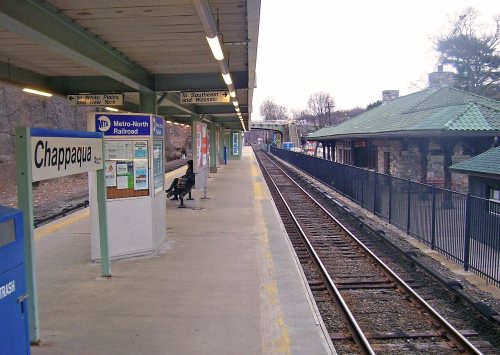
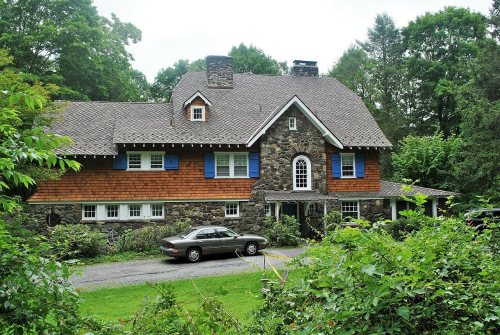
10 listings: 9 buildings and 1 historic district, the Old Chappaqua Historic District, with 12 contributing buildings. 22 historic buildings in all.
How old are the homes in New Castle?
21% of New Castle’s homes were built before 1940 (Census estimate, ±6.0 points), against a typical 27% for a New York town; the median home was built in 1964.
Founding dates: Wikidata, Wikipedia, the U.S. post office records of Blevins & Helbock (CC0) and the Census. Homes by year built: Census ACS 2020–24. National Register of Historic Places: National Park Service (list of May 22, 2026). Old photos, postcards and papers: Wikimedia Commons, the Library of Congress and other public archives, credited on each item’s page. Maps: U.S. Geological Survey historical topographic maps (via Esri) and Sanborn fire-insurance maps (Library of Congress). History text and census tables: Wikipedia (CC BY-SA 4.0). Places that used to be: USGS Geographic Names Information System (2021).
From Wikimedia Commons (5), Wikidata (1), the National Register of Historic Places (10), Wikipedia, Wikidata and Wikipedia for famous people, U.S. Geological Survey historical maps, U.S. Census counts (via Wikipedia), the US Post Offices dataset (Blevins & Helbock), the USGS Geographic Names Information System and old county and town histories (Internet Archive). Archive images are copied here with their credits and licenses, shown on each photo’s page. Refreshed monthly.




 2009
 2009
 2009