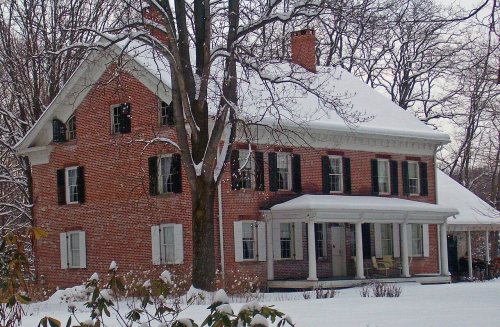
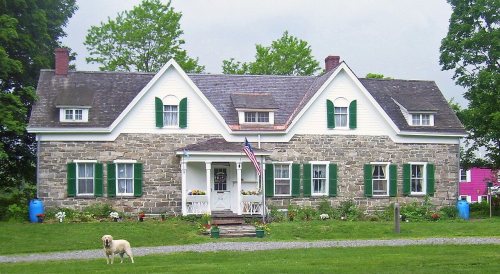
A good place to live, if you can afford it. Where it does best is walkability: it is more walkable than 87% of U.S. towns. The catch is cost of living: the typical home is worth about $464K, 5.4 years of the Kingston metro’s $86K median household income. Overall, that makes a B+, good for 218th of 745 in New York. Set against the rest, it does better than 73% of U.S. towns. New Paltz has 7 places on the National Register of Historic Places, among them Huguenot Street Historic District and Jean Hasbrouck House. Two thirds of adults 25 and older hold a bachelor’s degree or more in the town, against 32% in New York’s towns and 29% across U.S. towns. The town’s concentration of trails is 1.6 miles per square mile, above both the New York town median (0.4) and the median of U.S. towns (0.4).
Figures: home values, Zillow · incomes, Census ACS, 2020–24 · National Register of Historic Places · OpenStreetMap.
Walkers can cover 54 miles of trail in 7 parks and preserves. The biggest place to walk is Mohonk Preserve, 1,830 acres with 17.1 miles of trail. Parks and preserves in New Paltz: 7, covering 2,151 acres.
The largest public high school is New Paltz Senior High School, with 622 students. The public schools here belong to the New Paltz Central School District. 4 public schools serve New Paltz, with 1,673 students in all.
Flood insurance has paid out on 49 claims in New Paltz since 1979. Storm and flood damage is expected to run lower than in 81% of U.S. communities. FEMA puts 56% of the town’s expected hazard losses down to inland flooding, and 13% to tornadoes. Federal disaster aid has reached households in New Paltz after 6 declared disasters, most recently in 2017.
At 9.4 crimes per 1,000 residents a year, it reports less crime than 62% of New York’s graded towns. Reported crimes fell from 154 to 85 over the last three FBI years, a drop beyond ordinary year-to-year swings.
The property crime rate for New Paltz comes to 6.7 per 1,000 residents. The violent crime rate for New Paltz comes to 0.6 per 1,000 residents.
The average commute for its 4,874 working residents takes 26.1 minutes, against 32.6 across New York. 25.6% of workers work from home, against 14.9% across New York.
For working residents in New Paltz, the share who work locally is 20%. The top destinations are New York (16%), Poughkeepsie (5%) and Kingston (5%). Its typical journey to work comes in at 26 minutes.
20%work in town
New Paltz
New York towns
U.S. towns
Work from home
26%
12%
11%
Below the poverty line
22%
9.5%
9.6%
Working residents who work in town
20%
10%
8%
Average trip to work
26 minutes
25 minutes
25 minutes
Where working residents work
In New Paltz20%
New York16%
Poughkeepsie5%
Kingston5%
Poughkeepsie3%
17 mi
median commute distance
6,690
jobs based in New Paltz
Balanced
jobs vs. working residents
A
Walkability grade: more walkable than 87% of U.S. towns
For most people who can afford it, yes. New Paltz grades B+ overall, better than 73% of U.S. towns and #218 of 745 in New York. It grades A− for health, A− for safety and B+ for schools. Cost of living is its weak spot, with a D.
Is New Paltz, NY expensive?
Yes. Cost of living, which also weighs rents, property taxes and how many households pay 30% or more of their income for housing, grades D.


 7 mi
 8 mi
 27 mi