On its age, its old homes and the National Register, Brighton is more historic than 77% of U.S. towns, #467 of 758 in New York. Its age holds the grade up; its National Register listings pull it down.
A−
HistoryA character grade: shown, never part of Brighton’s overall grade.
New York towns list more on the Register than most of the country (a typical New York town has 12.3 per 10,000 residents, the U.S. 2.4), so Brighton’s 1.9 sits below most of its state (25% of New York towns have fewer) while its 7 historic buildings outnumber those of 73% of U.S. towns.
NoteThe founding year comes from Wikidata alone; no second source gives 1814.
How sure. Graded on any two of the three inputs instead, the letter would range from B+ to A−. The pre-1940 share (±2.5 points) is firm at this size.
Founding year: Wikidata (other dates in Quick answers). Homes: Census ACS 2020–24. National Register: National Park Service, May 2026 list; each listing counted once (boundary changes and added documentation belong to their listing), and a historic district counts its contributing buildings. How TownRatings grades history →
What stands out about Brighton’s past
Read from the archive, the National Register and the record. The page puts what stands out first.
The town of Brighton, located on the southeastern border of the city of Rochester, is located on the traditional homelands of the Onöndowa'ga:' (Seneca), part of the Ho-de-no-sau-nee-ga (Haudenosaunee) Confederacy, the People of the Long House, called Iroquois by the French. The first Europeans in the area were French trappers in the seventeenth century, who visited frequently but did not settle there. English colonists built permanent structures in approximately 1790, and formally established the town in 1814—earning it recognition as one of the oldest towns in Monroe County. Named for Brighton, England, it remained a farming and brick-making community until the 20th century, when the town began its evolution into an upscale suburban residential area, occupying some 15 square miles (39 km2).
England in the ship Mary and John in the history of the town of Brighton. lGo4. His uncle, Curtis Travis, and wife Charles Bradford Travis, forthirty were among the earliest members of the years a citizen of Brighton, son of Clark Brighton Congi-egational Church in 1828, and Ede Goulding (Bacon) Travis, was the next year after it was established, born in Holliston, Mass., Sept. 7, 1841. The mother of Mr. Ti'avis became a He spent his boyhood on the farm, atmemlier of tlie Brighton church in 1838.
Text read by machine from the scan; it may contain errors.
Oliver Cook came to Brighton alxiut 1840. He was not a neir relative to the other Cooks of Brighton. He built the large house at the head of Harvard Place, now occupied by Rev. Mr. Stevens. His extensive garden and peach orchard extended to Rockland Street.
Text read by machine from the scan; it may contain errors.
History of Rochester and Monroe county, New York1908 · page 753Read the page →
Read the text
his own large and prosperous business, has always had time to serve his town in any capacity in which they desired. He was assessoi for several years, was president of the village of Brighton and was elected supervisor of the Twenty-first ward in 1905, being the first supervisor from this ward. He has ever discharged his duties with marked ability and fairness, for he is a most loyal,
Text read by machine from the scan; it may contain errors.
Scans and text from the Internet Archive. Books published in 1930 or earlier, which are in the public domain.
Timeline
Brighton, 1814 to 2020
Woven from the archive, old maps, post office records, the National Register and the people born here.
Nothing in the archives for these yearsWeddings on Main Street, storms, parades, school pictures, the old store. If it’s in your family album, it belongs here.
In 1814, according to Wikidata. the census of 1820 counted 1,972 people here.
How does Brighton rank for history?
Brighton is more historic than 77% of U.S. towns, #467 of 758 in New York. The History grade combines the town’s founding era, the share of homes built before 1940 and its National Register listings. It’s a character grade, so it isn’t part of the overall grade. How it works.
What is on the National Register in Brighton?
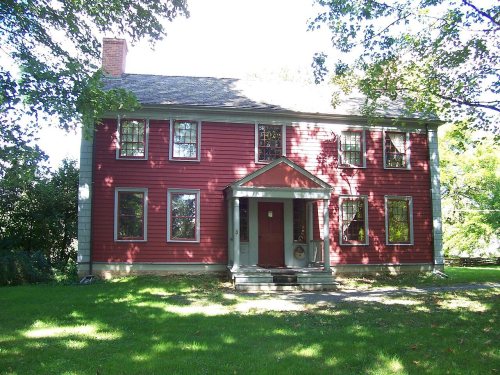
4 listings: 4 buildings, among them the Stone-Tolan House (listed 1983, the first). 7 historic buildings in all.
How old are the homes in Brighton?
22% of Brighton’s homes were built before 1940 (Census estimate, ±2.5 points), against a typical 27% for a New York town; the median home was built in 1960.
Founding dates: Wikidata, Wikipedia, the U.S. post office records of Blevins & Helbock (CC0) and the Census. Homes by year built: Census ACS 2020–24. National Register of Historic Places: National Park Service (list of May 22, 2026). Old photos, postcards and papers: Wikimedia Commons, the Library of Congress and other public archives, credited on each item’s page. Maps: U.S. Geological Survey historical topographic maps (via Esri) and Sanborn fire-insurance maps (Library of Congress). History text and census tables: Wikipedia (CC BY-SA 4.0). Places that used to be: USGS Geographic Names Information System (2021).
From Wikimedia Commons (10), the Library of Congress (1), Wikidata (1), the National Register of Historic Places (4), Wikipedia, Wikidata and Wikipedia for famous people, U.S. Geological Survey historical maps, U.S. Census counts (via Wikipedia), the USGS Geographic Names Information System and old county and town histories (Internet Archive). Archive images are copied here with their credits and licenses, shown on each photo’s page. Refreshed monthly.


 2004
 2004
 2001
 2001
 2001
 2001
 2001
 2001
 2001
 2001