Founding year: Wikipedia. First post office: 1828.The full story ↓
History grade
What drives Alabama’s History grade
On its age, its old homes and the National Register, Alabama is more historic than 73% of U.S. towns. Its share of homes from before 1940 holds the grade up; its National Register listings pull it down.
B+
HistoryA character grade: shown, never part of Alabama’s overall grade.
New York towns list more on the Register than most of the country (a typical New York town has 12.3 per 10,000 residents, the U.S. 2.4), so Alabama’s 0.0 sits below most of its state (10% of New York towns have fewer) while its 0 listings outnumber those of 23% of U.S. towns.
How sure. Graded on any two of the three inputs instead, the letter would range from C+ to A+. The pre-1940 share is a Census survey estimate (±9.5 points). Two sources give 1806.
Founding year: Wikipedia (other dates in Quick answers). Homes: Census ACS 2020–24. National Register: National Park Service, May 2026 list; each listing counted once (boundary changes and added documentation belong to their listing), and a historic district counts its contributing buildings. How TownRatings grades history →
What stands out about Alabama’s past
Read from the archive, the National Register and the record. The page puts what stands out first.
French fur trader William Poudrit set up a trading post in what is now the Tonawanda Indian Reservation. A form of his name, "Poodry," is current among the Native Americans. The town was first settled around 1806 in West Alabama. The Town of Alabama was established in 1826 from a part of the Town of Pembroke and the Town of Shelby (Orleans County). The town was originally called the "Town of Gerrysville" after Vice-president Elbridge Gerry. In 1828 the town assumed its current name.
Passages that mention Alabama, cut from the printed page as they were published.
Colonial Mobile. An historical study, largely from original sources, of the Alabama-Tombigbee basin from the discovery of Mobile bay in 1519 until the demolition of Fort Charlotte in 18211897 · page 403Read the page →
Read the text
a surveyor for the northern part of Mississippi Territory, and his jurisdiction as surveyor over the remainder of the Territory continued until the passage of the act of April 20, 1818, entitled " An Act respecting the Survey and Sale of the Public Lands in Alabama Territory." This provided " that the powers and duties of the surveyor for the lands in the northern part of Mississippi Territory shall extend to the whole of the Alabama Territory, and that Territory only." By letter dated May 10, 1818, Mr. Freeman was directed to transmit to the Surveyor-General of Alabama Territory all the
Text read by machine from the scan; it may contain errors.
Colonial Mobile. An historical study, largely from original sources, of the Alabama-Tombigbee basin from the discovery of Mobile bay in 1519 until the demolition of Fort Charlotte in 18211897 · page 399Read the page →
Read the text
Huntsville has an American history, but somewhat apart from that of central and south Alabama. It was founded in 1806; was incorporated as a city in 1811, on the model of Natchez; and in 1816 had the first bank. The "Madison Gazette " of 1812 was the second newspaper in the State limits, the "Mobile Centinel" being the first.
Text read by machine from the scan; it may contain errors.
Annals of the Fowler family, with branches in Virginia, North Carolina, South Carolina, Tennessee, Kentucky, Alabama, Mississippi, California, and Texas1901 · page 125Read the page →
Read the text
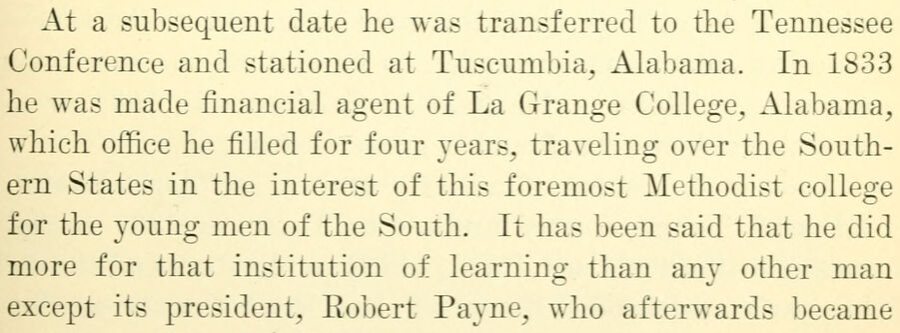
At a subsequent date he was transferred to the Tennessee Conference and stationed at Tuscumbia, Alabama. In 1833 he was made financial agent of La Grange College, Alabama, which office he filled for four years, traveling over the Southern States in the interest of this foremost Methodist college for the young men of the South. It has been said that he did more for that institution of learning than any other man except its president, Eobert Payne, who afterwards became
Text read by machine from the scan; it may contain errors.
Scans and text from the Internet Archive. Books published in 1930 or earlier, which are in the public domain.
Timeline
Alabama, 1806 to 1904
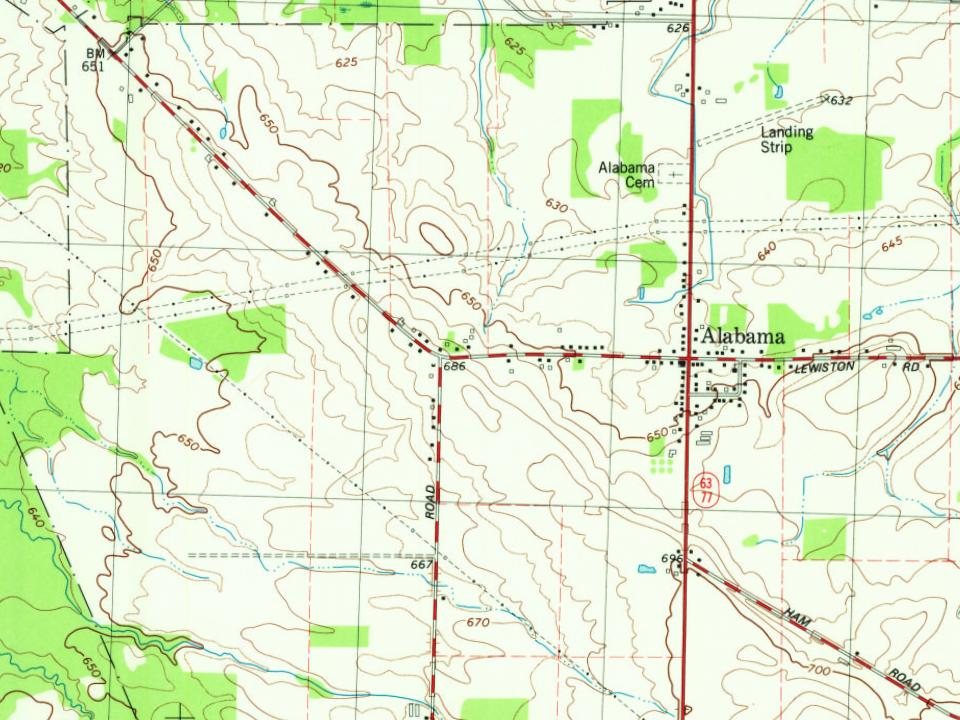
Woven from the archive, old maps, post office records, the National Register and the people born here.
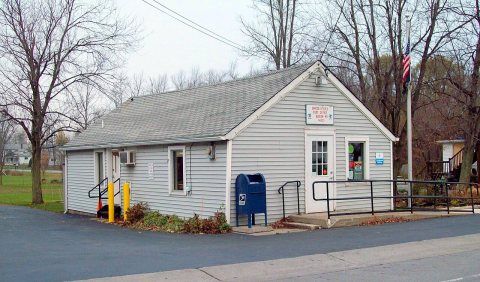
In 1806, according to Wikipedia’s history of the town. Alabama’s post office opened in 1828, and the census of 1830 counted 783 people here.
How does Alabama rank for history?
Alabama is more historic than 73% of U.S. towns. The History grade combines the town’s founding era, the share of homes built before 1940 and its National Register listings. It’s a character grade, so it isn’t part of the overall grade. How it works.
How old are the homes in Alabama?
54% of Alabama’s homes were built before 1940 (Census estimate, ±9.5 points), against a typical 27% for a New York town; the median home was built in 1938.
Founding dates: Wikidata, Wikipedia, the U.S. post office records of Blevins & Helbock (CC0) and the Census. Homes by year built: Census ACS 2020–24. National Register of Historic Places: National Park Service (list of May 22, 2026). Old photos, postcards and papers: Wikimedia Commons, the Library of Congress and other public archives, credited on each item’s page. Maps: U.S. Geological Survey historical topographic maps (via Esri) and Sanborn fire-insurance maps (Library of Congress). History text and census tables: Wikipedia (CC BY-SA 4.0). Places that used to be: USGS Geographic Names Information System (2021).
From Wikimedia Commons (4), Wikipedia, Wikidata and Wikipedia for famous people, U.S. Geological Survey historical maps, U.S. Census counts (via Wikipedia), the US Post Offices dataset (Blevins & Helbock), the USGS Geographic Names Information System and old county and town histories (Internet Archive). Archive images are copied here with their credits and licenses, shown on each photo’s page. Refreshed monthly.






 2015
 2015
 2013
 2010