Londonderry dates to 1722, and 1 of its places is on the National Register
More historic than 58% of U.S. towns · #111 of 126 in New Hampshire. What drives it
Most of Londonderry was built recently: 3% of its homes predate 1940 and the median home dates from 1986. Its Register listing is the Gen. Mason J. Young House. Below: 1 old photo or paper, maps from 1905 on, and the census since 1790.
Founding year: Wikidata. First post office: 1794.The full story ↓
History grade
What drives Londonderry’s History grade
On its age, its old homes and the National Register, Londonderry is more historic than 58% of U.S. towns, #111 of 126 in New Hampshire. Its age holds the grade up; its share of homes from before 1940 pulls it down.
B
HistoryA character grade: shown, never part of Londonderry’s overall grade.
New Hampshire towns list more on the Register than most of the country (a typical New Hampshire town has 9.5 per 10,000 residents, the U.S. 2.4), so Londonderry’s 1.5 sits below most of its state (22% of New Hampshire towns have fewer) while its 4 historic buildings outnumber those of 68% of U.S. towns.
NoteThe founding year comes from Wikidata alone; no second source gives 1722.
How sure. Graded on any two of the three inputs instead, the letter would range from C to A−. The pre-1940 share (±1.3 points) is firm at this size.
Founding year: Wikidata (other dates in Quick answers). Homes: Census ACS 2020–24. National Register: National Park Service, May 2026 list; each listing counted once (boundary changes and added documentation belong to their listing), and a historic district counts its contributing buildings. How TownRatings grades history →
What stands out about Londonderry’s past
Read from the archive, the National Register and the record. The page puts what stands out first.
Londonderry lies in an area that was first known as "Nutfield" because of the dense woods with nut trees. A petition for the town was submitted to the General Court of the Province of New Hampshire on September 23, 1719. That petition stated that the petitioners had settled "at Nutfield about the Eleventh of Aprile last"—i.e. April 11, 1719. That petition requested "ten miles square" and stated that there were now about seventy families and inhabitants from both Ireland and New England. On June 21, 1722, the town was chartered and given the name "Londonderry", after Londonderry in the province of Ulster in the north of Ireland. The grant made by Samuel Shute, Governor of the province of New Hampshire, was for a tract of land described as follows:
living in the western part of the town petitioned that either party would yield. In 1741 Windham to be set off as a separate religious society, and on was set off as a separate parish from the East Feb. 25, 1740, the New Hampshire legislature Parish. As far as church polity and denominaincorporated the West Parish of Londonderry, tional lines are concerned, the West Parish, now The first steps toward its organization had been the Presbyterian church, Londonderry, is the lineal taken five years before, so that the church actually descendant of the original Presbyterian church dates from 1735. This division in the original founded in 1719. A new church edifice was begun parish was caused partly by the location of the in 1769. It was located near the schoolhouse in
Text read by machine from the scan; it may contain errors.
The history of Windham in New Hampshire (Rockingham country). 1719-1883. A Scotch settlement (commonly called Scotch-Irish), embracing nearly one third of the ancient settlement and historic township of Londonderry, N.H1883 · page 48Read the page →
Read the text
'■'■Jan. the 21st, 1741. — Voted, That the Petitioners serve the Selectmen of the Town of Londonderry forthwith with a copy of the Petition and the Votes thereon, that the said Town of Londonderry may appear at the General assembly on thursday fortnight to shew cause if any they have why the prayer of the petition may not be granted, and if the General Court shall not then be sitting there to appear the third day of the sitting of the next session of the General Assembly. James Jeffrey, Cler. Ass'>'K
Text read by machine from the scan; it may contain errors.
The history of Windham in New Hampshire (Rockingham country). 1719-1883. A Scotch settlement (commonly called Scotch-Irish), embracing nearly one third of the ancient settlement and historic township of Londonderry, N.H1883 · page 46Read the page →
Read the text
This petition was to prevent the establishment of a new parish, which is now tlie town of Londonderry. The petition was unsuccessful, and the new parish was incorporated Feb. 25, 1740. In 1740, an emigration of some fourteen families took place from Windham and Londonderry to Coleraine, Mass. Among them were the Morisons and Stuarts.
Text read by machine from the scan; it may contain errors.
6, 1723; the Chester road, Nov. 17, 1723; the highway between Derry village and the Depot, in 1737; the Londonderry turnpike, in 1806; the road in Londonderry running east to meet the Aikens Range road, June 19, 1730; and the main road across Londonderry, east and west to Litchfield, in 1744 ; and from Dissmore's Corner north to the Baptist Church, in 1745. Some of the
Text read by machine from the scan; it may contain errors.
Scans and text from the Internet Archive. Books published in 1930 or earlier, which are in the public domain.
Timeline
Londonderry, 1722 to 2020
Woven from the archive, old maps, post office records, the National Register and the people born here.
Nothing in the archives for these yearsWeddings on Main Street, storms, parades, school pictures, the old store. If it’s in your family album, it belongs here.
In 1722, according to Wikidata. Londonderry’s post office opened in 1794, and the first U.S. census counted 2,622 people here in 1790.
How does Londonderry rank for history?
Londonderry is more historic than 58% of U.S. towns, #111 of 126 in New Hampshire. The History grade combines the town’s founding era, the share of homes built before 1940 and its National Register listings. It’s a character grade, so it isn’t part of the overall grade. How it works.
What is on the National Register in Londonderry?
One place: the Gen. Mason J. Young House (listed 1986).
How old are the homes in Londonderry?
3% of Londonderry’s homes were built before 1940 (Census estimate, ±1.3 points), against a typical 17% for a New Hampshire town; the median home was built in 1986.
Founding dates: Wikidata, Wikipedia, the U.S. post office records of Blevins & Helbock (CC0) and the Census. Homes by year built: Census ACS 2020–24. National Register of Historic Places: National Park Service (list of May 22, 2026). Old photos, postcards and papers: Wikimedia Commons, the Library of Congress and other public archives, credited on each item’s page. Maps: U.S. Geological Survey historical topographic maps (via Esri) and Sanborn fire-insurance maps (Library of Congress). History text and census tables: Wikipedia (CC BY-SA 4.0). Places that used to be: USGS Geographic Names Information System (2021).
From Wikimedia Commons (6), the National Register of Historic Places (1), Wikipedia, Wikidata and Wikipedia for famous people, U.S. Geological Survey historical maps, U.S. Census counts (via Wikipedia), the US Post Offices dataset (Blevins & Helbock), the USGS Geographic Names Information System and old county and town histories (Internet Archive). Archive images are copied here with their credits and licenses, shown on each photo’s page. Refreshed monthly.


 2011
 2011
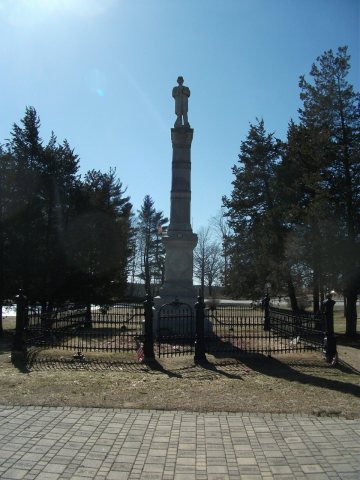 2011
 2011
 2011


