Derry’s post office opened in 1827, and 4 of its places are on the National Register
More historic than 65% of U.S. towns · #92 of 126 in New Hampshire. What drives it
Most of Derry was built recently: 8% of its homes predate 1940 and the median home dates from 1983. 4 places in town are on the National Register, among them 2 National Historic Landmarks and a historic district with 22 buildings. Below: 6 old photos and papers, maps from 1905 on, and the census since 1830.
The Derry post office opened in 1827, the earliest record of the town by name. Three smaller post offices, Derry Depot (1854), Hubbard (1888) and West Derry (1899), opened inside today’s town and later closed.
First census: 2,178 in 18302020 census: 34,317199 years
How historic is Derry?
B+
More historic than 65% of U.S. towns, on its age, its old homes and the National Register.
Founding year: the first Derry post office (Blevins & Helbock, CC0).The full story ↓
History grade
What drives Derry’s History grade
On its age, its old homes and the National Register, Derry is more historic than 65% of U.S. towns, #92 of 126 in New Hampshire. Its age holds the grade up; its share of homes from before 1940 pulls it down.
B+
HistoryA character grade: shown, never part of Derry’s overall grade.
New Hampshire towns list more on the Register than most of the country (a typical New Hampshire town has 9.5 per 10,000 residents, the U.S. 2.4), so Derry’s 7.3 sits near the middle of its state (43% of New Hampshire towns have fewer) while its 25 historic buildings outnumber those of 81% of U.S. towns.
How sure. Graded on any two of the three inputs instead, the letter would range from B− to A−. The pre-1940 share (±2.1 points) is firm at this size. The founding year is the first post office, not a stated founding date.
Founding year: the first post office (other dates in Quick answers). Homes: Census ACS 2020–24. National Register: National Park Service, May 2026 list; each listing counted once (boundary changes and added documentation belong to their listing), and a historic district counts its contributing buildings. How TownRatings grades history →
What stands out about Derry’s past
Read from the archive, the National Register and the record. The page puts what stands out first.
The area was first settled by Scots-Irish families in 1719 as part of the town of Londonderry, as were present-day Windham and portions of Manchester, Salem and Hudson. The town of Derry was formed in 1827 from the eastern portion of Londonderry and was named, like Londonderry, after the city of Derry in Ireland. The first potato planted in the United States was sown in Derry in the town's common field in 1719. The town is the location of two of America's oldest private schools, Pinkerton Academy, founded in 1814 and still in operation, and the closed Adams Female Seminary.
Passages that mention Derry, cut from the printed page as they were published.
History of Rockingham County, New Hampshire1915 · page 521Read the page →
Read the text
H'est Parish, or Londonderry Presbyterian Meeting-House. — February 25, 1740, the New Hampshire Legislature incorporated a second parish in Londonderry. It took the name of the West Parish, and embraced all the present town of Londonderry and a considerable part of Derry. The first meeting-house of the parish was erected near the old graveyard certainly as early as 1735. and may have been as early as March 14. 1733. as that was the date of the call to Rev. David McGregor, the first pastor. It was never fully finished, and probably only occasional services were held in it. The
Text read by machine from the scan; it may contain errors.
History of Rockingham County, New Hampshire1915 · page 61Read the page →
Read the text
John Porter was liorn in Bridgewater. Mass.. February 2(). 177^1. He completed his college course at Dartmouth in 1803, and studied law with Aaron Hutchinson, Esq.. of Lebanon, and in 1806 began to practice in Derry (then Londonderry). He represented that town in the State Legislature for five years, and the town of Derry for ten years. He was also a member of one of the commissions to revise the statutes of the state.
Text read by machine from the scan; it may contain errors.
Scans and text from the Internet Archive. Books published in 1930 or earlier, which are in the public domain.
Timeline
Derry, 1827 to 1985
Woven from the archive, old maps, post office records, the National Register and the people born here.
Nothing in the archives for these yearsWeddings on Main Street, storms, parades, school pictures, the old store. If it’s in your family album, it belongs here.
The Derry post office opened in 1827, the earliest record of the town by name (U.S. post office records).
How does Derry rank for history?
Derry is more historic than 65% of U.S. towns, #92 of 126 in New Hampshire. The History grade combines the town’s founding era, the share of homes built before 1940 and its National Register listings. It’s a character grade, so it isn’t part of the overall grade. How it works.
What is on the National Register in Derry?
4 listings, 2 of them National Historic Landmarks: 3 buildings, among them the Robert Frost Homestead (a National Historic Landmark since 1968), and 1 historic district, the East Derry Historic District, with 22 contributing buildings. 25 historic buildings in all.
How old are the homes in Derry?
8% of Derry’s homes were built before 1940 (Census estimate, ±2.1 points), against a typical 17% for a New Hampshire town; the median home was built in 1983.
Founding dates: Wikidata, Wikipedia, the U.S. post office records of Blevins & Helbock (CC0) and the Census. Homes by year built: Census ACS 2020–24. National Register of Historic Places: National Park Service (list of May 22, 2026). Old photos, postcards and papers: Wikimedia Commons, the Library of Congress and other public archives, credited on each item’s page. Maps: U.S. Geological Survey historical topographic maps (via Esri) and Sanborn fire-insurance maps (Library of Congress). History text and census tables: Wikipedia (CC BY-SA 4.0). Places that used to be: USGS Geographic Names Information System (2021).
From Wikimedia Commons (18), the National Register of Historic Places (4), Wikipedia, Wikidata and Wikipedia for famous people, U.S. Geological Survey historical maps, U.S. Census counts (via Wikipedia), the US Post Offices dataset (Blevins & Helbock), the USGS Geographic Names Information System, Sanborn fire insurance maps (Library of Congress) and old county and town histories (Internet Archive). Archive images are copied here with their credits and licenses, shown on each photo’s page. Refreshed monthly.
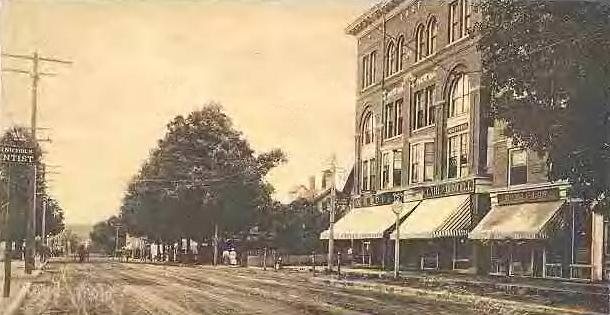


 ★ Landmark
 ★ Landmark


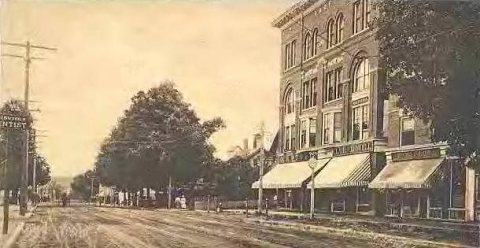


 c. 1909
 Date?
 2026
 2023
 2022
 2022
 2022
 2021
 2018
 2017
 2016
 2013
 2010
 2009


