Royal PinesNC
It is a town of 4,325 residents in North Carolina.
Is Royal Pines a good place to live?
Real strengths, and real weak spots. Its best grade is for health: CDC estimates put its residents' health ahead of 93% of the country. The catch is walkability. Most errands need a car: it is less walkable than just over four fifths of U.S. towns. A typical home there costs about $400K, 5.6 years of the Asheville metro’s $72K median household income. Overall, that makes a B+, better than 74% of U.S. towns. It ranks 29th of 286 in North Carolina. 57% of adults 25 and older hold a bachelor’s degree or more in Royal Pines, above both the North Carolina town median (29%) and the median of U.S. towns (29%).
Figures: health, CDC PLACES · home values, Zillow · incomes, Census ACS, 2020–24.
What makes Royal Pines stand out
Where Royal Pines beats most towns.
99% of working residents leave Royal Pines for work
Where Royal Pines’s working residents go each day. Line width shows the share.
Census LEHD 2023
How Royal Pines grades
Each subject compared with towns across the country (schools within North Carolina), ordered by how far Royal Pines is from typical.
How TownRatings grades towns →
Blue Ridge Parkway and 19 more within 40 miles
Museums, parks, gardens and other places to visit around Royal Pines. Close and well known come first.
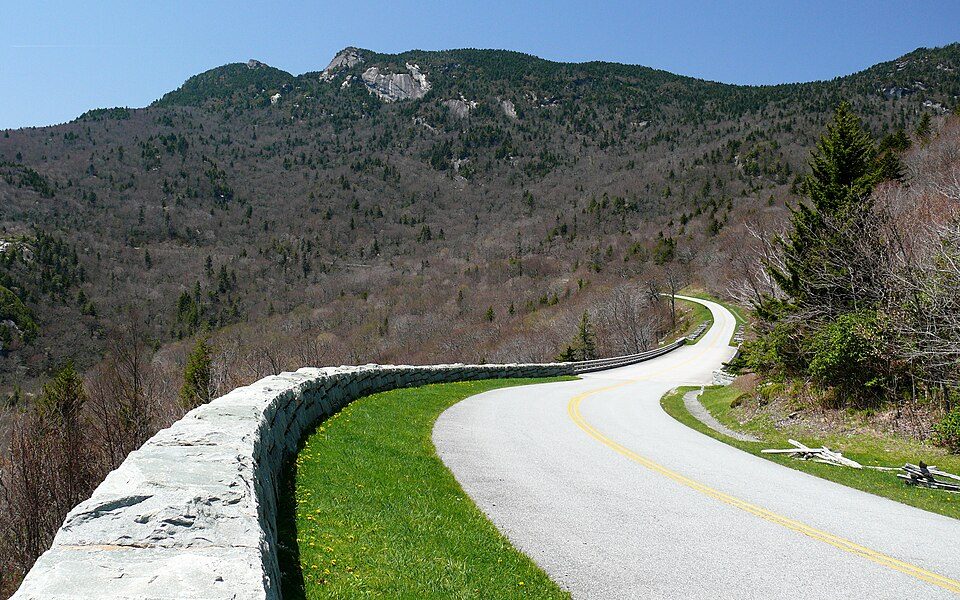 3 mi ParkwayBlue Ridge Parkway16.5M visitors a year
 Big draw24 mi MountainMount Mitchell
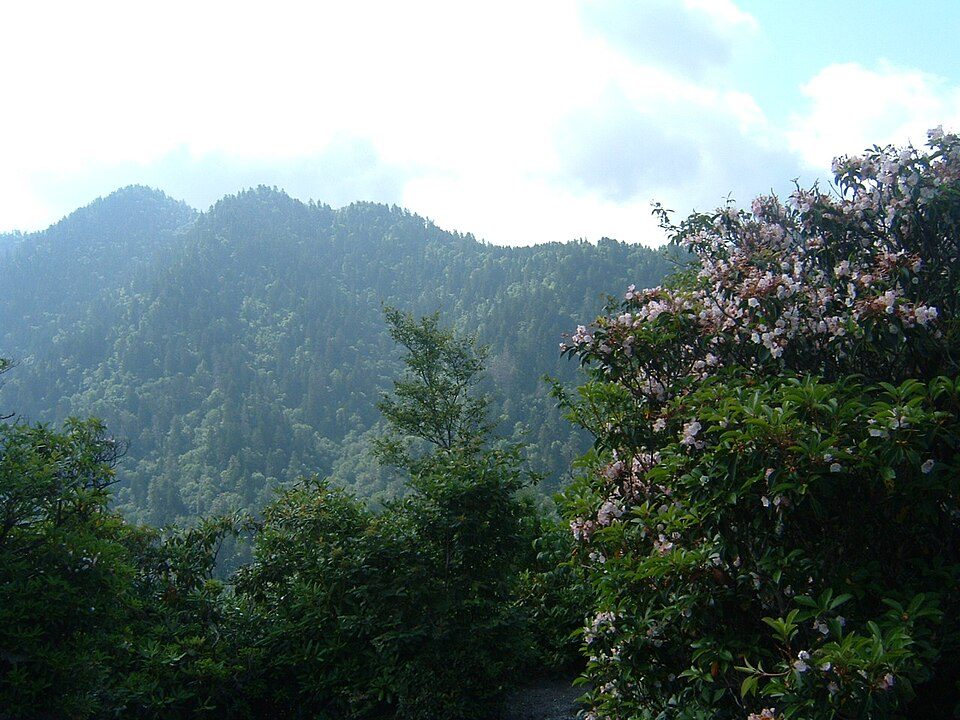 Big draw30 mi National ParkGreat Smoky Mountains National Park11.5M visitors a year
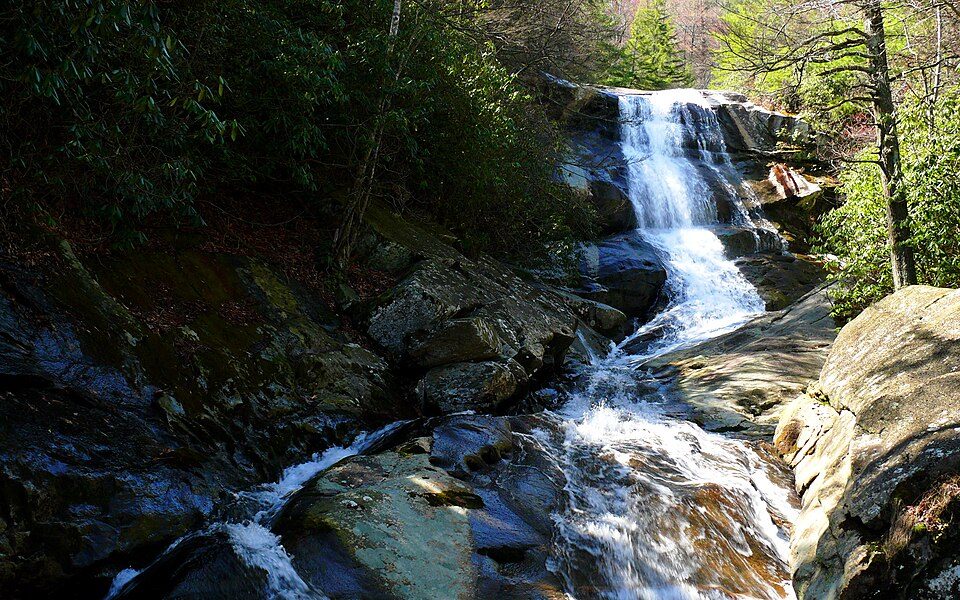 18 mi National forestPisgah National Forest34 mi Theme parkGhost Town in the Sky
 15 mi State parkChimney Rock State Park
Photo credits
Blue Ridge Parkway: Ken Thomas, Public domain · Mount Mitchell: Unknown, Public domain · Great Smoky Mountains National Park: Scott Basford, CC BY-SA 3.0 · Pisgah National Forest: Ken Thomas, Public domain · Chimney Rock State Park: Jmturner, Public domain


Moving to Royal Pines: who provides what
Royal Pines is unincorporated, so Buncombe County and regional agencies provide most services.
EPA SDWIS (Oct 9, 2026) · HIFLD + EIA-861 2025 · Census 2020 ZCTAs · NCES 2024–25 · registration: vote.gov, updated Nov 18, 2024.
The data
Ordered by what stands out in Royal Pines.
Royal Pines has less tooth loss than most of North Carolina, sends most of its workers to Asheville and beyond and has milder winter nights than most of the country, though not than most of North Carolina.
Royal Pines’ grade for health is an A
Its widest gap with North Carolina is tooth loss: 6.1% of those 65+ have lost all their teeth, against 13.9% statewide.
16% of Royal Pines adults binge drink. The town does better than the North Carolina average on 19 of 32 CDC measures and worse on 1. Among adults here, 28% feel lonely and 14% report frequent mental distress.
| Royal Pines | North Carolina towns | U.S. towns | |
|---|---|---|---|
| Sleep under 7 hours (CDC PLACES) | 27% | 34% | 36% |
| Feel lonely (CDC PLACES) | 28% | 33% | 33% |
| Frequent mental distress (CDC PLACES) | 14% | 17% | 17% |
| Get no exercise (CDC PLACES) | 17% | 24% | 25% |
| What stands out | Royal Pines | NC |
|---|---|---|
| Fewer older adults who have lost all their teeth | 6.1% | 13.9% |
| Fewer adults facing food insecurity | 7.4% | 15.2% |
| More adults who have had cancer | 10.6% | 7.9% |
CDC PLACES 2025 · modeled estimates for adults · CMS · HRSA
Royal Pines’ schools rank ahead of 62% of North Carolina districts
Public schools: the Buncombe County Schools. Its one school is below. Royal Pines’ only public school teaches 505 students.
| School | Level | Students | Letter |
|---|---|---|---|
| Glen Arden ElementaryLargest public elementary schoolGrades PK–4 | Grades PK–4 | 505 | B+ |
NCES · EDFacts · graded within NC on state tests and graduation
Royal Pines faces a very low natural-hazard risk, led by inland flooding
One declared disaster, in 2024, has brought federal aid to Royal Pines households. On expected storm and flood damage, Royal Pines sits below 82% of U.S. communities. Flood insurance has paid out on 5 claims here since 1980. 47% of the town’s expected losses from natural hazards come from inland flooding, followed by cold waves at 27%.
FEMA disaster declarations and aid · FEMA flood insurance claims · FEMA National Risk Index · OpenFEMA
Royal Pines stands out in North Carolina and nationally: a smaller share of its residents live below the poverty line
Royal Pines has 263 jobs for its 1,800 working residents: even if every job went to a resident, most would still commute out. 28.5% of workers work from home, against 16.3% across North Carolina.
The top destinations are Asheville (43%), Charlotte (5%) and Hendersonville (4%). In Royal Pines, the typical household income is $108,000. Just 1% of the town’s working residents have a job in town.
| Royal Pines | North Carolina towns | U.S. towns | |
|---|---|---|---|
| Below the poverty line | 1.5% | 13% | 9.6% |
| Median household income | $108,000 | $69,000 | $80,000 |
| Working residents who work in town | 1% | 6.8% | 8% |
| Average trip to work | 26 minutes | 24 minutes | 25 minutes |
Where working residents work
Census LEHD 2023 · ACS
Expect four seasons and pleasant summers in Royal Pines
January nights average 27°: milder than most of the country, but colder than 92% of North Carolina places with climate records; July afternoons average 83.7°.
About 9 inches of snow falls in a winter. The peak summer temperature for Royal Pines comes to 84°F.
| Royal Pines | North Carolina towns | U.S. towns | |
|---|---|---|---|
| July high | 84°F | 89°F | 85°F |
| January low | 27°F | 31°F | 22°F |
Typical low → high °F
NOAA U.S. Climate Normals, 1991–2020
Protected land: 3.1% of Royal Pines
Trails run 0.2 miles in 1 park or preserve. The biggest park or preserve is Collier Cove Nature Preserve, at 29 acres. Royal Pines’ trail density is 0.1 miles per square mile.
| Royal Pines | North Carolina towns | U.S. towns | |
|---|---|---|---|
| Miles of trail per square mile | 0.1 miles per square mile | 0.2 | 0.4 |
| Conserved land | 3.1% | 3.4% | 4.3% |
| Biggest places to walk | Trails | Acres |
|---|---|---|
| 1. Collier Cove Nature Preserve | — | 29 |
Trails & parks © OpenStreetMap contributors · Conserved land: USGS PAD-US
Homes in Royal Pines sell for about $504K
A home in Royal Pines typically sold within 60 days of listing. The going rate for rent in the town is $1,596 a month. The share of households in Royal Pines who live in a home they own: 88%.
| Royal Pines | North Carolina towns | U.S. towns | |
|---|---|---|---|
| Households that own their home | 88% | 67% | 73% |
| Median rent | $1,596 a month | $1,084 a month | $1,185 a month |
Census ACS, 2020–24 · Zillow Home Value Index · Redfin Data Center
Everything we know about Royal Pines
Colleges nearby
6 within 15 miles of the center of Royal Pines
About 4 of every 100 Royal Pines residents are enrolled in college, against 6 across North Carolina.
About Royal Pines
Census-designated place in North Carolina, United States
Royal Pines is a census-designated place (CDP) in Buncombe County, North Carolina, United States. As of the 2020 census, Royal Pines had a population of 4,127. It is part of the Asheville Metropolitan Statistical Area.
From Wikipedia, licensed CC BY-SA 4.0 · facts via Wikidata (CC0)
- Area
- 2.7 sq mi
- Elevation
- 2,283 ft
- Area code
- 828
Royal Pines’s neighbors
One town shares a border with Royal Pines.
| Town | NC rank | Overall | Cost | Safety | Schools | Health |
|---|---|---|---|---|---|---|
| Royal Pines | #29 | B+ | C | — | B | A |
| Asheville | #164 | C | D | D− | B | A− |
Royal Pines reports no FBI crime data of its own. Compare Royal Pines with a neighbor →
Questions about Royal Pines
Short answers, built from the data on this page.
Is Royal Pines, NC a good place to live?
By most measures, yes. Royal Pines grades B+ overall, better than 74% of U.S. towns and #29 of 286 in North Carolina. It grades A for health and B for schools. Walkability is its weak spot, with a C−.
Is Royal Pines, NC expensive?
The typical home is worth about $400,000, 20% above the North Carolina typical home. Cost of living, which also weighs rents, property taxes and how many households pay 30% or more of their income for housing, grades C.