

The story
Read it all →How Mount Vernon came to be
From Wikipedia’s history of Mount Vernon.
Mount Vernon was incorporated on June 28, 1792, and was named for George Washington's Virginia estate.
Text from Wikipedia, licensed CC BY-SA 4.0.
Each edition grades its towns against each other only.
More historic than 91% of U.S. towns. What drives it
3 places in town are on the National Register, among them a historic district with 15 buildings. Below: the census since 1800.
Mount Vernon dates its founding to 1792 (Wikipedia’s history). The census first counted it in 1800.
More historic than 91% of U.S. towns, on its age, its old homes and the National Register.
On its age, its old homes and the National Register, Mount Vernon is more historic than 91% of U.S. towns. All 3 inputs are above most U.S. towns; its National Register listings ranks highest and its age lowest.
Maine towns list more on the Register than most of the country (a typical Maine town has 15.9 per 10,000 residents, the U.S. 2.4), so Mount Vernon’s 99.1 sits above most of its state (87% of Maine towns have fewer) while its 17 historic buildings outnumber those of 79% of U.S. towns.
Founding year: Wikipedia (other dates in Quick answers). Homes: Census ACS 2020–24. National Register: National Park Service, May 2026 list; each listing counted once (boundary changes and added documentation belong to their listing), and a historic district counts its contributing buildings. How TownRatings grades history →
Read from the archive, the National Register and the record. The page puts what stands out first.
Mount Vernon’s post office has been open since 1801. Four other post offices opened and closed inside today’s town.
US Post Offices dataset (Blevins & Helbock, CC0). Places and cemeteries from the USGS Geographic Names Information System (2021).
The first neighbors to add old photos shape how Mount Vernon’s history is told.
Lost half of its people between 1850 and 1960, then more than doubled.
23 censuses, 1800–2020.
U.S. Census Bureau decennial counts, from the census table on Mount Vernon’s Wikipedia page.
From Wikipedia’s history of Mount Vernon.
Mount Vernon was incorporated on June 28, 1792, and was named for George Washington's Virginia estate.
Text from Wikipedia, licensed CC BY-SA 4.0.
Passages that mention Mount Vernon, cut from the printed page as they were published.

Major Thing was a man of great force of character, and exerted a wide influence in the town of Mount Vernon. He filled all of the town offices, served in the legislature in 1843 as an old line whig, and was a deacon in the Baptist church for many years. He was actively connected, as early as 1814, with the state militia, and attained the
Text read by machine from the scan; it may contain errors.
meeting house erected by the town just south of Moose pond, in 1800, and in school houses till 1826, when Esquire James Robinson gave a plot of land near the Robinson burying ground, on which was built the First Particular Baptist meeting house in Mount Vernon. Elijah Morse, Dudley Robinson and Daniel Thing were the building committee. Here the Baptist society had a house for over half a century, the last sermon being preached by Elder C. E. Young, in July, 1879.
Text read by machine from the scan; it may contain errors.Scans and text from the Internet Archive. Books published in 1930 or earlier, which are in the public domain.
Woven from the archive, old maps, post office records, the National Register and the people born here.
 BuiltDr. Samuel Quimby House is built
 Born hereJohn L. Stevens is born here
 Born hereLoren Fletcher is born here
 2022MountVernonMe OldChurch
 2022MountVernonME ShawMemorialLibrary
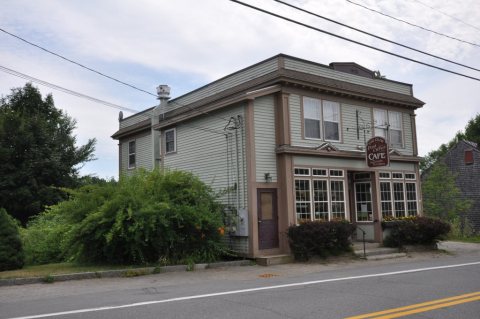 2022MountVernonME OldPostOfficeAndGeneralStore
 2022MountVernonME OldGrangeHall
 2022MountVernonME MasonicLodge
 2022MountVernonME JohnWilliamsHouse
 2022MountVernonME FirstBaptistChurch
 2022MountVernonME DrSamuelQuimbyHouse
 2022MountVernonME BearnstowSign
The country’s official list of buildings and places worth saving.
National Park Service, National Register of Historic Places. Photos from Wikimedia Commons, credited on each place’s page.
Writers, athletes, leaders and more, ranked by how widely they’re known.
Each neighbor’s History grade, on the same three inputs.
In 1792, according to Wikipedia’s history of the town. Mount Vernon’s post office opened in 1801, and the census of 1800 counted 740 people here.
Mount Vernon is more historic than 91% of U.S. towns. The History grade combines the town’s founding era, the share of homes built before 1940 and its National Register listings. It’s a character grade, so it isn’t part of the overall grade. How it works.
Three places: the John Williams House (listed 1984), the Dr. Samuel Quimby House (1990) and the Spruce Point Camps (2007).
24% of Mount Vernon’s homes were built before 1940 (Census estimate, ±6.9 points), against a typical 19% for a Maine town; the median home was built in 1978.
What the archives can’t tell you, neighbors can.
Founding dates: Wikidata, Wikipedia, the U.S. post office records of Blevins & Helbock (CC0) and the Census. Homes by year built: Census ACS 2020–24. National Register of Historic Places: National Park Service (list of May 22, 2026). Old photos, postcards and papers: Wikimedia Commons, the Library of Congress and other public archives, credited on each item’s page. Maps: U.S. Geological Survey historical topographic maps (via Esri) and Sanborn fire-insurance maps (Library of Congress). History text and census tables: Wikipedia (CC BY-SA 4.0). Places that used to be: USGS Geographic Names Information System (2021).
From Wikimedia Commons (9), Wikidata (1), the National Register of Historic Places (3), Wikipedia, Wikidata and Wikipedia for famous people, U.S. Census counts (via Wikipedia), the US Post Offices dataset (Blevins & Helbock), the USGS Geographic Names Information System and old county and town histories (Internet Archive). Archive images are copied here with their credits and licenses, shown on each photo’s page. Refreshed monthly.
