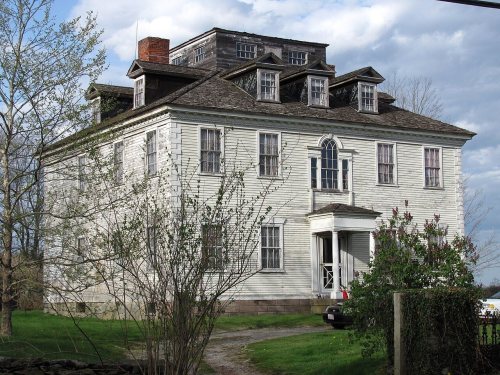
Seekonk dates to 1636, and 21% of its homes were built before 1940
More historic than 83% of U.S. towns · #210 of 283 in Massachusetts. What drives it
2 places in town are on the National Register, among them a historic district with 4 buildings. Below: 4 old photos and papers, maps from 1894 on, and the census since 1850.
Founding year: Wikidata. First post office: 1816.The full story ↓
History grade
What drives Seekonk’s History grade
On its age, its old homes and the National Register, Seekonk is more historic than 83% of U.S. towns, #210 of 283 in Massachusetts. Its age holds the grade up; its National Register listings pull it down.
A−
HistoryA character grade: shown, never part of Seekonk’s overall grade.
Massachusetts towns list more on the Register than most of the country (a typical Massachusetts town has 46.0 per 10,000 residents, the U.S. 2.4), so Seekonk’s 3.2 sits below most of its state (17% of Massachusetts towns have fewer) while its 5 historic buildings outnumber those of 70% of U.S. towns.
NoteThe founding year comes from Wikidata alone; no second source gives 1636.
How sure. Graded on any two of the three inputs instead, the letter would range from B to A. The pre-1940 share is a Census survey estimate (±5.0 points).
Founding year: Wikidata (other dates in Quick answers). Homes: Census ACS 2020–24. National Register: National Park Service, May 2026 list; each listing counted once (boundary changes and added documentation belong to their listing), and a historic district counts its contributing buildings. How TownRatings grades history →
What stands out about Seekonk’s past
Read from the archive, the National Register and the record. The page puts what stands out first.
The earliest known inhabitants of Seekonk were Native Americans from the Wampanoag Tribe. The name Wampanoag means People of the Morning Light. This name refers to the geographical area of the tribe. Living in the East they would be the first people to greet the sun each morning. The area now known as Seekonk and Rehoboth provided agricultural and water resources with abundant food supplies. During the warm summer months the Natives spent time near the rivers and oceans in what is now Southeastern Massachusetts. In the winter months the Natives lived inland, including several locations in Seekonk. At one time there were three Native American villages in the area we now call Seekonk.
Passages that mention Seekonk, cut from the printed page as they were published.
The history of Rehoboth, Bristol County, Massachusetts1836 · page 194Read the page →
Read the text
church, and Richmond Bullock, a committee from the town of Providence, in behalf of said town of Providence, requested liberty to build a breastwork on land belonging to the town of Seekonk and Rehoboth, at a place called Kettle Point; and to solicit the citizens of Seekonk to assist in building said fortification. By vote, granted the request of said committee so far as related to Seekonk, and chose a committee of seven to request the citizens to assist in raising the fortification."
Text read by machine from the scan; it may contain errors.
The history of Rehoboth, Bristol County, Massachusetts1836 · page 232Read the page →
Read the text
town of Pawtucket shall be entitled to hold their proportion, according to the last valuation, of all the real and personal property, including the legacy of the late Eliphalet Slack, belonging to the town of Seekonk before the passing of this act, except so much of said property as is hereafter mentioned ; and, whereas, by an act of this General Court passed the twentysixth day of February, in the year of our Lord one thousand eight hundred and twelve, entitled an act to establish the town
Text read by machine from the scan; it may contain errors.
History of Bristol County, Massachusetts, with biographical sketches of many of its pioneers and prominent men1883 · page 495Read the page →
Read the text
committee from the town of Providence, consisting of Tristam Burgess, William Church, and Richmond Bullock, requested liberty to build a breastwork on land belonging to the town of Seekonk and Rehoboth, at a place called " Kettle Point," and to solicit the citizens of Seekonk to assist in building said fortification. " By vote granted the request of said committee so far as related to Seekonk, and choose a
Text read by machine from the scan; it may contain errors.
History of Bristol County, Massachusetts, with biographical sketches of many of its pioneers and prominent men1883 · page 494Read the page →
Read the text
chargeable, together with such poor as have removed out of said town prior to this act of incorporation, but who may hereafter be lawfully returned to said town for support, shall be equally divided between the towns of Seekonk and Rehoboth ; and when the said town of Seekonk shall be organized, the paupers, whether the same be supported in whole or in part only, shall be divided as nearly as may be, and one-half of the number delivered over to the overseers of the poor of that town, to he by them in future supported.
Text read by machine from the scan; it may contain errors.
Scans and text from the Internet Archive. Books published in 1930 or earlier, which are in the public domain.
By decade
Seekonk, decade by decade
One decade in the archive so far: the 1980s. Scroll each row; tap a photo for its story.
Nothing in the archives for these yearsWeddings on Main Street, storms, parades, school pictures, the old store. If it’s in your family album, it belongs here.
In 1636, according to Wikidata. Seekonk’s post office opened in 1816, and the census of 1850 counted 2,243 people here.
How does Seekonk rank for history?
Seekonk is more historic than 83% of U.S. towns, #210 of 283 in Massachusetts. The History grade combines the town’s founding era, the share of homes built before 1940 and its National Register listings. It’s a character grade, so it isn’t part of the overall grade. How it works.
What is on the National Register in Seekonk?
Two places: the Martin House (listed 1974) and the Carpenter Homestead (1993).
How old are the homes in Seekonk?
21% of Seekonk’s homes were built before 1940 (Census estimate, ±5.0 points), against a typical 21% for a Massachusetts town; the median home was built in 1967.
Founding dates: Wikidata, Wikipedia, the U.S. post office records of Blevins & Helbock (CC0) and the Census. Homes by year built: Census ACS 2020–24. National Register of Historic Places: National Park Service (list of May 22, 2026). Old photos, postcards and papers: Wikimedia Commons, the Library of Congress and other public archives, credited on each item’s page. Maps: U.S. Geological Survey historical topographic maps (via Esri) and Sanborn fire-insurance maps (Library of Congress). History text and census tables: Wikipedia (CC BY-SA 4.0). Places that used to be: USGS Geographic Names Information System (2021).
From Wikimedia Commons (15), the Library of Congress (3), the National Register of Historic Places (2), Wikipedia, Wikidata and Wikipedia for famous people, U.S. Geological Survey historical maps, U.S. Census counts (via Wikipedia), the US Post Offices dataset (Blevins & Helbock), the USGS Geographic Names Information System, Sanborn fire insurance maps (Library of Congress) and old county and town histories (Internet Archive). Archive images are copied here with their credits and licenses, shown on each photo’s page. Refreshed monthly.


 Date?
 Date?
 Date?
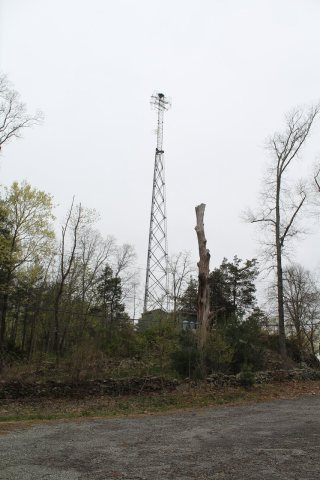 2023
 2022
 2022
 2018
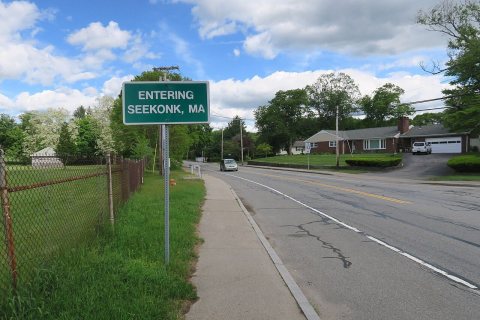 2017
 2017
 2016
 2016
 2016
 2014
 2010
 2010
 2008
 2002