Hampden dates to 1741, and 12% of its homes were built before 1940
More historic than 74% of U.S. towns · #245 of 283 in Massachusetts. What drives it
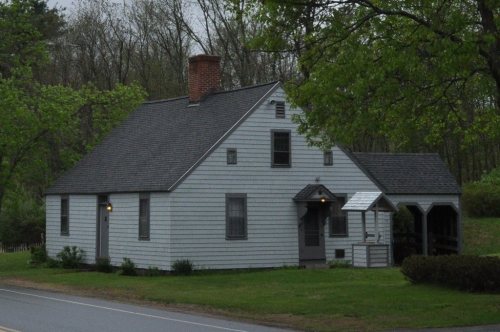
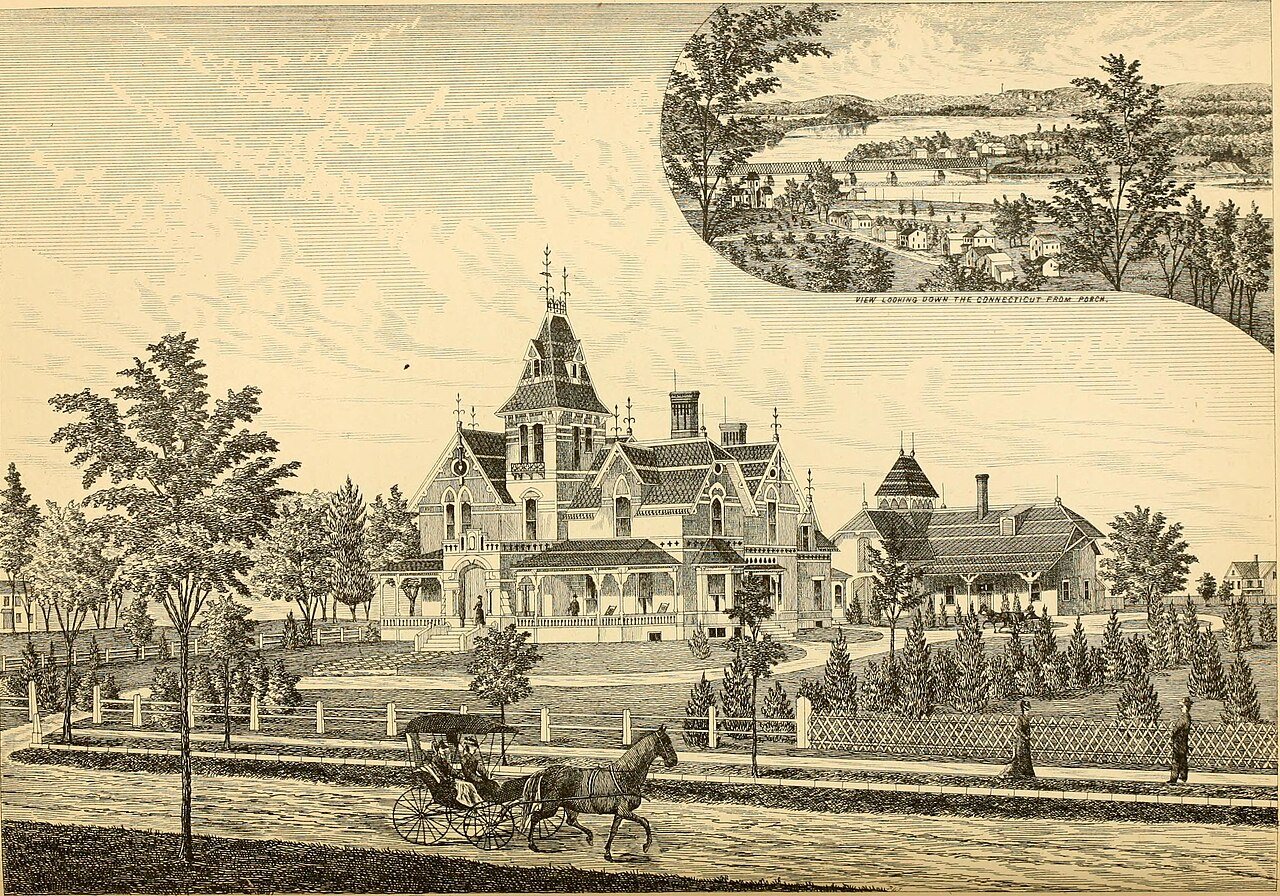
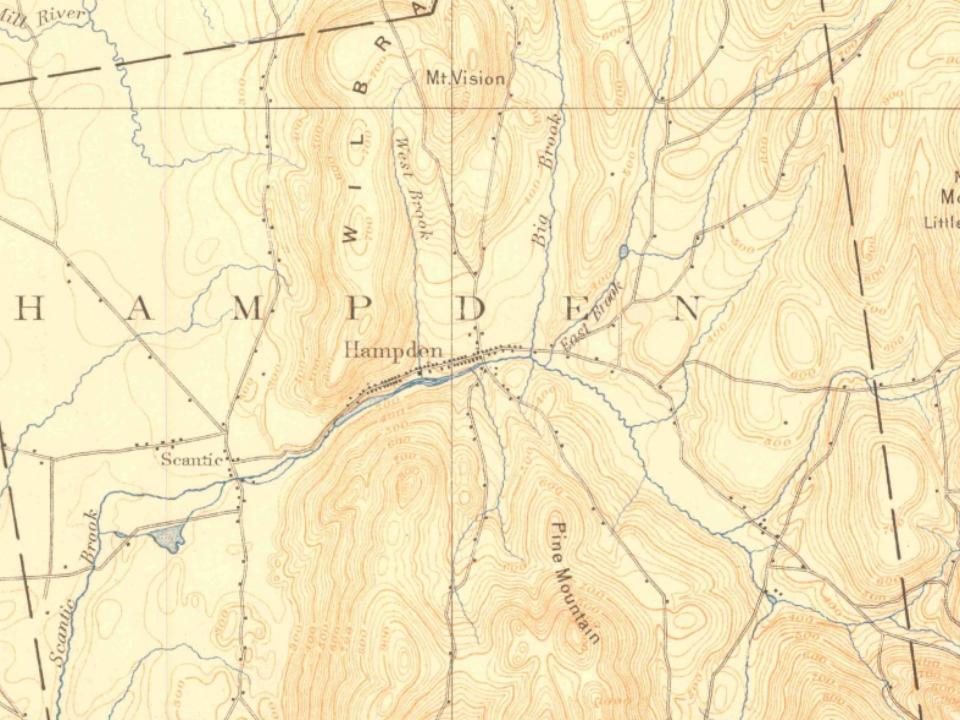
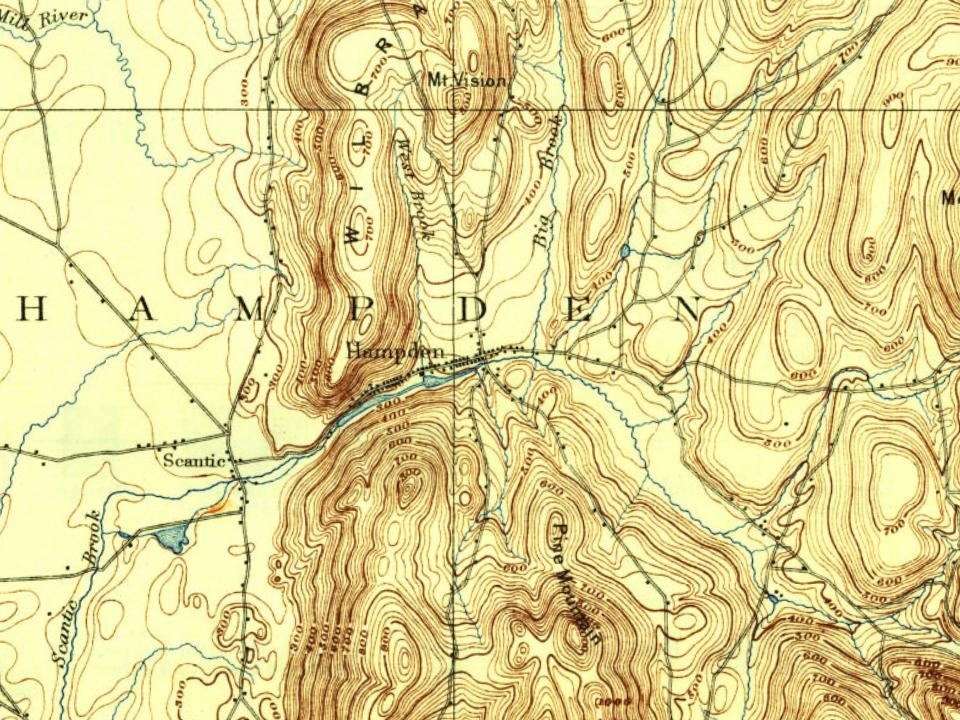
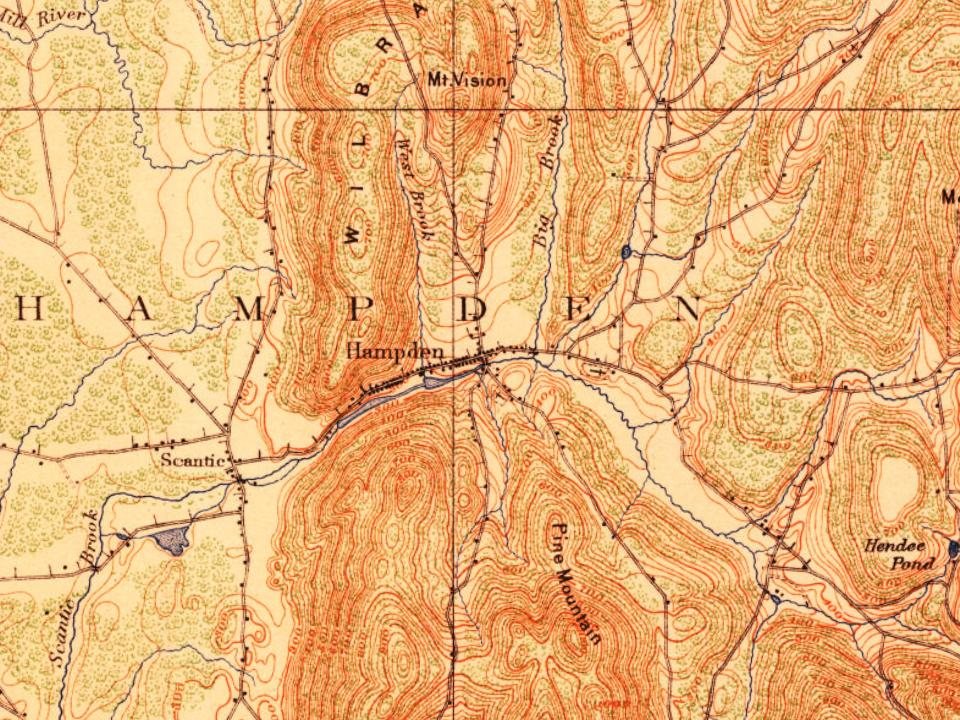
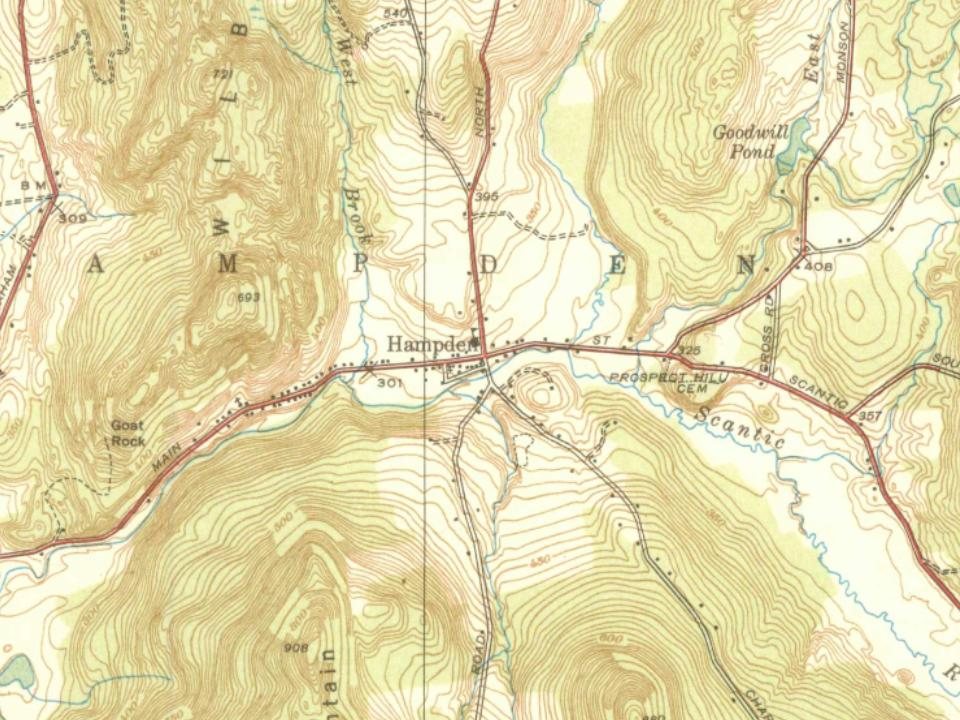
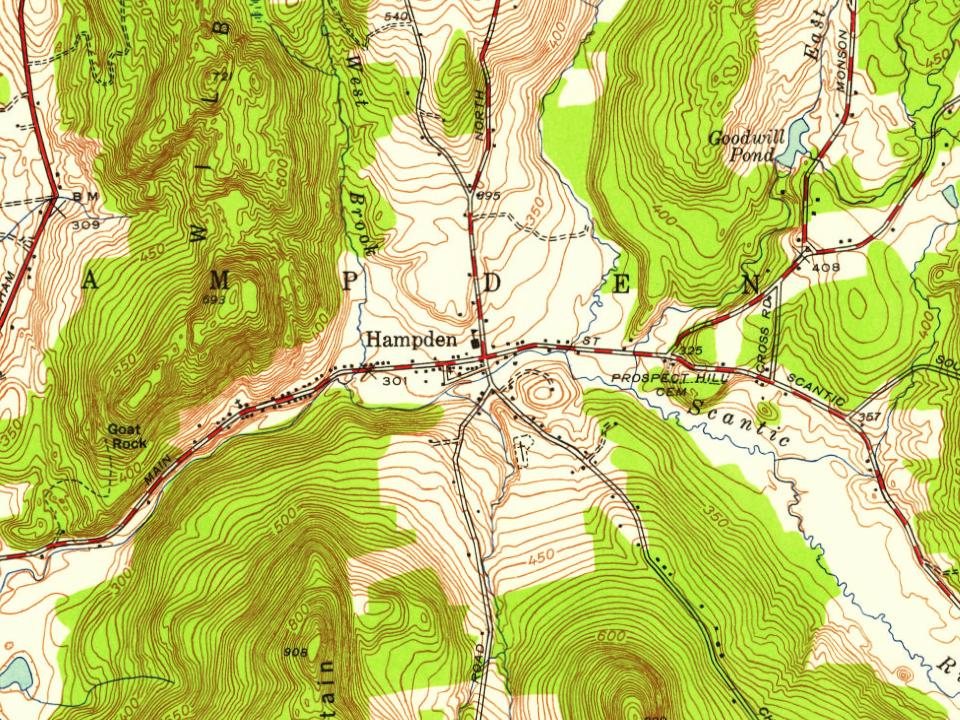
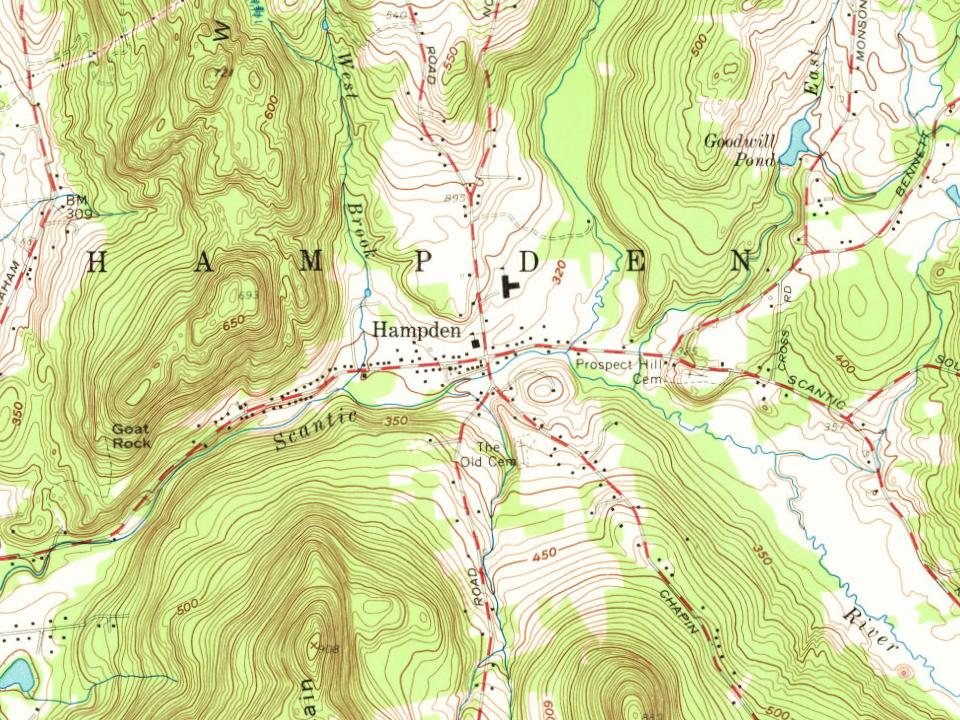
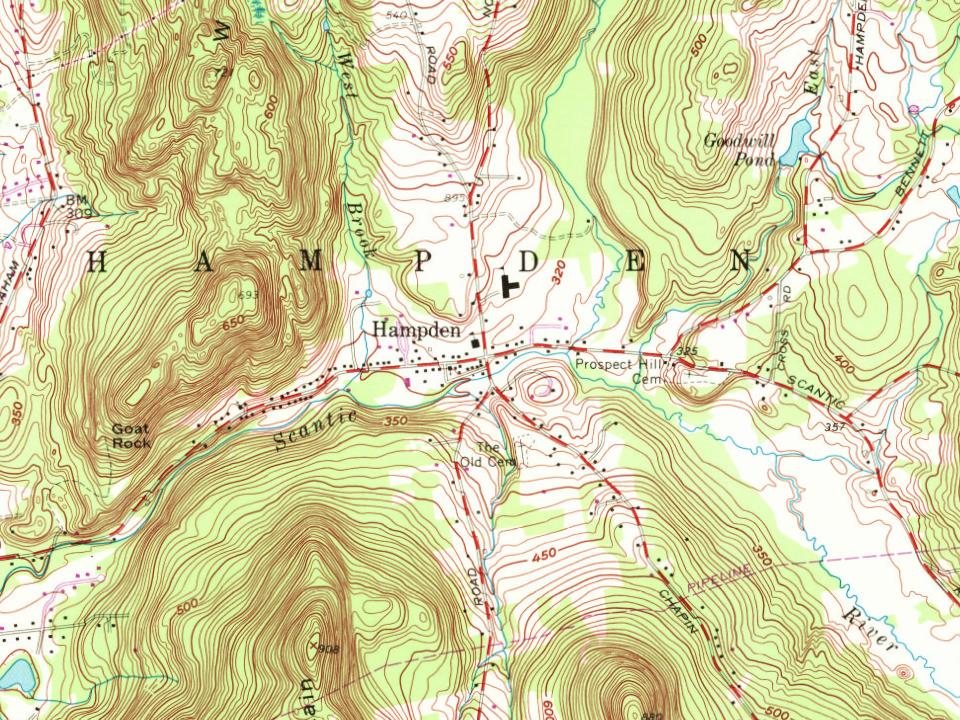
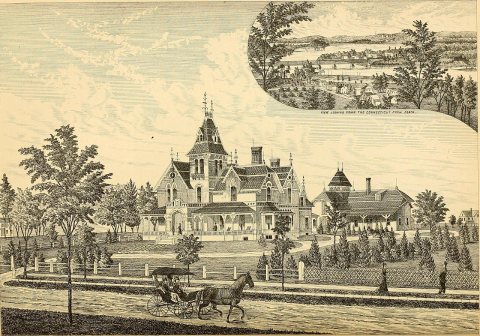
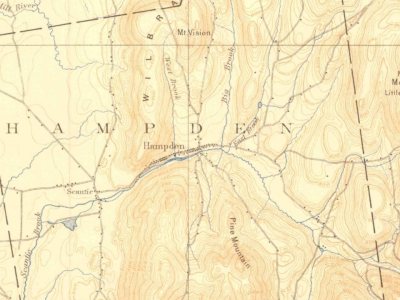
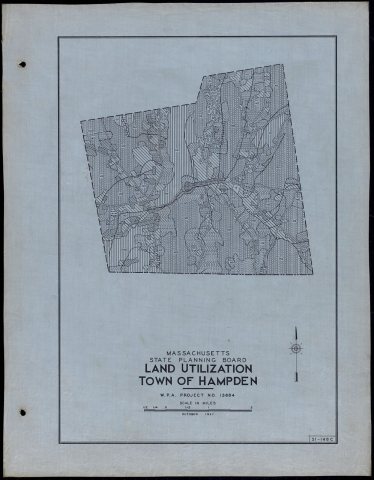
Its Register listing is the Thornton W. Burgess House. Its Register listing is the Thornton W. Burgess House. Below: 3 old photos and papers, maps from 1887 on, and the census since 1880.
Founding year: Wikidata. First post office: 1821.The full story ↓
History grade
What drives Hampden’s History grade
On its age, its old homes and the National Register, Hampden is more historic than 74% of U.S. towns, #245 of 283 in Massachusetts. Its age holds the grade up; its National Register listings pull it down.
B+
HistoryA character grade: shown, never part of Hampden’s overall grade.
Massachusetts towns list more on the Register than most of the country (a typical Massachusetts town has 46.0 per 10,000 residents, the U.S. 2.4), so Hampden’s 6.1 sits below most of its state (24% of Massachusetts towns have fewer) while its 3 historic buildings outnumber those of 65% of U.S. towns.
NoteThe founding year comes from Wikidata alone; no second source gives 1741.
How sure. Graded on any two of the three inputs instead, the letter would range from B− to A−. The pre-1940 share is a Census survey estimate (±4.3 points).
Founding year: Wikidata (other dates in Quick answers). Homes: Census ACS 2020–24. National Register: National Park Service, May 2026 list; each listing counted once (boundary changes and added documentation belong to their listing), and a historic district counts its contributing buildings. How TownRatings grades history →
What stands out about Hampden’s past
Read from the archive, the National Register and the record. The page puts what stands out first.
The Hampden-Wilbraham region was once known as Minnechaug ("berry land" or "berry hill") to the Nipmuc Indians. They sold it to William Pynchon of Springfield in 1674, and the area then became known as Springfield Mountain, but it was not settled (as South Wilbraham) until about 1741. The first European settlers were the Stebbins and Hitchcock families. The first sawmill was erected on the Scantic in the vicinity of the V.F.W. building.
Passages that mention Hampden, cut from the printed page as they were published.
Leading manufacturers and merchants of central and western Massachusetts. . Historical and descriptive review of the industrial enterprises of Worcester, Hampden, Hampshire, Berkshire, and Franklin counties1886 · page 234Read the page →
Read the text
The city of Holyoke is situated in Hampden county, in an elbow of the Connecticut river, about midway between Springfield and Northampton. It is an important station on the Connecticut River railroad and the terminus of the Holyoke and Westfield railroad. Across the Connecticut, on one side of the town, is South Hadley Fall.s, whose most important mills derive their water-power through a canal from the northern end of the dam, and opposite the other side is Chicopee, both places connected with Holyoke by bridges. The location is a commanding one, its railway facilities connecting it with the manufacturing system of New England, and rendering easily accessible all the principal points of supply and demand in the country.
Text read by machine from the scan; it may contain errors.
Leading manufacturers and merchants of central and western Massachusetts. . Historical and descriptive review of the industrial enterprises of Worcester, Hampden, Hampshire, Berkshire, and Franklin counties1886 · page 267Read the page →
Read the text
Palmer is known as one of the finest and most flourishing towns in Hampden county. Favorable in location, it is situated at tlie junction of the New London Northern, the Ware River, the Belcher- - town and Amherst, and the Boston and Albany railroads ; it is thus a railroad point of no inconsiderable importance, and the transportation facilities it enjoys are an appreciable factor in its progress and position as a manufacturing and trade centre. It is remarkably fortunate in the hydraulic power at its command.
Text read by machine from the scan; it may contain errors.
Scans and text from the Internet Archive. Books published in 1930 or earlier, which are in the public domain.
Timeline
Hampden, 1741 to 2000
Woven from the archive, old maps, post office records, the National Register and the people born here.
Nothing in the archives for these yearsWeddings on Main Street, storms, parades, school pictures, the old store. If it’s in your family album, it belongs here.
In 1741, according to Wikidata. Hampden’s post office opened in 1821, and the census of 1880 counted 958 people here.
How does Hampden rank for history?
Hampden is more historic than 74% of U.S. towns, #245 of 283 in Massachusetts. The History grade combines the town’s founding era, the share of homes built before 1940 and its National Register listings. It’s a character grade, so it isn’t part of the overall grade. How it works.
What is on the National Register in Hampden?
One place: the Thornton W. Burgess House (listed 1983).
How old are the homes in Hampden?
12% of Hampden’s homes were built before 1940 (Census estimate, ±4.3 points), against a typical 21% for a Massachusetts town; the median home was built in 1966.
Founding dates: Wikidata, Wikipedia, the U.S. post office records of Blevins & Helbock (CC0) and the Census. Homes by year built: Census ACS 2020–24. National Register of Historic Places: National Park Service (list of May 22, 2026). Old photos, postcards and papers: Wikimedia Commons, the Library of Congress and other public archives, credited on each item’s page. Maps: U.S. Geological Survey historical topographic maps (via Esri) and Sanborn fire-insurance maps (Library of Congress). History text and census tables: Wikipedia (CC BY-SA 4.0). Places that used to be: USGS Geographic Names Information System (2021).
From Wikimedia Commons (6), the National Register of Historic Places (1), Wikipedia, Wikidata and Wikipedia for famous people, U.S. Geological Survey historical maps, U.S. Census counts (via Wikipedia), the US Post Offices dataset (Blevins & Helbock), the USGS Geographic Names Information System and old county and town histories (Internet Archive). Archive images are copied here with their credits and licenses, shown on each photo’s page. Refreshed monthly.




 2013
 2013
 2009