
Boys walking fence. Washington, Indiana, 1941
Washington Township’s story
Washington Township in pictures
The archive holds 10 old photos and papers going back to 1941 and 3 maps from 1951 on.
Explore the history →Each edition grades its towns against each other only.
A town of 3,380.
Washington Township earns a D, 564th among Indiana's 585 graded towns, mostly because of health and incomes. CDC estimates put its residents' health behind 89% of the country. The median household income is $49K, and 11% of residents live below the poverty line. What it does well: a typical home costs about $119K, 1.9 years of the Peru area’s $61K median household income. On hazard risk, just 36 of Indiana’s 1,098 towns do worse. Most errands need a car: it is less walkable than 88% of U.S. towns. The biggest park or preserve is Maconaquah Park, at 23 acres.
Each subject compared with towns across the country (schools within Indiana), ordered by how far Washington Township is from typical.
How TownRatings grades towns →
The archive holds 10 old photos and papers going back to 1941 and 3 maps from 1951 on.
Explore the history →Who provides power, water and the rest in Washington Township, and how to reach them.
EPA SDWIS (Oct 9, 2026) · HIFLD + EIA-861 2025 · Census 2020 ZCTAs · NCES 2024–25 · registration: vote.gov, updated Nov 18, 2024.
Ordered by what stands out in Washington Township.
Washington Township is healthier than towns with similar incomes and has more than doubled its jobs in ten years, but it carries more natural-hazard risk than most of Indiana (mostly inland flooding).
Against the 5,282 U.S. towns with household incomes like Washington Township’s, it is less healthy than 69%, so its D isn’t only a matter of income.
45% of adults have obesity in Washington Township, above both Indiana’s towns (39%) and U.S. towns (35%). 20% of Washington Township adults smoke cigarettes. Washington Township beats the Indiana average on 0 of 32 CDC measures and trails it on 10.
| Washington Township | Indiana towns | U.S. towns | |
|---|---|---|---|
| Obesity (CDC PLACES) | 45% | 39% | 35% |
| Smoke cigarettes (CDC PLACES) | 20% | 17% | 14% |
| Diabetes (CDC PLACES) | 15% | 13% | 12% |
| Frequent physical distress (CDC PLACES) | 16% | 15% | 14% |
| What stands out | Washington Township | IN |
|---|---|---|
| More older adults who have lost all their teeth | 20.5% | 15.4% |
| More adults with COPD | 10.5% | 8.1% |
| More smokers | 19.7% | 15.7% |
CDC PLACES 2025 · modeled estimates for adults · CMS · HRSA
Its public schools are run by Maconaquah School Corp. Two of its 3 schools are below, each with why it’s listed. The largest public high school is Maconaquah High School, with 550 students.
| School | Level | Students | Letter |
|---|---|---|---|
| Maconaquah Elementary SchoolLargest public elementary schoolGrades 2–5 | Grades 2–5 | 563 | C+ |
| Maconaquah High SchoolLargest public high schoolGrades 9–12 | Grades 9–12 | 550 | A− |
NCES · EDFacts · graded within IN on state tests and graduation
FEMA rates its natural-hazard risk higher than 98% of Indiana towns, with expected losses of about $442 per resident a year; that rating is what its C− for hazard risk is built on.
At 77 of 100, Washington Township’s FEMA risk score is against 38 of 100 in Indiana’s towns and 44 of 100 across U.S. towns. Since 1982, 3 flood insurance claims have been paid out in Washington Township.
FEMA flood insurance claims · FEMA National Risk Index · OpenFEMA
| Washington Township | Indiana towns | U.S. towns | |
|---|---|---|---|
| Conserved land | 0.1% | 1.9% | 4.3% |
| Miles of trail per square mile | 0.2 miles per square mile | 0.2 | 0.4 |
| Biggest places to walk | Trails | Acres |
|---|---|---|
| 1. Maconaquah Park | 0.5 mi | 23 |
Trails & parks © OpenStreetMap contributors · Conserved land: USGS PAD-US
Washington Township has chilly winters and pleasant summers. July afternoons reach 84°, January nights drop to 19° and about 21 inches of snow falls in a winter.
NOAA U.S. Climate Normals, 1991–2020
Jobs based here grew from 498 in 2013 to 1,144.
Most working residents leave Washington Township for work: only 6% work in town. Jobs based in Washington Township grew to 1,144 in 2023, 646 more than in 2013. The top destinations are Peru (19%), Kokomo (15%) and Indianapolis (4%).
| Washington Township | Indiana towns | U.S. towns | |
|---|---|---|---|
| Median household income | $49,000 | $71,000 | $80,000 |
| Working residents who work in town | 6% | 11% | 8% |
Census LEHD 2023 · ACS
Museums, parks, gardens and other places to visit around Washington Township. Close and well known come first.
 4 mi MuseumInternational Circus Hall of Fame
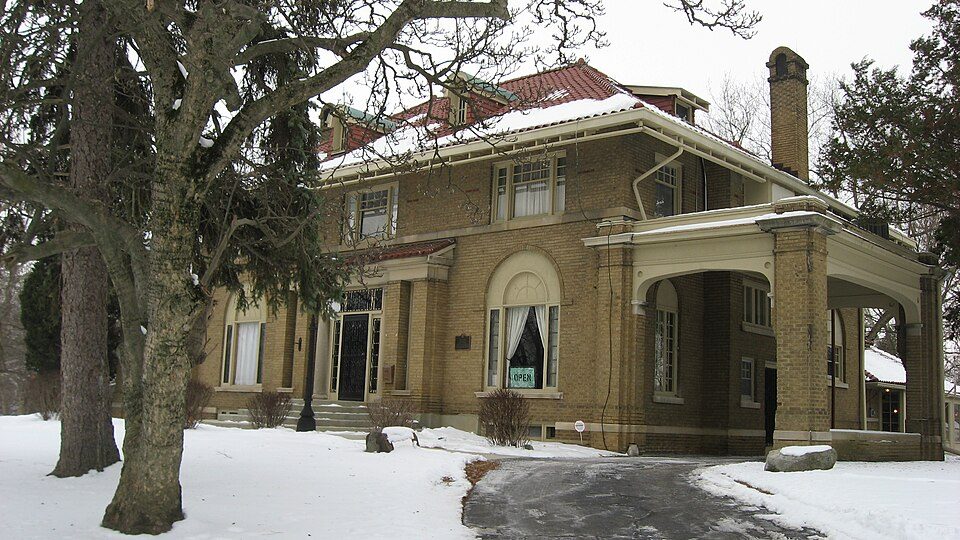 17 mi MuseumElwood Haynes Museum
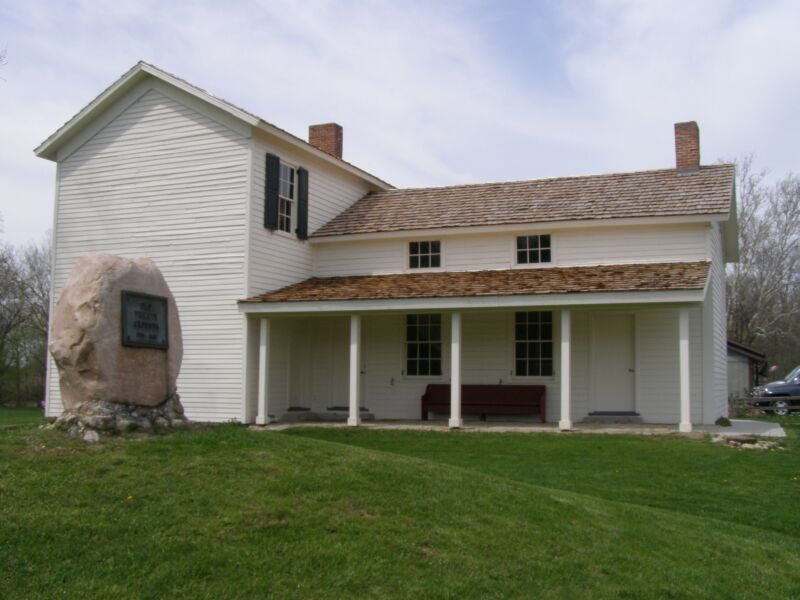 30 mi MuseumForks of the Wabash
International Circus Hall of Fame: Nyttend, Public domain · Elwood Haynes Museum: Nyttend, Public domain · Forks of the Wabash: Chris Light (talk), CC BY-SA 3.0
None within 15 miles of Washington Township; the nearest are
About 4 of every 100 Washington Township residents are enrolled in college, against 6 across Indiana.
Township in Indiana, United States
Washington Township is one of fourteen townships in Miami County, Indiana, United States. As of the 2020 census, its population was 3,365 (down from 3,493 at 2010) and it contained 1,563 housing units.
From Wikipedia, licensed CC BY-SA 4.0 · facts via Wikidata (CC0)
5 towns share a border with Washington Township.
| Town | IN rank | Overall | Cost | Safety | Schools | Health |
|---|---|---|---|---|---|---|
| Washington Township | #564 | D | A | — | C | D |
| Butler Township | — | — | — | — | — | — |
| Pipe Creek Township | #517 | C− | A− | — | C | D |
| Peru · Peru Township | #375 | B− | A | A | B− | D |
| Clay Township | — | — | — | — | — | — |
Washington Township and Pipe Creek Township report no FBI crime data of their own. Butler Township and Clay Township aren’t graded (fewer than 1,000 residents, or not enough data). Peru Township and Peru are one community, graded once. Compare Washington Township with a neighbor →
Short answers, built from the data on this page.
Washington Township grades D overall, better than 14% of U.S. towns and #564 of 585 in Indiana. It grades D for health and C for schools. Health is its weak spot, with a D.
Not for the area. Cost of living, which also weighs rents, property taxes and how many households pay 30% or more of their income for housing, grades A.


