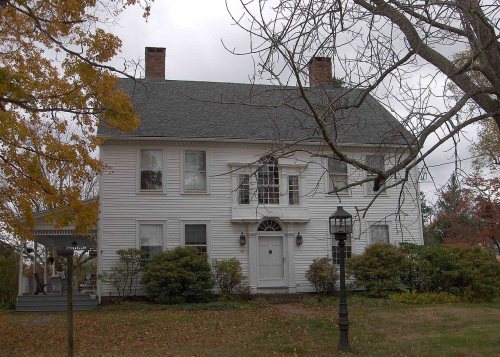
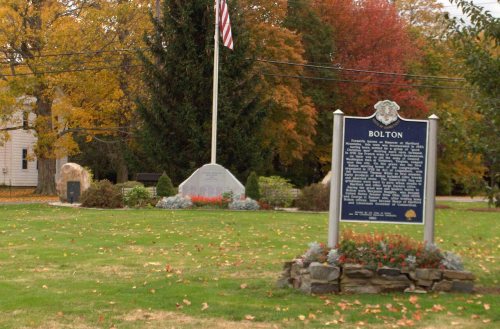
Bolton dates to 1720, and 11% of its homes were built before 1940
More historic than 76% of U.S. towns · #103 of 155 in Connecticut. What drives it
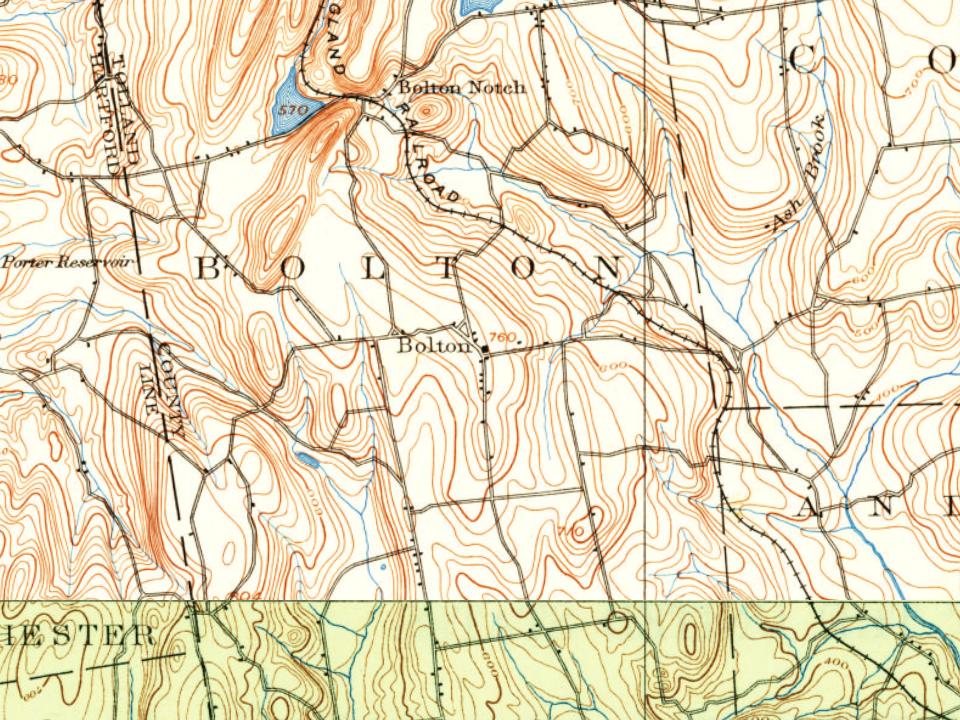
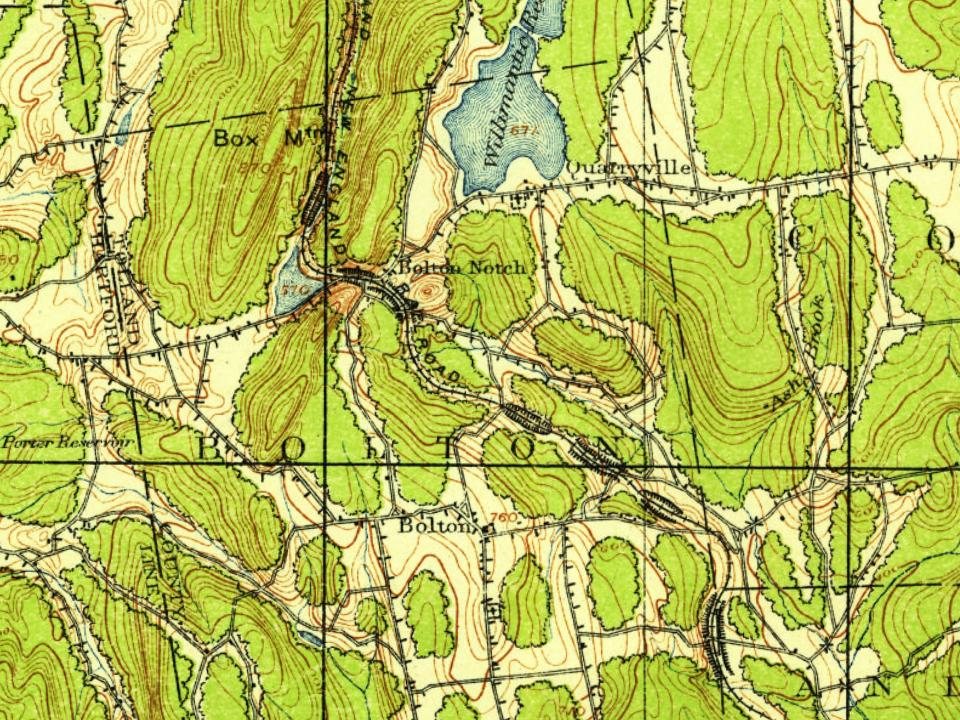
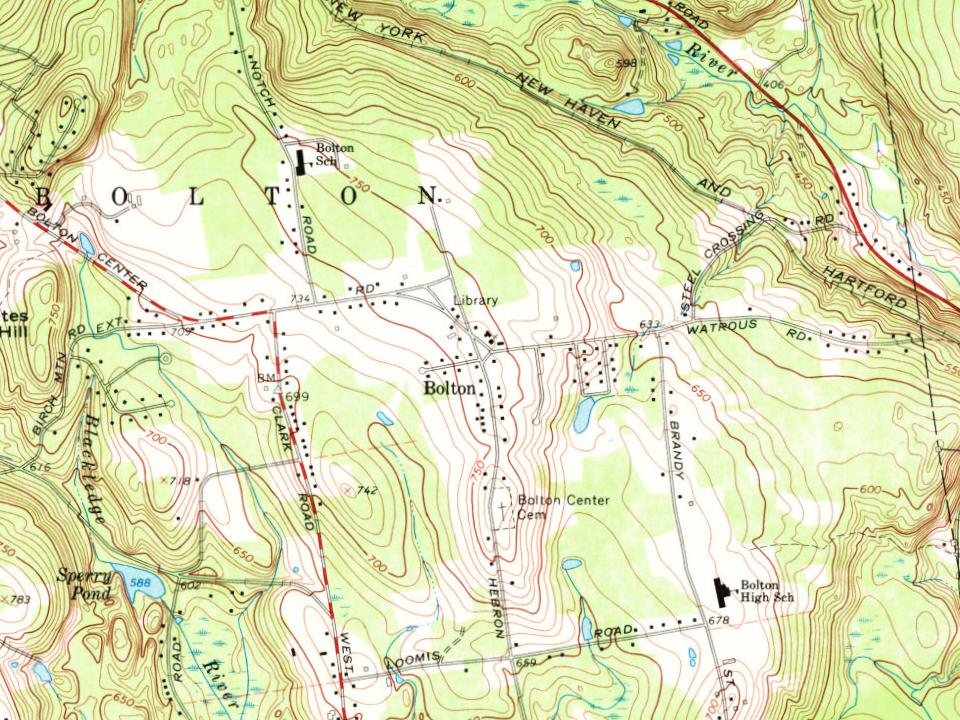
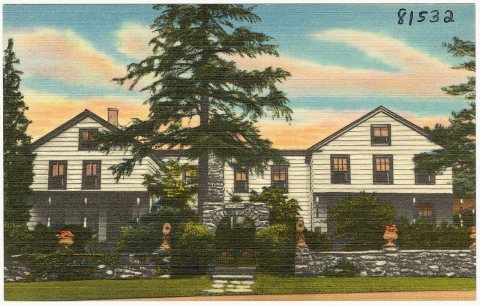
4 places in town are on the National Register, among them two historic districts with 9 buildings between them. Below: 2 old photos and papers, maps from 1892 on, and the census since 1820.
Founding year: Wikidata; Wikipedia’s history section gives the same year. First post office: 1812.The full story ↓
History grade
What drives Bolton’s History grade
On its age, its old homes and the National Register, Bolton is more historic than 76% of U.S. towns, #103 of 155 in Connecticut. Its age holds the grade up; its share of homes from before 1940 pulls it down.
A−
HistoryA character grade: shown, never part of Bolton’s overall grade.
Connecticut towns list more on the Register than most of the country (a typical Connecticut town has 73.3 per 10,000 residents, the U.S. 2.4), so Bolton’s 24.7 sits below most of its state (26% of Connecticut towns have fewer) while its 12 historic buildings outnumber those of 77% of U.S. towns.
How sure. Graded on any two of the three inputs instead, the letter would range from B− to A−. The pre-1940 share is a Census survey estimate (±4.7 points). Two sources give 1720.
Founding year: Wikidata (other dates in Quick answers). Homes: Census ACS 2020–24. National Register: National Park Service, May 2026 list; each listing counted once (boundary changes and added documentation belong to their listing), and a historic district counts its contributing buildings. How TownRatings grades history →
What stands out about Bolton’s past
Read from the archive, the National Register and the record. The page puts what stands out first.
Originally part of the town of Hartford, the area was referred to as Hartford Mountains or Hanover, until incorporation in October 1720. On November 11, 1723, Jonathan Edwards was installed as the pastor of Bolton. It was here that he had his "great awakening".
Bolton was known for its high quality schist stone in the 18th century, and many tombstone carvers such as Gershom Bartlett and Jonathan Loomis sourced their stone from Bolton quarries.
Passages that mention Bolton, cut from the printed page as they were published.
A historical sketch of Bolton, Connecticut1920 · page 21Read the page →
Read the text
Religious services were certainly held here as early as 1722 or 1723 for at a town meeting in Bolton November 17, 1721, definite plans were made for the building of a church as indicated by the following vote : "Voted that the Meeting House shall stand a little north of the pound and said Meeting House shall be of the following dimensions, viz : Forty foott long and thirty five foott Wide and twenty foot between Joynts. Voated at said meeting yt
Text read by machine from the scan; it may contain errors.
A historical sketch of Bolton, Connecticut1920 · page 18Read the page →
Read the text
for a brief period. Twenty 3^ears later in 1808 the North Society, having felt for some years the inconvenience of attendingpublic meetings at Bolton Center, was set off as a separate town under the name of Vernon, So Bolton lost that portion of its domain that possessed the greatest natural advantages and the part that was destined to increase most rapidly in population. Such was the beginning and early history of the settlement of Bolton. An in-
Text read by machine from the scan; it may contain errors.
Scans and text from the Internet Archive. Books published in 1930 or earlier, which are in the public domain.
Timeline
Bolton, 1720 to 2000
Woven from the archive, old maps, post office records, the National Register and the people born here.
Nothing in the archives for these yearsWeddings on Main Street, storms, parades, school pictures, the old store. If it’s in your family album, it belongs here.
Nothing in the archives for these yearsWeddings on Main Street, storms, parades, school pictures, the old store. If it’s in your family album, it belongs here.
In 1720, according to Wikidata and Wikipedia’s history of the town. Bolton’s post office opened in 1812, and the census of 1820 counted 731 people here.
How does Bolton rank for history?
Bolton is more historic than 76% of U.S. towns, #103 of 155 in Connecticut. The History grade combines the town’s founding era, the share of homes built before 1940 and its National Register listings. It’s a character grade, so it isn’t part of the overall grade. How it works.
What is on the National Register in Bolton?
4 listings: 2 buildings, among them the Jared Cone House (listed 1990, the first), and 2 historic districts, the Bolton Green Historic District and the March Route of Rochambeau's Army: Bailey Road, with 9 contributing buildings. 12 historic buildings in all.
How old are the homes in Bolton?
11% of Bolton’s homes were built before 1940 (Census estimate, ±4.7 points), against a typical 15% for a Connecticut town; the median home was built in 1969.
Founding dates: Wikidata, Wikipedia, the U.S. post office records of Blevins & Helbock (CC0) and the Census. Homes by year built: Census ACS 2020–24. National Register of Historic Places: National Park Service (list of May 22, 2026). Old photos, postcards and papers: Wikimedia Commons, the Library of Congress and other public archives, credited on each item’s page. Maps: U.S. Geological Survey historical topographic maps (via Esri) and Sanborn fire-insurance maps (Library of Congress). History text and census tables: Wikipedia (CC BY-SA 4.0). Places that used to be: USGS Geographic Names Information System (2021).
From Wikimedia Commons (24), the National Register of Historic Places (4), Wikipedia, Wikidata and Wikipedia for famous people, U.S. Geological Survey historical maps, U.S. Census counts (via Wikipedia), the US Post Offices dataset (Blevins & Helbock), the USGS Geographic Names Information System and old county and town histories (Internet Archive). Archive images are copied here with their credits and licenses, shown on each photo’s page. Refreshed monthly.






 2024
 2024
 2024
 2023
 2023
 2023
 2023
 2023
 2021
 2018
 2017
 2016
 2010
 2010
 2010
 2010
 2010
 2010
 2010
 2010
 2010
 2007