
Central Business DistrictSaskatoon
It is one of 43 neighbourhoods of Saskatoon. A neighbourhood of 4,987 in Saskatoon.
Is Central Business District a good place to live?
A town of contrasts. Homes are dear (D−). At C− overall, Central Business District is better than 21% of Canadian towns and ranks #85 of 102 in Saskatchewan. Safety lags (C−). Its strongest subject is walkability (A+).
Rents here are the metro area's average, shared by every town and neighbourhood in it. Safety less sure: this is the whole city's figure, because the city doesn't publish open neighbourhood crime rates. No School Grade: this province doesn't publish comparable results school by school. Health is graded on the health region's survey figures and life expectancy, with the distance to hospital giving the town its own spread.
How Central Business District grades
Each subject compares Central Business District with Canadian towns of 2,500 or more, ordered by how far it is from the middle. Towns in other countries are graded separately.
How TownRatings grades Canadian towns →
What makes Central Business District stand out
The 3 things Central Business District does most differently from other towns.
The data
Data highlights are ordered by what stands out in Central Business District.
Rent takes more of local pay in Central Business District than in Saskatchewan’s towns or Canadian towns: 35% of household income
Owners put the median home at $500,000, above Saskatchewan’s towns ($324,000) and Canadian towns ($406,000) alike. 37% of households spent 30% or more of their income on shelter, above Saskatchewan’s towns (17%) and Canadian towns (18%) alike.
What homes were worth · The median owner’s estimate at the 2021 census
| Census 2021 | Central Business District | Saskatchewan | Canada |
|---|---|---|---|
| Rent as a share of income | 35% | 19% | 20% |
| Households spending 30%+ on shelter | 37% | 17% | 18% |
| Median home value, 2021 | $500,000 | $324,000 | $406,000 |
Statistics Canada, Census 2021; CMHC Rental Market Survey via Statistics Canada · The 2021 census asked owners what their home was worth; those values, and 2020 incomes, are what this compares. · Rent as a share of income and monthly rent for a two-bedroom: the Saskatoon metro area
Hazard risk in Central Business District is lower than in 91% of Canadian towns
The radon tests numbers here cover the Saskatoon RHA · Shared with the rest of the city of Saskatoon: earthquake risk
Shaking is less of a worry than in most places, at $0.006 a year per $1,000 of building value ($0.030 typical). Fire seldom reaches Central Business District: since 1986, 0.6% of the land within 25 km has burned (0.01% a year). Radon is about average around Central Business District: 6.6% of tested homes in the survey area topped the guideline, against 6.6% for the typical town. The national inventory holds one flood map for it, from Water Security Agency.
Radon tests above the guideline · share of tested homes, 200 Bq/m³
| Hazards | Central Business District | Saskatchewan | Canada |
|---|---|---|---|
| Radon tests above the guideline | 6.6% | 9.1% | 6.6% |
| Earthquake loss per $1,000 of buildings a year | $0.006 | $0.006 | $0.030 |
NRCan seismic risk model and burned areas, Health Canada radon survey, the Flood Hazard Map Inventory
Central Business District is graded a C− for safety
Area-wide: Crime Severity Index, Violent Crime Severity Index, violent crime and property crime per 1,000, counted over the Saskatoon service area
The index for the force that serves it came to 119, close to Saskatchewan’s towns (119) and above Canadian towns (67). Across its police area, there are 48.4 property incidents per 1,000 residents a year. Where it is policed, 15.2 violent incidents per 1,000 residents are recorded each year.
Year by year · Crime Severity Index for each year
| 2023–2025 | Central Business District | Saskatchewan | Canada |
|---|---|---|---|
| Crime Severity Index | 119 | 119 | 67 |
| Violent Crime Severity Index | 154 | 154 | 86 |
| Property crime per 1,000 | 48.4 | 48.4 | 31.2 |
Statistics Canada, Uniform Crime Reporting Survey, 2023–2025 average
Very good or excellent health for 49% of adults in Central Business District’s health region
Health survey and life expectancy for the Saskatoon health region
Expected years of life at birth: 81.4, above Saskatchewan’s towns (80.2) and close to Canadian towns (81.5). Smoking is rarer than in the province: 8.3% of adults, against 13% for Saskatchewan. The town’s own part is the trip to care, and Central Business District is well placed: 0.8 km to a hospital on average, against 3.7 km typical.
Very good or excellent health · adults, age-standardised
| Health | Central Business District | Saskatchewan | Canada |
|---|---|---|---|
| Smokers | 8.3% | 8.6% | 12% |
| Life expectancy at birth | 81.4 | 80.2 | 81.5 |
| Very good or excellent health | 49% | 49% | 52% |
Statistics Canada, Canadian Community Health Survey 2023/2024 and life expectancy 2022/2024; Open Database of Healthcare Facilities
Trips to work from Central Business District are shorter than from Saskatchewan’s towns or Canadian towns: 17 min on average
How working residents got to work · census 2021
| Census 2021 | Central Business District | Saskatchewan | Canada |
|---|---|---|---|
| Average trip | 17 min | 18 min | 26 min |
Statistics Canada, Census 2021 (labour and commuting) · The 2021 census was taken in May 2021, during COVID-19 restrictions: more people than usual worked from home or were off work.
Central Business District is among the driest of Canadian towns: 357 mm of rain and snow a year
A normal January brings 20 cm of snow, the most of any month. June is the wettest month, with 75 mm of rain and snow on average. The coldest nights, in January, bottom out at −20.7°C, close to Saskatchewan’s towns (−20.7°C) and below Canadian towns (−13.5°C). Frost usually lifts by 19 May and returns around 15 September: 117 days without it.
Average high by season · ECCC normals, 1991–2020
| Normals, 1991–2020 | Central Business District | Saskatchewan | Canada |
|---|---|---|---|
| Precipitation a year | 357 mm | 383 mm | 883 mm |
| January night low | −20.7°C | −20.7°C | −13.5°C |
| Days with frost a year | 203 | 203 | 159 |
| Snowfall a year | 91 cm | 91 cm | 141 cm |
Environment and Climate Change Canada, Canadian Climate Normals 1991–2020 (Saskatoon Diefenbaker (Airport))
Fewer children live in Central Business District than in Saskatchewan’s towns or Canadian towns: 7.1% are under 15
Over-65s are 28% of the population. First Nations, Métis and Inuit people make up 12% of residents, above Saskatchewan’s towns (11%) and Canadian towns (2.8%) alike.
Ages · Share of residents in each age group, Census 2021
Schooling · Highest qualification, residents 15 and over
Women and men · all residents
Women make up 51.0% of Central Business District
In 2021 there were 2,535 women to 2,440 men; Canada as a whole is 50.9% women.
| Central Business District | Saskatchewan | Canada | |
|---|---|---|---|
| Under 15 | 7.1% | 18% | 16% |
| 15 to 64 | 66% | 65% | 64% |
| 65+ | 28% | 16% | 19% |
| No certificate, diploma or degree | 11% | 15% | 16% |
| Postsecondary qualification | 64% | 52% | 56% |
Statistics Canada, Census 2021; Saskatchewan and Canada: medians of towns of 2,500+
Expect November days around −1°C in Central Business District, nights around −10°C
About 13 cm of snow falls in a normal November. Into December, the normals move to −8°C and −18°C. Rain and snow over a typical November come to 14 mm. Over the year, July is warmest at 25°C by day and January coldest at −21°C by night.
Normal highs, the months ahead · ECCC normals, 1991–2020
| Season | High | Low | Rain and snow |
|---|---|---|---|
| Winter | −9°C | −19°C | 35 mm |
| Spring | 9°C | −4°C | 79 mm |
| Summer | 24°C | 10°C | 176 mm |
| Autumn | 9°C | −3°C | 67 mm |
ECCC normals, 1991–2020 (Saskatoon Diefenbaker (Airport)); the forecast is on the Weather page
At 56%, 2021 turnout in Saskatoon West trailed 85% of the country’s ridings
Central Business District is part of Saskatoon, whose council is led by Cynthia Block, the mayor.
Wikidata, MAMH, MMAH, Statistics Canada
Frances Morrison Central Library is Central Business District’s public library
It sits 0.3 km from the centre of Central Business District.
Provincial library statistics, OpenStreetMap, the CRA and Statistics Canada
Central Business District touches Cosmopolitan Park
3 beaches are mapped within 5 km, none with a name. The closest provincial park is Fred Heal Canoe Launch, 15 km from the edge of town. Within 100 km there is no national park. The protected share within 10 km is 1.5%, where a typical Canadian town has 2.3%.
Protected land · of the land within 10 km
| Outdoors | Central Business District | Saskatchewan | Canada |
|---|---|---|---|
| Protected land within 10 km | 1.5% | 1.7% | 2.3% |
| Public protected areas within 10 km | 2 | 2 | 4 |
Canadian Protected and Conserved Areas Database (CPCAD), OpenStreetMap routes and beaches
The schools around Central Business District answer to 3 boards
Counting a 3 km margin, Central Business District has 34 elementary schools, 14 secondary schools and 1 school for every grade.
| School | Level | Students | System |
|---|---|---|---|
| Victoria SchoolNearest elementary school, 0.1 kmElementary | Elementary | – | English public |
| Nutana CollegiateNearest secondary school, 0.3 kmSecondary | Secondary | – | English public |
| Schools within 3 km | Central Business District | Saskatchewan | Canada |
|---|---|---|---|
| School boards | 3 | 2 | 3 |
Statistics Canada’s Open Database of Educational Facilities · In Saskatchewan, no schools grade. The province publishes no results school by school.
5 historic places on the heritage registers in Central Business District
Go back to 1910 and you reach Land Titles Building, the oldest of them. Older housing, built before 1961, accounts for 28% of homes, higher than both Saskatchewan’s towns (17%) and Canadian towns (18%).
Historic places by designation · inside the town
Among them
| Heritage | Central Business District | Saskatchewan | Canada |
|---|---|---|---|
| Homes built before 1961 | 28% | 17% | 18% |
Canadian Register of Historic Places, Directory of Federal Heritage Designations, Québec’s Répertoire du patrimoine culturel, Wikidata; Census 2021 homes by period
Everything we know about Central Business District
St. Paul's Cathedral and 27 more in and around Central Business District
A first look at Central Business District’s museums, historic sites and days out, and a few just outside town.
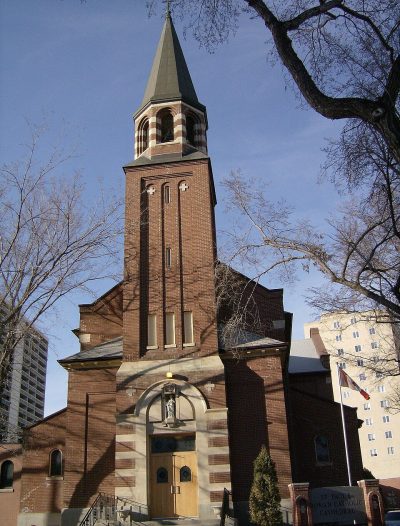 CathedralSt. Paul's Cathedralin town
 Art galleryRemai Modernin town
 CathedralCathedral of St. John the Evangelistin town
 CathedralCathedral of St. George1.2 km outside town, to the west
 MuseumThe Right Honourable John G. Diefenbaker Centre for the Study of Canada700 m outside town, to the east
 CathedralHoly Family Cathedral4.7 km outside town, to the east
Photos: each place’s Wikidata image, from Wikimedia Commons under the licence below (our copy, resized).
Photo credits (6)
- St. Paul's Cathedral: Vic D, Public domain, Wikimedia Commons
- Remai Modern: Jmc881, CC BY-SA 3.0, Wikimedia Commons
- Cathedral of St. John the Evangelist: Jordon Cooper from Saskatoon, Canada, CC BY-SA 2.0, Wikimedia Commons
- Cathedral of St. George: Julia Adamson SriMesh talk, CC BY-SA 3.0, Wikimedia Commons
- The Right Honourable John G. Diefenbaker Centre for the Study of Canada: SriMesh, CC BY-SA 3.0, Wikimedia Commons
- Holy Family Cathedral: Sarah Hall, CC BY-SA 4.0, Wikimedia Commons
About Central Business District
Neighbourhood in Saskatoon
The edges of Central Business District follow census dissemination areas, which TownRatings groups into Saskatoon’s neighbourhoods; the name comes from the city’s map or OpenStreetMap.
Statistics Canada: population estimates 2025 (17-10-0155), Census of Population 2021, 2021 census boundaries.
- Population
- 4,987 (people, 2021 estimate)
- Province or territory
- Saskatchewan
- City
- Saskatoon
- Census subdivision
- 4711066
Central Business District’s neighbours
The nearest places of 1,000 or more. Statistics Canada
| Town | People | km | Overall | Cost | Safety | Health |
|---|---|---|---|---|---|---|
| Central Business District | 4,987 | — | C− | D− | C− | A− |
| City Park | 3,827 | 0.9 | C+ | D− | C− | A− |
| Grosvenor Park | 6,240 | 1.5 | C− | D− | C− | A− |
| Caswell Hill | 2,573 | 1.6 | C+ | C− | C− | A− |
| Haultain | 6,126 | 1.8 | B− | D | C− | B+ |
| Westmount | 2,872 | 2 | C− | D | C− | A− |
| Buena Vista | 5,777 | 2 | B− | D | C− | B+ |
People: Statistics Canada, Census 2021. Distances: centre to centre.
Sources: Statistics Canada, Census of Population 2021 · population estimates 2025 (17-10-0155) and 2021 census boundaries · Uniform Crime Reporting Survey 2023–25 (35-10-0026, 35-10-0183 to 35-10-0190) · CMHC rents as published by Statistics Canada (34-10-0133) · grades by TownRatings. Under the Statistics Canada Open Licence.
Adapted from Statistics Canada (Census of Population 2021, population estimates 2025, 2021 census boundaries) under the Statistics Canada Open Licence; this does not constitute an endorsement by Statistics Canada. Neighbourhood names in some cities © OpenStreetMap contributors (ODbL).