 Local
Provincial heritage property · 1910Land Titles BuildingPhoto: Julia Adamson SriMesh talk · CC BY 2.5 · Commons file
 Photo: daryl_mitchell from Saskatoon, Saskatchewan, Canada · CC BY-SA 2.0
5historic places on the registers
History of Central Business District · Canada’s heritage registers
5 historic places on the heritage registers in Central Business District
Only a few towns match Central Business District per resident: 10 for every 10,000, ahead of 98% of Canadian towns. Go back to 1910 and you reach Land Titles Building, the oldest of them. On the list: 5 provincial or municipal listings.
Historic places
5
10 per 10,000 residents
Highest designations
0
National Historic Sites and Classified Federal Heritage Buildings
Provincial and local listings
5
provincial and municipal listings with an encyclopedia article
Oldest building
1910
the first construction date on its record
Homes built before 1961
28%
typical town: 18%
In pictures
Historic Central Business District, in 5 photos
Photos show every place Central Business District’s registers name. Two to begin with: Land Titles Building and Sommerville/Petitt House. The pictures are the work of 3 photographers.
 Land Titles Building
 Sommerville/Petitt House
 Cathedral of St. John the Evangelist
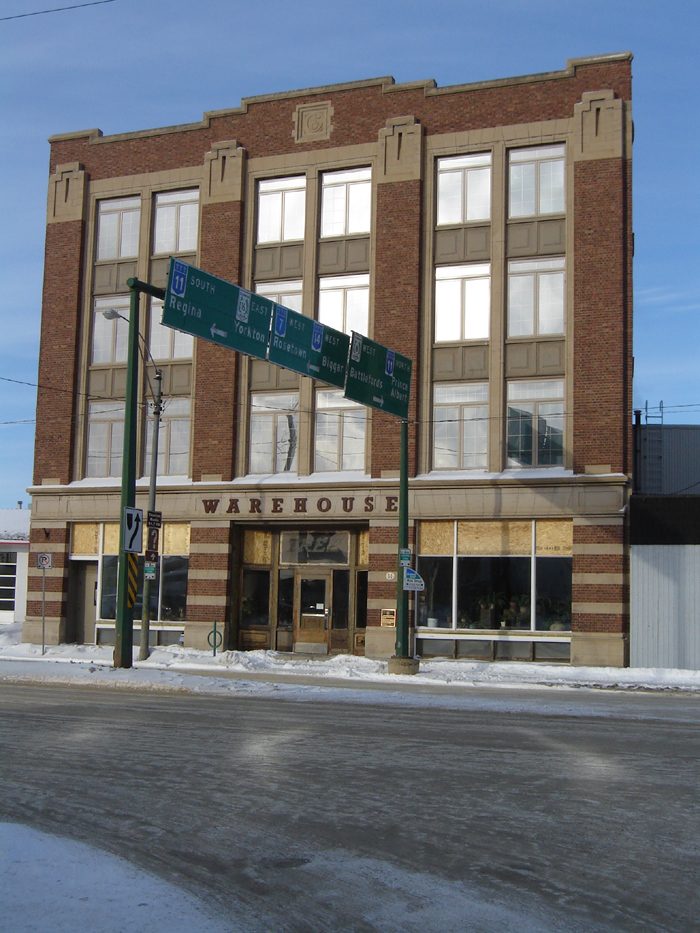 Fairbanks-Morse Warehouse
 Hutchinson Building
Photos from Wikimedia Commons, each credited to its photographer with its licence; names open the place’s page. Tap a photo to step through them full screen.
The map
Where Central Business District’s history is
Every place on the registers inside the town, by its designation.
Provincial and local listings
Tap any dot to open that place’s own page; hovering shows its name.
The 5, by tier
5 Provincial and local listings
Parks Canada’s Directory of Federal Heritage Designations lists the places the Government of Canada has recognized; outside Québec, provincial and municipal listings come only through Wikidata, and only those with an encyclopedia article get a page.
Points from Wikidata (Parks Canada’s files carry none) and from Québec’s register, as mapped there.
Provincial and local listings
5 local listings in Central Business District
Provincial and municipal listings that Wikidata records and an encyclopedia describes. Their dates run from 1910, with Land Titles Building, to 1923. Each one opens its own page.
 Local
Municipal heritage property · 1911Fairbanks-Morse WarehousePhoto: Julia Adamson SriMesh talk · CC BY-SA 2.5 · Commons file
 Local
Municipal heritage property · 1912Sommerville/Petitt HousePhoto: Julia Adamson SriMesh talk · CC BY 2.5 · Commons file
 Local
Municipal heritage property · 1917Cathedral of St. John the EvangelistPhoto: Jordon Cooper from Saskatoon, Canada · CC BY-SA 2.0 · Commons file
 Local
How old
Central Business District’s dated places lean to the decades after Confederation
Each place by the first construction date on its record.
British North America 1760–18660
After Confederation 1867–19133
Wars and Depression 1914–19452
Since 1946 1946 on0
Homes by age
A town of older homes: 28% of Central Business District’s were built before 1961 (18% is typical)
Count back from today and half of Central Business District’s homes are older than 1981. Few of Central Business District’s homes date from 2001 to 2015: 5.1%, the norm 15%. Homes built from 2016 to 2021 make up just 2.7% of Central Business District’s, below the typical 4.1%.
28%
Before 1961
37%
1961–80
26%
1981–2000
5.1%
2001–15
2.7%
2016–21
Central Business DistrictTypical town
2021 Census, private dwellings by period of construction (Statistics Canada); the typical town is the middle Canadian town of 2,500 or more.
Towns its size
Central Business District has the most of 16 towns its size
Towns of 5,000 to 5,000 residents, by places on the registers.
Central Business District5
Their median is 0. 13 of them have nothing on the registers.
Neighbours
Central Business District and its neighbours
| Town | People | Places | Highest | Oldest |
|---|---|---|---|---|
| Central Business District | 4,987 | 5 | 0 | 1910 |
| City Park | 3,827 | 0 | 0 | — |
| Grosvenor Park | 6,240 | 2 | 1 | 1888 |
| Caswell Hill | 2,573 | 1 | 1 | 1907 |
| Haultain | 6,126 | 3 | 0 | 1911 |
| Westmount | 2,872 | 0 | 0 | — |
| Buena Vista | 5,777 | 3 | 0 | 1884 |
In brief
Central Business District in brief
The 2021 Census dates 28% of Central Business District’s homes before 1961, against 18% in the typical town. Together that makes 5 historic places. Among the 16 towns nearest its size, none has more historic places. By date, the decades after Confederation lead: 3 of 5.
How to read these numbers
What this data can and can’t tell you
- Protection. Federal recognition isn’t a planning control: buildings the federal government owns follow its heritage policy, while others are protected only by a provincial or municipal designation.
- The tiers. Three tiers: the top for National Historic Sites, classified federal buildings and Québec’s classements, a second for the other federal designations, a third for provincial and municipal listings.
- People and events. Persons of national historic significance come with no location; a town gets one only by birthplace (name and both life years agreeing) or by one of its own places that bears the name and whose record tells the story. Events, which can’t be tied, are left out.
- The grade. History is described, not graded, for every Canadian town.
- The federal register. Federal places come from Parks Canada’s directory, which counts National Historic Sites, federal heritage buildings, stations and lighthouses; their statements are the register’s own.
- Map points. Where a federal place sits on the map is Wikidata’s placing; the directory itself has no coordinates.
- Provincial and municipal lists. Provincial and municipal listings here come from Wikidata alone, since the provinces’ own registers can’t be reused; a listing needs an encyclopedia article to get a page.
Questions about Central Business District’s history
How many historic places does Central Business District have on the registers?
Inside Central Business District: 5 historic places.
What is the oldest building in Central Business District?
Land Titles Building (Provincial heritage property): the first construction date on its record is 1910.
How old are the homes in Central Business District?
The 2021 Census dates 28% of its homes before 1961 (18% in the typical town).
Contains information licensed under the Open Government Licence – Canada (Parks Canada).
Sources: Parks Canada, Directory of Federal Heritage Designations · Canadian Register of Historic Places (federal extract) · Wikidata (CC0) for map points, other names and articles · Statistics Canada, 2021 Census (homes by period of construction). Under the Statistics Canada Open Licence.
Adapted from Statistics Canada (Census of Population 2021, population estimates 2025, 2021 census boundaries) under the Statistics Canada Open Licence; this does not constitute an endorsement by Statistics Canada. Neighbourhood names in some cities © OpenStreetMap contributors (ODbL).