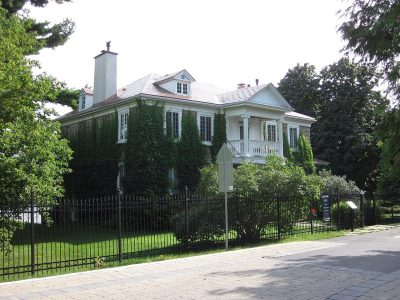
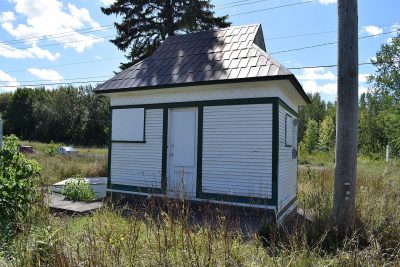
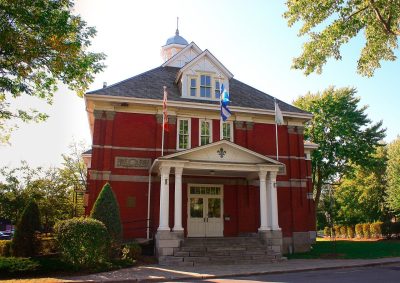
Maison John-Yule · Photo: Cantons-de-l'Est · CC BY-SA 4.0
18historic places on the registers
History of Chambly · Canada’s heritage registers
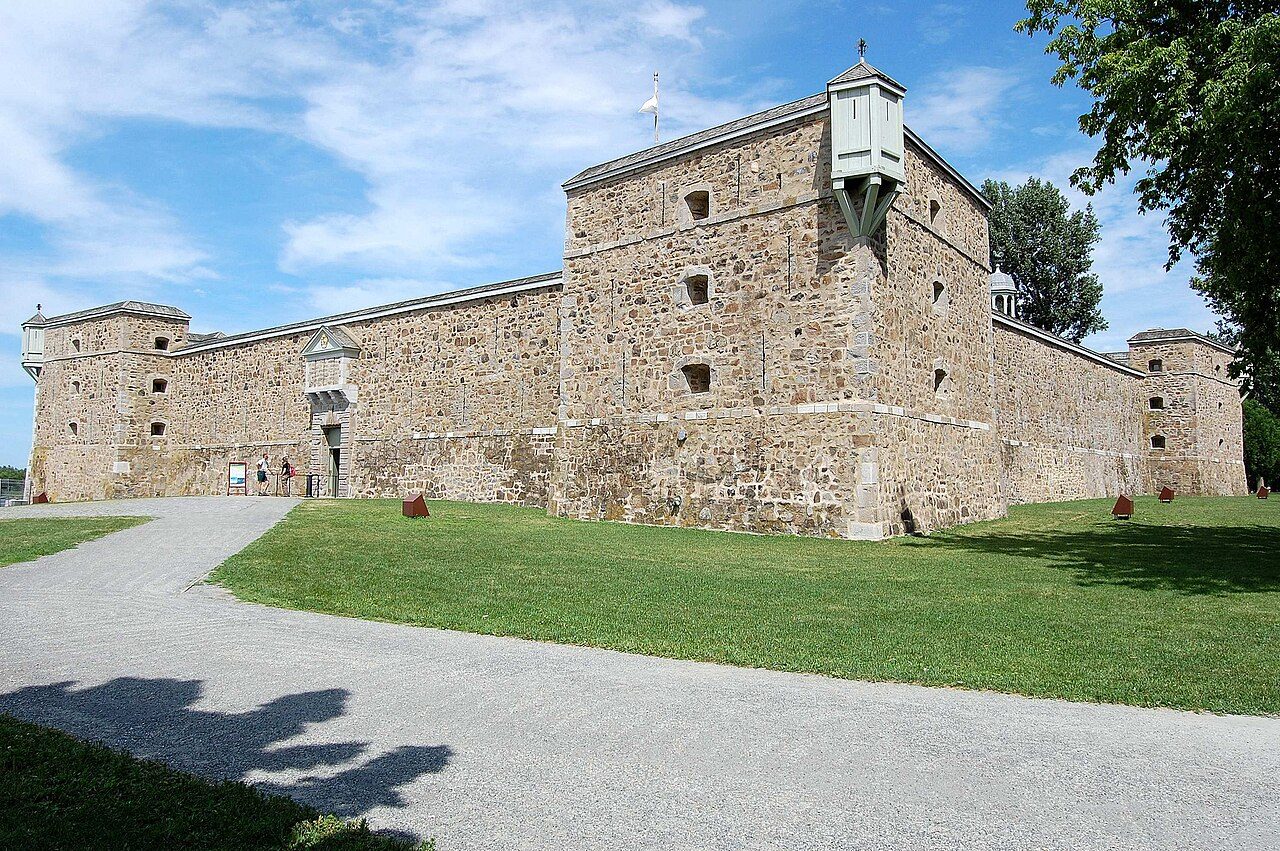
Chambly’s record starts in 1665 with Fort Chambly
On the registers Chambly counts 18 historic places, 8 at the top. Scaled to its population the record is long: 5.6 per 10,000 residents, more than 95% of Canadian towns. The list takes in 6 Recognized Federal Heritage Buildings and 4 municipal citations. Local registers add one more place, counted here but not paged: Wikidata holds its number and little else.
See 7 of Chambly’s 8 places with the highest designations
In front: Maison John-Yule and Site patrimonial de la Maison-Thomas-Whitehead. 14 of the places on Chambly’s heritage registers are pictured here; the others keep their register record. Old pictures of 5 places in Chambly fill their own pages.
Photos from Wikimedia Commons, each credited to its photographer with its licence; names open the place’s page. Tap a photo to step through them full screen.
Through time
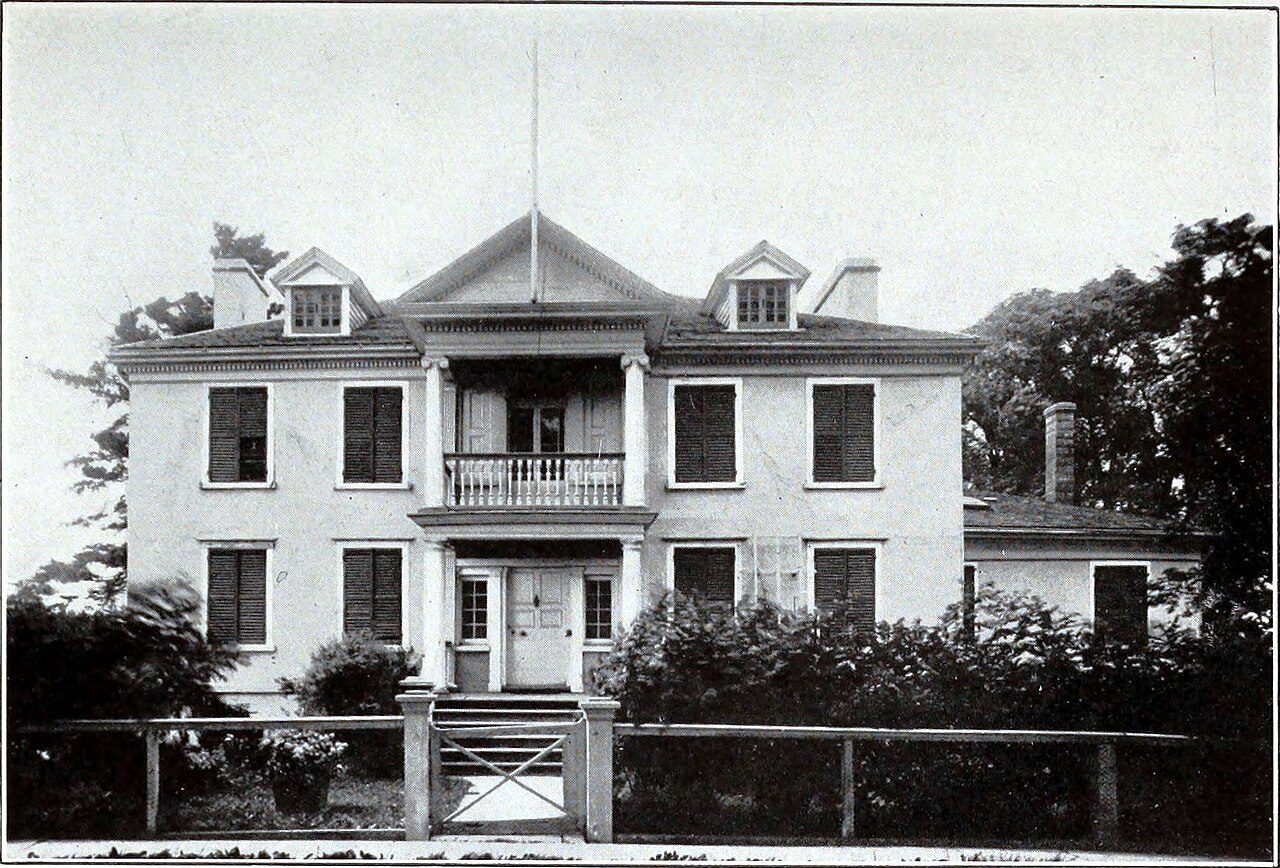
Chambly through the years, 1814–1927
On one line by date: the oldest views of 5 of its historic places. Tap any picture to see it full screen.
1800182518501875190019251950Before ConfederationConfederation to 1900Boom yearsThe wars and betweenAfter the war
Public domain or CC0, made before 1950, from Wikimedia Commons; old views of places can be drawings, prints or maps of their time. Each credit opens the image’s page.
How old
Chambly’s dated places lean to the decades after Confederation
Each place by the first construction date on its record.
New France before 17601
British North America 1760–18666
After Confederation 1867–19138
Wars and Depression 1914–19451
Since 1946 1946 on0
Of the 16 with a date, 7 predate 1867.
How it began
Chambly’s record begins in 1965
Chambly takes its name from Jacques de Chambly, french colonial governor. In 1965 the municipality took over from Chambly and Fort-Chambly. On the open record, Chambly as a municipality goes back to September 18, 1965, though that may be a charter rather than a first settlement.
Every place on the registers inside the town, by its designation.
Highest designationsOther federal designationsProvincial and local listings
Each dot is a place: point at it for the name, tap it for its page.
The 18, by tier
8 Highest designations6 Other federal designations4 Provincial and local listings
The federal directory and the Répertoire du patrimoine culturel du Québec are both open, so every federal, provincial and municipal designation here has its point.
Points from Wikidata (Parks Canada’s files carry none) and from Québec’s register, as mapped there. One place, placed by its register’s municipality, has no point and isn’t on the map.
Highest designations
8 places in Chambly with the highest designation
Here that means 4 National Historic Sites, 3 places classified by Québec and a Classified Federal Heritage Building. National Historic Sites and Classified Federal Heritage Buildings, Canada’s highest federal recognition. Fort Chambly is the earliest, from 1665; the latest dates from 1831. Each one opens its own page.
The first was designated in 1987, the latest in 1997. Recognized Federal Heritage Buildings, heritage railway stations and lighthouses. Superintendent's Residence is the earliest, from 1867; the latest dates from 1906. Each one opens its own page.
Recognized Federal Heritage Building · 1905–1907Cabin 3
What’s designated
Chambly’s list splits evenly at the top: 5 stations, lighthouses and bridges, 5 houses
Two of the highest-ranked are Fort Chambly and De Salaberry House. Its places fall into 7 kinds.
Stations, lighthouses and bridges5
Houses5
Forts and military buildings3
Public buildings2
Theatres, museums and memorials1
Churches and religious buildings1
Mills, shops and works1
Kinds read from each place’s name and the functions its register gives; a building keeps the kind it was built as.
Provincial and local listings
On provincial and local lists in Chambly: 4 places
Centre administratif et communautaire de Chambly is the earliest, from 1855; the latest dates from 1931. Citations the municipality has made, registered with Québec’s ministry of culture. Their designations span 2006 to 2007. Each one opens its own page.
The first was Fort Chambly, in 1920. The busiest year was 2006, with 3. Since 2011, 3 more have joined the list.
Homes by age
A growing town: 9.8% of Chambly’s homes went up from 2016 to 2021, against 4.1%
31% of Chambly’s homes date from 2001 to 2015, well above the typical 15%. Homes from before 1961 are 8.9% of Chambly’s housing, below the typical 18%. Chambly has an unusual share of homes built from 1981 to 2000: 29%, where most towns have 23%.
8.9%
Before 1961
21%
1961–80
29%
1981–2000
31%
2001–15
9.8%
2016–21
ChamblyTypical town
2021 Census, private dwellings by period of construction (Statistics Canada); the typical town is the middle Canadian town of 2,500 or more.
People of the past
Chambly’s past in lives: 2 nationally designated
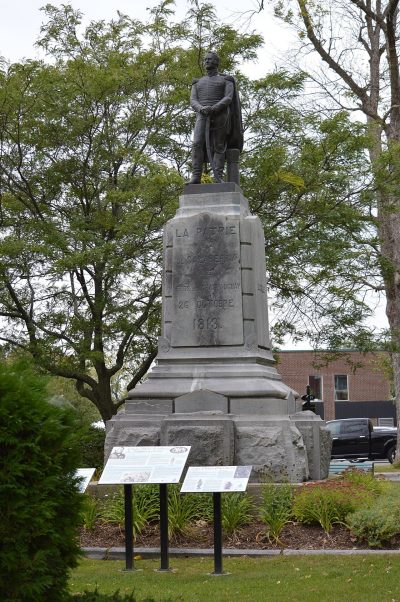
The earliest is Joseph-Claude Boucher de Niverville, born in 1715. 14 of the 19 were born in the years before Confederation. Frederick Montye Morson lived longest, to 93, dying in 1944. Monument de Charles-Michel D'Irumberry de Salaberry, one of the town’s historic places, recalls Charles de Salaberry.
Joseph-Claude Boucher de Niverville
Mathieu Herbin
René Boileau
Noël Breux
Charles de Salaberry
Étienne Provost
Joseph La Rocque
Charles La Rocque
Noël Darche
John Yule
Charles-René-Léonidas d'Irumberry de Salaberry
Victor Robert
Gédéon Larocque
Antoine Rocheleau
Tancrède Boucher de Grosbois
Emma Albani
Frederick Montye Morson
Frédéric-Hector Daigneault
Harry J. Robertson
Gabrielle Bernier
170017501800185019001950
Emma Albani1847–1930 · National historic person, 1937 · Canadian opera soprano
Charles de Salaberry1778–1829 · Person of national historic significance (1934) · Recalled by Monumen…
ÉP
Étienne Provost1785–1850 · Mountain man, Canadian fur trader
CR
Charles La Rocque1809–1875 · Canadian Catholic prelate
Charles-René-Léonidas d'Irumberry de Salaberry1820–1882 · Canadian militia officer
Joseph La Rocque1808–1887 · Catholic bishop
René Boileau1754–1831 · Canadian politician
HR
Harry J. Robertson1896–1962 · American football player and coach
Everyone born in Chambly → Born before 1914, or named by one of the town’s historic places. Birthplaces from Wikidata, each checked against Wikipedia; national historic persons from Parks Canada’s Directory of Federal Heritage Designations, matched by name and life years.
Towns its size
Chambly has the 3rd most of 16 towns its size
Towns of 31,100 to 32,200 residents, by places on the registers.
Chambly has 18 historic places, 8 with the highest designation. Only 2 of the 16 towns nearest its size have more historic places. the decades after Confederation account for 8 of the 16 dated places. Its people of the past include Emma Albani (1847), Charles de Salaberry (1778) and Étienne Provost (1785). Most of its homes are post-1960: only 8.9% came earlier, against 18% in the typical town.
How to read these numbers
What this data can and can’t tell you
•
Map points. Where a federal place sits on the map is Wikidata’s placing; the directory itself has no coordinates.
•
People and events. Parks Canada’s open file gives its national historic persons no place. A town’s page names one only when the person was born there (matched by name and both life years) or one of its own historic places carries the name and its record speaks of them; national historic events stay off.
•
The tiers. Three tiers: the top for National Historic Sites, classified federal buildings and Québec’s classements, a second for the other federal designations, a third for provincial and municipal listings.
•
Québec’s register. In Québec the ministry of culture publishes its register openly: provincial classements, declared sites and the municipalities’ citations all appear, with their descriptions.
•
The federal register. Every federal designation is in Parks Canada’s directory, and the Canadian Register of Historic Places gives most of them a bilingual statement of significance.
•
The grade. History is described, not graded, for every Canadian town.
•
Protection. Here the register is also the protection: classement and citation under Québec’s cultural heritage law control changes, while federal recognition does not.
Questions about Chambly’s history
What is the oldest building in Chambly?
Fort Chambly, a National Historic Site, begun in 1665.
Which places in Chambly have the highest designation?
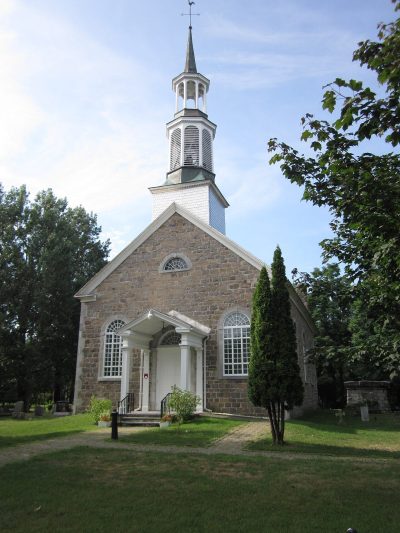
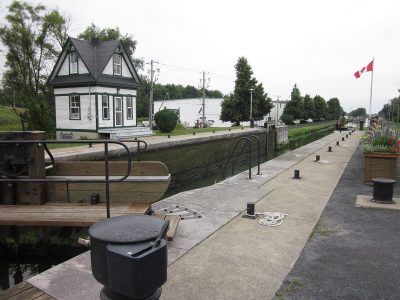
Fort Chambly, De Salaberry House, St. Stephen's Anglican Church, Chambly Canal, Fort Chambly National Historic Site and Maison Thomas-Whitehead, and 2 more.
How old are the homes in Chambly?
Before 1961: 8.9% of its homes; the typical town has 18%.
Contains information licensed under the Open Government Licence – Canada (Parks Canada). Québec register data: Ministère de la Culture et des Communications du Québec, CC BY 4.0.
Sources: Parks Canada, Directory of Federal Heritage Designations · Canadian Register of Historic Places (federal extract) · Répertoire du patrimoine culturel du Québec (MCC, Données Québec) · Wikidata (CC0) for map points, other names and articles · Statistics Canada, 2021 Census (homes by period of construction). Under the Statistics Canada Open Licence.




 c. 1814
 1881
 c. 1910
 c. 1915
 1927
 Top
 Top
 Top
 Top
 Top
 Top
 Fed
 Fed
 Fed
 Local
 Local
 Local
 Local


