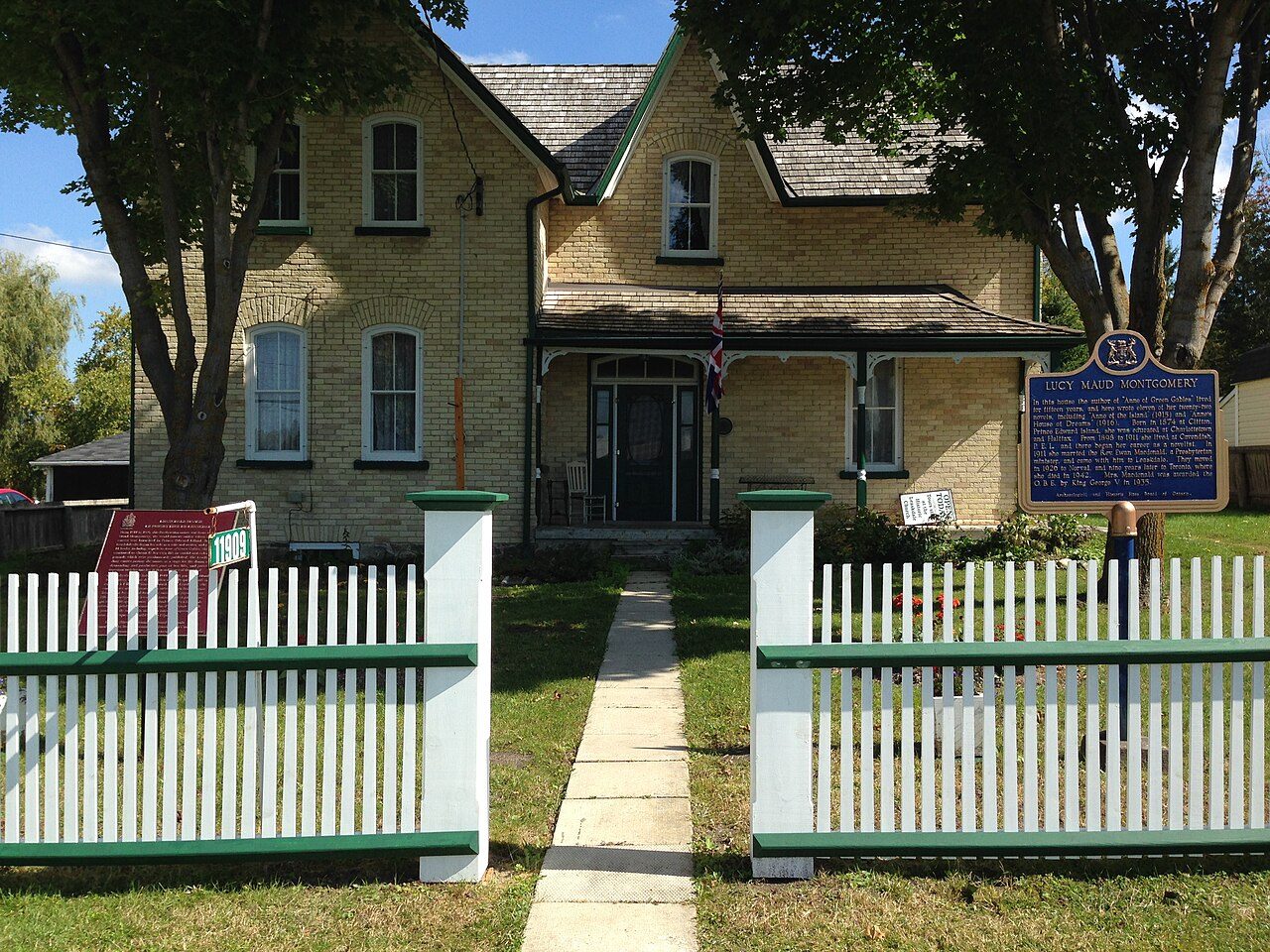
Leaskdale Manse · Photo: Dottiemockery · CC BY-SA 4.0
2historic places on the registers
History of Uxbridge · Canada’s heritage registers
The registers list 2 historic places in Uxbridge, one at the top
Designations here include a Recognized Federal Heritage Building. The earliest construction date, 1886, belongs to Leaskdale Manse. Per resident Uxbridge has more than 78% of Canadian towns: 0.9 for every 10,000 people.
The railway reached Uxbridge in 1871. For the municipality of Uxbridge itself, Wikidata records 1850, a date that can be a founding as much as a merger.
Every place on the registers inside the town, by its designation.
Highest designations
Names show on hover, and a tap takes you to the place’s page.
The 2, by tier
1 Highest designations1 Other federal designations
Most entries are federal, from Parks Canada’s Directory of Federal Heritage Designations; local listings outside Québec are known only through Wikidata items with an article.
Points from Wikidata (Parks Canada’s files carry none) and from Québec’s register, as mapped there. One place, placed by its register’s municipality, has no point and isn’t on the map.
Highest designations
One place in Uxbridge with the highest designation
National Historic Sites and Classified Federal Heritage Buildings, Canada’s highest federal recognition. Each one opens its own page.
10 places of the highest rank within 50 km of Uxbridge
The radius of 50 km holds 19. Closest of all is Former Port Perry Town Hall, in Port Perry, 16 km off. By designation: 10 National Historic Sites, 5 heritage railway stations and 4 provincial or municipal listings.
Most of Uxbridge’s homes went up from 1981 to 2000: 30%
23% of Uxbridge’s homes date from 2001 to 2015, well above the typical 15%. Homes from before 1961 are 20% of Uxbridge’s housing, about the typical 18%. From 2016 to 2021 Uxbridge added 4.9% of its homes, close to the typical town’s 4.1%.
20%
Before 1961
23%
1961–80
30%
1981–2000
23%
2001–15
4.9%
2016–21
UxbridgeTypical town
2021 Census, private dwellings by period of construction (Statistics Canada); the typical town is the middle Canadian town of 2,500 or more.
Born here
Uxbridge’s people of the past, born 1836–1897
Wikidata and Wikipedia agree on 11 births here before 1914. Longest lived was Philip Bernard Rynard, 83 years in all (1980). 7 of the 11 were born in the decades after Confederation. Fame, by Wikipedia: William Henry Sharpe first, in 3 languages.
Stewart Taylor
Isaac James Gould
Frank Madill
Alma Gould Dale
William Henry Sharpe
John Wesley Widdifield
Samuel Simpson Sharpe
James Blanchard
Mary J. L. Black
Teddy Oke
Philip Bernard Rynard
1800182518501875190019251950
WS
William Henry Sharpe1868–1942 · Canadian politician
Samuel Simpson Sharpe1873–1918 · Canadian politician
PR
Philip Bernard Rynard1897–1980 · Canadian politician
IG
Isaac James Gould1839–1915 · Canadian politician
FM
Frank Madill1852–1895 · Canadian politician
JB
James Blanchard1876–1952 · Canadian politician
Mary J. L. Black1879–1939 · Canadian librarian and suffragist
ST
Stewart Taylor1836–1859 · American abolitionist
Everyone born in Uxbridge → Born before 1914 (the page’s periods: Confederation to the First World War). Birthplaces from Wikidata, each checked against the person’s Wikipedia article.
Towns its size
Uxbridge has the 4th most of 16 towns its size
Towns of 22,500 to 22,800 residents, by places on the registers.
The 2021 Census dates 20% of Uxbridge’s homes before 1961, against 18% in the typical town. There are 2 historic places in all, one with the highest designation; Leaskdale Manse heads them. Only 3 of the 16 towns nearest its size have more historic places. Of its people of the past, the best known are William Henry Sharpe (1868), Samuel Simpson Sharpe (1873) and Philip Bernard Rynard (1897). Everything else is close to the norm: the designations ran from 1997 to 2009.
How to read these numbers
What this data can and can’t tell you
•
The federal register. Every federal designation is in Parks Canada’s directory, and the Canadian Register of Historic Places gives most of them a bilingual statement of significance.
•
Protection. A National Historic Site designation recognises significance; it doesn’t by itself protect a building the federal government doesn’t own. Legal protection comes from provincial and municipal designations, whose own registers aren’t open data outside Québec.
•
The tiers. The highest designations are National Historic Sites, Classified Federal Heritage Buildings and Québec’s classements; then come the other federal designations; then provincial and local listings.
•
People and events. Parks Canada’s open file gives its national historic persons no place. A town’s page names one only when the person was born there (matched by name and both life years) or one of its own historic places carries the name and its record speaks of them; national historic events stay off.
•
Map points. Where a federal place sits on the map is Wikidata’s placing; the directory itself has no coordinates.
•
The grade. This page gives no grade; history doesn’t count toward a Canadian town’s letter.
•
Provincial and municipal lists. The local and provincial lists outside Québec aren’t published openly, so this page counts what Wikidata records and pages only the places an encyclopedia describes.
Questions about Uxbridge’s history
Which places in Uxbridge have the highest designation?
Just one: Leaskdale Manse.
What is the oldest building in Uxbridge?
Leaskdale Manse, a National Historic Site, begun in 1886.
How old are the homes in Uxbridge?
Before 1961: 20% of its homes; the typical town has 18%.
Contains information licensed under the Open Government Licence – Canada (Parks Canada).
Sources: Parks Canada, Directory of Federal Heritage Designations · Canadian Register of Historic Places (federal extract) · Wikidata (CC0) for map points, other names and articles · Statistics Canada, 2021 Census (homes by period of construction). Under the Statistics Canada Open Licence.
 Top

