 Top
National Historic Site · 1753–1992Old Town Lunenburg Historic DistrictBluenose Drive, Lunenburg HarbourPhoto: Danielle Langlois · CC BY-SA 3.0 · Commons file
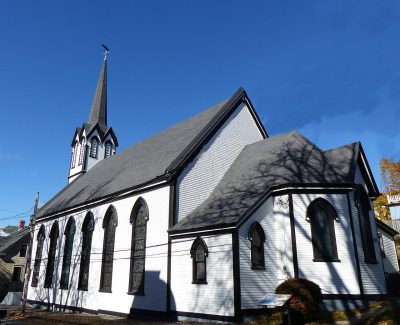
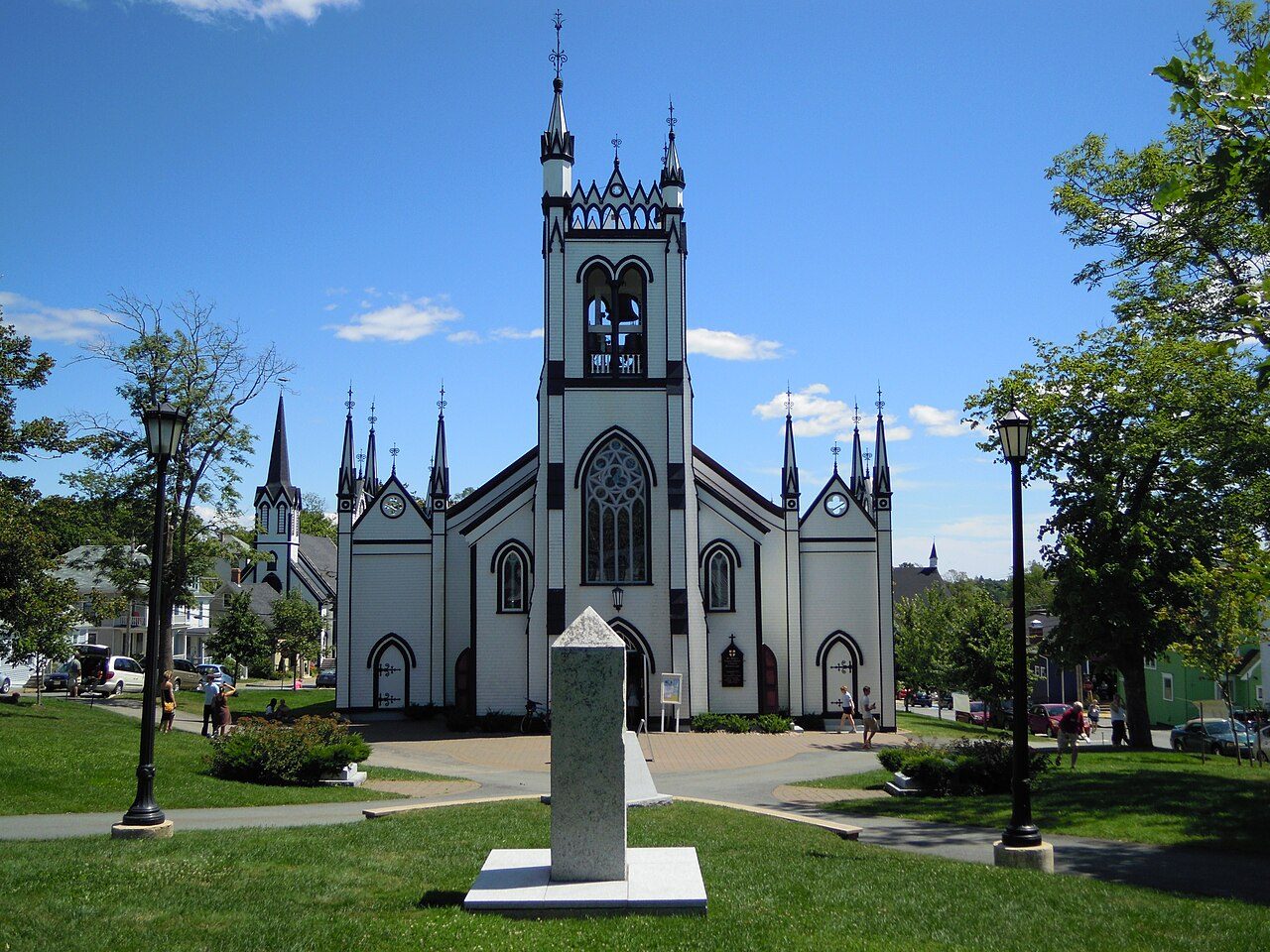 St. John's Anglican Church · Photo: Skeezix1000 · CC BY-SA 3.0
6historic places on the registers
History of Lunenburg · Canada’s heritage registers
Lunenburg keeps its older homes: 63% from before 1961
Lunenburg has 3.6 times what the typical town has (18%). The earliest construction date, 1753, belongs to Old Town Lunenburg Historic District. Canada’s heritage registers list 6 historic places inside the town, 4 with the highest designation. Scaled to its population the record is long: 24 per 10,000 residents, more than 99% of Canadian towns.
Historic places
6
24 per 10,000 residents
Highest designations
4
National Historic Sites and Classified Federal Heritage Buildings
Provincial and local listings
2
provincial and municipal listings with an encyclopedia article
Oldest building
1753
the first construction date on its record
Homes built before 1961
63%
typical town: 18%
In pictures
All 4 of Lunenburg’s highest-designated places, photographed
Photos show every place Lunenburg’s registers name. St. John's Anglican Church and Lunenburg Academy lead the set. 5 different photographers shared them on Wikimedia Commons.
 Lunenburg Academy
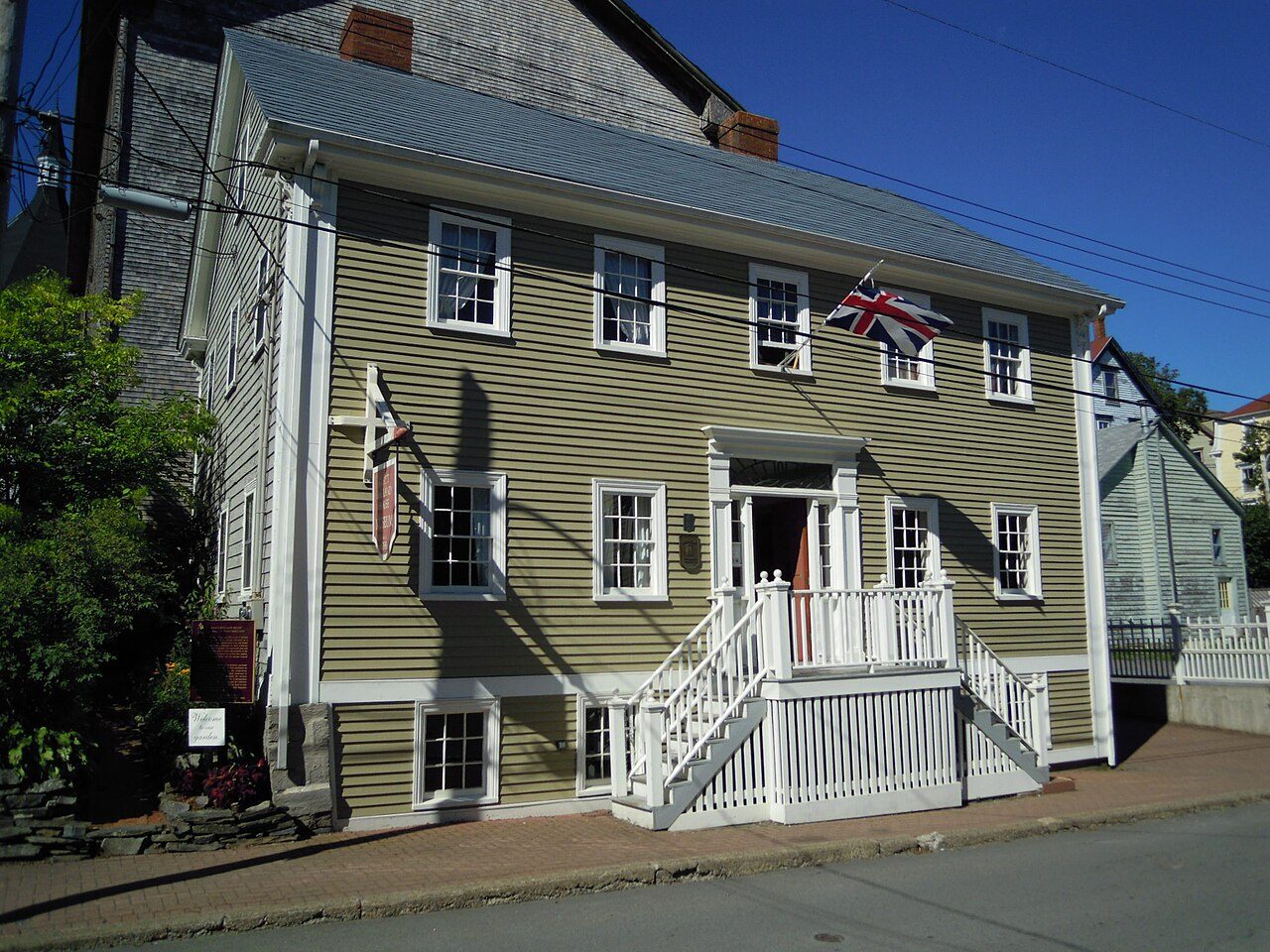 Knaut-Rhuland House
 Old Town Lunenburg Historic District
 St. Andrew's Presbyterian Church
 Zion Evangelical Lutheran Church+1See all photos
Photos from Wikimedia Commons, each credited to its photographer with its licence; names open the place’s page. Tap a photo to step through them full screen.
Through time
Lunenburg through the years, 1880–1896
On one line by date: one old photograph of the town and the oldest view of one of its historic places. Point at a dot for its year, or tap a picture to enlarge it.
 1880s
 c. 1896
Public domain or CC0, made before 1950, from Wikimedia Commons; old views of places can be drawings, prints or maps of their time. Each credit opens the image’s page.
The map
Where Lunenburg’s history is
Every place on the registers inside the town, by its designation.
Highest designationsProvincial and local listings400 m from St. John's Anglican Church
4 of 4within 400 m of St. John's Anglican Church, the heart of the town’s history
Hover a dot for its name; tap one to open its page.
The 6, by tier
4 Highest designations2 Provincial and local listings
The federal directory kept by Parks Canada supplies most of these places; provincial and municipal lists outside Québec aren’t open data, so only the ones Wikidata documents with an article appear.
Points from Wikidata (Parks Canada’s files carry none) and from Québec’s register, as mapped there.
Highest designations
4 places in Lunenburg with the highest designation
The oldest, Old Town Lunenburg Historic District, dates from 1753; the newest from 1894. National Historic Sites and Classified Federal Heritage Buildings, Canada’s highest federal recognition. Designations came from 1983 to 2002. Each one opens its own page.
 Top
National Historic Site · 1754–1764St. John's Anglican Church2 Cumberland StreetPhoto: Skeezix1000 · CC BY-SA 3.0 · Commons file
 Top
National Historic Site · 1793–1794Knaut-Rhuland House123 Pelham StreetPhoto: Skeezix1000 · CC BY-SA 3.0 · Commons file
 Top
National Historic Site · 1894–1896Lunenburg Academy101 Kaulback StreetPhoto: Wladyslaw [Disk.] · CC BY-SA 3.0 · Commons file
What’s designated
The list in Lunenburg starts with churches and religious buildings, at 50%
By kind, the list runs to 4 groups. Two of the highest-ranked are Old Town Lunenburg Historic District and St. John's Anglican Church.
Churches and religious buildings3
Houses1
Public buildings1
Other places1
Kinds read from each place’s name and the functions its register gives; a building keeps the kind it was built as.
Provincial and local listings
On provincial and local lists in Lunenburg: 2 places
Provincial and municipal listings that Wikidata records and an encyclopedia describes. The oldest, St. Andrew's Presbyterian Church, dates from 1828; the newest from 1891. Each one opens its own page.
 Local
Municipally Registered Property · 1828St. Andrew's Presbyterian ChurchPhoto: giggel · CC BY 3.0 · Commons file
 Local
Municipally Registered Property · 1891Zion Evangelical Lutheran ChurchPhoto: Michael Stokes · CC BY 2.0 · Commons file
How old
Lunenburg’s dated places lean to the years of New France
Each place by the first construction date on its record.
New France before 17602
British North America 1760–18662
After Confederation 1867–19132
Wars and Depression 1914–19450
Since 1946 1946 on0
4 of the 6 dated places were built before Confederation.
Homes by age
Only 0.9% of Lunenburg’s homes were built from 2016 to 2021 (4.1% is typical)
Over half of the homes in Lunenburg were already standing by 1961. Homes built from 1981 to 2000 make up just 11% of Lunenburg’s, against 23% in the typical town. Lunenburg built little from 1961 to 1980: 14% of its homes, where most towns have 27%.
63%
Before 1961
14%
1961–80
11%
1981–2000
8.7%
2001–15
0.9%
2016–21
LunenburgTypical town
2021 Census, private dwellings by period of construction (Statistics Canada); the typical town is the middle Canadian town of 2,500 or more.
Born here
From 1832 to 1913: lives that began in Lunenburg
Counting only births before 1914, there are 11. Angus Walters is on Canada’s list of national historic persons. Murray Barnson Emeneau is the most written about, in 9 languages. The longest life here was Murray Barnson Emeneau’s, 101 years, ending in 2005.
James Daniel Eisenhauer
Charles Edwin Kaulbach
Jabez Bunting Snowball
Harriet Starr Stewart
Angus Walters
John James Kinley
Morris Wilson
Murray Barnson Emeneau
Robert Winters
Arthur L. Thurlow
Wally Knock
1800182518501875190019251950
ME
Murray Barnson Emeneau1904–2005 · Linguist, Indologist specializing in India as a linguistic area

Robert Winters1910–1969 · Canadian politician

Jabez Bunting Snowball1837–1907 · Canadian politician
JK
John James Kinley1881–1971 · Canadian politician

Arthur L. Thurlow1913–2020 · Canadian judge
JE
James Daniel Eisenhauer1832–1896 · Canadian politician

Charles Edwin Kaulbach1834–1907 · Canadian politician

Angus Walters1881–1968 · Person of national historic significance (2005) · Canadian sailor
Everyone born in Lunenburg → Born before 1914. Birthplaces from Wikidata, each checked against Wikipedia; national historic persons from Parks Canada’s Directory of Federal Heritage Designations, matched by name and life years.
Towns its size
Lunenburg has the most of 16 towns its size
Towns of 2,500 to 2,500 residents, by places on the registers.
Lunenburg6
The middle one has 0. 10 of them have none.
Neighbours
Lunenburg and its neighbours
| Town | People | Places | Highest | Oldest |
|---|---|---|---|---|
| Lunenburg | 2,523 | 6 | 4 | 1753 |
| Mahone Bay | 1,200 | 0 | 0 | — |
| Lunenburg | 26,862 | 2 | 1 | 1632 |
| Bridgewater | 9,989 | 0 | 0 | — |
In brief
Lunenburg in brief
Before 1961: 63% of Lunenburg’s homes, against 18% in the typical town. The lists come to 6 historic places, 4 with the highest designation, including Old Town Lunenburg Historic District. Among the 16 towns nearest its size, none has more historic places.
The densest spot is around St. John's Anglican Church: 4 of its places of the highest designation within 400 m. Among the lives from its past: Murray Barnson Emeneau (1904), Robert Winters (1910) and Jabez Bunting Snowball (1837). Beyond that, the list grew between 1983 and 2002.
How to read these numbers
What this data can and can’t tell you
- Protection. Federal recognition isn’t a planning control: buildings the federal government owns follow its heritage policy, while others are protected only by a provincial or municipal designation.
- The federal register. Parks Canada’s Directory of Federal Heritage Designations lists every National Historic Site, federal heritage building, heritage railway station and lighthouse; the Canadian Register of Historic Places adds their statements in English and French.
- Provincial and municipal lists. Outside Québec, provinces’ and municipalities’ heritage registers aren’t open data; their places are known only through Wikidata items with a register number, and only those with an encyclopedia article get a page.
- The tiers. Three tiers: the top for National Historic Sites, classified federal buildings and Québec’s classements, a second for the other federal designations, a third for provincial and municipal listings.
- Map points. Where a federal place sits on the map is Wikidata’s placing; the directory itself has no coordinates.
- People and events. The open directory puts its national historic persons nowhere, so a town shows one only on firm ground: a birth there, matched by name and life years, or a historic place there named for the person whose record says so. Events are left out.
- The grade. History is described, not graded, for every Canadian town.
Questions about Lunenburg’s history
How old are the homes in Lunenburg?
63% predate 1961, where the typical town has 18%.
What is the oldest building in Lunenburg?
Old Town Lunenburg Historic District, a National Historic Site, begun in 1753.
Which places in Lunenburg have the highest designation?
They are Old Town Lunenburg Historic District, St. John's Anglican Church, Knaut-Rhuland House and Lunenburg Academy.
Why might a heritage building in Lunenburg be missing here?
Its province’s and council’s own lists can’t be reused here; 48 further listings in Lunenburg show up only as Wikidata numbers.
Contains information licensed under the Open Government Licence – Canada (Parks Canada).
Sources: Parks Canada, Directory of Federal Heritage Designations · Canadian Register of Historic Places (federal extract) · Wikidata (CC0) for map points, other names and articles · Statistics Canada, 2021 Census (homes by period of construction). Under the Statistics Canada Open Licence.
Adapted from Statistics Canada (Census of Population 2021, population estimates 2025, 2021 census boundaries) under the Statistics Canada Open Licence; this does not constitute an endorsement by Statistics Canada. Neighbourhood names in some cities © OpenStreetMap contributors (ODbL).