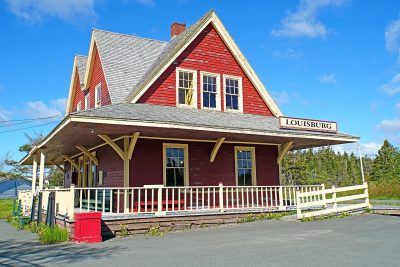
Museum and Caretaker's House · Photo: daryl_mitchell · CC BY-SA 2.0
9historic places on the registers
History of Cape Breton · Canada’s heritage registers
Wolfe's Landing, from 1758, is Cape Breton’s oldest designated place
Older housing stands out in Cape Breton: 37% of homes predate 1961, where the typical town has 18%. All told the heritage lists hold 9 historic places within the town, and 3 sit in the top tier. Per resident that is more than in 78% of Canadian towns: 0.8 for every 10,000 people. Among the places are 3 Recognized Federal Heritage Buildings and 3 provincial or municipal listings.
provincial and municipal listings with an encyclopedia article
Oldest building
1758
the first construction date on its record
Homes built before 1961
37%
typical town: 18%
In pictures
5 pictures of Cape Breton today, 6 from its past
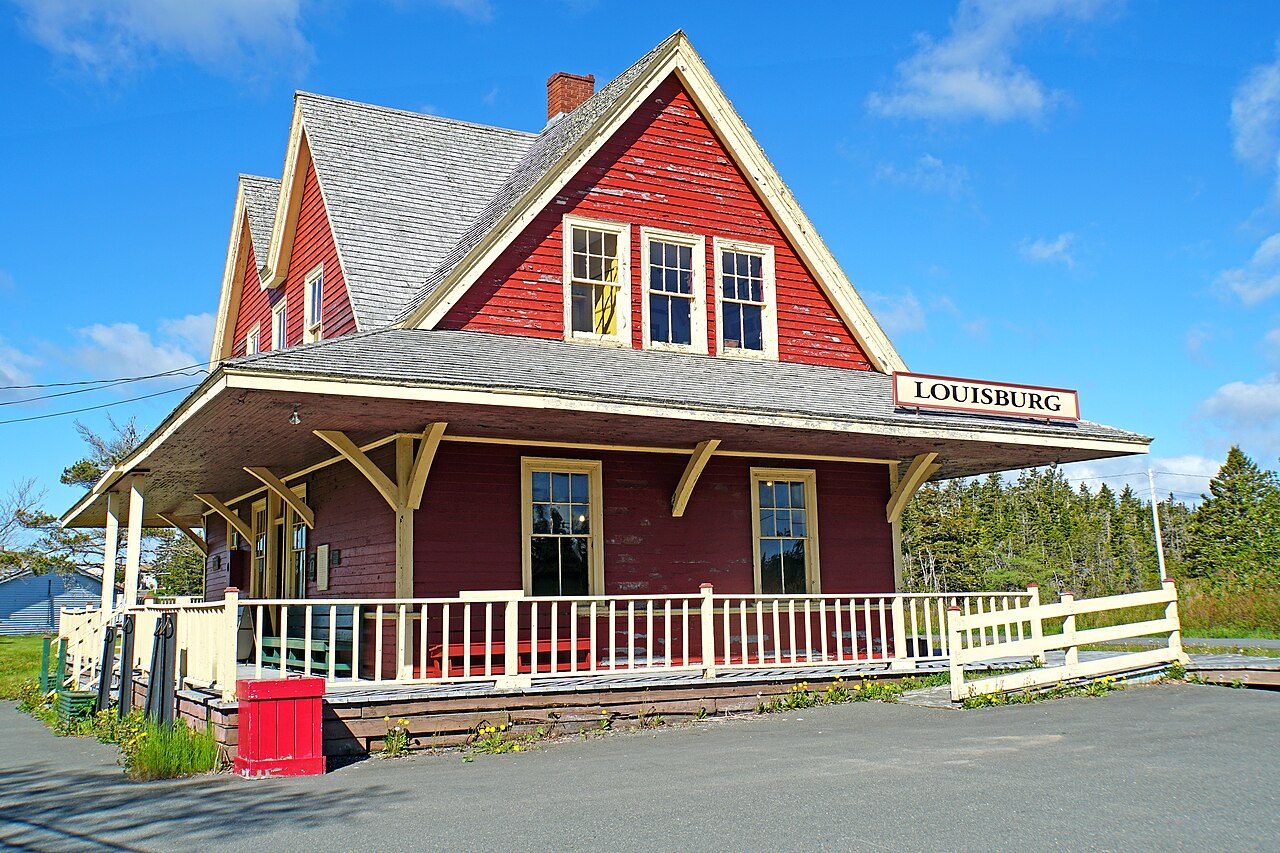
The set includes one of Cape Breton’s most honoured places. 5 designated places in Cape Breton have a photo. Two to begin with: Museum and Caretaker's House and Louisburg Railway Station.
Photos from Wikimedia Commons, each credited to its photographer with its licence; names open the place’s page. Tap a photo to step through them full screen.
Through time
Cape Breton through the years, 1900–1928
In order of date: 5 old photographs of the town, then the oldest view of one of its historic places. Tap any picture to see it full screen.
1890190019101920193019401950Confederation to 1900Boom yearsThe wars and betweenAfter the war
Public domain or CC0, made before 1950, from Wikimedia Commons; old views of places can be drawings, prints or maps of their time. Each credit opens the image’s page.
How old
Cape Breton’s dated places lean to the decades after Confederation
Each place by the first construction date on its record.
New France before 17601
British North America 1760–18660
After Confederation 1867–19134
Wars and Depression 1914–19452
Since 1946 1946 on2
Of the 9 with a date, one predates 1867.
How it began
1895 and after: Cape Breton’s milestones
On the open record, Cape Breton as a municipality goes back to August 1, 1995, though that may be a charter rather than a first settlement. Louisburg Railway Station, the earliest station on record, opened in 1895.
Every place on the registers inside the town, by its designation.
Highest designationsOther federal designationsProvincial and local listings
Hover a dot for its name; tap one to open its page.
The 9, by tier
3 Highest designations3 Other federal designations3 Provincial and local listings
Federal designations come from Parks Canada’s directory; a province’s or a council’s own listing shows here only when Wikidata holds it and an encyclopedia covers it.
Points from Wikidata (Parks Canada’s files carry none) and from Québec’s register, as mapped there.
Highest designations
The highest rank in Cape Breton: 3 places
Their dates run from 1758, with Wolfe's Landing, to 1935. They are 2 National Historic Sites and a Classified Federal Heritage Building. National Historic Sites and Classified Federal Heritage Buildings, Canada’s highest federal recognition. Each one opens its own page.
Their dates run from 1938, with Light Tower, to 1966. Recognized Federal Heritage Buildings, heritage railway stations and lighthouses. The first was designated in 2002, the latest in 2006. Each one opens its own page.
Recognized Federal Heritage Building · 1966–1967Science Building210 George Street
What’s designated
In Cape Breton, stations, lighthouses and bridges lead the list (33%)
Leading by designation: Wolfe's Landing and Marconi Wireless Station. Next come theatres, museums and memorials: 2. By kind, the list runs to 5 groups.
Stations, lighthouses and bridges3
Theatres, museums and memorials2
Churches and religious buildings1
Houses1
Other places2
Grouped by what each register says the place is or was; a converted building counts as what it was built for.
Provincial and local listings
3 more places Cape Breton or its province protects
Provincial and municipal listings that Wikidata records and an encyclopedia describes. Their dates run from 1895, with Louisburg Railway Station, to 1913. Each one opens its own page.
Gabarus Light TowerRecognized Federal Heritage Building · 400 m outside the town
St. George's ChurchProvincially Registered Property · 600 m outside the town
Homes by age
Cape Breton added few homes from 2016 to 2021: 2.6%, where most towns have 4.1%
Few of Cape Breton’s homes date from 2001 to 2015: 8.6%, the norm 15%. Over half of the homes in Cape Breton were already standing by 1981. 30% of Cape Breton’s homes were built from 1961 to 1980, close to the typical town’s 27%.
37%
Before 1961
30%
1961–80
21%
1981–2000
8.6%
2001–15
2.6%
2016–21
Cape BretonTypical town
2021 Census, private dwellings by period of construction (Statistics Canada); the typical town is the middle Canadian town of 2,500 or more.
Born here
Cape Breton’s people of the past, born 1731–1913
30 of the 45 were born in the decades after Confederation. Canada counts Jeanne Dugas and John George Bourinot among its national historic persons. Edgar Douglas Richmond Bissett lived longest, to 100, dying in 1990. There are 45 people born here before 1914 with an article to show for it. Only the 20 best known fit the timeline.
Pierre Martin
William Connell
John George Bourinot
Joseph Alexander Gillies
William Mackenzie McLeod
Fenwick Lionel Kelly
Henry Ernest Kendall
Christine Ross Barker
Alexander Kenneth Maclean
Daniel Alexander Cameron
Jack Cameron
George Cleveland
Helen Kendall
Percival Appleby
Peter Macdonald
Claude Richardson
Harold Connolly
Hugh MacLennan
Florence MacDonald
Flash Hollett
175017751800182518501875190019251950
Hugh MacLennan1907–1990 · Canadian writer
George Cleveland1885–1957 · Actor
William Connell1827–1909 · American politician
Harold Connolly1901–1980 · Canadian politician
Pierre Martin1752–1820 · French naval officer
Christine Ross Barker1866–1940 · Canadian suffragist and pacifist
Alexander Kenneth Maclean1869–1942 · Canadian politician
John George Bourinot1837–1902 · National historic person, 1938 · Canadian historian and journalist
Everyone born in Cape Breton → Born before 1914. Birthplaces from Wikidata, each checked against Wikipedia; national historic persons from Parks Canada’s Directory of Federal Heritage Designations, matched by name and life years.
Towns its size
Cape Breton has the 4th most of 16 towns its size
Towns of 97,800 to 115,400 residents, by places on the registers.
The 2021 Census dates 37% of Cape Breton’s homes before 1961, against 18% in the typical town. Together that makes 9 historic places, 3 with the highest designation, led by Wolfe's Landing. Only 3 of the 16 towns nearest its size have more historic places. Hugh MacLennan (1907), George Cleveland (1885) and William Connell (1827) lead its people of the past. For the rest, its places were designated between 1929 and 2006.
How to read these numbers
What this data can and can’t tell you
•
The tiers. The highest designations are National Historic Sites, Classified Federal Heritage Buildings and Québec’s classements; then come the other federal designations; then provincial and local listings.
•
The federal register. The federal list is complete and open: Parks Canada’s directory for the designations, the Canadian Register of Historic Places for what each one is and why it matters.
•
Protection. Being on these registers doesn’t mean a building can’t change. Federal designation commemorates; protection is provincial or municipal, and those lists aren’t open here.
•
The grade. This page gives no grade; history doesn’t count toward a Canadian town’s letter.
•
People and events. National historic persons carry no place in the open file. They appear on a town’s page when born there (same name, same birth and death years) or when a historic place inside it carries their name and its record names them with their dates; national historic events don’t appear.
•
Map points. Where a federal place sits on the map is Wikidata’s placing; the directory itself has no coordinates.
•
Provincial and municipal lists. The local and provincial lists outside Québec aren’t published openly, so this page counts what Wikidata records and pages only the places an encyclopedia describes.
Questions about Cape Breton’s history
What is the oldest building in Cape Breton?
Wolfe's Landing, a National Historic Site, begun in 1758.
How old are the homes in Cape Breton?
The 2021 Census dates 37% of its homes before 1961 (18% in the typical town).
Which places in Cape Breton have the highest designation?
They are Wolfe's Landing, Marconi Wireless Station and Museum and Caretaker's House.
Why might a heritage building in Cape Breton be missing here?
Its province’s and council’s own lists can’t be reused here; 7 further listings in Cape Breton show up only as Wikidata numbers.
Contains information licensed under the Open Government Licence – Canada (Parks Canada).
Sources: Parks Canada, Directory of Federal Heritage Designations · Canadian Register of Historic Places (federal extract) · Wikidata (CC0) for map points, other names and articles · Statistics Canada, 2021 Census (homes by period of construction). Under the Statistics Canada Open Licence.



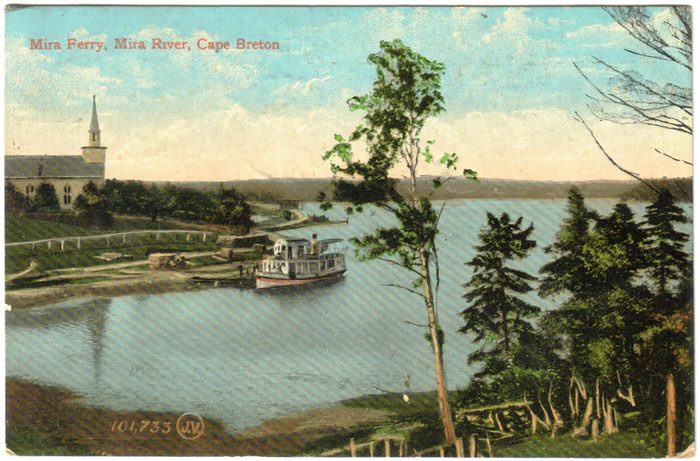 c. 1900
 1903
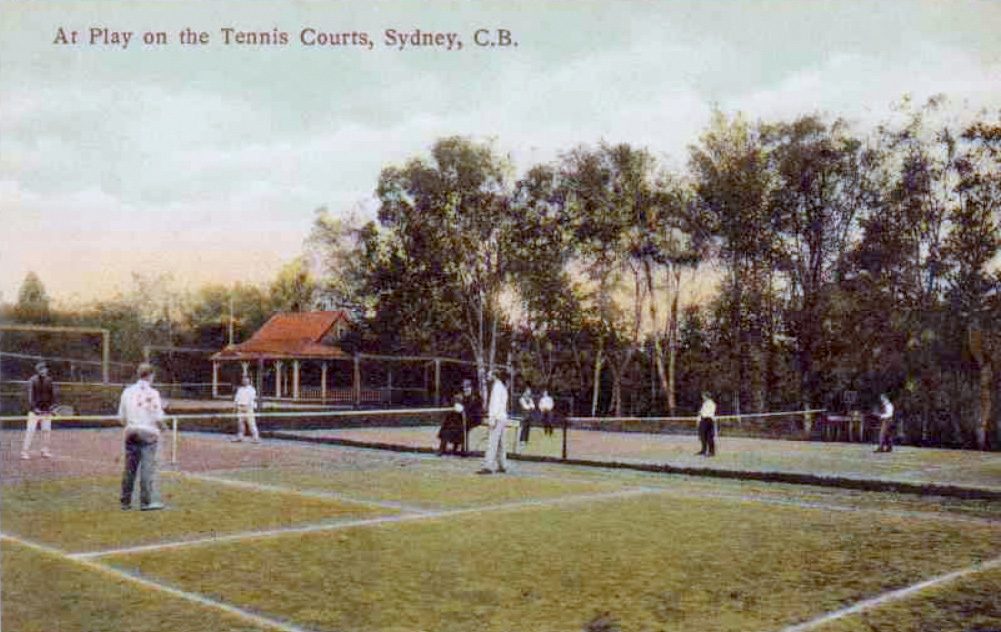 c. 1908
 1910–1920
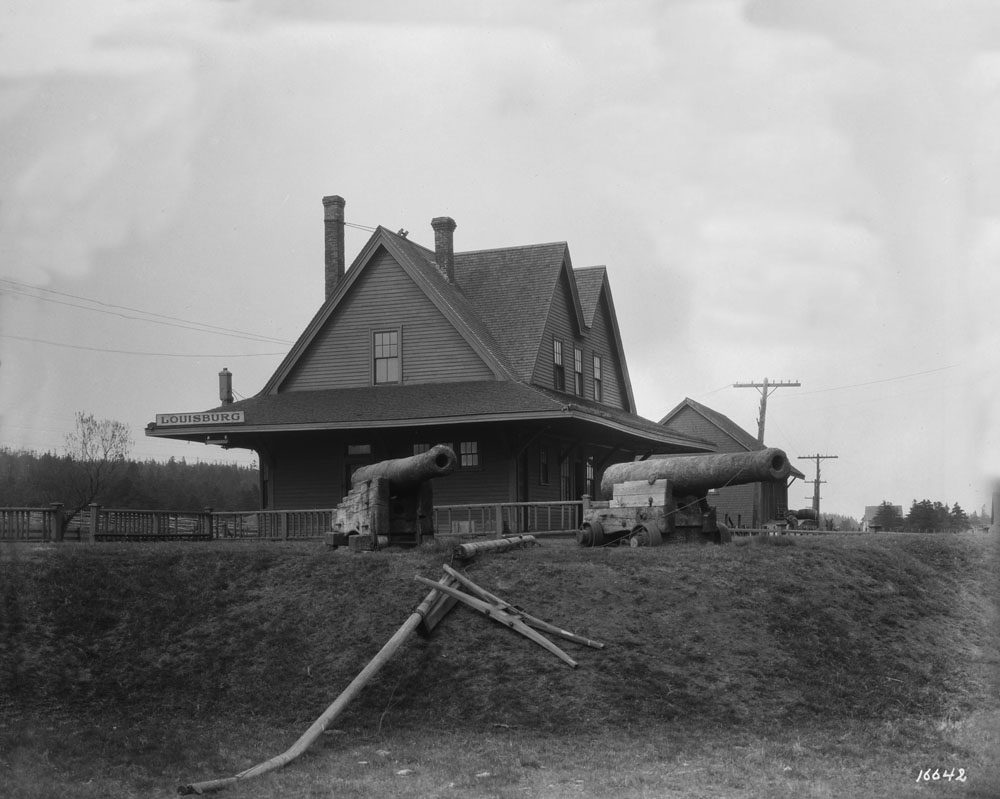 1927
 c. 1928
 Top
 Fed
 Local
 Local
 Local


