 Top
National Historic Site · 1924–1941Former Bowmanville Boys Training School/Camp 302020 Lambs RoadPhoto: Shezamm · CC BY-SA 2.0 · Commons file
 Former Bowmanville Boys Training School/Camp 30 · Photo: Shezamm · CC BY-SA 2.0
1historic place on the registers
History of Bowmanville · Canada’s heritage registers
One place in Bowmanville, at the top of the registers
Bowmanville’s one place is Former Bowmanville Boys Training School/Camp 30, a national historic site begun in 1924. The municipality’s date on Wikidata is 1974: a founding, an incorporation or an amalgamation, the record doesn’t say which. Measured against its size, Bowmanville’s 0.1 per 10,000 residents puts it ahead of 71% of Canadian towns. 3 more places on provincial or local lists are counted from Wikidata without pages.
Historic places
1
0.1 per 10,000 residents
Highest designations
1
National Historic Sites and Classified Federal Heritage Buildings
Oldest building
1924
the first construction date on its record
Homes built before 1961
13%
typical town: 18%
Through time
Bowmanville from 1898 to 1925
Here in time order: 8 old photographs of the town, along with the oldest view of one of its historic places. The dots mark each picture’s year; tap one to enlarge it.
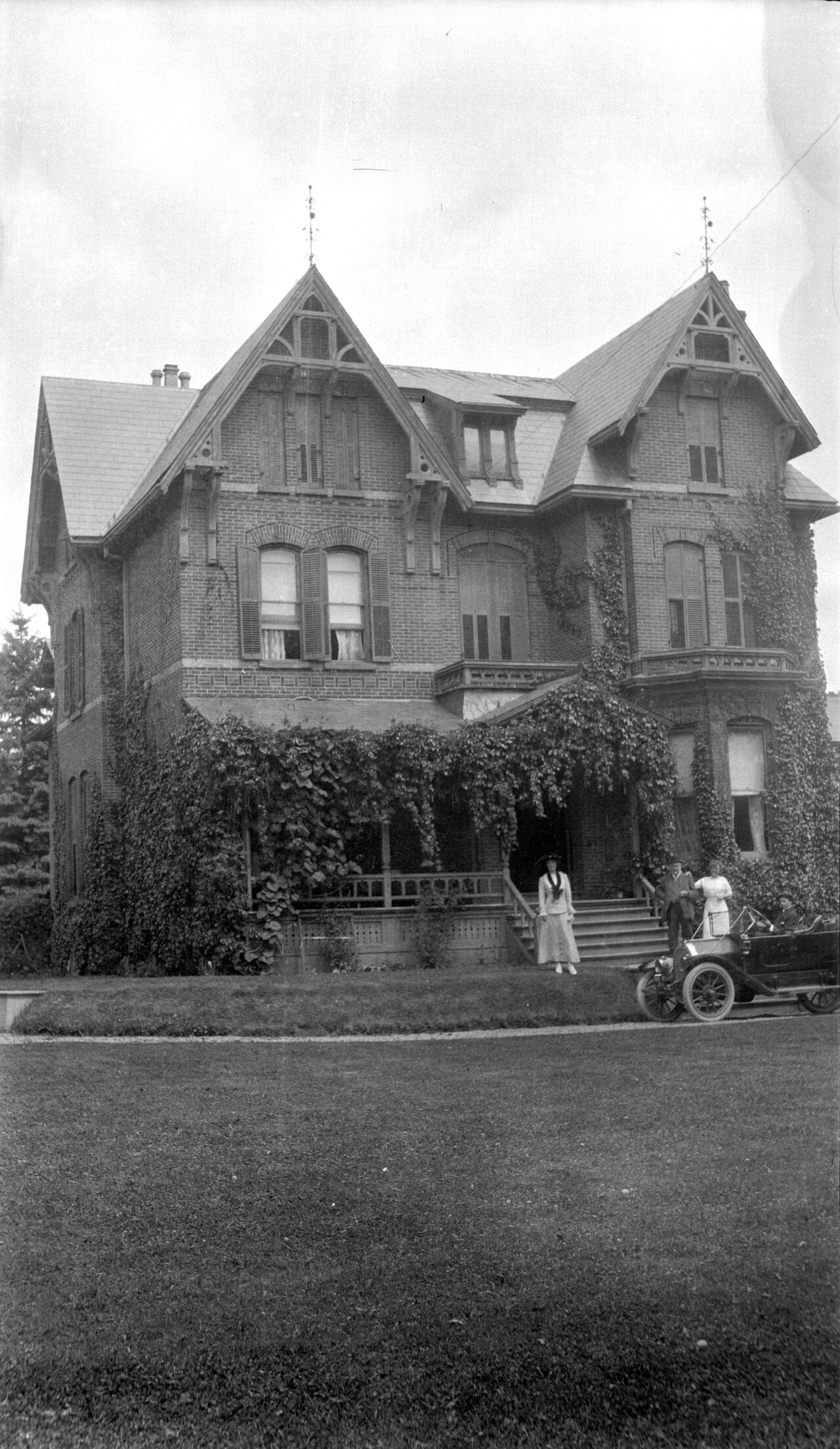 1898
 1900–1913
 1900–1914
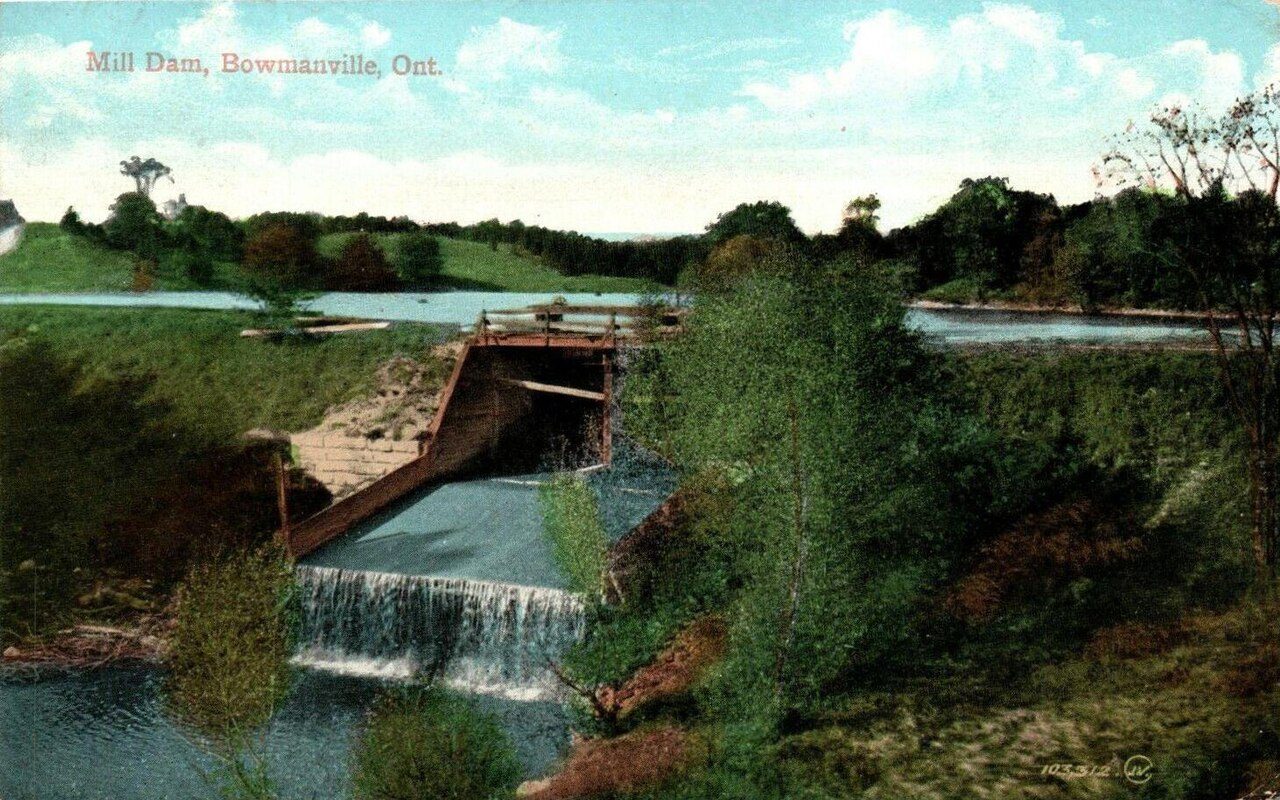 c. 1908
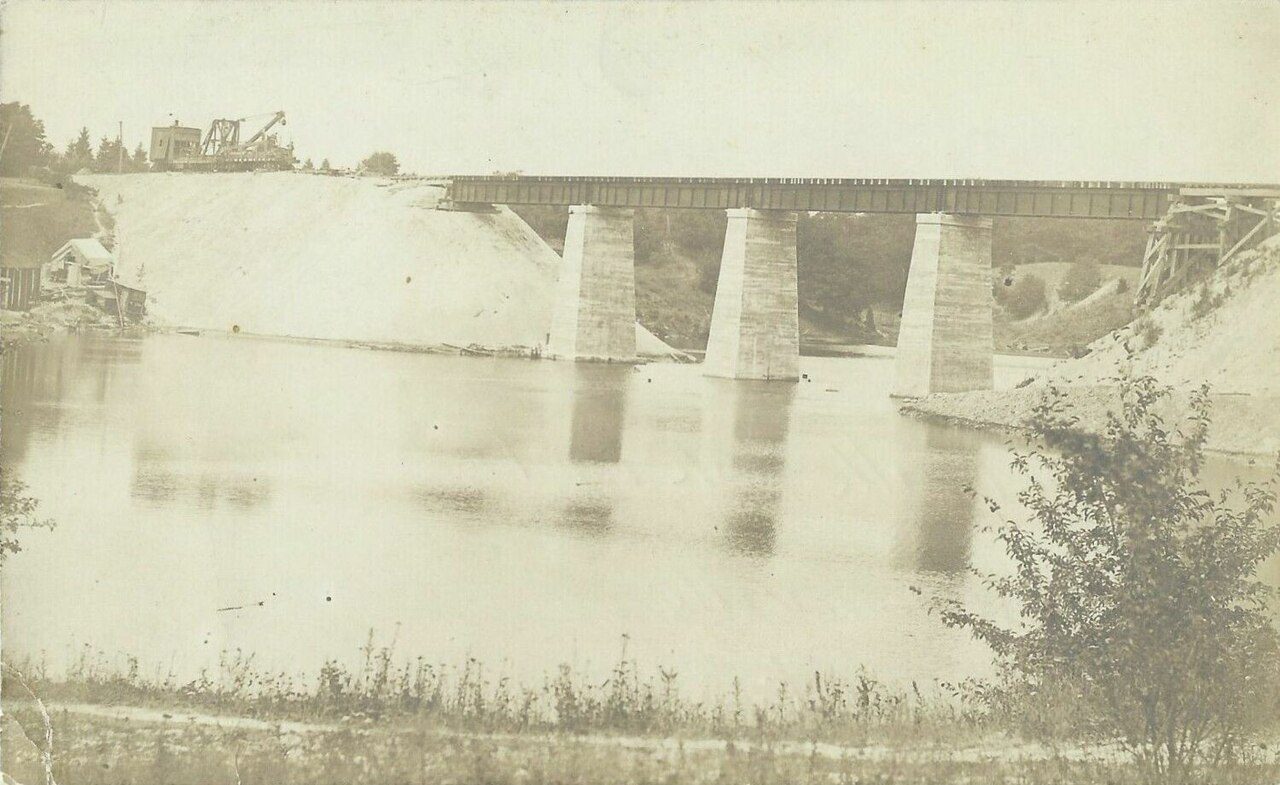 1910s
 1910
 1915
 1916
 1925
Public domain or CC0, made before 1950, from Wikimedia Commons; old views of places can be drawings, prints or maps of their time. Each credit opens the image’s page.
The map
Where Bowmanville’s history is
Every place on the registers inside the town, by its designation.
Highest designations
Dots open their places’ pages; hover first to read the name.
The 1, by tier
1 Highest designations
What the map shows is the open record: the federal directory in full, and from provincial or municipal lists only the places Wikidata ties to an encyclopedia article.
Points from Wikidata (Parks Canada’s files carry none) and from Québec’s register, as mapped there.
Highest designations
One place in Bowmanville with the highest designation
National Historic Sites and Classified Federal Heritage Buildings, Canada’s highest federal recognition. Each one opens its own page.
Around the town
Bowmanville’s surroundings: 12 historic places within 50 km
Closest of all is Parkwood, in Oshawa, 14 km off. They are spread over 8 towns, including Port Hope, Cobourg and Markham Village. St. Mark's Church, 33 km off, is the oldest: 1822.
The 12 nearest, within 50 km
| ParkwoodNational Historic Site · 1915–1941 · 14 km away, in Oshawa |
| Former Port Perry Town HallNational Historic Site · 1873–1874 · 29 km away, in Port Perry |
| Former Grand Trunk Railway (Canadian National Railways) Station, Port Hope, OntarioHeritage Railway Station · 1856–1857 · 32 km away, in Port Hope |
| Capitol TheatreDesignated heritage property (part IV) · 33 km away, in Port Hope |
| St. Mark's ChurchDesignated heritage property (part IV) · 1822 · 33 km away, in Port Hope |
| Thistle Ha' FarmNational Historic Site · 1840–1871 · 33 km away, in Pickering |
| Victoria Hall / Cobourg Town HallNational Historic Site · 1856–1861 · 43 km away, in Cobourg |
| Former Canadian National Railways (VIA Rail) Station, Cobourg, OntarioHeritage Railway Station · 1910–1912 · 43 km away, in Cobourg |
| Markham Village Town HallDesignated heritage property (part IV) · 1881 · 45 km away, in Markham Village |
| Former Canadian National Railway Station, Markham, OntarioHeritage Railway Station · 1871–1872 · 45 km away, in Markham Village |
| Leaskdale ManseNational Historic Site · 1886–1887 · 49 km away, in Uxbridge |
| Canadian National Railway Station, Unionville, OntarioHeritage Railway Station · 1871–1872 · 49 km away, in Unionville |
Homes by age
Bowmanville is still building: 9.8% of homes date from 2016 to 2021, against 4.1%
At 13%, Bowmanville’s share of pre-1961 homes is under the typical town’s 18%. 27% of Bowmanville’s homes were built from 2001 to 2015, more than the typical town’s 15%. More of Bowmanville’s homes were built from 1981 to 2000 than in any other period: 36%.
13%
Before 1961
15%
1961–80
36%
1981–2000
27%
2001–15
9.8%
2016–21
BowmanvilleTypical town
2021 Census, private dwellings by period of construction (Statistics Canada); the typical town is the middle Canadian town of 2,500 or more.
Born here
2 of Canada’s national historic persons, tied to Bowmanville
Of the 22, 13 were born in the years before Confederation. The most recent birth is John James’s, in 1911. By Wikipedia’s reach, William Osler leads, with 48 articles. In 1835 came the earliest, Elizabeth Lucas. The timeline shows the 20 best known.
Elizabeth Lucas
George Byron Smith
Thomas McCulloch Fairbairn
William Osler
William F. Eddy
Lillian Massey Treble
Samuel John Fox
Wiman Andrus
Helena Coleman
Mark Robert Eagleson
Charles Brent
Joseph E. Atkinson
Fred Higginbotham
Alexander Dew Chaplin
Fred Wellington Bowen
Walt Bellamy
Percy John Rowe
Albert Ross Tilley
Gwendolyn Koldofsky
John James
1800182518501875190019251950
WO
William Osler1849–1919 · National historic person, 1950 · Canadian physician and co-founder of…

Charles Brent1862–1929 · American Episcopal bishop and Army chaplain
JA
Joseph E. Atkinson1865–1948 · Designated nationally in 1986 · Canadian newspaper editor and activist

Helena Coleman1860–1953 · Canadian poet, music teacher, and writer

Fred Wellington Bowen1877–1949 · Canadian politician
GK
Gwendolyn Koldofsky1906–1998 · Canadian music educator

John James1911–1999 · Canadian politician

Lillian Massey Treble1854– · Canadian philanthropist
Everyone born in Bowmanville → Born before 1914. Birthplaces from Wikidata, each checked against Wikipedia; national historic persons from Parks Canada’s Directory of Federal Heritage Designations, matched by name and life years.
Neighbours
Bowmanville and its neighbours
| Town | People | Places | Highest | Oldest |
|---|---|---|---|---|
| Bowmanville | 114,180 | 1 | 1 | 1924 |
| Oshawa | 213,592 | 2 | 1 | 1914 |
In brief
Bowmanville in brief
Bowmanville has 1 historic place, one with the highest designation, among them Former Bowmanville Boys Training School/Camp 30. Among the lives from its past: William Osler (1849), Charles Brent (1862) and Joseph E. Atkinson (1865). Few of its homes are old, 13% before 1961, against 18% in the typical town. The other figures are unremarkable: one historic place is about usual for its size (the median is 5); and its one place was designated in 2013.
How to read these numbers
What this data can and can’t tell you
- Provincial and municipal lists. Outside Québec, provinces’ and municipalities’ heritage registers aren’t open data; their places are known only through Wikidata items with a register number, and only those with an encyclopedia article get a page.
- Protection. Federal recognition isn’t a planning control: buildings the federal government owns follow its heritage policy, while others are protected only by a provincial or municipal designation.
- The federal register. Federal places come from Parks Canada’s directory, which counts National Historic Sites, federal heritage buildings, stations and lighthouses; their statements are the register’s own.
- People and events. Persons of national historic significance come with no location; a town gets one only by birthplace (name and both life years agreeing) or by one of its own places that bears the name and whose record tells the story. Events, which can’t be tied, are left out.
- The tiers. National Historic Sites and the most protected buildings form the top tier; recognized federal buildings, stations and lighthouses the second; provincial and municipal listings the third.
- Map points. Where a federal place sits on the map is Wikidata’s placing; the directory itself has no coordinates.
- The grade. History isn’t one of Canada’s graded pillars, so this page describes and compares without a letter.
Questions about Bowmanville’s history
Which places in Bowmanville have the highest designation?
It is Former Bowmanville Boys Training School/Camp 30.
What is the oldest building in Bowmanville?
By its record, Former Bowmanville Boys Training School/Camp 30, from 1924 (National Historic Site).
Why might a heritage building in Bowmanville be missing here?
Provincial and municipal registers outside Québec aren’t open data. Wikidata knows 3 more listings in Bowmanville, but without an open description or an encyclopedia article they get no page.
How old are the homes in Bowmanville?
13% predate 1961, where the typical town has 18%.
Contains information licensed under the Open Government Licence – Canada (Parks Canada).
Sources: Parks Canada, Directory of Federal Heritage Designations · Canadian Register of Historic Places (federal extract) · Wikidata (CC0) for map points, other names and articles · Statistics Canada, 2021 Census (homes by period of construction). Under the Statistics Canada Open Licence.
Adapted from Statistics Canada (Census of Population 2021, population estimates 2025, 2021 census boundaries) under the Statistics Canada Open Licence; this does not constitute an endorsement by Statistics Canada. Neighbourhood names in some cities © OpenStreetMap contributors (ODbL).