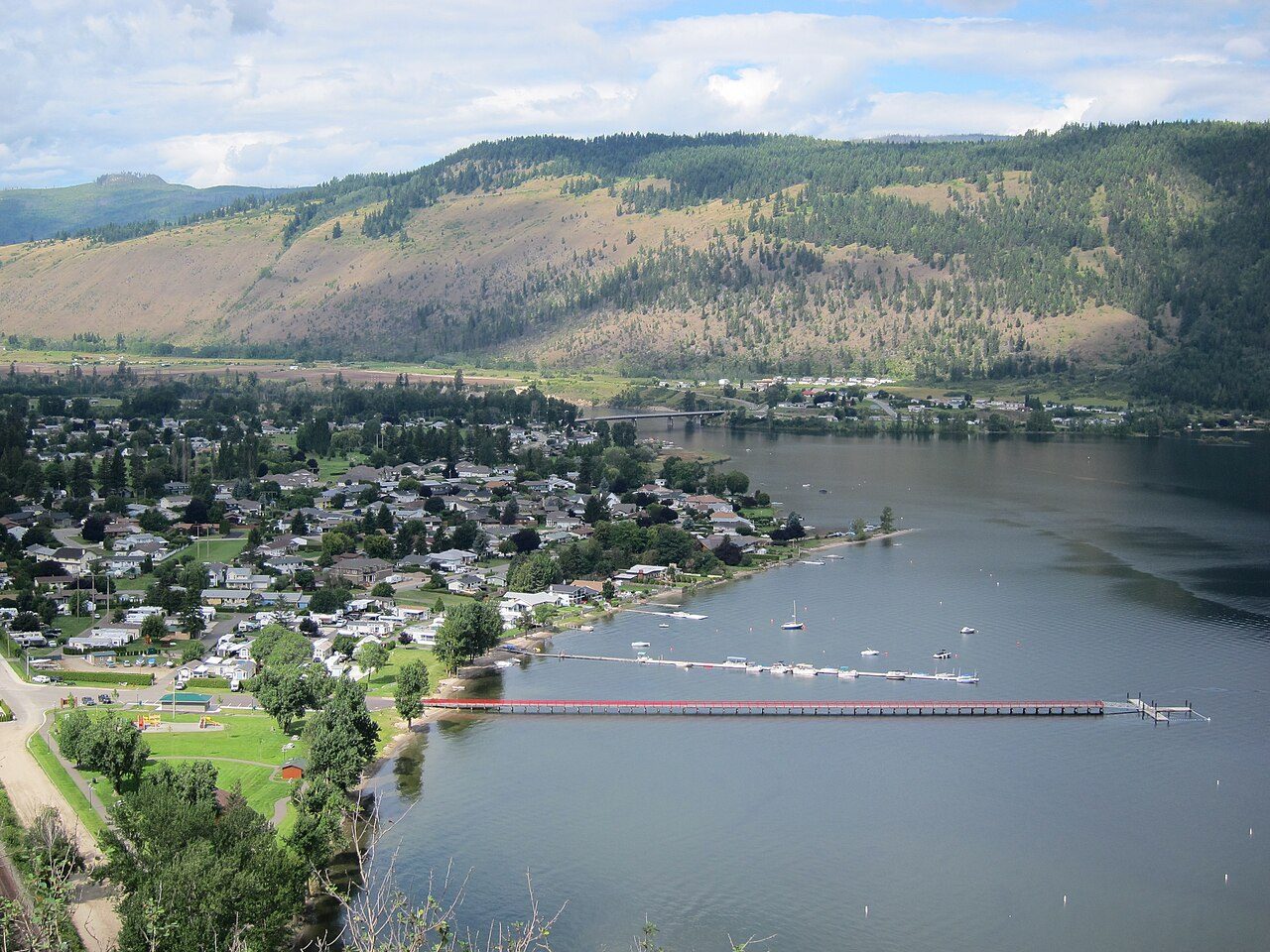
 Photo: The Interior · CC BY-SA 3.0
Chase and its setting: 2 historic places within 100 km
Heritage of the first rank begins 49 km from Chase, in Kamloops. Homes from 2016 to 2021 make up 2.6% of the stock; the typical town has 4.1%.
2 places on Canada’s registers lie 100 km or less from Chase
By age, “Canadian National Railway Station, Kamloops, British Columbia” leads, from 1926, at 48 km. Kamloops Memorial Arena in Kamloops is the nearest, 48 km away. The mix: a provincial or municipal listing and a heritage railway station.
The 2 nearest, within 100 km
| Kamloops Memorial ArenaListed in a community heritage register · 48 km away, in Kamloops |
| Canadian National Railway Station, Kamloops, British ColumbiaHeritage Railway Station · 1926–1928 · 48 km away, in Kamloops |
Most of Chase’s homes went up from 1981 to 2000: 37%
Few of Chase’s homes date from 2001 to 2015: 10%, the norm 15%. Like the typical town (18%), Chase has 19% of its homes from before 1961. Over half of the homes in Chase were already standing by 2001.
2021 Census, private dwellings by period of construction (Statistics Canada); the typical town is the middle Canadian town of 2,500 or more.
How Chase compares with 16 towns its size
Towns of 2,600 to 2,600 residents, by places on the registers.
Ahead of it: Saint-Éphrem-de-Beauce, City Commercial Core and Hébertville. The typical town its size has 0. For 13, the registers list nothing.
Chase and its neighbours
| Town | People | Places | Highest | Oldest |
|---|---|---|---|---|
| Chase | 2,591 | 0 | 0 | — |
| Sun Peaks Mountain | 1,546 | 0 | 0 | — |
Chase in brief
Before 1961: 19% of Chase’s homes, against 18% in the typical town. Towns its size usually have more historic places; the middle one has 0.
What this data can and can’t tell you
- The federal register. Federal places come from Parks Canada’s directory, which counts National Historic Sites, federal heritage buildings, stations and lighthouses; their statements are the register’s own.
- Protection. Being on these registers doesn’t mean a building can’t change. Federal designation commemorates; protection is provincial or municipal, and those lists aren’t open here.
- Provincial and municipal lists. Only Wikidata gives open access to listings on provincial and municipal registers outside Québec; without an article such a place is counted but not paged.
- The grade. History isn’t one of Canada’s graded pillars, so this page describes and compares without a letter.
- The tiers. National Historic Sites and the most protected buildings form the top tier; recognized federal buildings, stations and lighthouses the second; provincial and municipal listings the third.
- People and events. Persons of national historic significance come with no location; a town gets one only by birthplace (name and both life years agreeing) or by one of its own places that bears the name and whose record tells the story. Events, which can’t be tied, are left out.
Questions about Chase’s history
How many historic places does Chase have on the registers?
Inside Chase, none so far; Kamloops Memorial Arena, 48 km away in Kamloops, is the closest.
How old are the homes in Chase?
The 2021 Census dates 19% of its homes before 1961 (18% in the typical town).
Contains information licensed under the Open Government Licence – Canada (Parks Canada).
Sources: Parks Canada, Directory of Federal Heritage Designations · Canadian Register of Historic Places (federal extract) · Wikidata (CC0) for map points, other names and articles · Statistics Canada, 2021 Census (homes by period of construction). Under the Statistics Canada Open Licence.
Adapted from Statistics Canada (Census of Population 2021, population estimates 2025, 2021 census boundaries) under the Statistics Canada Open Licence; this does not constitute an endorsement by Statistics Canada. Neighbourhood names in some cities © OpenStreetMap contributors (ODbL).