Orange dates to 1869, and 17 of its places are on the National Register
More historic than 59% of U.S. towns · #109 of 847 in California. What drives it
Most of Orange was built recently: 5% of its homes predate 1940 and the median home dates from 1973. 17 places in town are on the National Register, among them two historic districts with 1,265 buildings between them. Below: maps from 1885 on and the census since 1880.
Founding year: Wikidata. First post office: 1873.The full story ↓
History grade
What drives Orange’s History grade
On its age, its old homes and the National Register, Orange is more historic than 59% of U.S. towns, #109 of 847 in California. Its National Register listings hold the grade up; its share of homes from before 1940 pulls it down.
B
HistoryA character grade: shown, never part of Orange’s overall grade.
Among the 400 U.S. cities of 100,000 or more, Orange ranks #214 on History.
Few California towns list much on the Register (a typical California town has 0.0 per 10,000 residents, the U.S. 2.4), so Orange’s 93.4 sits above most of its state (98% of California towns have fewer) while its 1,291 historic buildings outnumber those of 99% of U.S. towns.
How sure. Graded on any two of the three inputs instead, the letter would range from C− to B+. The pre-1940 share (±0.9 points) is firm at this size. Two sources give 1869.
Founding year: Wikidata (other dates in Quick answers). Homes: Census ACS 2020–24. National Register: National Park Service, May 2026 list; each listing counted once (boundary changes and added documentation belong to their listing), and a historic district counts its contributing buildings. How TownRatings grades history →
What stands out about Orange’s past
Read from the archive, the National Register and the record. The page puts what stands out first.
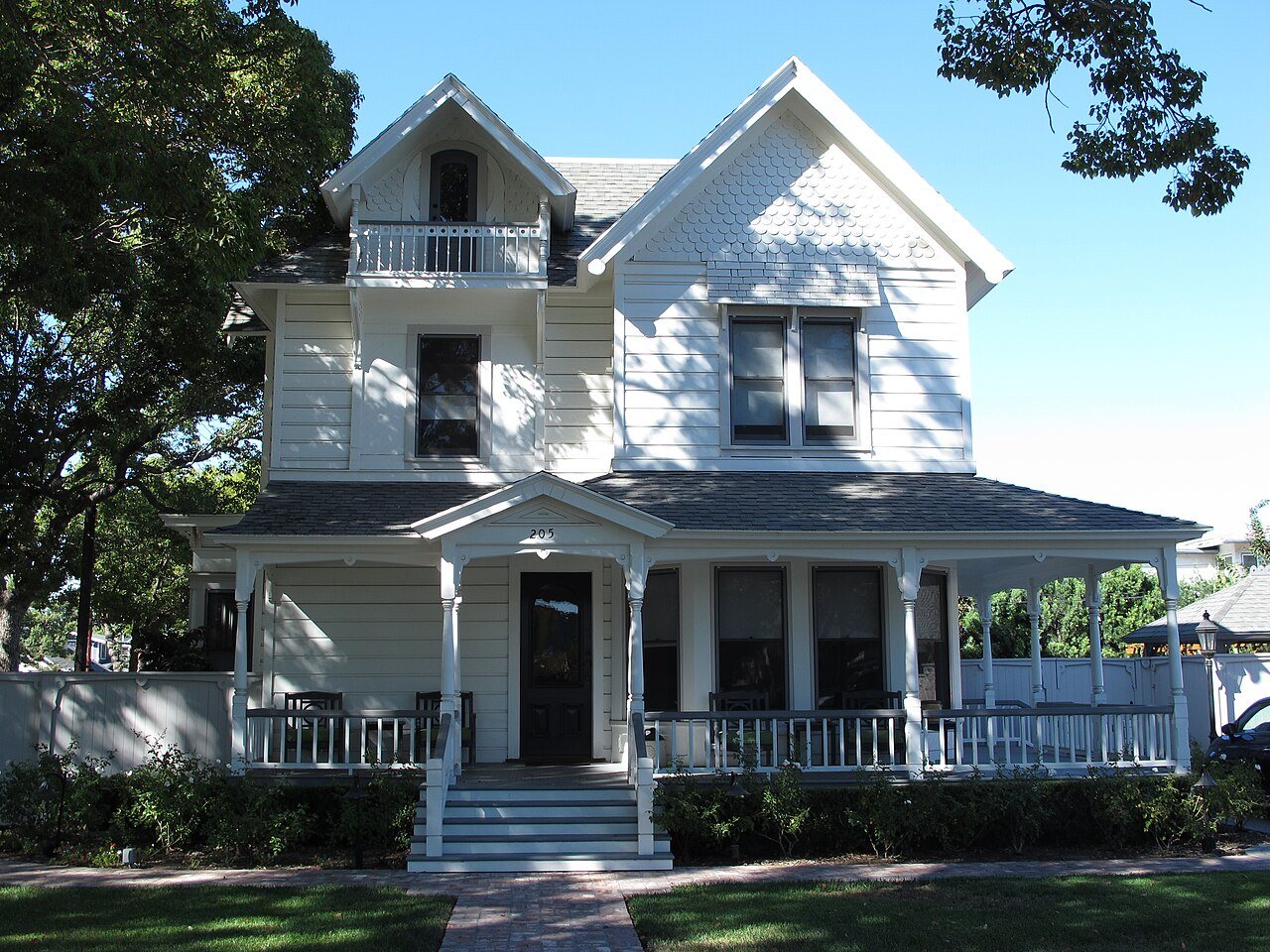
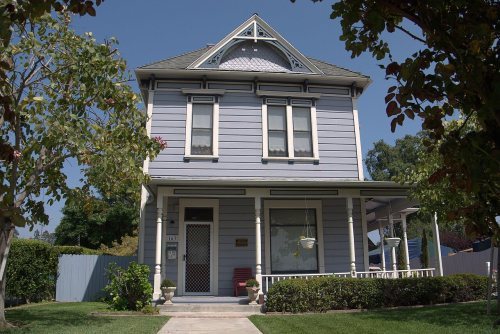
National Park Service, National Register of Historic Places. Photos from Wikimedia Commons, credited on each place’s page.
Places that used to be
Lost post offices, old corners, places now gone and burying grounds
Orange’s post office has been open since 1873. Three other post offices opened and closed inside today’s town.
Orange
1873–today
McPherson
1886–1900
Olive
1887–1963
El Modena
1910–1961
18701950today
Hamlets and corners on the map
Carriage Mobile Home EstatesCreekside Mobile Home EstatesGoforth Mobile Home VillageHewes ParkLa PalomaMarlboroMcPhersonOliveOrange Mobile Home ParkOrange Village Mobile Home ParkPark RoyaleWandaWest Anaheim Junction
Gone or out of use
El Modena StationlocaleOrange Union High SchoolschoolSantiago Golf Courselocale
1cemetery inside Orange
Holy Sepulcher
US Post Offices dataset (Blevins & Helbock, CC0). Places and cemeteries from the USGS Geographic Names Information System (2021).
Help out
Start Orange’s collection
The first neighbors to add old photos shape how Orange’s history is told.
Decades since 1900 with photos
00s10s20s30s40s50s60s70s80s90s
0 of 10 decades. The empty ones are waiting for someone’s album.
Members of the Tongva and Juaneño/Luiseño ethnic group long inhabited this area. After the 1769 expedition of Gaspar de Portolá, an expedition out of San Blas, Nayarit, Mexico, led by Father Junípero Serra, named the area Vallejo de Santa Ana (Valley of Saint Anne). On November 1, 1776, Mission San Juan Capistrano became the area's first permanent European settlement in Alta California, New Spain.
Passages that mention Orange, cut from the printed page as they were published.
An illustrated history of Southern California1890Read the page →
Read the text
Orange is about three miles northeast of Santa Ana, at the junction of a branch of the Santa Fe with the main line, and also on the line of the Southern Pacific. The town is incorporated as in the sixth class; it is well laid out, having a plaza, with neat walks, lined with flowers, and a central fountain. An ordinance prohibits saloons inside the corporate limits.
Text read by machine from the scan; it may contain errors.
An illustrated history of Southern California1890Read the page →
Read the text
and original incorporator of the First National Bank of Riverside; vice-president of the East Riverside Water Company; formerly a director of Riverside Water Company, and of the Orange Growers' Association, and associated with other incorporations of lesser note as a subscriber and stockholder. He has for years been one of the active business men of Riverside, ever ready
Text read by machine from the scan; it may contain errors.
The history of the House of Orange1876 · page 58Read the page →
Read the text
But the Duke of Alva having retaken Mons, sent his son to reduce some other cities in Holland and Guelderland, and because the town of Haarlem had formerly received the Prince of Orange, after the Duke had reduced it by famine, whereof nearly thirteen thousand died, he made a dreadful example of this place, the Spaniards first hanging the governor, and for several days together hanging and
Text read by machine from the scan; it may contain errors.
Scans and text from the Internet Archive. Books published in 1930 or earlier, which are in the public domain.
Timeline
Orange, 1869 to 1989
Woven from the archive, old maps, post office records, the National Register and the people born here.
Every edition of the U.S. Geological Survey’s map of Orange. Tap a year, or press play to watch the town change.
1896Anaheim sheet · 1:62,500
U.S. Geological Survey historical topographic maps (public domain), via Esri’s collection of the scans. The red ring marks the center of Orange.
Every building
Orange, building by building, 1885–1922
Fire insurance maps drew every building, what it was made of and what it was used for, so insurers could price the risk of fire. Pick a year, then a sheet.
1885Sheet 1 of 1
Edition
Sheets
BrickWoodStone
Sanborn Map Company, via the Library of Congress. Editions published in 1930 or earlier, which are in the public domain.
People over time
Orange, census by census
Grew from 679 people in 1880 to 139,911 in 2020, more than tenfold.
15 censuses, 1880–2020.
U.S. Census Bureau decennial counts, from the census table on Orange’s Wikipedia page.
Famous people
39 famous people were born in Orange
Writers, athletes, leaders and more, ranked by how widely they’re known.
In 1869, according to Wikidata. Orange’s post office opened in 1873, and the census of 1880 counted 679 people here.
How does Orange rank for history?
Orange is more historic than 59% of U.S. towns, #109 of 847 in California. The History grade combines the town’s founding era, the share of homes built before 1940 and its National Register listings. It’s a character grade, so it isn’t part of the overall grade. How it works.
What is on the National Register in Orange?
17 listings: 13 buildings, among them the Orange Union High School (listed 1975, the first), 2 historic districts, the Old Towne Orange Historic District and the Plaza Historic District, with 1,265 contributing buildings, and 2 sites. 1,291 historic buildings in all.
How old are the homes in Orange?
5% of Orange’s homes were built before 1940 (Census estimate), against a typical 3.4% for a California town; the median home was built in 1973.
Founding dates: Wikidata, Wikipedia, the U.S. post office records of Blevins & Helbock (CC0) and the Census. Homes by year built: Census ACS 2020–24. National Register of Historic Places: National Park Service (list of May 22, 2026). Old photos, postcards and papers: Wikimedia Commons, the Library of Congress and other public archives, credited on each item’s page. Maps: U.S. Geological Survey historical topographic maps (via Esri) and Sanborn fire-insurance maps (Library of Congress). History text and census tables: Wikipedia (CC BY-SA 4.0). Places that used to be: USGS Geographic Names Information System (2021).
From Wikimedia Commons (2), Wikidata (9), the National Register of Historic Places (17), Wikipedia, Wikidata and Wikipedia for famous people, U.S. Geological Survey historical maps, U.S. Census counts (via Wikipedia), the US Post Offices dataset (Blevins & Helbock), the USGS Geographic Names Information System, Sanborn fire insurance maps (Library of Congress) and old county and town histories (Internet Archive). Archive images are copied here with their credits and licenses, shown on each photo’s page. Refreshed monthly.







 2026
 2017


