Anaheim dates to 1857, and 13 of its places are on the National Register
More historic than 46% of U.S. towns · #174 of 847 in California. What drives it
Most of Anaheim was built recently: 2% of its homes predate 1940 and the median home dates from 1973. 13 places in town are on the National Register, among them a historic district with 57 buildings. Below: 11 old photos and papers, maps from 1885 on, and the census since 1870.
Founding year: Wikidata; Wikipedia’s history section gives the same year. First post office: 1861.The full story ↓
History grade
What drives Anaheim’s History grade
On its age, its old homes and the National Register, Anaheim is more historic than 46% of U.S. towns, #174 of 847 in California. Its National Register listings hold the grade up; its share of homes from before 1940 pulls it down.
B−
HistoryA character grade: shown, never part of Anaheim’s overall grade.
Among the 400 U.S. cities of 100,000 or more, Anaheim ranks #252 on History.
Few California towns list much on the Register (a typical California town has 0.0 per 10,000 residents, the U.S. 2.4), so Anaheim’s 2.3 sits above most of its state (82% of California towns have fewer) while its 80 historic buildings outnumber those of 88% of U.S. towns.
Newer cities are common at Anaheim’s size: in the typical U.S. city of 100,000 or more, 5% of homes predate 1940.
How sure. Graded on any two of the three inputs instead, the letter would range from C− to B. The pre-1940 share (±0.3 points) is firm at this size. Two sources give 1857.
Founding year: Wikidata (other dates in Quick answers). Homes: Census ACS 2020–24. National Register: National Park Service, May 2026 list; each listing counted once (boundary changes and added documentation belong to their listing), and a historic district counts its contributing buildings. How TownRatings grades history →
What stands out about Anaheim’s past
Read from the archive, the National Register and the record. The page puts what stands out first.
Lost post offices, old corners, places now gone and burying grounds
Anaheim’s post office has been open since 1861. Two other post offices opened and closed inside today’s town.
Anaheim
1861–today
Yorba
1880–1905
Loara
1900–1907
18601940today
Hamlets and corners on the map
Anaheim HillsAnaheim Mobile Home EstatesAnaheim Royal Mobile Home ParkAnaheim ShoresBrookhurstCasa Hermosa Mobile Home ParkCherokee Mobile GardensDel Ray Mobile Home EstatesFriendly Village of AnaheimGolden Skies Mobile Home ParkHansenLa Belle Fontane EstatesMicafloresMirafloresNeffNutwoodOrangetreePalm Lodge Mobile Home EstatesPeralta HillsPlantation Mobile Home EstatesPonderosa Mobile Home EstatesRancho La PazRio Vista Mobile Home EstatesSouth Anaheim
Gone or out of use
Anaheim Community HospitalhospitalAnaheim Drive-InlocaleBroadway SchoolschoolFour Square Gospel ChurchchurchFree Methodist Episcopal ChurchchurchHorace Mann Elementary SchoolschoolKatella SchoolschoolMarywood Central Catholic High SchoolschoolPeralta SchoolschoolSaint Boniface SchoolschoolSavanna SchoolschoolTrident High SchoolschoolWhite Temple Methodist Episcopal ChurchchurchYorba Churchchurch
3cemeteries and burying grounds inside Anaheim
AnaheimHoly CrossMelrose Abbey Memorial Park
US Post Offices dataset (Blevins & Helbock, CC0). Places and cemeteries from the USGS Geographic Names Information System (2021).
On the National Register
13 listings protect 80 historic buildings
The country’s official list of buildings and places worth saving.
Tongva people are indigenous to Anaheim's region of Southern California. Evidence suggests their presence since 3500 BCE. The Tongva village at Anaheim was called Hutuukuga. The village has been noted as one of the largest Tongva villages throughout Tovaangar. Native plants like oak trees and sage bushes were an important food source, as well as rabbit and mule deer for meat. The village had deep trade connections with coastal villages and those further inland.
Passages that mention Anaheim, cut from the printed page as they were published.
History of Orange County, California1921 · page 1614Read the page →
Read the text
On May 1, 1918, Mr. Wood was appointed city marshal of Anaheim and the same year was elected constable of Anaheim Township, and he is now filling the duties of that office as well as that of deputy sheriff. In May, 1920, he resigned his office as city marshal and license tax collector in order to engage in business, and he was the proprietor of the People's Service Station at 130 South Lemon Street, and also agent for the Motor Transit Company at Anaheim, said to be the largest stage company in the world. In November, 1920, an opportunity presented itself for him to engage in the real estate business with J. S. Howard and disposing of his business to advantage
Text read by machine from the scan; it may contain errors.
History of Orange County, California1921 · page 186Read the page →
Read the text
Since the foregoing discussion of estimates of population was written, a census of Anaheim township has been taken, under the authority of the board of supervisors, which credits that township with a population of 9,241. Then, as if to disparage Anaheim's special census and the estimates of both cities, along came the federal census about August 12, 1920, with a population of 6.936 for Anaheim township, instead of 9,241 reported in the special census, and 5,526 for the city of Anaheim, instead of 4.995 given in the estimate on registration, and with a population of 15.485 for the city of Santa Ana, instead of 18,060 given
Text read by machine from the scan; it may contain errors.
Anaheim, southern California, its history, climate, soil and advantages for home seekers and settlers1885Read the page →
Read the text
Perhaps no town of the population of Anaheim can show so little debt among its people and so much wealth distributed among them. The principal Imsiness being the grape-culture. There are several larger places in Los Angeles county than Anaheim, but the shipment of valuable products from ftur depot is second only to Los Angeles city.
Text read by machine from the scan; it may contain errors.
Anaheim, southern California, its history, climate, soil and advantages for home seekers and settlers1885Read the page →
Read the text
number does not exist tor the same reason that in a town of the same size in the East, the same number or more may be found. This will be seen by a brief survey of the various churches and their peculiar work. There is of course a Koman church in Anaheim. A large section of country in the Santa Ana Valley, of which this is a part, has no church of this kind save here, hence all who are allied to it must come to Anaheim for the privileges granted by the sect. Rev. V. Foran is the priest. One of the most attractive and churchly edifices outside the cities is occupied by the Episcopalians.
Text read by machine from the scan; it may contain errors.
Scans and text from the Internet Archive. Books published in 1930 or earlier, which are in the public domain.
Timeline
Anaheim, 1857 to 1966
Woven from the archive, old maps, post office records, the National Register and the people born here.
Nothing in the archives for these yearsWeddings on Main Street, storms, parades, school pictures, the old store. If it’s in your family album, it belongs here.
Nothing in the archives for these yearsWeddings on Main Street, storms, parades, school pictures, the old store. If it’s in your family album, it belongs here.
Fire insurance maps drew every building, what it was made of and what it was used for, so insurers could price the risk of fire. Pick a year, then a sheet.
1885Sheet 1 of 1
Edition
Sheets
BrickWoodStone
Sanborn Map Company, via the Library of Congress. Editions published in 1930 or earlier, which are in the public domain.
Then & now
Stand where they stood
No then-and-now pairs yet. Take a photo from the same spot as an old one and they appear here side by side.
Retake this viewAnaheim-1879, 1879
Find the spot, match the angle, and add your photo. It becomes the first then-and-now pair on Anaheim’s page.
In 1857, according to Wikidata and Wikipedia’s history of the town. Anaheim’s post office opened in 1861, and the census of 1870 counted 881 people here.
How does Anaheim rank for history?
Anaheim is more historic than 46% of U.S. towns, #174 of 847 in California. The History grade combines the town’s founding era, the share of homes built before 1940 and its National Register listings. It’s a character grade, so it isn’t part of the overall grade. How it works.
What is on the National Register in Anaheim?
13 listings: 12 buildings, among them the Carnegie Library (listed 1979, the first), and 1 historic district, the Kroger-Melrose District, with 57 contributing buildings. 80 historic buildings in all.
How old are the homes in Anaheim?
2% of Anaheim’s homes were built before 1940 (Census estimate), against a typical 3.4% for a California town; the median home was built in 1973.
Founding dates: Wikidata, Wikipedia, the U.S. post office records of Blevins & Helbock (CC0) and the Census. Homes by year built: Census ACS 2020–24. National Register of Historic Places: National Park Service (list of May 22, 2026). Old photos, postcards and papers: Wikimedia Commons, the Library of Congress and other public archives, credited on each item’s page. Maps: U.S. Geological Survey historical topographic maps (via Esri) and Sanborn fire-insurance maps (Library of Congress). History text and census tables: Wikipedia (CC BY-SA 4.0). Places that used to be: USGS Geographic Names Information System (2021).
From Wikimedia Commons (8), the Library of Congress (6), Wikidata (4), the National Register of Historic Places (13), Wikipedia, Wikidata and Wikipedia for famous people, U.S. Geological Survey historical maps, U.S. Census counts (via Wikipedia), the US Post Offices dataset (Blevins & Helbock), the USGS Geographic Names Information System, Sanborn fire insurance maps (Library of Congress) and old county and town histories (Internet Archive). Archive images are copied here with their credits and licenses, shown on each photo’s page. Refreshed monthly.


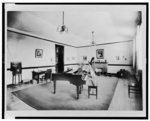


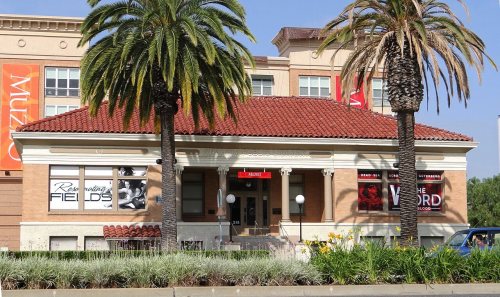


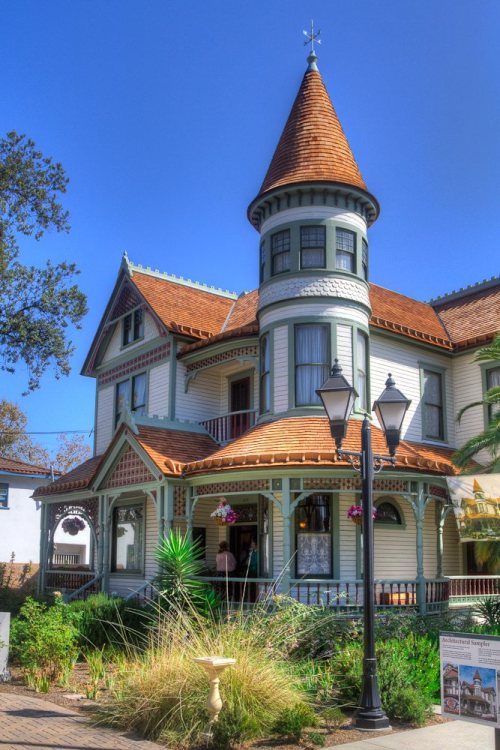




 1915
 1915
 1922
 1947
 1980
 2015
 2008
 2005


